
How Astrotourism and Dark Sky Parks Are Saving the Night Sky
As light pollution erases the stars for 99% of the population, a booming astrotourism industry is turning pristine darkness into a protected, multi-billion-dollar resource.
By Factlen Editorial Team
- Conservationists & Ecologists
- Focus on protecting nocturnal habitats and natural rhythms from artificial light.
- Tourism & Economic Planners
- View dark skies as a lucrative, low-impact resource that drives off-season travel and local revenue.
- Dark Sky Advocates
- Campaign for rigorous lighting standards and public education to reclaim the night sky as a human heritage.
What's not represented
- · Indigenous Astronomy Guides
- · Lighting Manufacturers
Why this matters
With artificial light disrupting both human health and nocturnal ecosystems, the preservation of dark skies offers a rare, immediately reversible environmental fix that also injects billions into rural economies.
Key points
- Only 18 of the 63 U.S. National Parks have achieved official Dark Sky Park certification.
- Astrotourism in the Colorado Plateau is projected to generate $5.8 billion in spending over a decade.
- Nearly 70 percent of wildlife species are nocturnal and rely on natural darkness for survival.
- Parks must implement strict lighting management plans, including fully shielded fixtures and warm color temperatures.
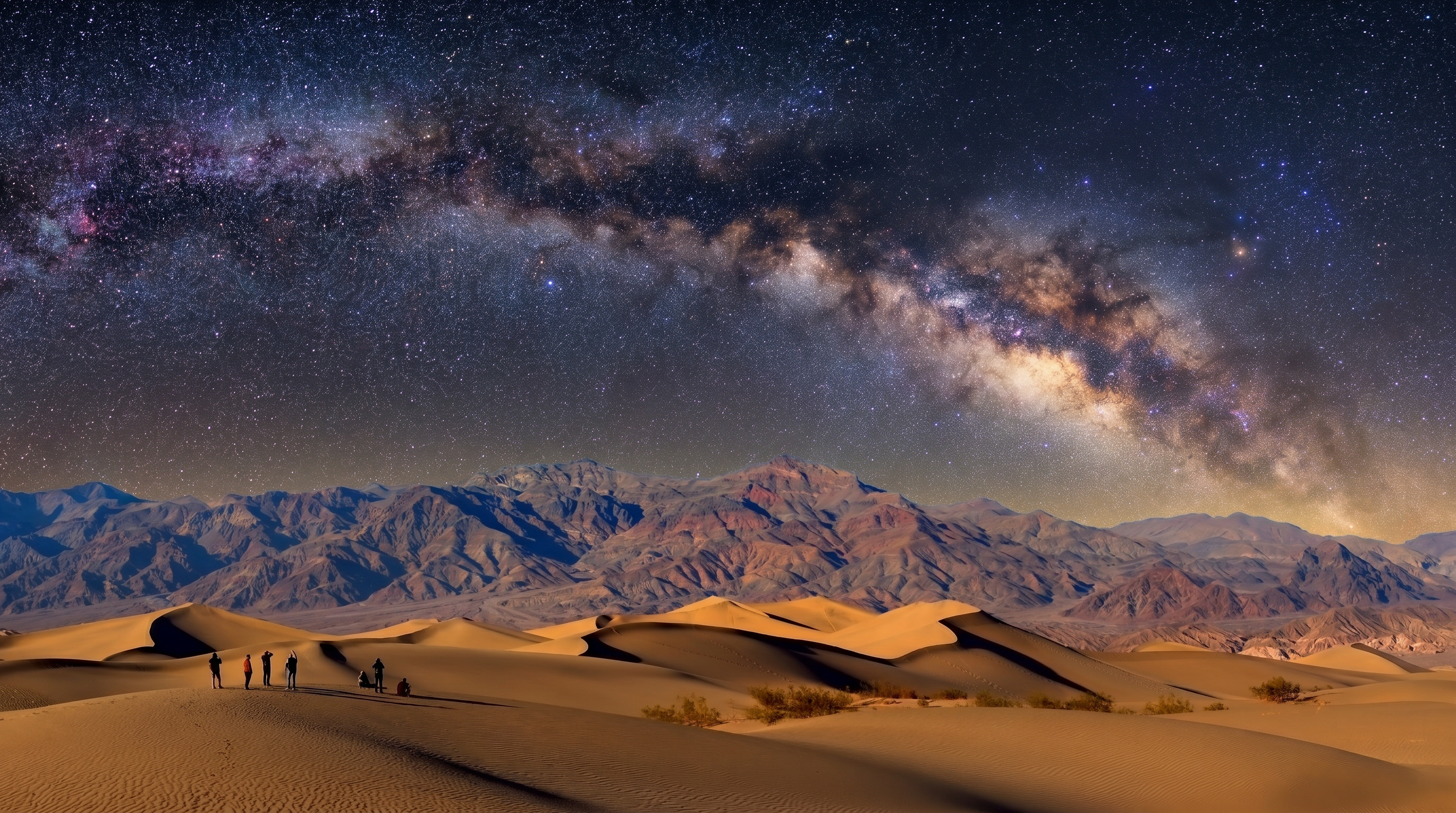
For millennia, the night sky was humanity's shared canvas—a glittering expanse that guided navigation, dictated agricultural cycles, and inspired foundational myths. Today, that celestial heritage has been largely erased by the glow of modernity. According to conservation groups, a staggering 99 percent of the population in the United States and Europe now lives under skies polluted by artificial light. For roughly 80 percent of North Americans, the Milky Way is entirely invisible from their homes, washed out by an ever-expanding dome of urban skyglow. This creeping celestial blindness has fundamentally altered our relationship with the cosmos, turning the stars into a rare luxury rather than a nightly guarantee.[1][5][6]
In response to this loss, a rapidly growing segment of the travel industry is looking upward. "Astrotourism"—travel specifically centered around stargazing and celestial events—has emerged as a major outdoor trend in 2026. Visitors are flocking to remote landscapes not just for the daytime vistas of canyons and peaks, but for the pristine darkness that falls after sunset. This shift in traveler behavior is transforming how protected lands are managed, turning the absence of light into one of the most sought-after natural resources on the planet.[6]
At the forefront of this movement is the International Dark Sky Places program, managed by DarkSky International. The organization has established rigorous criteria for locations to be certified as official Dark Sky Parks. Out of the 63 major U.S. National Parks, only 18 have achieved this elite designation, joining a global network of over 200 protected dark-sky sites. These parks represent a profound commitment to preserving natural darkness, offering visitors the rare opportunity to experience the night sky exactly as our ancestors did.[1]
Earning a Dark Sky Park certification is not simply a matter of being located far from a city. The process requires years of systematic measurement, community outreach, and infrastructure overhaul. Parks must implement a comprehensive, legally binding Lighting Management Plan that dictates the technical specifications for every single artificial light source within their boundaries. This includes detailed fixture inventories, strict replacement schedules, and ongoing compliance monitoring to ensure that the park's own infrastructure does not contribute to the problem it is trying to solve.[1]

The mechanics of a dark-sky lighting plan are highly specific. Fixtures must be fully shielded, meaning the light is directed entirely downward with no lateral or upward spillage. Furthermore, the color temperature of the bulbs is strictly regulated. Parks are required to use warm-toned lighting—typically measuring 3000 Kelvin or lower—to minimize the emission of blue light. Blue light wavelengths scatter more easily in the atmosphere, creating severe skyglow, and are particularly disruptive to both human circadian rhythms and nocturnal ecosystems.[1]
To quantify their success, parks rely on the Bortle Scale, a nine-level numeric system that measures the brightness of the night sky. A Class 9 rating represents an inner-city sky where only the brightest planets are visible, while a Class 1 rating denotes pristine, natural darkness. In a Class 1 environment, the Milky Way is so vivid that it can cast faint shadows on the ground, and thousands of stars, along with faint celestial objects like nebulae, are visible to the naked eye. Certified parks like Great Basin and Big Bend consistently achieve these top-tier ratings.[1][5]
Beyond visual observations, darkness is measured scientifically using Sky Quality Meters. These devices quantify the darkness of the sky in a unit known as magnitudes per square arc second. To qualify for certification, a park must typically achieve readings of 21.2 or higher across multiple seasons and locations. This rigorous data collection ensures that the park's darkness is not just an anecdotal claim, but a measurable, protected environmental baseline.[1]
While astrotourism draws the crowds, the ecological imperative for dark skies is arguably even more critical. The distinction between day and night is one of the most fundamental rhythms of life on Earth, and nearly 70 percent of all wildlife species are nocturnal. For these animals, natural darkness is not a scenic amenity; it is a strict biological requirement for survival. Their feeding, mating, migration, and predator-prey dynamics have evolved over millions of years to rely on the cues provided by the moon and stars.[1]
The proliferation of Artificial Light at Night (ALAN) severely disrupts these delicate ecosystems. Sea turtle hatchlings become disoriented by coastal lights, migrating birds crash into illuminated buildings, and nocturnal predators lose their hunting advantage in artificially brightened landscapes. By establishing vast tracts of protected darkness, Dark Sky Parks serve as crucial havens where natural ecological rhythms can continue undisturbed, safeguarding biodiversity in an increasingly illuminated world.[1][5]
The proliferation of Artificial Light at Night (ALAN) severely disrupts these delicate ecosystems.
The preservation of darkness also yields massive economic dividends. Astrotourism is inherently lucrative because it necessitates overnight stays. Unlike day-trippers who might pass through a park without spending much locally, stargazers require lodging, late-night dining, and multi-day accommodations. This extended dwell time injects significant capital into rural gateway communities, transforming dark skies into a powerful engine for local economic development.[3][4][6]
The financial impact is highly quantifiable. A comprehensive economic study conducted by researchers at Missouri State University analyzed the value of dark sky tourism across the Colorado Plateau—a region encompassing parts of Utah, Colorado, Arizona, and New Mexico. The researchers projected that non-local tourists drawn specifically by the dark skies will spend an estimated $5.8 billion in the region over a ten-year period.[3][4]

This influx of astrotourism capital ripples through the broader economy. The same study estimated that these tourist expenditures will generate $2.4 billion in higher wages for local residents. Furthermore, the demand for lodging, guided astronomy tours, and hospitality services is projected to create over 10,000 additional jobs each year within the region. For remote communities with limited industrial bases, the night sky has become a vital, renewable economic resource.[3][4]
Crucially, astrotourism helps solve one of the tourism industry's most persistent challenges: seasonality. Traditional national park visitation peaks heavily during the summer months, straining infrastructure and leaving local businesses struggling during the off-season. However, stargazing conditions are often superior in the fall and winter, when the air is crisper, humidity is lower, and the nights are significantly longer. This allows parks to attract visitors year-round, smoothing out the economic peaks and valleys for gateway communities.[3][4]
The economic viability of dark skies is driving a global conservation movement. In South Africa, researchers are actively exploring astrotourism as a low-impact revenue source to fund the South African National Parks (SANParks) system. Because astrotourism requires minimal hard infrastructure—relying on the natural environment rather than new construction—it offers a rare opportunity to generate conservation funding without degrading the protected landscapes.[7]
Other nations are also pioneering dark sky preservation on a massive scale. Australia designated Warrumbungle National Park as its first Dark Sky Park to protect its crucial role in astronomical research, while Canada's Grasslands National Park boasts some of the darkest measured skies on the continent. In the United States, the Central Idaho Dark Sky Reserve protects over 1,400 square miles of wilderness, demonstrating that dark sky conservation can operate at a landscape level.[5]

Despite these successes, the future of Dark Sky Parks is entirely dependent on the communities that surround them. A national park cannot put a dome over its boundaries; it is highly vulnerable to light pollution spilling over from neighboring towns. As the popularity of these parks drives local development, the resulting construction of new hotels, gas stations, and residential areas threatens to erase the very darkness that tourists are traveling to see.[4][5]
The economic risk of losing this resource is severe. A 2023 survey of visitors to Great Sand Dunes National Park—a certified Gold Tier dark sky site—found that 47 percent of respondents would reduce their future visitation if light pollution increased to match neighboring municipalities. Researchers estimated that such a decline in visitation could cost the immediate region hundreds of thousands of dollars in lost GDP annually, proving that light pollution is an economic liability.[4]
To combat this, park advocates are working closely with gateway communities to implement local dark-sky ordinances. By demonstrating the economic value of astrotourism, conservationists are successfully incentivizing towns to retrofit their own streetlights and commercial signage. These municipal upgrades not only protect the parks' skyglow but also save the towns significant money on energy and maintenance costs, creating a rare alignment of ecological and economic interests.[4][5]

Ultimately, the push to protect the night sky is about preserving a fundamental human experience. For all of human history, looking up at a star-filled sky has inspired art, science, philosophy, and a profound sense of our place in the universe. National Park Service astronomy programs routinely draw massive crowds, proving that the desire to connect with the cosmos remains deeply ingrained in the public consciousness.[2][5]
The loss of the night sky is a tragedy, but unlike many environmental crises, it is entirely reversible. Light pollution leaves no toxic residue in the soil and requires no centuries-long atmospheric scrubbing to fix. The moment a poorly designed light fixture is shielded or turned off, the darkness immediately returns. Through the expansion of Dark Sky Parks and the booming popularity of astrotourism, humanity is slowly learning to flip the switch and welcome back the stars.[8]
How we got here
2001
Flagstaff, Arizona is designated as the world's first International Dark Sky City.
2007
Natural Bridges National Monument in Utah becomes the first certified International Dark Sky Park.
2019
Economic studies reveal astrotourism will generate billions in revenue for the Colorado Plateau region.
2026
Astrotourism emerges as a dominant global travel trend, driving rapid expansion of dark-sky certifications worldwide.
Viewpoints in depth
Conservationists & Ecologists
Focus on protecting nocturnal habitats and natural rhythms from artificial light.
For ecologists, the night sky is not just a scenic backdrop—it is a critical biological habitat. Nearly 70 percent of wildlife species are nocturnal, relying on natural darkness for navigation, foraging, and mating. Conservationists argue that Artificial Light at Night (ALAN) is a severe pollutant that fragments habitats just as destructively as a bulldozer. They advocate for strict, legally binding lighting ordinances in and around protected lands to ensure that ecological rhythms, honed over millions of years, are not disrupted by urban skyglow.
Tourism & Economic Planners
View dark skies as a lucrative, low-impact resource that drives off-season travel and local revenue.
Economic planners see pristine darkness as a highly marketable, renewable resource. Astrotourism requires overnight stays, which forces visitors to spend money on lodging, dining, and local services—generating significantly more revenue than day-trippers. Furthermore, because stargazing is often best during the colder, non-summer months, it provides a crucial economic lifeline to gateway communities struggling with off-season lulls. For these stakeholders, protecting the night sky is a straightforward business decision with billions of dollars in projected returns.
Dark Sky Advocates
Campaign for rigorous lighting standards and public education to reclaim the night sky as a human heritage.
Organizations like DarkSky International approach the issue from a cultural and human-health perspective. They argue that the ability to see the cosmos is a fundamental human right that has been quietly stolen by poor urban planning. Their focus is on actionable, immediate solutions: retrofitting streetlights, shielding fixtures, and lowering color temperatures. They emphasize that unlike chemical pollution, light pollution can be solved at the speed of light—the moment a switch is flipped, the stars return.
What we don't know
- Whether gateway communities will universally adopt dark-sky ordinances fast enough to outpace the light pollution generated by their own tourism-driven growth.
- The long-term impact of massive satellite constellations on the pristine viewing conditions of certified Dark Sky Parks.
Key terms
- Astrotourism
- A form of travel focused on visiting destinations with minimal light pollution to observe celestial phenomena and the night sky.
- Bortle Scale
- A nine-level numeric scale that measures the night sky's brightness and the astronomical observability of celestial objects.
- Artificial Light at Night (ALAN)
- Human-made illumination that alters the natural patterns of light and dark in ecosystems.
- Skyglow
- The brightening of the night sky over inhabited areas, caused by artificial light scattering in the atmosphere.
- Color Temperature
- A measure of a light bulb's color appearance, measured in Kelvin (K); dark-sky lighting requires warmer, lower-Kelvin bulbs to minimize blue light.
Frequently asked
What is a Dark Sky Park?
A specially designated area that meets rigorous criteria for exceptional night sky quality, minimal light pollution, and a commitment to preserving natural darkness.
How is sky darkness measured?
Scientists use the Bortle Scale, which rates skies from 1 (darkest) to 9 (brightest), as well as Sky Quality Meters that quantify darkness in magnitudes per square arc second.
Why is artificial light harmful to wildlife?
Nearly 70 percent of wildlife species are nocturnal. Artificial light disrupts their natural rhythms, affecting feeding, mating, migration, and predator-prey dynamics.
Do I need a telescope to enjoy a Dark Sky Park?
No. In Class 1 or 2 Bortle skies, thousands of stars, the Milky Way, and even some nebulae are clearly visible to the naked eye.
Sources
Source coverage
8 outlets
3 viewpoints surfaced








[1]DarkSky InternationalDark Sky Advocates
International Dark Sky Places Program
Read on DarkSky International →[2]National Park ServiceConservationists & Ecologists
Night Skies - National Park Service
Read on National Park Service →[3]Missouri State UniversityTourism & Economic Planners
Economic Impacts of Dark Sky Tourism on the Colorado Plateau
Read on Missouri State University →[4]Destinations InternationalTourism & Economic Planners
Dark Sky Tourism: How Embracing the Night Sky Can Benefit DMOs
Read on Destinations International →[5]Sierra ClubConservationists & Ecologists
A Stargazer's Guide to Protected Dark Skies
Read on Sierra Club →[6]Field MagDark Sky Advocates
Astrotourism Explained: Top Dark Sky Zones for Stargazing
Read on Field Mag →[7]Koedoe JournalTourism & Economic Planners
Viability of astrotourism in South African National Parks as a revenue source for conservation
Read on Koedoe Journal →[8]Factlen Editorial TeamDark Sky Advocates
Synthesis by Factlen editorial team
Read on Factlen Editorial Team →
More in travel
See all 23 stories →Astrotourism
The Astrotourism Boom: Why Destinations Are Racing to Protect the Dark
6 sources
Climate Tourism
The Rise of the 'Coolcation': How Northern Europe Became the New Summer Riviera
8 sources
Altitude Science
The Science of Acclimatization: How Everyday Hikers Conquer 5,000-Meter Peaks
7 sources
Japan Transit
Beyond the Golden Route: How the Hokuriku Shinkansen Extension is Reshaping Travel in Japan
7 sources
Every angle. Every day.
Get travel stories with full source coverage and perspective breakdowns delivered to your inbox.