
The Astrotourism Boom: Why Destinations Are Racing to Protect the Dark
Driven by the scarcity of unpolluted night skies and the lucrative economics of overnight stays, astrotourism has become a major travel trend in 2026. Destinations are now implementing strict lighting ordinances to protect their darkness as a premium natural asset.
By Factlen Editorial Team
- Hospitality & Economic Developers
- Views the preservation of dark skies as a lucrative economic engine capable of revitalizing rural communities.
- Dark Sky Conservationists
- Focuses on mitigating artificial light at night to protect ecosystems and preserve the scientific and cultural heritage of the stars.
- Sustainable Tourism Advocates
- Warns against the 'astrotourism paradox,' where the infrastructure built to accommodate stargazers risks creating new light pollution.
What's not represented
- · Local residents in gateway communities facing increased traffic and housing costs due to the astrotourism boom.
- · Lighting manufacturers transitioning their supply chains to meet the new demand for dark-sky compliant fixtures.
Why this matters
With 99% of the US and European population living under light-polluted skies, natural darkness is becoming a rare and highly monetizable resource. The push to create Dark Sky Reserves not only revitalizes rural economies but also combats the ecological disruption and energy waste caused by artificial light.
Key points
- Astrotourism has surged in 2026, driven by celestial events and the growing scarcity of naturally dark skies in urbanized areas.
- Artificial Light at Night (ALAN) obscures the stars for 99% of the US and European population, while disrupting ecosystems and wasting energy.
- DarkSky International has certified over 250 locations globally that enforce strict lighting ordinances to preserve night sky visibility.
- Because astrotourism requires overnight stays, it generates up to three times more local spending than traditional daytime tourism.
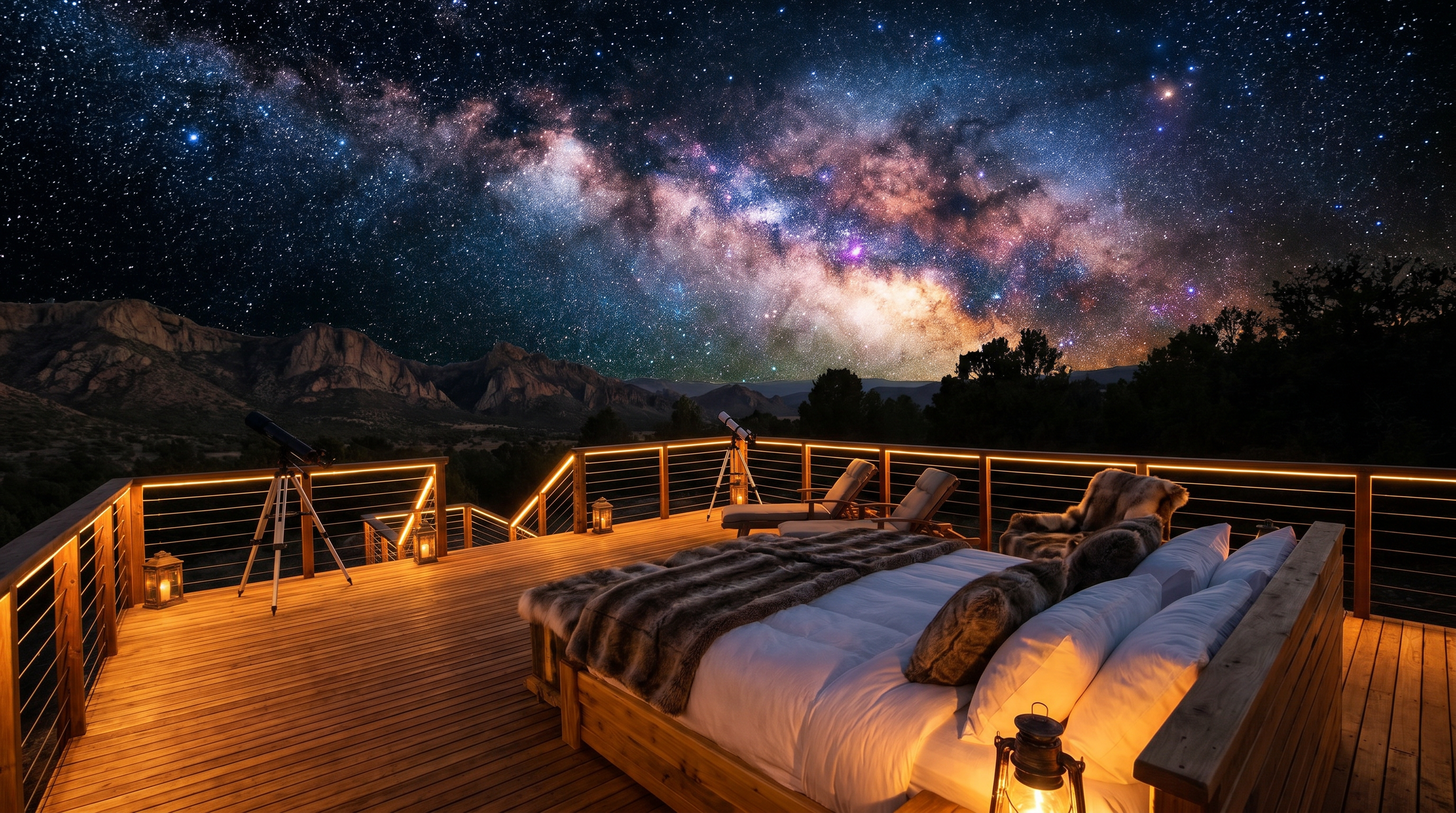
For decades, the travel industry has sold the sun: pristine beaches, endless daylight, and tropical warmth. But in 2026, the most coveted commodity in global tourism is the dark. Driven by the impending August 2026 total solar eclipse sweeping across Europe and a heightened cycle of auroral activity, "astrotourism" has evolved from a niche hobby for amateur astronomers into a dominant force in the hospitality sector. Travelers are increasingly planning their vacations around celestial events, meteor showers, and the simple, profound experience of standing beneath a truly black sky. Luxury resorts are swapping golf courses for private observatories, and rural communities are discovering that their lack of urban development is suddenly their most lucrative asset.[1][2]
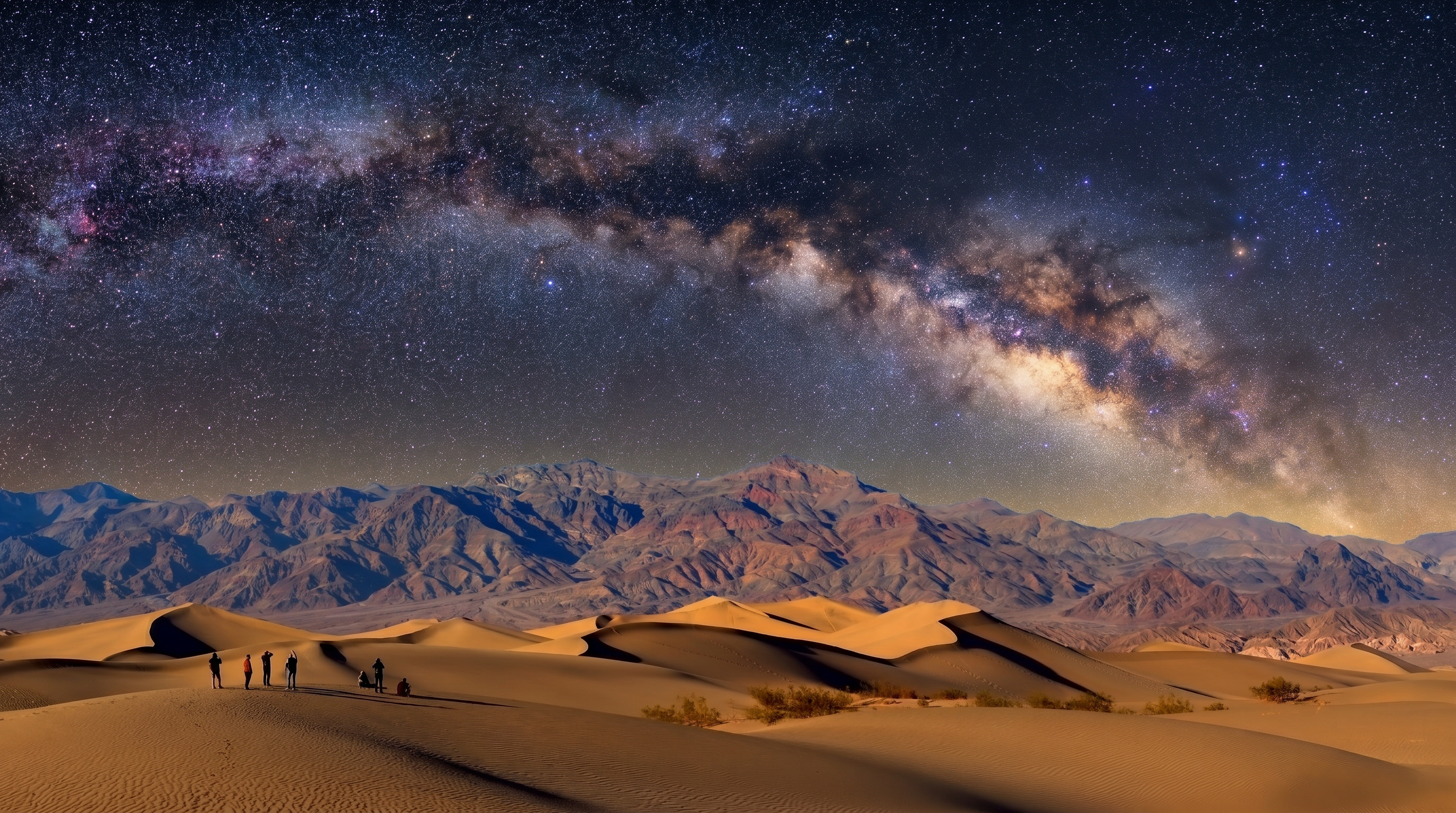
The explosion of astrotourism is fundamentally driven by scarcity. For the vast majority of human history, a sky blanketed in thousands of stars was a universal nightly experience. Today, it is a luxury that must be actively sought out. According to DarkSky International, a staggering 99 percent of the population in the United States and Europe now lives under skies polluted to some degree by artificial light. For nearly 80 percent of North Americans, the Milky Way is completely invisible from their homes, washed out by the ambient glow of streetlights, neon signs, and sprawling subdivisions. What was once a shared human heritage has become a rare environmental feature.[3]
This artificial erasure of the night sky is driven by a phenomenon scientists call ALAN—Artificial Light at Night. When unshielded or poorly aimed outdoor lighting beams upward, the photons scatter against moisture and dust particles in the atmosphere, creating a diffuse "sky glow" that obscures the stars. The brightness of the night sky is measured by astronomers using a Sky Quality Meter (SQM), which quantifies luminance. In heavily urbanized areas, the sky can be thousands of times brighter than its natural state, effectively blinding ground-based observers to everything but the moon and the brightest planets.[4]
The consequences of ALAN extend far beyond the frustration of stargazers. Light pollution is a potent environmental disruptor. Natural darkness is a critical biological requirement for nocturnal ecosystems, governing the migration patterns of birds, the hunting habits of predators, and the reproductive cycles of insects. Furthermore, the unchecked proliferation of artificial light represents a massive waste of resources. In the United States alone, an estimated 30 percent of all outdoor lighting is wasted—shining directly into the sky rather than illuminating the ground—costing billions of dollars in unnecessary energy expenditures annually.[3][5]

In response to this rapid loss of the night, a global conservation movement has gained unprecedented momentum. At the center of this effort is DarkSky International, an organization that evaluates and certifies locations that possess an exceptional quality of starry nights. As of 2026, the organization has certified over 250 International Dark Sky Places across more than 20 countries. These range from remote sanctuaries in the Namib Desert to expansive reserves in the French Alps and dedicated dark-sky communities in the American Southwest.[2][3]
Achieving a Dark Sky certification is a rigorous, multi-year process. It requires far more than simply being located far from a city. Communities and parks must implement strict lighting management plans, physically retrofitting municipal and commercial lighting to meet stringent standards. Fixtures must be fully shielded to direct light downward, and bulbs must utilize warmer color temperatures—typically under 3000 Kelvin—to minimize the blue-light wavelengths that scatter most aggressively in the atmosphere. The certification is not permanent; locations must submit annual reports proving they are maintaining or improving their darkness.[3][4]
Achieving a Dark Sky certification is a rigorous, multi-year process.
While the dark sky movement was founded by astronomers and conservationists, its recent explosion is being fueled by economic developers. Astrotourism possesses a unique structural advantage over traditional daytime tourism: it inherently requires an overnight stay. Tourists cannot simply drive through a dark sky reserve in the afternoon, snap a photo, and leave. Because the primary attraction only appears after dusk, visitors are forced to book local lodging, eat dinner at local restaurants, and purchase breakfast the next morning.[5]
This overnight requirement creates a massive economic multiplier effect for rural communities. Research indicates that overnight visitors spend approximately three times as much in local gateway regions as daytime visitors. A landmark economic impact study focusing on the Colorado Plateau—a region encompassing parts of Utah, Arizona, Colorado, and New Mexico—projected that dark sky tourism would generate $5.8 billion in visitor spending over a ten-year period. This influx of capital is expected to support over 10,000 additional jobs annually, providing a sustainable economic lifeline to remote towns that may have previously relied on declining extractive industries like mining or logging.[5]

The hospitality industry has aggressively mobilized to capture this spending. Across the globe, luxury properties are turning darkness into their most coveted amenity. In the American West, high-end resorts are hiring "resident astronomers" and building permanent, climate-controlled observatories equipped with research-grade telescopes. In South Africa, the Lapalala Wilderness recently became the first "Big Five" wildlife reserve to achieve DarkSky certification, allowing guests to combine traditional daytime safaris with guided night-sky viewing from specialized "star-beds."[1][2]
This commercialization has also birthed a new category of certification: DarkSky Approved Lodging. Properties like Under Canvas Yosemite in California and Au Diable Vert in Quebec have redesigned their entire infrastructure to meet strict light-pollution standards. By utilizing low-impact, motion-sensored, and amber-hued pathway lighting, these resorts prove that it is possible to provide a safe, luxurious guest experience without compromising the celestial views that travelers are paying a premium to see.[1][2][3]
However, the astrotourism boom has introduced a complex paradox: the very act of traveling to see the dark threatens to destroy it. As remote destinations become popular astrotourism hotspots, they require new infrastructure to support the influx of visitors. New hotels, expanded roadways, parking lots, and restaurants all require lighting. If this development is not meticulously managed, the resulting light pollution will gradually erode the pristine skies that put the destination on the map in the first place, effectively killing the golden goose.[6]

This "astrotourism paradox" has forced a shift in how destinations plan for growth. Sustainable tourism advocates argue that dark skies must be treated with the same carrying-capacity considerations as fragile coral reefs or ancient ruins. It is no longer enough to market the stars; destinations must actively engineer their built environments to protect them. This requires a delicate balance of local zoning laws, community education, and corporate responsibility from the hospitality brands operating within the reserves.[3][6]
Beyond the economics and the engineering, astrotourism is increasingly being recognized for its cultural and psychological value. For Indigenous communities, the night sky is often a vital repository of cultural heritage, navigation, and storytelling. In places like Bluff, Utah—a newly certified Dark Sky Community—annual festivals feature Diné (Navajo) storytellers sharing traditional sky knowledge, ensuring that the cultural context of the stars is preserved alongside the physical visibility of them.[2]
Ultimately, the rise of astrotourism represents a profound shift in how modern society values the natural world. It reframes darkness not as something to be feared and banished with floodlights, but as a precious, finite resource that demands active stewardship. As global urbanization continues to accelerate, the remaining pockets of true darkness will only become more valuable. The destinations that succeed in the 2026 travel landscape will be those that recognize that sometimes, the most spectacular thing a place can offer is the absence of everything we have built.[6]

How we got here
2001
Flagstaff, Arizona, is designated as the world's first International Dark Sky City.
2012
New Zealand's Aoraki Mackenzie is accredited as the first International Dark Sky Reserve.
2019
Economic studies reveal dark sky tourism could generate billions in rural spending, shifting the focus toward economic development.
2024
DarkSky International releases its formal guiding principles for 'responsible astrotourism' to manage the industry's rapid growth.
August 2026
A total solar eclipse sweeps across Europe, driving a massive global spike in astrotourism bookings and awareness.
Viewpoints in depth
Dark Sky Conservationists
Focuses on mitigating artificial light at night to protect ecosystems and preserve the scientific and cultural heritage of the stars.
For astronomers and ecologists, the night sky is a critical natural resource that is rapidly being erased. They emphasize that Artificial Light at Night (ALAN) is a potent environmental pollutant that disrupts nocturnal wildlife, bird migrations, and human circadian rhythms. From this perspective, astrotourism is primarily a vehicle for conservation—a way to financially incentivize local governments to implement strict lighting ordinances, shield fixtures, and reduce unnecessary energy waste.
Hospitality & Economic Developers
Views the preservation of dark skies as a lucrative economic engine capable of revitalizing rural communities.
Economic developers recognize a unique structural advantage in astrotourism: it mandates an overnight stay. Because tourists cannot simply 'drive through' a dark sky reserve during the day, they are forced to spend money on local lodging and dining, resulting in a spending multiplier up to three times higher than daytime tourism. For rural areas transitioning away from extractive industries like mining, the dark sky represents a highly monetizable, renewable asset.
Sustainable Tourism Advocates
Warns against the 'astrotourism paradox,' where the infrastructure built to accommodate stargazers risks creating new light pollution.
This camp highlights the inherent tension in commercializing the dark. As remote destinations become popular, they require new hotels, roads, and restaurants—all of which traditionally bring light. Sustainable tourism advocates argue that without meticulous zoning, rigorous 'DarkSky Approved' lighting standards, and strict carrying-capacity limits, the tourism boom will inevitably destroy the pristine skies that travelers are paying a premium to see.
What we don't know
- Whether the rapid development of luxury astrotourism infrastructure can truly be achieved without incrementally increasing ambient light pollution over time.
- How the deployment of massive low-earth-orbit satellite constellations will impact the viability of ground-based astrotourism in the coming decade.
Key terms
- Astrotourism
- Travel centered around experiencing dark night skies, stargazing, and celestial events like eclipses or auroras.
- Artificial Light at Night (ALAN)
- Human-made illumination that alters natural light levels, disrupting ecosystems and obscuring the night sky.
- Sky Quality Meter (SQM)
- An instrument used by astronomers and conservationists to measure the luminance of the night sky and quantify light pollution.
- Sky Glow
- The diffuse illumination of the night sky caused by artificial light scattering against moisture and dust particles in the atmosphere.
Frequently asked
Why is astrotourism suddenly so popular in 2026?
A combination of the upcoming August 2026 European solar eclipse, heightened aurora activity from the solar maximum, and the growing scarcity of truly dark skies in urbanized areas has driven a massive spike in interest.
Do I need a telescope to participate in astrotourism?
No. While some luxury resorts offer observatory-grade equipment, the primary draw of astrotourism is experiencing the naked-eye visibility of the Milky Way and the immersive feeling of a naturally dark environment.
How does light pollution affect the economy?
Beyond wasting billions of dollars in unshielded energy, light pollution degrades a natural resource that rural communities can monetize. Dark skies drive lucrative overnight tourism that disappears when areas become over-illuminated.
What is a Dark Sky Reserve?
It is a public or private land possessing an exceptional quality of starry nights, protected by strict local lighting ordinances and certified by DarkSky International.
Sources
Source coverage
6 outlets
3 viewpoints surfaced






[1]ForbesHospitality & Economic Developers
The Rise Of Astrotourism: 25 Hotels Leading The Stargazing Trend
Read on Forbes →[2]Outside MagazineHospitality & Economic Developers
These Are the Best Places for Astrotourism in 2026
Read on Outside Magazine →[3]DarkSky InternationalDark Sky Conservationists
Principles of Responsible Astrotourism
Read on DarkSky International →[4]MDPIDark Sky Conservationists
Landscape Potential and Light Pollution as Key Factors for Astrotourism Development
Read on MDPI →[5]Utah State University ExtensionHospitality & Economic Developers
Economics of Dark Skies
Read on Utah State University Extension →[6]Factlen Editorial TeamSustainable Tourism Advocates
Synthesis by Factlen editorial team
Read on Factlen Editorial Team →
More in travel
See all 23 stories →Astrotourism
The Billion-Dollar Business of Darkness: How Astrotourism is Reshaping Travel
7 sources
Climate Tourism
The Rise of the 'Coolcation': How Northern Europe Became the New Summer Riviera
8 sources
Altitude Science
The Science of Acclimatization: How Everyday Hikers Conquer 5,000-Meter Peaks
7 sources
Japan Transit
Beyond the Golden Route: How the Hokuriku Shinkansen Extension is Reshaping Travel in Japan
7 sources
Every angle. Every day.
Get travel stories with full source coverage and perspective breakdowns delivered to your inbox.