
SpaceX Raises $75 Billion in Largest IPO in History as Retail Demand Surges
Elon Musk's aerospace company priced its initial public offering at $135 per share, shattering global records amid unprecedented retail investor demand and mounting regulatory scrutiny.
By Factlen Editorial Team
- Growth & Innovation Optimists
- Views the valuation as justified by SpaceX's monopoly on low-Earth orbit broadband and future space infrastructure.
- Market Regulators & Governance Advocates
- Focuses on the systemic risks to retail investors and the implications of index funds absorbing unproven tech valuations.
- Fundamental Valuation Skeptics
- Questions the sustainability of the $135 share price given Starlink's slowing growth and massive capital expenditures.
What's not represented
- · Competitors in the aerospace sector
- · Retail investors holding the stock
Why this matters
The sheer scale of this public debut will immediately reshape major index funds and test the market's appetite for sky-high valuations based on future space infrastructure, directly impacting millions of retail portfolios and retirement accounts.
Key points
- SpaceX priced its IPO at $135 per share, raising a record-breaking $75 billion.
- Retail investor demand surged past $100 billion before the order books closed.
- Starlink remains the company's primary profit driver, though subscriber growth is facing headwinds.
- Senator Elizabeth Warren is questioning the oversight of the listing and index fund inclusion rules.
- The massive underwriting fees from the deal pushed major bank stocks to record highs.
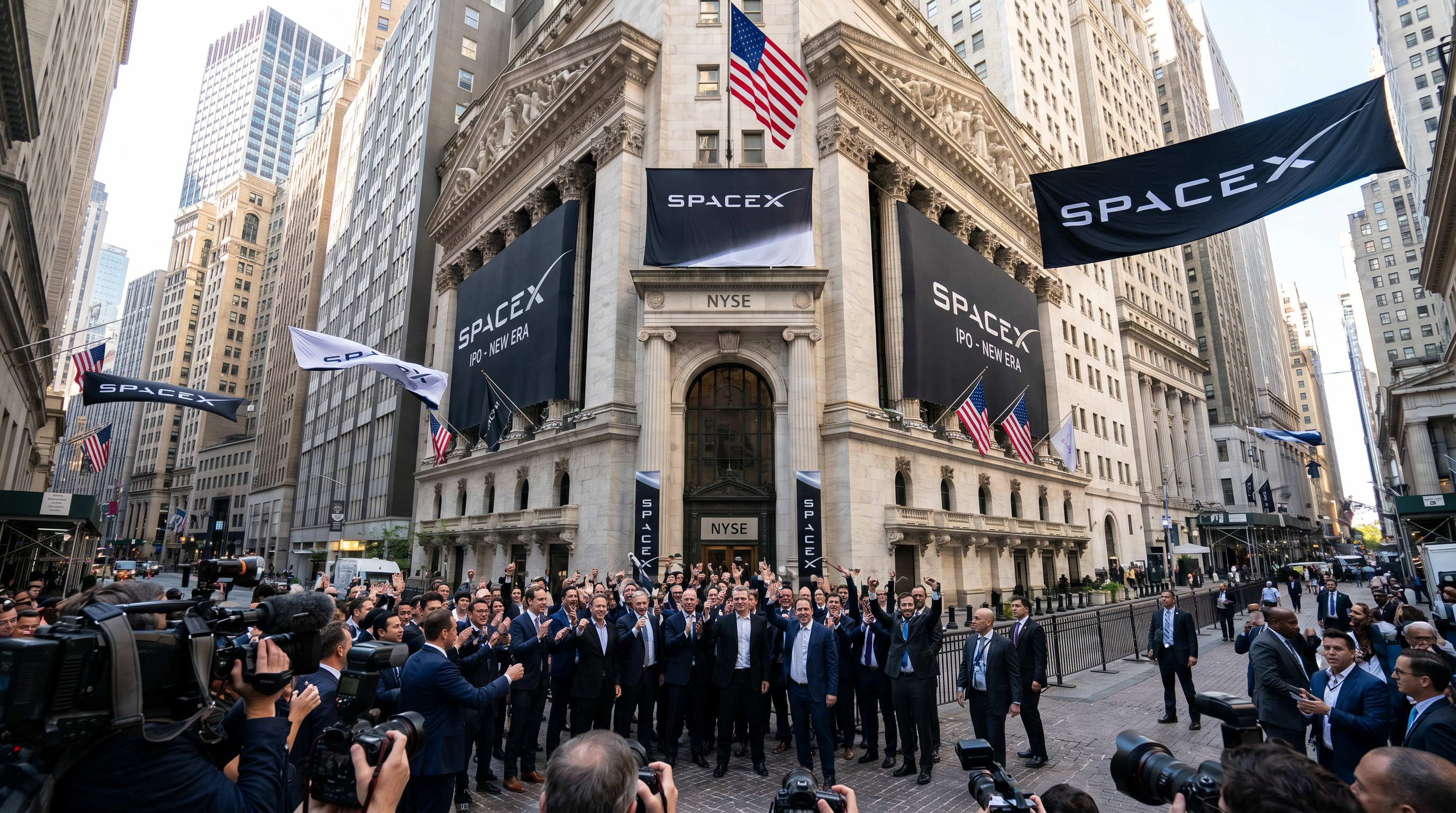
The global financial markets are bracing for a historic opening bell on Friday as SpaceX officially prices its initial public offering at $135 per share, raising a staggering $75 billion.[2][6]
The aerospace giant, founded by Elon Musk, offered 555.6 million shares to the public, cementing its status as the largest public debut in history and easily eclipsing the previous capital-raise records set by Saudi Aramco and Alibaba.[6]
The road to this valuation has been paved by an unprecedented wave of retail enthusiasm, with individual investor orders topping $100 billion before the order books even officially closed.[2]

But beneath the staggering top-line numbers lies a complex financial architecture that is drawing intense scrutiny from Wall Street analysts and Washington lawmakers alike, who question whether the fundamentals support the frenzy.[3][4]
To understand the magnitude of this offering, one must look at the underlying mechanics of the company's sole profitable division: Starlink.[5]
Starlink's constellation of low-Earth orbit satellites currently dominates the global satellite broadband market, providing the reliable cash flow necessary to underwrite SpaceX's more ambitious, capital-intensive projects.[5]
However, industry insiders warn that Starlink's subscriber growth is facing mounting headwinds as the service saturates its early-adopter markets and encounters logistical bottlenecks in terminal production and deployment.[5]

Despite these near-term growth hurdles, institutional investors are largely looking past current profitability metrics, betting instead on a sweeping vision of future space infrastructure.[6]
Financial models circulating among top-tier investment banks suggest that SpaceX's true long-term value lies in unproven but highly lucrative sectors, such as deploying massive data centers in orbit to support artificial intelligence processing.[6]
This speculative premium is precisely what has drawn the ire of market regulators and consumer protection advocates, who worry that retail investors are bearing an outsized share of the risk in an untested frontier market.[4]
Senator Elizabeth Warren has already fired a warning shot across the bow of major financial exchanges, issuing a formal letter demanding answers about the oversight of the listing process.[4]
At the heart of Warren's inquiry are recent, controversial changes to index fund waiting periods, which could force passive retirement accounts to absorb SpaceX shares at their peak initial valuation regardless of underlying financial disclosures.[4]

The sheer gravity of a $75 billion equity injection is also creating ripple effects across the broader economy, acting as a catalyst for a wider market rally in the financial sector.[1]
Bank stocks hit record highs on Thursday, buoyed by the massive underwriting fees generated by the SpaceX deal and renewed optimism that the IPO window has been thrown wide open for other heavily capitalized tech unicorns.[1]
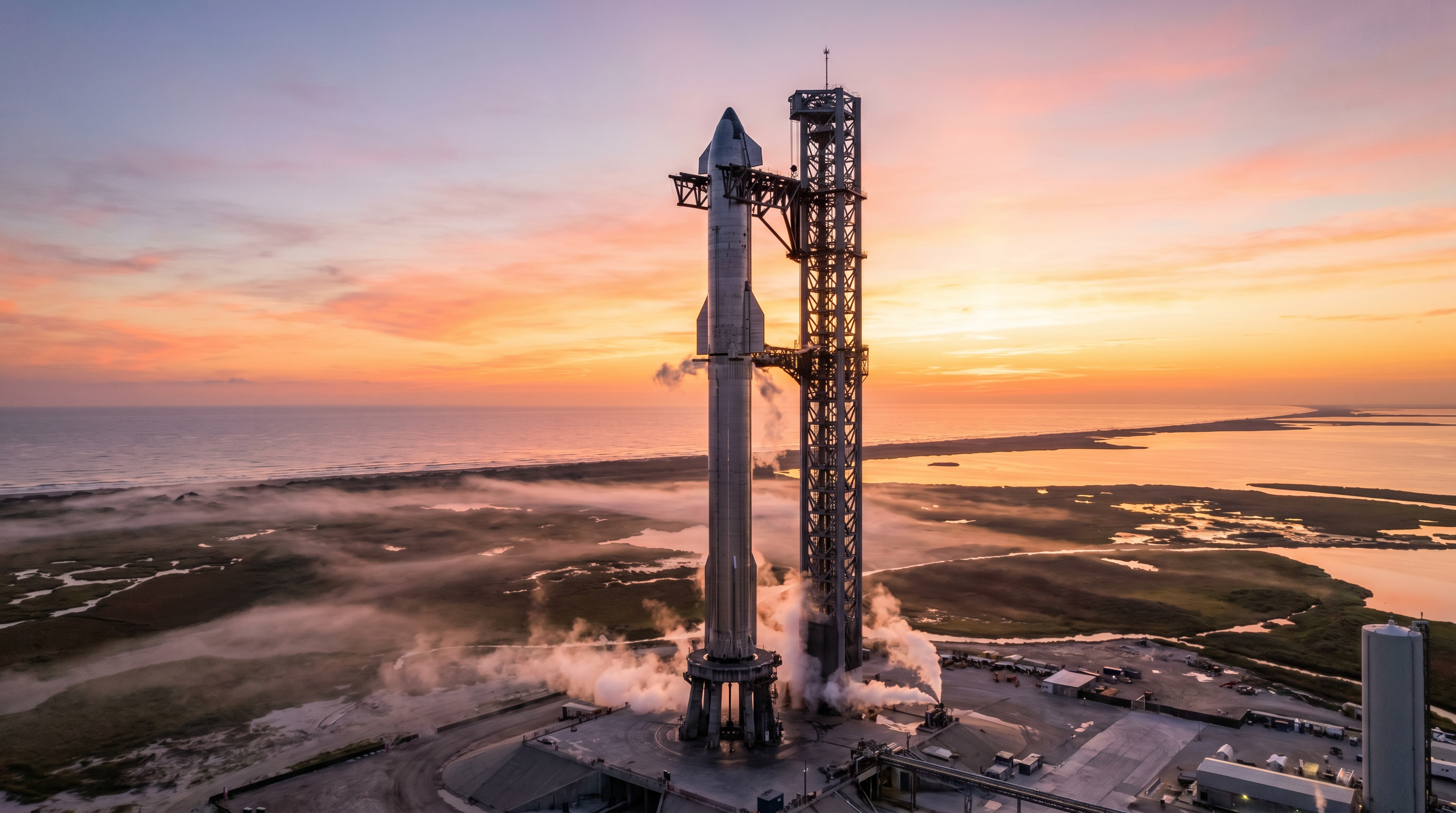
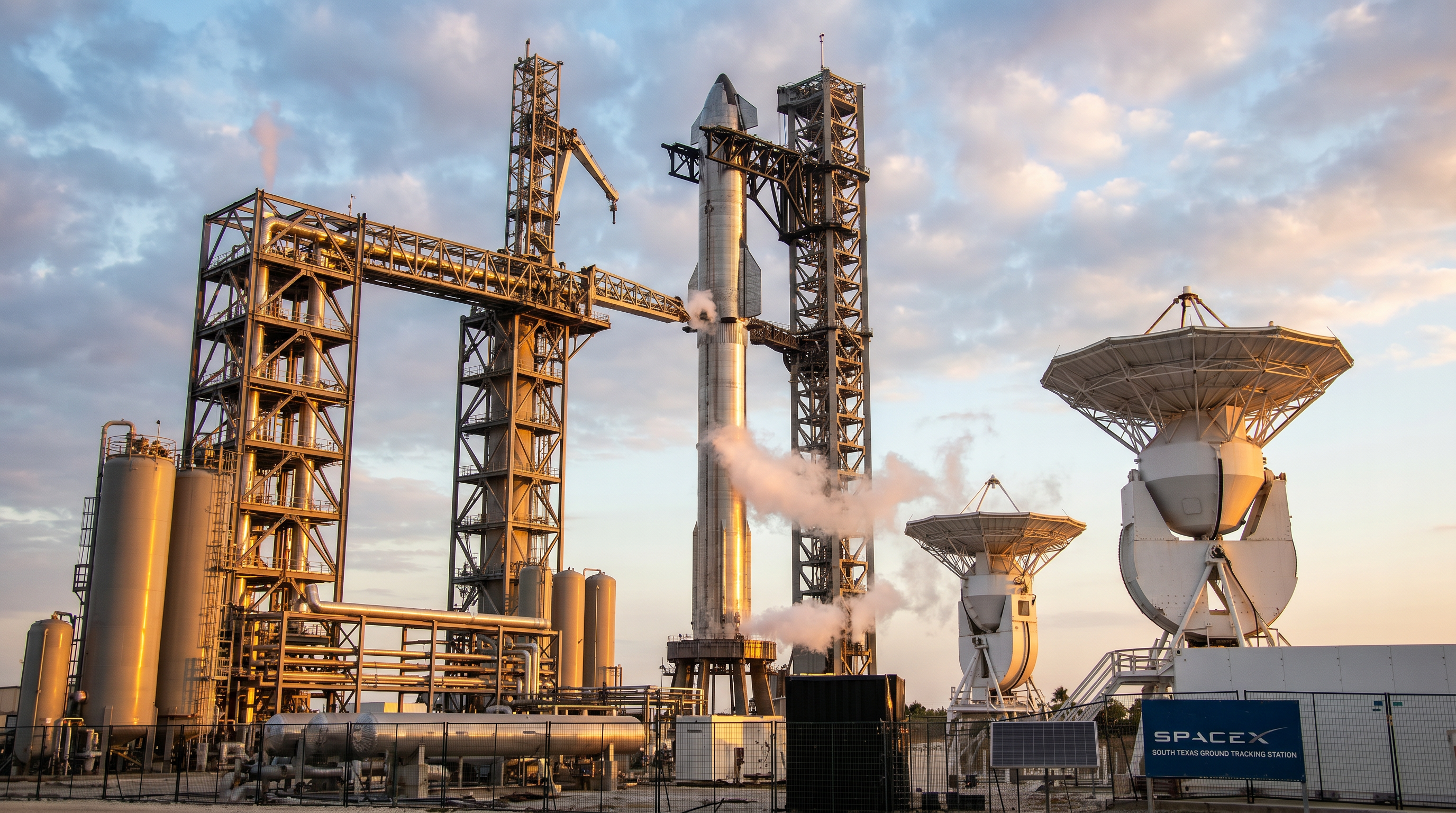
Yet, the core tension remains: SpaceX is effectively asking public markets to fund the colonization of Mars and the development of the next-generation Starship rocket, endeavors that carry unprecedented technical and financial risks.[3]
If Starship experiences prolonged developmental delays, the capital expenditure required to keep the program afloat could rapidly erode the cash reserves generated by the IPO, putting pressure on the stock price.[3][5]

How we got here
Pre-2026
SpaceX relies exclusively on private funding rounds, eventually reaching private valuations well over $150 billion.
Early 2026
Rumors of an IPO accelerate as the Starlink division achieves consistent quarterly profitability.
June 11, 2026
SpaceX officially prices its IPO at $135 per share, raising a record $75 billion.
June 12, 2026
Shares are scheduled to begin trading on the public markets, testing retail and institutional demand.
Viewpoints in depth
Institutional Bulls
Investors who believe SpaceX's valuation is justified by its potential to monopolize future space infrastructure.
This camp argues that traditional valuation metrics do not apply to a company building the foundational infrastructure for the next century of human expansion. They point to Starlink's current dominance in low-Earth orbit as proof of execution, suggesting that future endeavors—such as orbital data centers for AI processing and point-to-point Earth travel—will unlock trillions in total addressable market value.
Regulatory Watchdogs
Lawmakers and consumer advocates concerned about the systemic risks posed by the massive listing.
Regulators, led by figures like Senator Elizabeth Warren, are sounding the alarm over the mechanics of the IPO itself. Their primary concern is that recent changes to index fund inclusion rules will force passive retirement accounts to buy SpaceX shares at peak valuations, effectively transferring the immense risk of deep-space exploration from venture capitalists to everyday retail investors.
Fundamental Skeptics
Financial analysts who warn that the company's cash burn rate could outpace its revenue generation.
Skeptics highlight the precarious balance sheet underlying the hype. While Starlink is profitable, its subscriber growth is becoming harder to maintain as it saturates early markets. Meanwhile, the Starship program requires astronomical capital expenditures. If Starship faces prolonged delays, this camp warns that the $75 billion raised could be burned through faster than anticipated, leading to significant downward pressure on the stock.
What we don't know
- How quickly major index funds will be forced to absorb the newly issued shares.
- Whether Starlink's revenue growth can re-accelerate to offset the massive costs of the Starship program.
- How retail investors will react if the stock experiences high volatility in its first weeks of trading.
Key terms
- Initial Public Offering (IPO)
- The process by which a private company offers shares of its stock to the public for the first time, raising capital from public investors.
- Low-Earth Orbit (LEO)
- An Earth-centered orbit with an altitude of 2,000 km or less, where SpaceX's Starlink satellites operate to provide low-latency internet.
- Index Fund Inclusion
- The process by which a newly public company is added to a major stock market index, forcing passive investment funds to automatically buy its shares.
- Capital Expenditure (CapEx)
- Funds used by a company to acquire, upgrade, and maintain physical assets such as property, industrial buildings, or equipment—in SpaceX's case, rockets and launch pads.
Frequently asked
When do SpaceX shares begin trading?
Shares are scheduled to begin trading on the public markets on Friday, following the Thursday evening pricing.
Why is Senator Elizabeth Warren investigating the IPO?
She has raised concerns over changes to index fund waiting periods and whether retail investors have adequate protections when buying into such a massive, speculative valuation.
Is SpaceX currently a profitable company?
Its Starlink satellite internet division is profitable, but the broader company faces massive capital expenditures for developmental projects like the Starship rocket.
Sources
Source coverage
6 outlets
3 viewpoints surfaced




[1]BloombergGrowth & Innovation Optimists
Bank Stocks Hit Record Highs on US-Iran Deal Hopes, IPO Optimism
Read on Bloomberg →[2]ForbesGrowth & Innovation Optimists
SpaceX Cements Final IPO Price At $135 As Retail Investor Orders Top $100 Billion (Live Updates)
Read on Forbes →[3]NYTFundamental Valuation Skeptics
SpaceX IPO: How Our Reporters Assess the Sky-High Valuation and Potential Economic Impact
Read on NYT →[4]CNBCMarket Regulators & Governance Advocates
Warren questions SpaceX IPO oversight in new letter to exchanges
Read on CNBC →SpaceX is way ahead of competitors with Starlink, but growth is harder heading into IPO
Read on CNBC →SpaceX IPO Raises $75 Billion in Biggest Debut of All Time
Read on Bloomberg →
More in business
See all 27 stories →Executive Talent
The Rise of the Fractional Executive: How Mid-Sized Companies Are Rethinking the C-Suite in 2026
6 sources

SpaceX IPO
SpaceX Prices Record $75 Billion IPO, Reaching $1.77 Trillion Valuation
10 sources
Space Economy
SpaceX Shatters Records With $75 Billion IPO, Reaching $1.77 Trillion Valuation
8 sources
Space Economy
SpaceX Raises $75 Billion in Largest Initial Public Offering in History
10 sources
Every angle. Every day.
Get business stories with full source coverage and perspective breakdowns delivered to your inbox.