
Silicon-Carbon Batteries Hit the Global Market, Promising Multi-Day Smartphone Lifespans
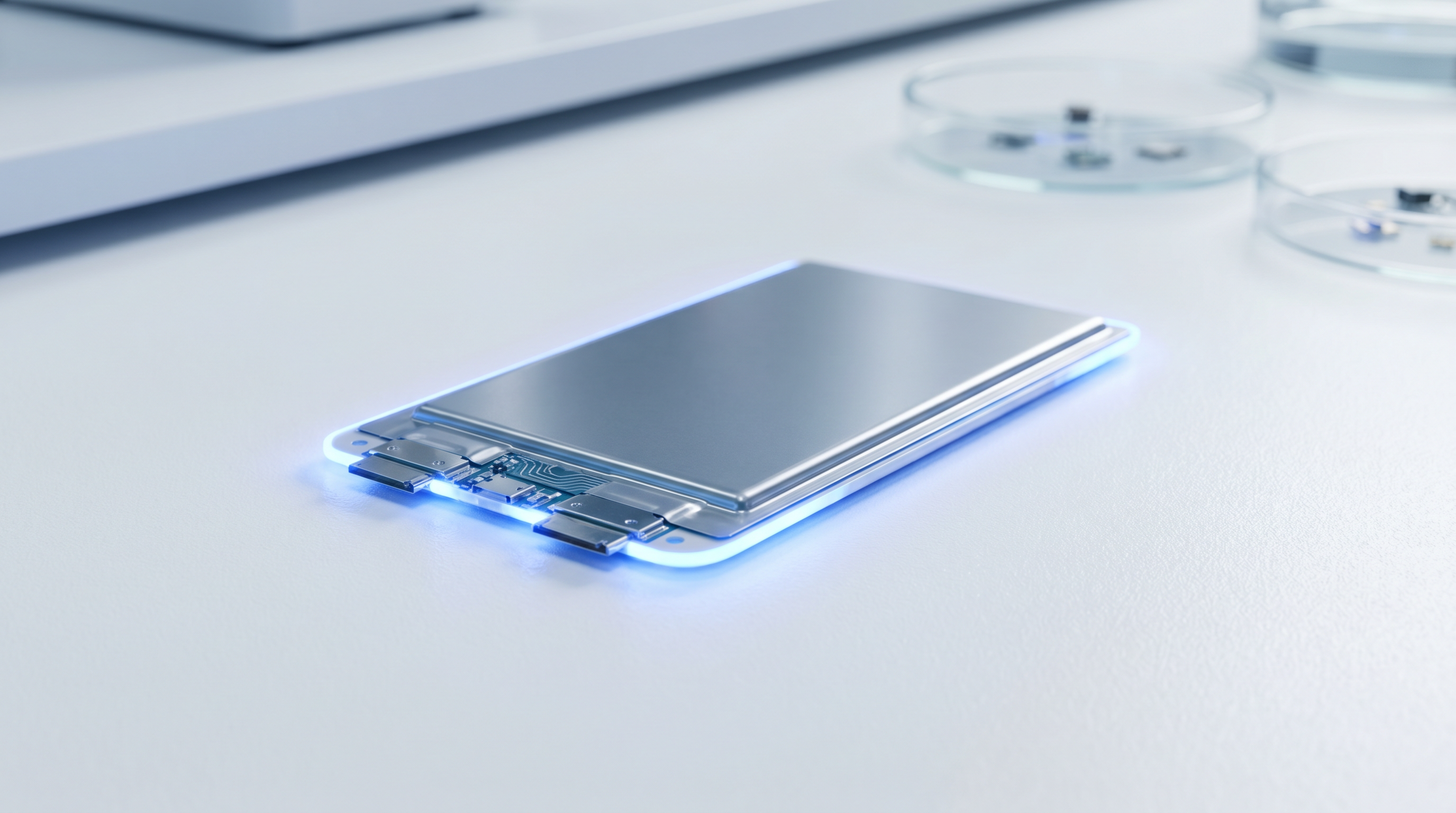
A new generation of high-density silicon-carbon batteries is rolling out to global smartphones in 2026, offering massive capacity upgrades without increasing device thickness. The breakthrough promises to end the era of daily charging for millions of users.
By Factlen Editorial Team
- Battery Technology Pioneers
- Manufacturers pushing the physical limits of energy density to differentiate their hardware.
- Premium Market Incumbents
- Established giants taking a measured approach to new battery chemistry to ensure long-term stability.
- Consumer Tech Analysts
- Reviewers focused on the practical quality-of-life improvements for everyday smartphone users.
What's not represented
- · Environmental Advocates
- · Battery Recycling Industry
Why this matters
For over a decade, smartphone users have been tethered to daily charging routines and battery anxiety. The global rollout of silicon-carbon batteries fundamentally changes this dynamic, offering multi-day lifespans and transforming how we use our most essential devices.
Key points
- Silicon-carbon batteries are rolling out globally in 2026, replacing traditional graphite-anode lithium-ion cells.
- The new chemistry allows for 10% to 20% more energy density without increasing the physical size of the battery.
- Smartphone capacities are jumping from the standard 5,000 mAh to 7,000 mAh and beyond.
- Foldable phones are seeing the most dramatic benefits, finally achieving multi-day battery life despite their thin profiles.
For the better part of a decade, smartphone users have accepted a universal compromise: the more powerful the device, the more frequently it needs to be tethered to a wall. But as the summer of 2026 kicks off, a fundamental shift in mobile hardware is rewriting that rule. A new generation of smartphones is hitting the global market equipped with silicon-carbon batteries, a breakthrough technology that promises to end the era of daily charging and battery anxiety.[1][2]
The core problem with traditional smartphone design has always been physics. Standard lithium-ion batteries, which rely on graphite anodes, have essentially hit their theoretical limit for energy density. To give users more battery life, manufacturers had to make phones thicker and heavier—a trade-off that consumers and designers alike have historically rejected.[2][4]
Silicon-carbon chemistry bypasses this physical bottleneck. By incorporating silicon into the battery's anode, engineers can store significantly more lithium ions in the same physical volume. Silicon has long been known to have a massive capacity for energy storage, but it traditionally swelled and degraded quickly during charging cycles. Recent engineering breakthroughs have stabilized the material, allowing manufacturers to safely include ten to twenty percent silicon in their commercial battery cells.[1][2]

The real-world numbers represent the largest single-generation leap in mobile power in recent history. While the industry standard for flagship smartphones has hovered around 5,000 mAh for years, the new wave of silicon-carbon devices is pushing capacities to 7,000 mAh, with single-cell designs expected to hit an astonishing 9,000 mAh by the end of the year.[2]
Crucially, this massive increase in capacity does not come with a penalty in size. Devices like the newly global Honor Magic series and upcoming releases from Oppo and Xiaomi are packing these massive power reserves into chassis that are just as slim—if not slimmer—than their predecessors.[1][2]
Crucially, this massive increase in capacity does not come with a penalty in size.
The impact of this technology is perhaps most transformative for the foldable smartphone market. Book-style and clamshell foldables have traditionally suffered from compromised battery life due to their incredibly thin individual halves, which left little room for power cells. Silicon-carbon technology is allowing these futuristic devices to finally match, and even exceed, the endurance of standard slab smartphones.[1][3]

Beyond simply holding more power, these high-density batteries are maintaining blistering charging speeds. The latest global variants support 100W wired and 80W wireless charging, meaning that even a massive 7,200 mAh cell can be replenished in a matter of minutes, further eliminating the friction of power management for heavy users.[1]
The push for internal space optimization isn't limited to the battery itself. Across the industry, engineers are developing novel ways to shrink other internal components to make room for these high-capacity cells. Recent breakthroughs, such as the development of microscopic phonon lasers that generate surface acoustic waves, are allowing manufacturers to drastically reduce the footprint of wireless and GPS chips, freeing up precious millimeters for battery volume.[7]

As Chinese manufacturers aggressively push this technology into Western markets, the pressure is mounting on established incumbents. Apple and Samsung, who have historically taken a more conservative approach to battery chemistry, are now facing a market where multi-day battery life is becoming the new baseline expectation rather than a niche luxury.[1][3]
For the everyday consumer, the implications extend far beyond spec sheets. The arrival of reliable, multi-day battery life means the end of carrying bulky power banks, the freedom to utilize power-hungry on-device artificial intelligence features without hesitation, and a fundamental shift in how we rely on our most essential digital tools. The tether has finally been cut.[4]
How we got here
Early 2024
Silicon-carbon batteries are introduced in limited regional releases, primarily in the Chinese domestic market.
Mid 2025
Manufacturers successfully increase the silicon content in battery anodes to 10%, proving the technology's viability for high-capacity cells.
January 2026
Industry analysts predict a massive shift toward silicon-carbon technology for the upcoming year's global smartphone lineup.
June 2026
A wave of new global smartphone releases officially brings 7,000+ mAh silicon-carbon batteries to Western markets.
Viewpoints in depth
Battery Technology Pioneers
Manufacturers pushing the physical limits of energy density to differentiate their hardware.
Companies like Honor, Oppo, and Xiaomi view silicon-carbon chemistry as the ultimate competitive advantage. By replacing traditional graphite anodes with silicon—which can hold significantly more lithium ions—they are achieving unprecedented energy densities. These pioneers argue that hardware innovation must lead the way, proving that consumers do not have to compromise between a sleek device and multi-day battery life.
Premium Market Incumbents
Established giants taking a measured approach to new battery chemistry to ensure long-term stability.
Market leaders like Apple and Samsung have historically been more conservative with battery technology, prioritizing long-term thermal stability and supply chain scale over immediate capacity leaps. While they are actively researching silicon-anode technology, their approach emphasizes rigorous safety testing and gradual integration, ensuring that the new high-density cells do not degrade faster over years of daily charging cycles.
Consumer Tech Analysts
Reviewers focused on the practical quality-of-life improvements for everyday smartphone users.
For technology analysts and consumer advocates, the shift to silicon-carbon is the most significant quality-of-life upgrade in a decade. They note that as smartphones have become primary work and entertainment hubs, battery anxiety has been the biggest friction point. Analysts argue that multi-day battery life will change user behavior, making power banks obsolete and allowing users to fully utilize power-hungry features like on-device AI and high-brightness displays without hesitation.
What we don't know
- It remains unclear exactly when Apple and Samsung will fully transition their flagship devices to high-density silicon-carbon cells.
- The long-term degradation rate of 20% silicon anodes over several years of heavy consumer use is still being monitored in real-world conditions.
Key terms
- Silicon-Carbon Anode
- The negative electrode of a battery that incorporates silicon to hold more lithium ions, drastically increasing energy capacity.
- Energy Density
- The amount of energy a battery can store relative to its physical size or weight.
- mAh (Milliampere-hour)
- A unit of measurement used to describe the energy capacity of a battery; higher numbers indicate longer battery life.
- Phonon Laser
- A microscopic device that generates ultra-fast surface acoustic waves, used to shrink internal wireless components and free up space.
Frequently asked
What is a silicon-carbon battery?
It is a new type of smartphone battery that uses silicon in its anode instead of traditional graphite, allowing it to store significantly more energy in the same physical space.
Will these batteries make phones thicker?
No. The primary advantage of silicon-carbon technology is its high energy density, meaning manufacturers can increase battery capacity without adding bulk or weight to the device.
Are silicon-carbon batteries safe?
Yes. They undergo the same rigorous safety and thermal testing as traditional lithium-ion batteries, though manufacturers have had to develop new engineering techniques to manage silicon's tendency to expand during charging.
When will these phones be available globally?
While initially limited to the Chinese market, smartphones featuring silicon-carbon batteries are seeing a widespread global rollout throughout 2026.
Sources
Source coverage
7 outlets
3 viewpoints surfaced






[1]BGRConsumer Tech Analysts
6 Ways Android Phones Will Change In 2026
Read on BGR →[2]PhoneArenaBattery Technology Pioneers
Battery technology to make big leaps in 2026, as single-cell capacity expected to hit 9,000 mAh
Read on PhoneArena →[3]StuffPremium Market Incumbents
Upcoming phones 2026: release dates and rumors for your next smartphone upgrade
Read on Stuff →[4]Bernard MarrConsumer Tech Analysts
8 Smartphone Trends That Will Shape 2026
Read on Bernard Marr →[5]Mobile VerseBattery Technology Pioneers
Upcoming Smartphones in June 2026
Read on Mobile Verse →[6]Telecom TalkBattery Technology Pioneers
Upcoming Smartphones in June 2026: Xiaomi 17T, Motorola Edge 70 Pro+ and More
Read on Telecom Talk →[7]ScienceDailyConsumer Tech Analysts
Engineers just created a 'phonon laser' that could shrink your next smartphone
Read on ScienceDaily →
More in technology
See all 49 stories →Battery Tech
Solid-State Batteries Move From Lab to Road, Promising 1,000-Kilometer EV Ranges
7 sources
Atmospheric Water Harvesting
Engineers Develop a Wearable Jacket That Harvests Drinking Water Directly From the Air
6 sources

AI Scaffolding
Microsoft and Xiaomi Open-Source Breakthroughs in AI Coding Memory and Skills
8 sources

Materials Science
Engineers Develop a Jacket That Harvests Drinking Water Directly From the Air
6 sources

Every angle. Every day.
Get technology stories with full source coverage and perspective breakdowns delivered to your inbox.