
EV vs. PHEV in 2026: The Complete Cost and Lifestyle Comparison
As battery ranges increase and price gaps narrow, the choice between a pure electric vehicle and a plug-in hybrid comes down to home charging access and long-term maintenance costs.
By Factlen Editorial Team
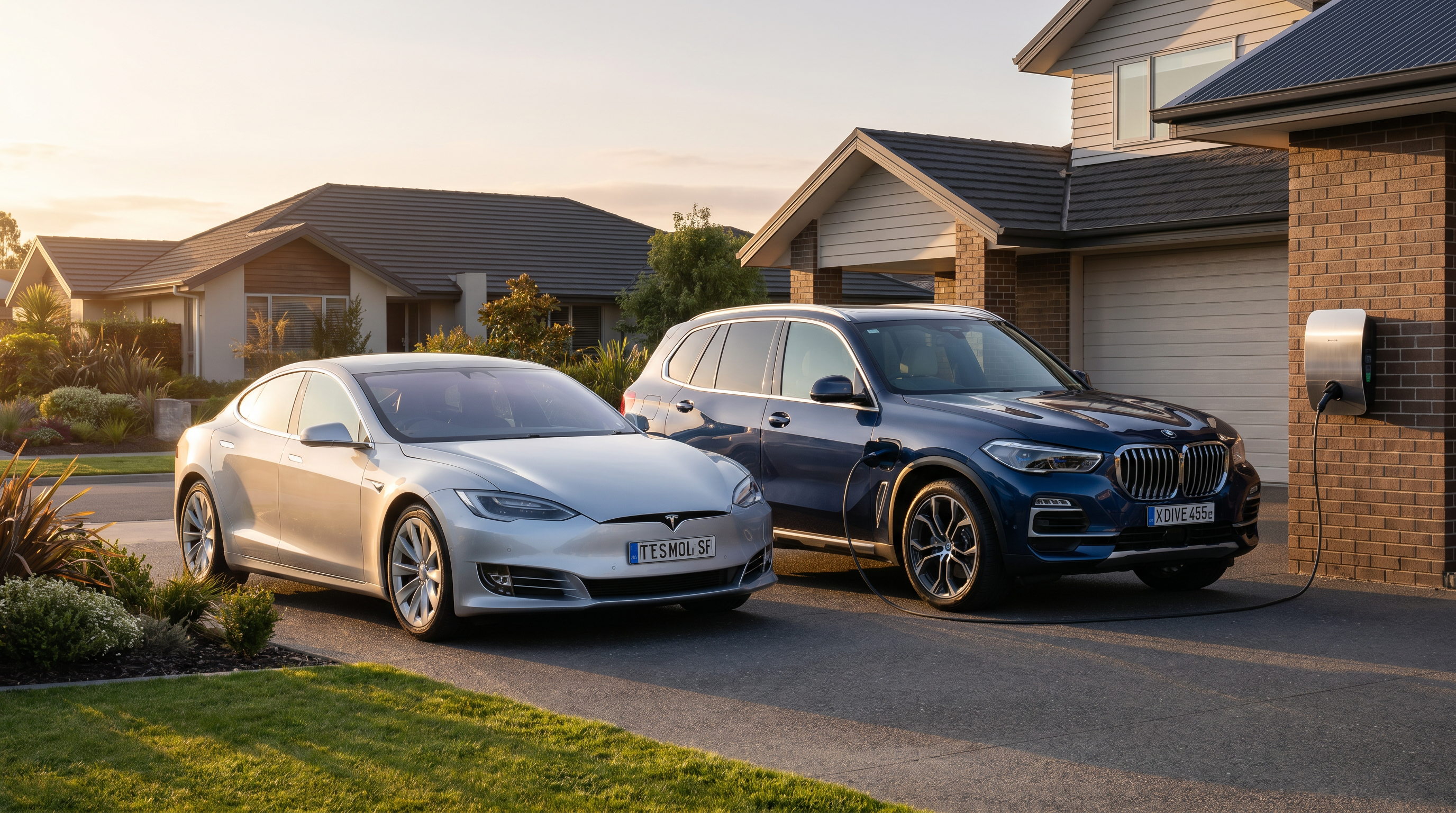
- Pure EV Advocates
- Argue that eliminating the combustion engine entirely is the only way to maximize financial savings and environmental benefits.
- PHEV Pragmatists
- Believe the flexibility of a dual powertrain is necessary until public charging infrastructure matches the convenience of gas stations.
- Total Cost Analysts
- Evaluate vehicles strictly on a 5-year financial horizon, weighing upfront premiums against long-term operational savings.
What's not represented
- · Hydrogen Fuel Cell Advocates
- · Public Transit Planners
Why this matters
Choosing the wrong drivetrain can cost you thousands in unused battery capacity or unexpected maintenance. Understanding the real-world trade-offs ensures your next vehicle matches your actual daily driving habits and financial goals.
Key points
- Pure electric vehicles (BEVs) offer the lowest long-term maintenance costs by eliminating the internal combustion engine entirely.
- Plug-in hybrids (PHEVs) provide 30 to 50 miles of electric range, backed by a gas engine for longer road trips.
- J.D. Power data shows BEV owners report significantly higher satisfaction than PHEV owners, largely due to lower operational costs.
- A PHEV's financial and environmental benefits are entirely dependent on the owner's commitment to plugging it in daily.
For buyers navigating the 2026 automotive market, the transition away from traditional gasoline engines has never offered more compelling choices. Yet, this abundance of options has introduced a new dilemma: whether to commit fully to a Battery Electric Vehicle (BEV) or to bridge the gap with a Plug-in Hybrid Electric Vehicle (PHEV). Both technologies promise to slash daily fuel costs and reduce tailpipe emissions, but they achieve these goals through fundamentally different engineering philosophies. Making the right choice requires looking past the dealership sticker price and examining how each vehicle integrates into a driver's daily routine, charging access, and long-term financial planning.[7]
The core distinction between the two platforms lies in their hardware. A pure electric vehicle relies entirely on a large, high-capacity battery pack and electric motors to drive the wheels, meaning it consumes zero gasoline and produces zero tailpipe emissions. In contrast, a plug-in hybrid houses two distinct powertrains under one chassis. It features a smaller battery pack—typically providing enough energy for 30 to 50 miles of silent, electric-only driving—paired with a traditional internal combustion engine. When the battery is depleted, the gas engine seamlessly takes over, allowing the vehicle to operate like a conventional hybrid for extended journeys.[3][5]
When evaluating the upfront financial commitment, pure electric vehicles historically carried a steep premium. While battery manufacturing costs have plummeted in recent years, narrowing the gap significantly, EVs often still present a higher initial purchase price than their hybrid counterparts. Without specific federal, state, or provincial tax incentives to offset the difference, a PHEV can offer a more accessible entry point into electrified driving. However, automotive economists stress that the sticker price is only the first variable in the total cost of ownership equation, and buyers must project their expenses over a five-year horizon to see the true financial picture.[2][6]

The most immediate financial advantage of electrification is the dramatic reduction in daily energy costs. Charging an EV at home, particularly when utilizing off-peak overnight electricity tariffs, remains the most cost-effective way to power a vehicle in 2026. National averages indicate that EV maintenance and energy costs hover around two to four dollars per hundred miles, significantly undercutting the volatile price of gasoline. For a driver covering 15,000 miles annually, these daily savings compound rapidly, often offsetting a higher initial purchase price within the first three to four years of ownership.[2][4]
However, the economic benefits of a plug-in hybrid are highly conditional on driver behavior. A PHEV only delivers its promised efficiency if it is plugged in and charged daily. Because these vehicles carry the heavy dual burden of a battery pack and a gasoline engine, they are less efficient than standard cars when operating solely on fossil fuels. Industry studies consistently show that when PHEV owners neglect their home charging routines, they are effectively driving a heavier, compromised gas vehicle, entirely wiping out the anticipated fuel savings and environmental benefits.[3][6]
The divergence between the two technologies becomes most apparent in the service bay. Pure electric vehicles are mechanically elegant, operating with a fraction of the moving parts found in a combustion engine. An EV drivetrain contains roughly 20 moving components, completely eliminating the need for routine oil changes, spark plug replacements, engine air filters, and transmission fluid flushes. This mechanical simplicity translates directly to the owner's wallet; data indicates that EV drivers can save up to 50 percent on lifetime repair and maintenance costs compared to those driving traditional gasoline vehicles.[2][4]
The divergence between the two technologies becomes most apparent in the service bay.
Conversely, a plug-in hybrid is arguably the most mechanically complex vehicle available to consumers today. Because it houses both an advanced electric propulsion system and a complete internal combustion engine, owners are responsible for maintaining two entirely separate drivetrains. The gasoline engine still requires regular oil changes and fluid maintenance, while the high-voltage battery system adds its own layer of diagnostic complexity. Over a five-year ownership period, the compounded maintenance requirements of a PHEV often make it the more expensive vehicle to keep on the road.[5][7]
This disparity in long-term ownership costs is clearly reflected in real-world driver satisfaction. According to J.D. Power’s 2026 U.S. Electric Vehicle Experience Ownership Study, pure electric vehicles consistently outscore plug-in hybrids across key satisfaction metrics. The data reveals that premium BEV owners reported satisfaction scores 114 points higher than their PHEV counterparts, while mass-market BEVs outperformed PHEVs by 117 points. Researchers noted that this satisfaction gap is driven largely by the sheer convenience of avoiding the mechanic and the predictable, lower cost of daily operation that pure EVs provide.[1]

Despite the clear financial and mechanical advantages of pure EVs, the plug-in hybrid remains highly relevant due to the realities of public infrastructure. While charging networks have expanded exponentially, range anxiety continues to be a psychological hurdle for many buyers. For drivers who frequently embark on spontaneous 500-mile road trips, tow heavy loads, or travel through rural corridors where fast-charging stations are sparse, relying entirely on public infrastructure can still require meticulous route planning and longer travel times.[3][6]
In these scenarios, the plug-in hybrid serves as the ultimate automotive safety net. It offers the best of both worlds: the ability to complete daily commutes, grocery runs, and school drop-offs on cheap, silent electricity, combined with the absolute freedom of a gasoline engine for weekend adventures. A PHEV driver never has to worry about a broken public charger or waiting in line at a highway rest stop; when the battery runs dry, they simply pull into any gas station and refuel in five minutes.[5][6]

Looking toward the end of the ownership cycle, depreciation and future-proofing play a crucial role in the financial calculus. As global cities increasingly implement zero-emission zones and governments mandate the phase-out of internal combustion engines, pure electric vehicles are holding their value remarkably well in the secondary market. PHEVs, while cleaner than traditional cars, still rely on fossil fuels and emit tailpipe carbon, meaning they may eventually face the same urban restrictions and accelerated depreciation curves as standard gasoline vehicles.[2][7]
From a purely environmental standpoint, the lifecycle emissions of the two platforms also differ significantly. Over a 15-year lifespan, a pure electric vehicle produces substantially less carbon than a PHEV, even when accounting for the energy-intensive process of manufacturing a larger battery pack. Because a PHEV's real-world emissions depend entirely on how often the owner chooses to plug it in, their actual environmental impact often falls short of laboratory estimates, making pure EVs the definitive choice for buyers prioritizing ecological sustainability.[7]

Ultimately, the decision comes down to a clear set of lifestyle conditions. A pure electric vehicle is the definitive winner—and the smartest financial choice—if you have reliable access to overnight home charging, drive predictable daily routes, and want to minimize your lifetime maintenance costs. For the average commuter who can wake up every morning with a 'full tank' of cheap electricity, the EV offers an unmatched combination of driving dynamics, mechanical reliability, and long-term savings.[6][7]
Conversely, a plug-in hybrid is the ideal solution for a very specific driver profile. It fits perfectly for apartment dwellers who want to experience electric driving but lack dedicated home charging, or for single-car households that regularly drive long distances into areas with poor infrastructure. However, a PHEV is a poor fit for buyers who do not intend to plug it in daily; without regular charging, the dual powertrains become an expensive, heavy liability rather than a versatile asset.[3][6]
How we got here
1997
Toyota introduces the Prius, bringing hybrid technology to the mass market and laying the groundwork for electrification.
2010
The Nissan Leaf and Chevrolet Volt launch, offering consumers the first modern choices between pure electric and plug-in hybrid powertrains.
2020
Advancements in lithium-ion battery density push average EV ranges past the 250-mile mark, reducing everyday range anxiety.
2026
Electric vehicles achieve near-parity in total cost of ownership with combustion vehicles, driven by lower maintenance and fuel costs.
Viewpoints in depth
Pure EV Advocates
Focus on zero emissions, mechanical simplicity, and long-term financial savings.
This camp argues that the internal combustion engine is obsolete technology. By eliminating the gas engine entirely, drivers avoid the compounding costs of oil changes, transmission repairs, and volatile fuel prices. They emphasize that with the rapid expansion of fast-charging networks and the convenience of waking up to a fully charged battery at home, the 'range anxiety' that once justified plug-in hybrids is no longer a valid concern for the vast majority of daily driving.
PHEV Pragmatists
Value the safety net of a gas engine for road trips and underdeveloped charging infrastructure.
Pragmatists view the plug-in hybrid as the perfect transitional vehicle. They point out that while public charging infrastructure is improving, it can still be unreliable or inconvenient during long road trips or in rural areas. By utilizing a PHEV, drivers can achieve zero-emission commuting for 90% of their daily needs while retaining the absolute freedom to refuel at any gas station in five minutes when traveling cross-country.
Total Cost Analysts
Focus purely on the 5-year financial math, depreciation, and upfront premiums.
Financial analysts look past the environmental arguments and focus strictly on the spreadsheet. They note that while EVs offer lower running costs, their higher upfront purchase price can take years to recoup without aggressive tax incentives. This camp advises buyers to meticulously calculate their annual mileage and local electricity rates, warning that a PHEV can actually be the more expensive option if the owner fails to plug it in daily and relies solely on the less-efficient gas engine.
What we don't know
- How rapidly the secondary market will depreciate aging plug-in hybrids as more cities implement zero-emission zones.
- Whether upcoming advancements in solid-state batteries will render the transitional PHEV platform obsolete before the end of the decade.
Key terms
- BEV (Battery Electric Vehicle)
- A vehicle powered entirely by a battery pack and electric motors, producing zero tailpipe emissions.
- PHEV (Plug-in Hybrid Electric Vehicle)
- A vehicle with both an electric motor and a gasoline engine, capable of driving short distances on electricity before switching to gas.
- Internal Combustion Engine (ICE)
- A traditional vehicle engine that generates power by burning fossil fuels like gasoline or diesel.
- Level 2 Charging
- A home or public charging standard that uses a 240-volt outlet to fully recharge an EV battery overnight.
- Regenerative Braking
- A system that captures the kinetic energy normally lost during braking and uses it to recharge the vehicle's battery.
Frequently asked
Do I have to plug in a PHEV for it to work?
No, a PHEV will operate normally on gasoline if the battery is depleted. However, failing to plug it in negates its fuel savings and makes it less efficient than a standard car.
Are electric cars really cheaper to maintain?
Yes. Because EVs lack an internal combustion engine, they do not require oil changes, spark plugs, or transmission servicing, saving owners up to 50% on lifetime maintenance.
How far can a PHEV drive on electricity alone?
Most 2026 plug-in hybrids offer an electric-only range of 30 to 50 miles, which is sufficient to cover the average daily commute before the gas engine engages.
Which vehicle holds its value better?
Currently, pure electric vehicles from reputable brands are experiencing stronger resale values, as global markets increasingly shift toward zero-emission zones and phase out combustion engines.
Sources
Source coverage
7 outlets
3 viewpoints surfaced







[1]J.D. PowerPure EV Advocates
U.S. Electric Vehicle Experience (EVX) Ownership Study
Read on J.D. Power →[2]Clean Fleet ReportTotal Cost Analysts
PHEV vs EV Total Cost of Ownership 2026
Read on Clean Fleet Report →[3]GreenCarsPHEV Pragmatists
Range Basics for EVs, Hybrids, and Hydrogen Vehicles
Read on GreenCars →[4]FinanceBuzzPure EV Advocates
Electric Car Maintenance Costs vs. Gas Cars
Read on FinanceBuzz →[5]ZenithPHEV Pragmatists
EV and PHEV comparison: Which is right for you?
Read on Zenith →[6]CarzingPHEV Pragmatists
The honest case for a hybrid in 2026
Read on Carzing →[7]Factlen Editorial TeamPure EV Advocates
Synthesis by Factlen editorial team
Read on Factlen Editorial Team →

More in shopping
See all 52 stories →E-Bike Tech
The 2026 E-Bike Buying Guide: Motors, Batteries, and Finding Your Perfect Ride
8 sources

E-Bike Tech
The 2026 E-Bike Buying Guide: Motors, Batteries, and the New Safety Rules
8 sources

Audio Tech
Solid-State MEMS Speakers Are Replacing Traditional Headphone Drivers
7 sources
Nursery Tech
Smart Bassinets vs. Traditional Sleepers: The Complete Trade-Off Analysis
8 sources

Every angle. Every day.
Get shopping stories with full source coverage and perspective breakdowns delivered to your inbox.