
The 2026 E-Bike Buying Guide: Motors, Batteries, and Finding Your Perfect Ride
As electric bikes replace cars for millions of commuters, choosing the right model comes down to understanding motor types, battery safety certifications, and your daily route.
By Factlen Editorial Team
- Urban Commuters
- Prioritize simplicity, low maintenance, and affordability for flat city routes.
- Performance & Cargo Riders
- Demand high torque, mid-drive efficiency, and premium components for hills and heavy loads.
- Safety Regulators
- Focus on eliminating fire risks through mandatory UL certifications and strict battery testing.
What's not represented
- · Local bike shop mechanics who handle the long-term maintenance
- · Pedestrian advocates concerned about e-bike speeds on shared paths
Why this matters
Buying the wrong e-bike can mean struggling up hills, facing expensive proprietary repairs, or risking a dangerous battery fire. Understanding the core technology ensures you invest in a safe, capable machine that actually fits your lifestyle and replaces car trips.
Key points
- Mid-drive motors use the bike's gears and are essential for steep hills and heavy cargo.
- Hub motors are simpler, more affordable, and ideal for flat city commuting.
- Battery capacity is measured in Watt-hours (Wh); 500 Wh is standard for mixed riding.
- UL 2849 certification is critical to ensure the battery and electrical system are safe from fire risks.
- Torque sensors provide a smoother, more natural riding feel compared to basic cadence sensors.
Electric bikes are the fastest-growing segment of cycling in 2026. They are replacing cars for short trips, flattening intimidating hills, and making daily commuting entirely sweat-free. But as the market floods with countless new brands and models, buying the wrong bike can lead to mechanical frustration or severe safety risks. Navigating the modern e-bike landscape requires understanding a few core technologies.[1]
The heart of any electric bike is its motor, and the first major decision a buyer faces is choosing between a hub motor and a mid-drive motor. This single choice dictates how the bike handles, how efficiently it climbs, and how much maintenance the drivetrain will require over its lifespan.[7]
Hub motors are the simpler and more affordable option, typically housed directly in the center of the rear wheel. Because they push the bike forward from the axle, they operate completely independently of the bicycle's gears. This makes them incredibly straightforward to use and significantly reduces wear and tear on the chain and cassette.[7]
For riders whose daily routes consist of flat city streets, paved bike paths, or casual neighborhood cruising, a hub motor is often the perfect fit. They provide a zippy, "pushed" feeling that requires very little thought to operate, and they dominate the budget, folding, and entry-level commuter e-bike categories.[5][7]

However, hub motors have a significant mechanical limitation: they only possess one gear ratio. When faced with steep hills or heavy cargo, a hub motor cannot downshift. It must draw substantially more current from the battery to muscle up the incline, which can drain the battery quickly or cause the motor to overheat on sustained climbs.[7]
Enter the mid-drive motor. Positioned at the bottom bracket between the pedals, a mid-drive motor powers the bike's chain directly rather than the wheel. This crucial design difference allows the motor to leverage the bicycle's mechanical gears, exactly the same way the human rider does.[7]
When you shift into an easier gear to climb a 15 percent grade, the mid-drive motor also gets the mechanical advantage of that easier gear. This makes mid-drives exponentially more efficient on steep terrain, allowing them to produce massive torque—often between 70 and 120 Newton-meters—without rapidly draining the battery.[7]
When you shift into an easier gear to climb a 15 percent grade, the mid-drive motor also gets the mechanical advantage of that easier gear.
Mid-drives also keep the bike's weight low and centered, resulting in superior balance and handling. This is why almost all premium electric mountain bikes and heavy-duty cargo haulers rely on mid-drive systems. The trade-off is a higher upfront cost and increased wear on the chain and gears, requiring more frequent drivetrain maintenance.[2][7]

Beyond the motor's location, how it delivers power is dictated by its internal sensors. Cadence sensors, common on budget bikes, act like an on/off switch: once you start pedaling, the motor kicks in at a set speed. Torque sensors, found on mid-range and premium models, measure exactly how hard you are pushing the pedals and amplify that specific effort, resulting in a much smoother, more natural riding experience.[1]
Powering these motors is the lithium-ion battery, the most expensive and critical component of the bike. Capacity is measured in Watt-hours (Wh). A standard 400 to 500 Wh battery is sufficient for 20 to 30 miles of mixed riding, while 600 to 750 Wh packs are better suited for long commutes or cargo hauling.[1]
But in 2026, battery capacity is entirely secondary to battery safety. The rapid proliferation of cheap, uncertified e-bikes has led to a sharp increase in thermal runaway events—uncontrollable, self-heating battery fires that are notoriously difficult for fire departments to extinguish.[8]
The U.S. Consumer Product Safety Commission has issued stark warnings about substandard lithium-ion packs, noting that destructive testing of uncertified aftermarket batteries often reveals internal degradation, lithium plating, and a complete lack of thermal safeguards.[3]
To protect consumers, safety advocates and regulators are pushing for mandatory federal standards. In the meantime, the golden rule for 2026 buyers is to insist on UL certification. Specifically, UL 2849 certifies the safety of the entire electrical system—including the bike, battery, and charger—while UL 2271 covers the battery pack itself.[4][8]

A UL sticker guarantees that the battery management system has been rigorously tested to prevent overcharging, overheating, and short-circuiting. Buying an e-bike without these certifications is a gamble that safety experts and fire officials universally advise against.[4]
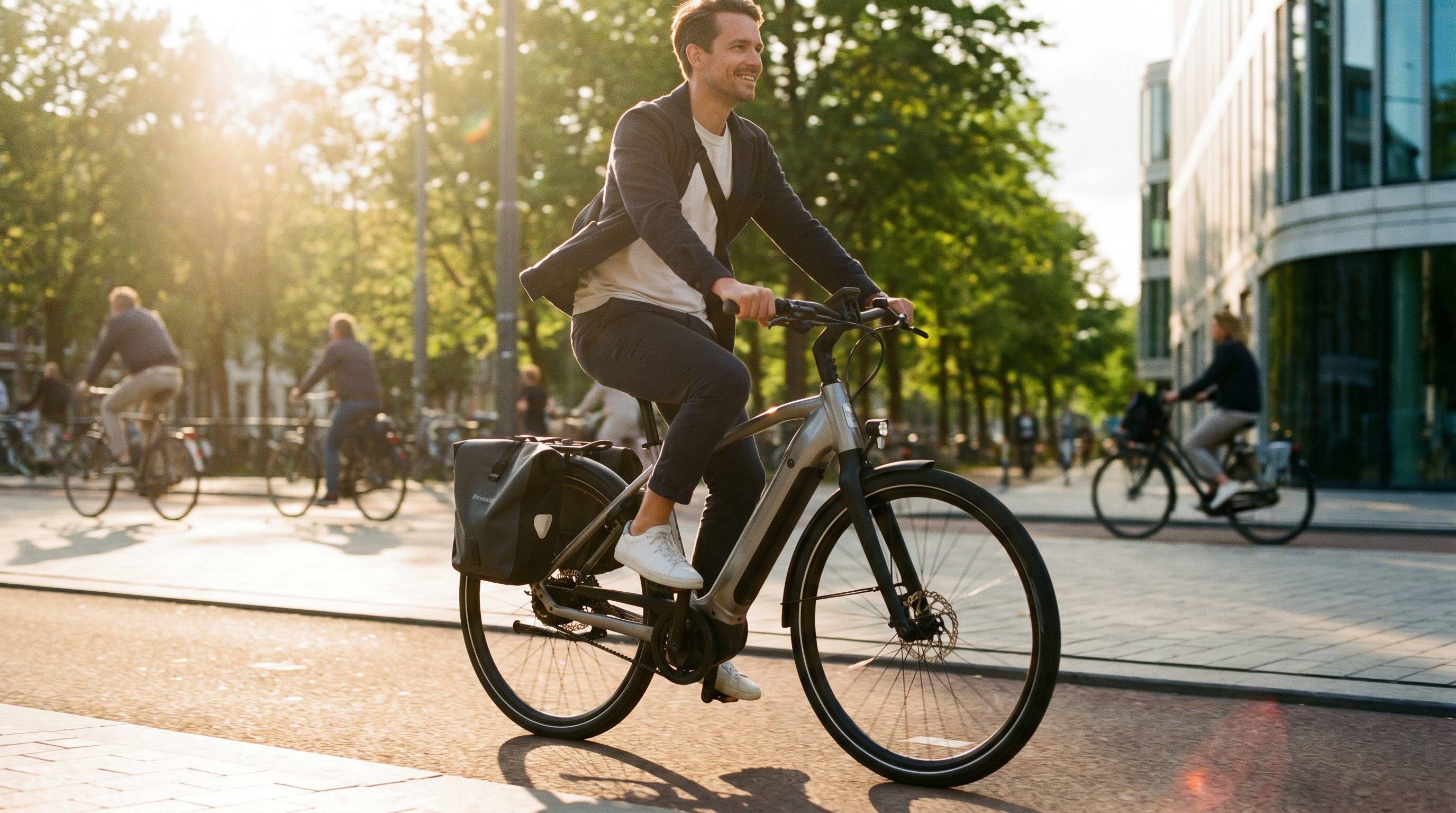
Finally, buyers must match the bike's geometry and features to their specific needs. Daily commuters should look for integrated lights, fenders, and rear racks, often found on step-through frames that accommodate work clothing. Cargo bikes require extended wheelbases and high payload capacities, while folding bikes prioritize compact storage for apartment dwellers.[2][5][6]

Ultimately, the best e-bike is one that can be reliably serviced. While direct-to-consumer budget bikes are tempting, they often use proprietary electronic parts that local bike shops cannot repair. Investing in a bike with a recognized motor system ensures access to firmware updates, replacement parts, and professional support for years to come.[1][6]
Viewpoints in depth
Urban Commuters
Prioritize simplicity, low maintenance, and affordability for flat city routes.
For riders navigating flat city grids, the e-bike is primarily a utility vehicle meant to replace a car or subway ride. This camp favors hub motors because they are inexpensive, require very little maintenance, and don't put extra strain on the bike's chain. Commuters also prioritize practical features over raw performance, seeking out step-through frames that accommodate work clothing, integrated lighting for night riding, and pre-installed racks for carrying laptops or groceries.
Performance & Cargo Riders
Demand high torque, mid-drive efficiency, and premium components for hills and heavy loads.
Riders who live in hilly areas, haul children, or tackle off-road trails view hub motors as insufficient. This perspective argues that a mid-drive motor is non-negotiable because it leverages the bike's mechanical gears, allowing the motor to spin efficiently even when the bike is moving slowly up a steep grade. While they accept the higher upfront cost and increased drivetrain wear, they value the superior balance, natural ride feel, and massive torque that only a mid-drive system can provide.
Safety Regulators
Focus on eliminating fire risks through mandatory UL certifications and strict battery testing.
Organizations like the Consumer Product Safety Commission and UL Standards & Engagement view the e-bike market primarily through the lens of fire safety. Alarmed by the rise in thermal runaway events caused by cheap, uncertified lithium-ion batteries, this camp advocates for strict federal mandates. They argue that consumers cannot visually assess battery quality, making third-party certifications like UL 2849 the only reliable way to ensure a battery management system will prevent catastrophic overheating or overcharging.
What we don't know
- Whether the U.S. Congress will pass pending legislation to make UL certification mandatory for all e-bikes sold federally.
- How quickly solid-state battery technology will become affordable enough to replace current lithium-ion packs in consumer e-bikes.
Key terms
- Watt-hour (Wh)
- A measurement of battery capacity; higher numbers mean a larger
- Torque (Nm)
- Rotational force measured in Newton-meters; higher torque means better hill-climbing ability and faster acceleration.
- Mid-Drive Motor
- An electric motor positioned at the bike's pedals that powers the chain and utilizes the bike's mechanical gears.
- Hub Motor
- An electric motor housed directly in the center of the front or rear wheel that pushes the bike independently of its gears.
- UL 2849
- A rigorous safety certification standard specifically designed for e-bike electrical systems, batteries, and chargers.
- Thermal Runaway
- An uncontrollable, self-heating state in a damaged or poorly manufactured lithium-ion battery that leads to fire.
Frequently asked
How much should I spend on a reliable e-bike?
Quality entry-level commuter e-bikes typically start around $1,000 to $1,500. Premium mid-drive models and heavy-duty cargo bikes range from $2,500 to over $5,000.
How long do e-bike batteries last?
A high-quality lithium-ion battery should last between 500 and 1,000 full charge cycles before experiencing significant capacity degradation, which translates to several years of regular use.
Can I ride an electric bike in the rain?
Yes, most modern e-bikes from reputable brands are highly water-resistant and designed to be ridden in the rain, though they should never be fully submerged in water.
What is the difference between Class 1, 2, and 3 e-bikes?
Class 1 provides pedal assistance up to 20 mph; Class 2 includes a throttle up to 20 mph; and Class 3 provides pedal assistance up to 28 mph.
Sources
Source coverage
8 outlets
3 viewpoints surfaced








[1]Factlen Editorial TeamUrban Commuters
Synthesis by Factlen editorial team
Read on Factlen Editorial Team →[2]BicyclingPerformance & Cargo Riders
The Best E-Bikes for Every Type of Rider
Read on Bicycling →[3]U.S. Consumer Product Safety CommissionSafety Regulators
CPSC Warns Consumers About Uncertified E-Bike Batteries
Read on U.S. Consumer Product Safety Commission →[4]PeopleForBikesSafety Regulators
Federal Safety Standards for Lithium-Ion Batteries in E-Bikes
Read on PeopleForBikes →[5]OutdoorGearLabUrban Commuters
Best Electric Bikes of 2026
Read on OutdoorGearLab →[6]Cycling WeeklyUrban Commuters
Best electric bikes 2026: Our experts top-rated ebikes
Read on Cycling Weekly →[7]EVELOPerformance & Cargo Riders
Mid-Drive vs. Hub Motor E-Bikes: Which is Better?
Read on EVELO →[8]UL Standards & EngagementSafety Regulators
E-Mobility Safety Standards and Battery Risks
Read on UL Standards & Engagement →
More in shopping
See all 54 stories →Luggage Choice
Travel Backpack vs. Rolling Carry-On: Which Luggage Fits Your Trip?
7 sources

Summer Sales
The 2026 Summer Retail Price War: Amazon, Walmart, and Target Launch Massive June Sales Events
7 sources

EV Transition
EV vs. PHEV in 2026: The Complete Cost and Lifestyle Comparison
7 sources
E-Bike Tech
The 2026 E-Bike Buying Guide: Motors, Batteries, and the New Safety Rules
8 sources
Every angle. Every day.
Get shopping stories with full source coverage and perspective breakdowns delivered to your inbox.