
Trump Announces 'Great Settlement' to End US-Iran War, Canceling Planned Strikes
President Donald Trump announced a tentative peace agreement with Iran, halting imminent US military strikes, though Iranian officials caution that a final deal has not yet been signed.
By Factlen Editorial Team
- US Administration
- Views the tentative deal as a historic victory achieved through the credible threat of overwhelming military force.
- Iranian Government
- Projects caution, emphasizing that red lines remain intact and no final capitulation has occurred.
- Regional Observers
- Expresses a mix of relief over de-escalation and skepticism regarding the deal's long-term viability.
What's not represented
- · Global energy market analysts assessing the immediate impact on oil prices.
- · European Union diplomats who may host the upcoming signing ceremony.
Why this matters
A finalized peace agreement would end months of direct military confrontation between the US and Iran, stabilizing global energy markets and reopening the critical Strait of Hormuz. However, if the deal falls through, the US has threatened to seize Iran's primary oil export infrastructure, which could trigger a massive regional escalation.
Key points
- President Trump canceled imminent military strikes against Iran, citing a newly reached 'great settlement.'
- The tentative deal reportedly includes a conceptual agreement to permanently halt Iran's nuclear weapons program.
- A formal signing ceremony could take place in Europe this weekend, with VP JD Vance attending.
- Iranian officials caution that while the text is largely finalized, no definitive decision has been made.
- The US naval blockade of the Strait of Hormuz will remain active until the documents are signed.
- The breakthrough follows days of escalating military exchanges, including Iranian strikes on US bases in the Gulf.
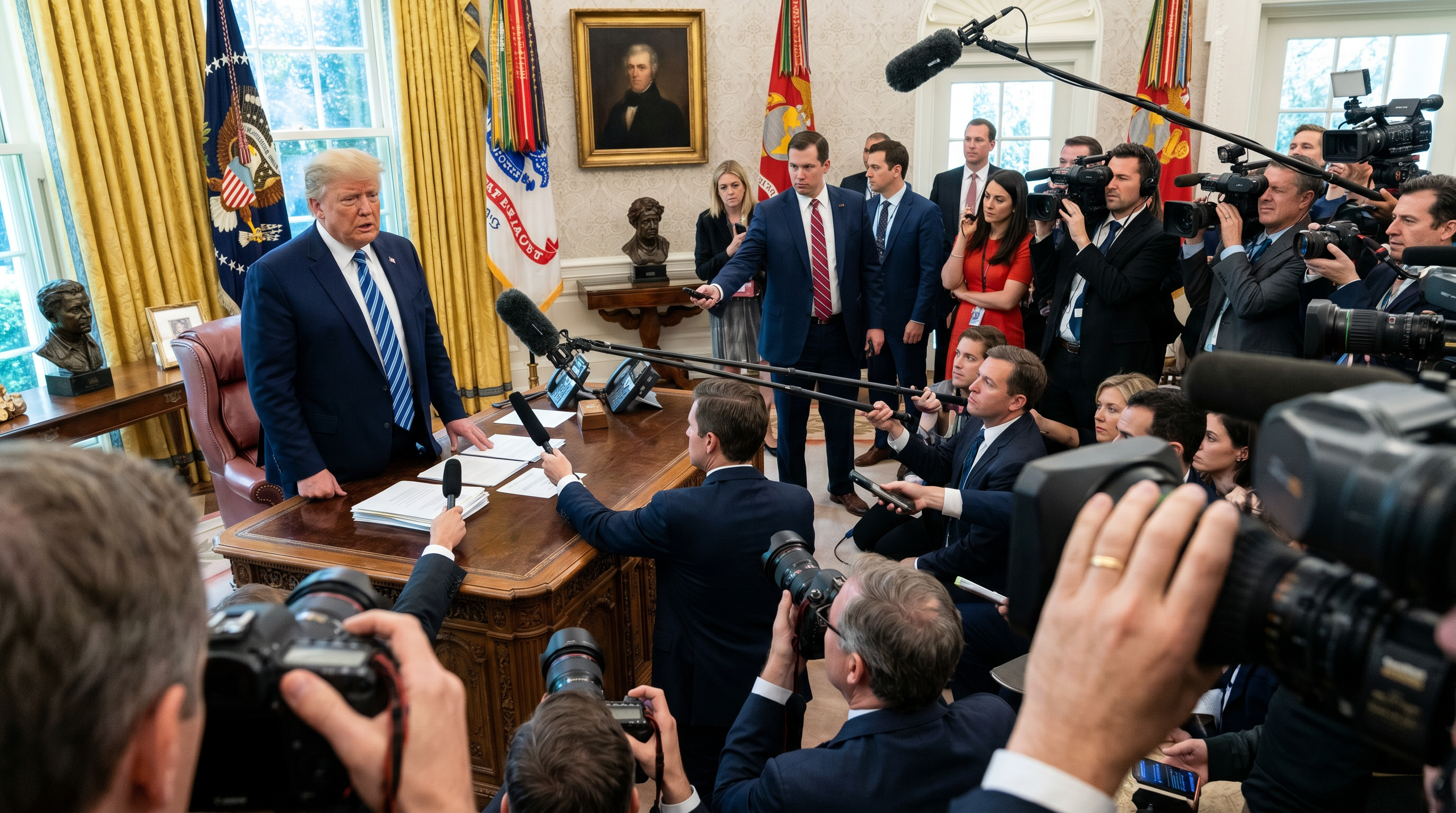
President Donald Trump announced on Thursday that the United States and Iran have reached a "great settlement" to end their ongoing military conflict, abruptly canceling a wave of planned US airstrikes. Speaking from the Oval Office and posting on Truth Social, Trump declared that the agreement had been approved "in both concept and great detail" by all involved parties, including Iranian Supreme Leader Mojtaba Khamenei.[1][2][3]
The announcement marks a potential turning point in a war that has severely disrupted global shipping and energy markets. According to the White House, the deal conceptually resolves the issue of Iran's nuclear program, with Trump asserting that the agreement ensures Tehran "will never have a nuclear weapon." A formal signing ceremony is tentatively scheduled for this weekend in Europe, with Vice President JD Vance expected to lead the US delegation.[1][3][4]
However, the certainty of the deal remains contested. While the US administration projects that the agreement is in its final stages, Iranian officials have offered a more measured assessment. Foreign Ministry spokesman Esmaeil Baghaei stated that while a large portion of the negotiating text has been finalized, Tehran has not yet reached a final conclusion. Baghaei emphasized that Iran will not compromise on its established "red lines" and characterized reports of an imminent signing ceremony as speculative.[5][6][7]

The diplomatic breakthrough follows a period of intense whiplash. Just hours before announcing the settlement, Trump had threatened to hit Iran "very hard" and warned that the US military would seize Kharg Island—Iran's primary oil export terminal in the Persian Gulf—and assume total control of the country's oil and gas markets. He compared the proposed seizure to recent US actions in Venezuela.[2][8]
That aggressive posture shifted rapidly. In a subsequent interview with Fox News, Trump admitted that while taking Kharg Island was his preference, he was unsure if the American public had the "appetite" for such a massive escalation. By Thursday evening, the planned strikes were officially called off, with the administration citing the sudden progress in negotiations brokered by regional partners.[1][3]
By Thursday evening, the planned strikes were officially called off, with the administration citing the sudden progress in negotiations brokered by regional partners.
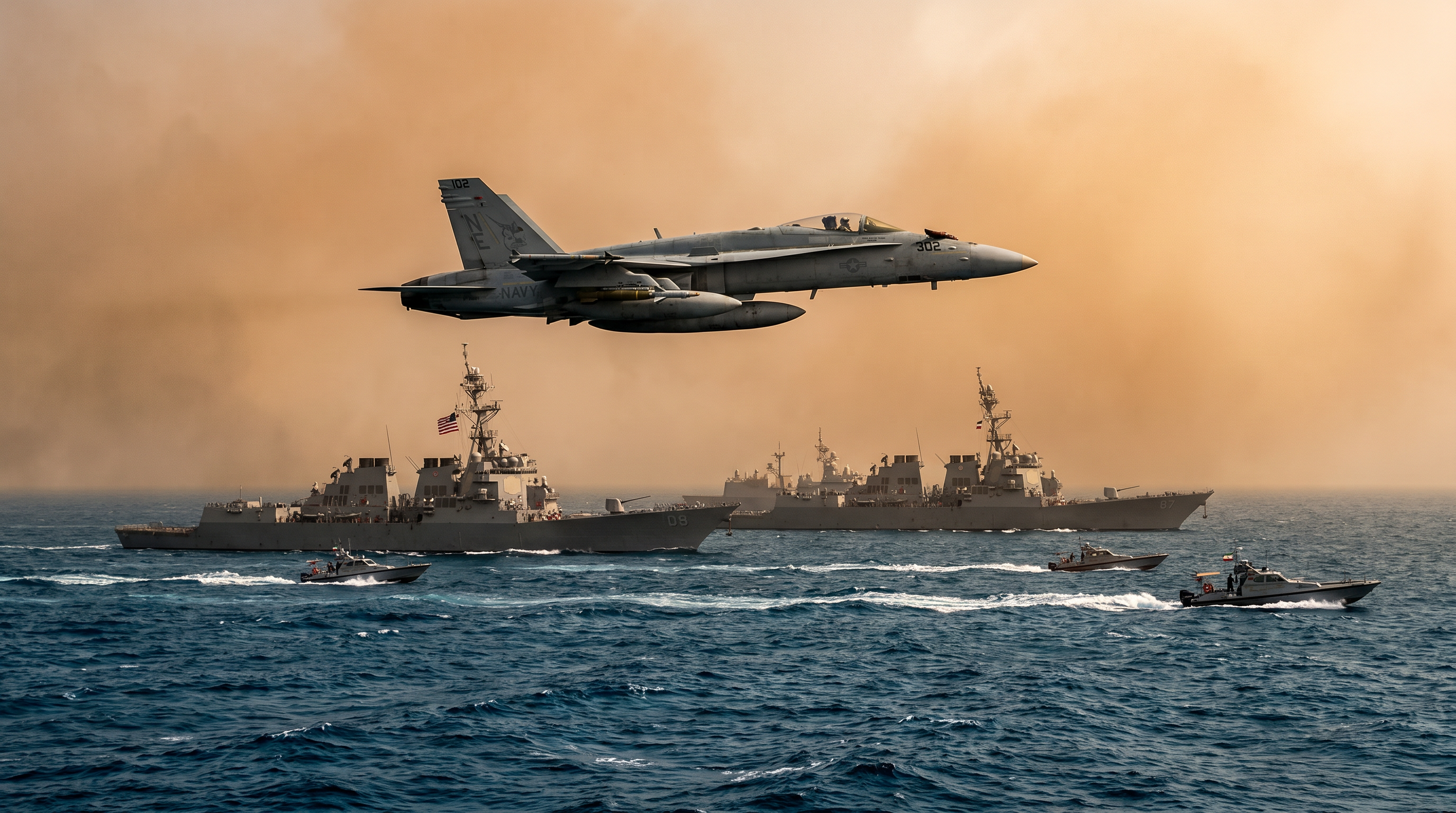
The immediate stakes of the agreement center on the Strait of Hormuz, a vital maritime chokepoint through which approximately one-fifth of the world's oil production flows. The US has maintained a naval blockade of Iranian ports in the strait, while Tehran's Persian Gulf Strait Authority recently declared the waterway completely closed due to the conflict. Trump confirmed that the US blockade will remain in "full force and effect" until the peace documents are officially signed.[2][4]

The path to this tentative settlement was paved by a sharp military escalation earlier in the week. Following Iran's downing of a US Apache helicopter off the coast of Oman on Monday, US forces carried out consecutive nights of strikes against Iranian infrastructure, including water storage facilities and radar sites. In retaliation, Iran's Islamic Revolutionary Guard Corps (IRGC) launched drones and missiles at bases hosting US forces in Kuwait, Bahrain, and Jordan.[5][7][8]
Kuwait's military reported intercepting 24 hostile drones in its airspace, noting that the aggression resulted in limited material damage and no human casualties. The rapid tit-for-tat exchanges underscored the fragility of the ceasefire that had been nominally in place since April, pushing mediators from Qatar and Oman to accelerate their diplomatic efforts.[8]
The regional reaction to the sudden settlement announcement has been mixed. Trump stated he had spoken with leaders from Saudi Arabia, the United Arab Emirates, Qatar, Turkey, and Israel to secure backing for the deal. However, Israeli sources indicated that Prime Minister Benjamin Netanyahu was caught off guard by the announcement. Netanyahu was reportedly in the middle of a security cabinet discussion regarding the Iranian threat when the news broke, and Israeli officials clarified they were not a party to the specific US-Iran memorandum of understanding.[4][5][7]

If finalized, the initial agreement is expected to take the form of a memorandum of understanding (MOU)—a formal but preliminary document that extends the current ceasefire and establishes a framework for subsequent, highly detailed negotiations regarding Iran's nuclear material and regional proxy networks. Analysts caution that transitioning from a conceptual MOU to a binding, verifiable treaty will require navigating deep-seated mistrust between Washington and Tehran.[1][5]
For now, the region remains in a tense holding pattern. US naval forces continue to enforce the blockade, and the threat of renewed strikes hangs over the proceedings if the weekend signing ceremony fails to materialize. The coming days will test whether the "great settlement" represents a genuine end to the hostilities or merely another temporary pause in a volatile conflict.[2][3][4]
How we got here
Late February 2026
The US and Israel launch a coordinated military campaign against Iran.
Early April 2026
A fragile ceasefire is established but is repeatedly breached by both sides.
Monday
An American Apache helicopter is shot down off the coast of Oman, sparking renewed US airstrikes.
Wednesday
Iran's IRGC launches retaliatory drone and missile strikes against US bases in Kuwait, Bahrain, and Jordan.
Thursday Morning
Trump threatens to hit Iran 'very hard' and suggests seizing Kharg Island, Iran's main oil terminal.
Thursday Evening
Trump abruptly cancels the strikes, announcing that a 'great settlement' has been reached.
Viewpoints in depth
US Administration's View
The White House frames the agreement as a historic victory achieved through maximum pressure.
President Trump and his administration argue that the threat of overwhelming military force—specifically the credible threat to seize Iran's oil infrastructure—forced Tehran to the negotiating table. They view the tentative agreement as a definitive end to Iran's nuclear ambitions and a successful stabilization of the region, emphasizing that the naval blockade will not be lifted until the ink is dry.
Iranian Government's View
Tehran projects caution, emphasizing that no final surrender has occurred and red lines remain intact.
Iranian officials are actively downplaying the finality of the deal to their domestic audience. By stressing that the Supreme Leader has not yet given final approval and that "red lines" regarding sovereignty and defense will not be crossed, Tehran aims to frame the negotiations as a mutual compromise rather than a capitulation to US military threats. They also point to their recent retaliatory strikes on US bases as proof of their enduring deterrence capabilities.
Regional Allies' View
Gulf states and Israel view the sudden diplomatic pivot with a mix of relief and deep skepticism.
While nations like Qatar and Oman have worked tirelessly to broker the ceasefire to protect their own airspace and shipping lanes, other allies—particularly Israel—are wary of a rushed deal. Reports that Israeli leadership was caught off guard by the announcement suggest concerns that the US might accept a "conceptual" nuclear agreement that lacks the rigorous enforcement mechanisms necessary to genuinely neutralize the Iranian threat.
What we don't know
- Whether Iranian Supreme Leader Mojtaba Khamenei has actually given his final, formal approval to the text.
- The specific enforcement mechanisms that will guarantee Iran's compliance with the nuclear provisions.
- How Israel will respond if it determines the finalized agreement leaves Iran with residual nuclear capabilities.
Key terms
- Kharg Island
- Iran's most important oil export terminal, located in the Persian Gulf, which handles the vast majority of the country's crude oil shipments.
- Strait of Hormuz
- A narrow, strategically critical waterway between the Persian Gulf and the Gulf of Oman through which roughly 20% of the world's oil passes.
- Memorandum of Understanding (MOU)
- A formal agreement between two or more parties that outlines the broad concepts of a deal before a final, legally binding treaty is drafted.
- Islamic Revolutionary Guard Corps (IRGC)
- A multi-service primary branch of the Iranian Armed Forces tasked with protecting the country's Islamic republic system, often operating independently of the regular military.
Frequently asked
Is the war between the US and Iran officially over?
Not yet. While President Trump announced a settlement and canceled imminent strikes, the agreement has not been formally signed, and the US naval blockade remains in place.
What happens to the Strait of Hormuz?
The US has stated that the Strait of Hormuz will officially reopen and the blockade of Iranian ports will be lifted as soon as the peace agreement is signed.
Did Iran agree to give up its nuclear program?
According to the White House, the deal conceptually ensures Iran will never obtain a nuclear weapon, though the specific mechanisms for enforcing this have not been publicly detailed.
Why did Trump cancel the strikes?
Trump stated he canceled the bombings because diplomatic discussions had reached the highest levels of Iranian leadership and a settlement had been approved in concept.
Sources
Source coverage
8 outlets
3 viewpoints surfaced








[1]CBS NewsUS Administration
Trump says "settlement" reached on Iran, signing could be as soon as this weekend
Read on CBS News →[2]TimeRegional Observers
Trump Says He Has 'Canceled' Strikes Against Iran After Threatening 'Very Hard' Attack
Read on Time →[3]Fox NewsUS Administration
Trump says Iran deal is nearly complete and could be signed in Europe within days
Read on Fox News →[4]ReutersRegional Observers
Trump says great settlement on Iran to be signed soon and strait will open
Read on Reuters →[5]The Times of IsraelRegional Observers
Trump says 'great settlement' almost reached with Iran; Netanyahu says Israel not party to deal
Read on The Times of Israel →[6]Al JazeeraIranian Government
Trump says US and Iran have reached a 'great settlement'
Read on Al Jazeera →[7]The Jerusalem PostRegional Observers
Trump says agreement with Iran approved by all parties involved, including Israel, cancels strikes
Read on The Jerusalem Post →[8]ForbesUS Administration
Trump Cancels Iran Bombings And Claims Peace Deal Is Approved
Read on Forbes →
More in news politics
See all 64 stories →US-Iran Conflict
Trump Cancels Strikes on Iran, Citing Imminent Peace Deal as Markets Surge
7 sources
US-Iran Conflict
Trump Cancels Iran Strikes, Claims Peace Deal to Reopen Strait of Hormuz is Imminent
7 sources
US-Iran War
Trump Cancels Strikes on Iran, Claims 'Great Settlement' Reached as Tehran Cites Unfinished Deal
8 sources
Diplomatic Settlement
US Cancels Strikes on Iran as Trump Announces 'Great Settlement' to End War
8 sources
Every angle. Every day.
Get news politics stories with full source coverage and perspective breakdowns delivered to your inbox.