
Supreme Court Blocks Alabama From Executing Inmate Using Nitrogen Gas
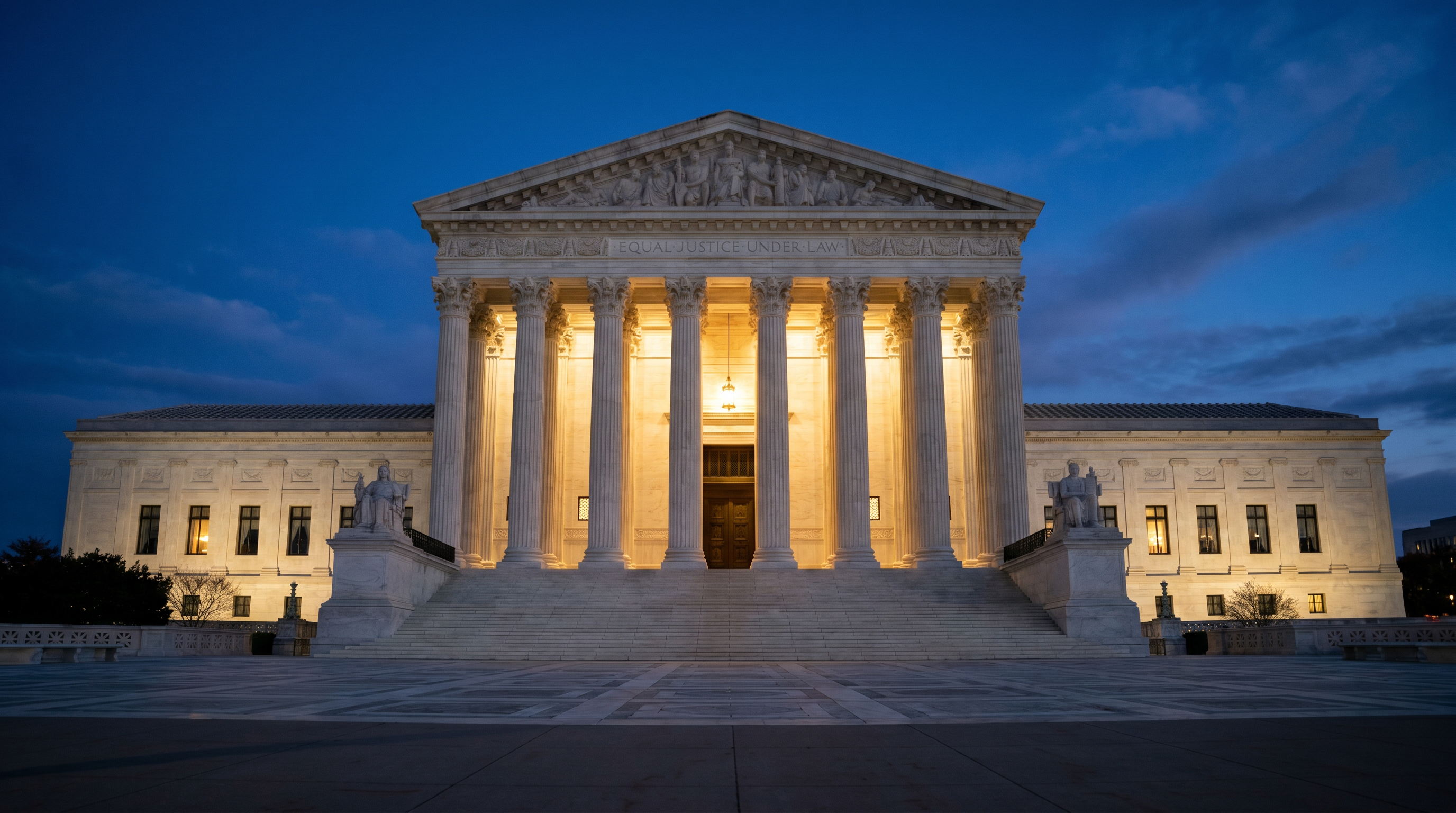
The U.S. Supreme Court has denied Alabama's request to proceed with the execution of Jeffery Lee using nitrogen hypoxia, upholding lower court rulings that the method violates the Eighth Amendment's ban on cruel and unusual punishment.
By Factlen Editorial Team
- Eighth Amendment Advocates
- Civil rights groups and defense attorneys who argue the method constitutes physical and psychological torture.
- Alabama State Officials
- State prosecutors and officials who maintain the method is painless and legally sound.
- Legal & Judicial Observers
- Analysts focused on the procedural history, the Supreme Court's rare intervention, and the injustice of the judicial override.
What's not represented
- · Families of the victims, Jimmy Ellis and Elaine Thompson, awaiting closure after 28 years.
- · Correctional officers tasked with administering the experimental nitrogen gas protocol.
Why this matters
This ruling represents the first time federal courts have permanently blocked a legislatively enacted execution method on constitutional grounds. It sets a major precedent that could halt the use of nitrogen gas for capital punishment nationwide and force states to find alternative methods.
Key points
- The U.S. Supreme Court denied Alabama's emergency request to execute Jeffery Lee using nitrogen gas.
- Lower federal courts ruled the nitrogen hypoxia protocol causes severe suffering, violating the Eighth Amendment.
- Lee's defense team successfully argued that a firing squad is a feasible and less painful alternative.
- Lee was sentenced to death in 2000 after a trial judge overrode a 7-5 jury vote for life imprisonment.
The U.S. Supreme Court intervened late Thursday to block Alabama from executing 49-year-old Jeffery Lee using nitrogen gas, upholding lower court rulings that the controversial method constitutes cruel and unusual punishment. The decision marks a historic, albeit temporary, halt to the state's pioneering use of the asphyxiation protocol, which has drawn intense international scrutiny and legal challenges since its introduction. The high court's action effectively prevents the state from carrying out what would have been the ninth nitrogen gas execution in the United States, pending further legal review.[1][3][4][7][8]
The Supreme Court issued a brief, one-sentence order denying an emergency request from the Alabama Attorney General's Office. State officials had asked the justices to vacate an injunction and allow the execution to proceed as scheduled at 6 p.m. Central Time. Three conservative justices—Clarence Thomas, Samuel Alito, and Neil Gorsuch—indicated they would have granted the state's request to let the execution go forward, though they did not author a written dissent explaining their reasoning. The brief order leaves the lower court's injunction intact, forcing Alabama to halt its immediate plans for Lee.[4][7]
The high court's decision leaves in place a landmark ruling by U.S. District Judge Emily Marks, who permanently barred the state from using nitrogen hypoxia on Lee earlier in the week. Following an evidentiary hearing, Marks concluded that the protocol violates the Eighth Amendment by subjecting inmates to "severe air hunger" and profound physiological distress. Her ruling represented a rare instance of a federal judge permanently enjoining a legislatively enacted execution method on constitutional grounds, setting a potential precedent for how courts evaluate novel forms of capital punishment.[1][3][5]
Nitrogen hypoxia involves strapping a specialized respirator mask to a condemned inmate's face and replacing breathable air with pure nitrogen gas, eventually causing death by lack of oxygen. Alabama lawmakers authorized the method as an alternative to lethal injection, which has been increasingly plagued by pharmaceutical drug shortages and a series of highly publicized, botched procedures where executioners failed to establish intravenous lines. State officials have consistently defended the nitrogen protocol as a humane and painless alternative that induces rapid unconsciousness.[1][5]

Despite the state's assurances, media witnesses, spiritual advisors, and human rights advocates who have observed the eight previous nitrogen gas executions in the U.S.—seven in Alabama and one in Louisiana—have reported deeply disturbing scenes. Witnesses have described inmates convulsing, writhing against their restraints, and gasping heavily for air for several minutes before finally losing consciousness. These eyewitness accounts formed the backbone of the legal challenge mounted by Lee's defense team, who argued that the state was effectively subjecting inmates to a prolonged and torturous suffocation.[1][2][5]
In her comprehensive ruling, Judge Marks noted that the evidence demonstrated inmates likely experience severe emotional and physical distress for at least one to three minutes before asphyxiation occurs. "There is, in other words, a substantial risk of serious harm," Marks wrote in her decision, emphasizing that the risk of suffering was not merely speculative or conjectural. She concluded that counting to 60 or 180 seconds while suffocating is not a quick exercise, and constitutionally speaking, that timeframe crosses the line into cruel and unusual punishment.[3][4]
The 11th U.S. Circuit Court of Appeals upheld Marks' decision in a 2-1 vote on Wednesday night, rejecting the state's request for a stay. The appellate panel called the three-minute timeframe for losing awareness "intolerable" given the profound suffering that would likely take place under Alabama's current nitrogen hypoxia protocol. The majority agreed that Lee had successfully demonstrated by a preponderance of the evidence that the protocol poses a substantial risk of severe pain over and above death itself, satisfying the Supreme Court's strict standards for Eighth Amendment claims.[1][2]
Circuit Court of Appeals upheld Marks' decision in a 2-1 vote on Wednesday night, rejecting the state's request for a stay.
Alabama Attorney General Steve Marshall's office fiercely contested the lower court rulings, arguing in its emergency Supreme Court appeal that a permanent ban on a legislatively enacted execution method is unprecedented in American legal history. State lawyers contended that the emotional distress or anxiety associated with suffocation does not equate to the physical torture prohibited by the Constitution. They warned that upholding the injunction would expand the concept of cruelty well beyond the historical bounds of the Eighth Amendment, effectively paralyzing the state's ability to carry out lawful death sentences.[2][3]

Under established Supreme Court precedent, death row inmates challenging a specific execution method must propose a feasible and readily implemented alternative that would significantly reduce their risk of severe pain. Lee's legal team suggested that Alabama execute him using a firing squad. Judge Marks ruled that a firing squad met the legal criteria for a viable alternative, though Alabama officials countered that they currently lack the facilities, protocols, and trained personnel to carry out an execution by firing squad, making it practically unfeasible in the near term.[3][4]
Beyond the debate over the execution method, Lee's case has drawn intense scrutiny because of the controversial path that led him to death row. Lee was convicted of the 1998 murders of pawnshop owner Jimmy Ellis and store employee Elaine Thompson during a robbery. During the penalty phase of his trial, the jury voted 7-5 to recommend a sentence of life imprisonment without the possibility of parole. However, the trial judge utilized a legal mechanism known as judicial override to disregard the jury's verdict and unilaterally sentence Lee to death.[1][2][7]
Alabama was the last state in the nation to permit judicial override, a practice that drew widespread condemnation from legal scholars and civil rights organizations. The state legislature finally abolished the practice in 2017, recognizing that life-or-death decisions should rest with a jury of peers rather than a single elected official. However, lawmakers did not make the abolition retroactive. As a result, Lee and nearly 20 percent of the inmates currently on Alabama's death row remain condemned to die despite their juries explicitly choosing life sentences.[1][6][8]

The combination of the overridden jury verdict and the experimental execution method prompted widespread calls for clemency. Prominent figures, including bestselling author John Grisham and former Alabama Supreme Court Chief Justice Drayton Nabers Jr., publicly urged Governor Kay Ivey to commute Lee's sentence to life without parole. Advocates argued that executing a man against the express wishes of his jury, using a method that two federal courts have deemed unconstitutionally cruel, represents a profound failure of the justice system and a violation of conservative principles of limited government.[1][6]
The Supreme Court's intervention marks a significant victory for death penalty opponents and raises profound questions about the future mechanics of capital punishment in the United States. With lethal injection increasingly unviable due to drug embargoes, and nitrogen gas now facing formidable constitutional hurdles at the highest levels of the judiciary, states committed to the death penalty find themselves running out of legally permissible options. The ruling may force legislatures to either revive older methods like the firing squad or confront a de facto moratorium on executions.[4][5][7]
How we got here
1998
Jeffery Lee is convicted of a double murder; a judge overrides the jury's 7-5 vote for life imprisonment to impose the death penalty.
2017
Alabama abolishes judicial override in capital cases, but does not apply the law retroactively to inmates like Lee.
June 9, 2026
A federal district judge permanently blocks Alabama from executing Lee with nitrogen gas, citing the Eighth Amendment.
June 10, 2026
The 11th Circuit Court of Appeals upholds the injunction in a 2-1 decision.
June 11, 2026
The U.S. Supreme Court denies Alabama's emergency request to vacate the injunction, halting the execution.
Viewpoints in depth
Eighth Amendment Advocates
Civil rights groups and defense attorneys argue the method constitutes torture.
This camp points to eyewitness accounts of the eight previous nitrogen executions, where inmates were observed convulsing, writhing, and gasping for air for several minutes. They argue that the physiological panic of 'air hunger'—the body's desperate, instinctual reaction to a lack of oxygen—amounts to severe psychological and physical torment. For these advocates, the district court's finding that inmates suffer for one to three minutes before losing consciousness is clear evidence that the protocol violates the Constitution's prohibition against cruel and unusual punishment.
Alabama State Officials
State prosecutors maintain the method is painless and legally sound.
The Alabama Attorney General's office and state correctional officials argue that nitrogen hypoxia is a humane alternative to lethal injection, inducing unconsciousness rapidly without the pain of chemical burns or botched IV insertions. They contend that the 'distress' cited by lower courts is merely the general anxiety of dying, not the severe physical pain required to violate the Eighth Amendment. Furthermore, they warn that allowing federal judges to permanently ban a legislatively enacted execution method undermines state sovereignty and the democratic process.
Judicial Reformers
Legal advocates focus on the systemic injustice of Lee's original sentence.
For this group, the execution method is secondary to the fact that Lee is on death row at all. They emphasize that Lee's jury voted 7-5 to sentence him to life in prison, a verdict that was unilaterally discarded by the trial judge. Because Alabama abolished this practice of 'judicial override' in 2017—acknowledging its inherent flaws—reformers argue it is a profound miscarriage of justice to execute Lee under a legal framework that the state itself has since repudiated.
What we don't know
- Whether Alabama will attempt to establish a firing squad protocol to execute Lee, as proposed by his defense team.
- How this Supreme Court decision will impact the other states (like Oklahoma and Mississippi) that have authorized nitrogen hypoxia but not yet used it.
- Whether Governor Kay Ivey will eventually commute Lee's sentence to life imprisonment, given the abolished judicial override.
Key terms
- Nitrogen hypoxia
- A condition where the body is deprived of oxygen by breathing pure nitrogen gas, utilized by some states as a method of capital punishment.
- Eighth Amendment
- The section of the U.S. Constitution that prohibits the federal government from imposing excessive bail, excessive fines, or cruel and unusual punishments.
- Judicial override
- A former legal mechanism in Alabama that allowed a trial judge to ignore a jury's verdict of life imprisonment and unilaterally sentence a defendant to death.
- Injunction
- A court order that compels a party to do or refrain from specific acts, in this case preventing Alabama from carrying out the execution.
- Preponderance of the evidence
- A legal standard of proof requiring that a claim is more likely to be true than not true, which Lee met to prove the execution method was unconstitutional.
Frequently asked
What is nitrogen hypoxia?
It is an execution method where a condemned inmate is fitted with a respirator mask that pumps pure nitrogen gas, replacing breathable air and causing death by asphyxiation.
Why did the Supreme Court block the execution?
The Court upheld lower federal court rulings which found that Alabama's nitrogen gas protocol causes 'severe air hunger' and distress, violating the Eighth Amendment's ban on cruel and unusual punishment.
Will Jeffery Lee still be executed?
Lee remains on death row. The state could theoretically attempt to execute him using an alternative method, such as a firing squad, which his defense team proposed and a judge deemed feasible.
What is judicial override?
It was a legal practice that allowed trial judges to disregard a jury's sentencing recommendation and impose the death penalty. Alabama abolished the practice in 2017, but not retroactively.
Sources
Source coverage
8 outlets
3 viewpoints surfaced








[1]AP NewsAlabama State Officials
US Supreme Court blocks Alabama nitrogen gas execution
Read on AP News →[2]The Washington PostAlabama State Officials
Alabama asks US Supreme Court to allow Thursday's blocked nitrogen gas execution
Read on The Washington Post →[3]CBS NewsLegal & Judicial Observers
Supreme Court blocks Alabama nitrogen gas execution
Read on CBS News →[4]CNNLegal & Judicial Observers
Supreme Court blocks Alabama from executing man using nitrogen hypoxia
Read on CNN →[5]PBSEighth Amendment Advocates
Judge bars Alabama nitrogen gas execution, says method is unconstitutionally cruel
Read on PBS →[6]Equal Justice InitiativeEighth Amendment Advocates
Prolonged Execution in Alabama Raises Alarms
Read on Equal Justice Initiative →[7]The New York TimesEighth Amendment Advocates
Supreme Court Blocks Alabama From Executing Inmate Using Nitrogen Gas
Read on The New York Times →[8]NPREighth Amendment Advocates
Supreme Court prohibits Alabama from using nitrogen gas for execution
Read on NPR →

More in news politics
See all 70 stories →Death Penalty
Supreme Court Blocks Alabama From Executing Inmate Using Nitrogen Gas
6 sources
Capital Punishment
Supreme Court Blocks Alabama From Executing Inmate Using Nitrogen Gas
6 sources

Workplace Trends
Fact Check: Does a Four-Day Workweek Actually Improve Revenue and Employee Health?
8 sources

Electoral Reform
Evidence Pack: Fact-Checking the Biggest Claims About Ranked-Choice Voting
7 sources

Every angle. Every day.
Get news politics stories with full source coverage and perspective breakdowns delivered to your inbox.