
Intermittent Fasting vs. Daily Calorie Restriction: Which Actually Works Better?
A wave of 2025 and 2026 clinical trials has finally settled the debate between time-restricted eating and traditional calorie counting, revealing that while both drive similar weight loss, their long-term sustainability differs significantly.
By Factlen Editorial Team
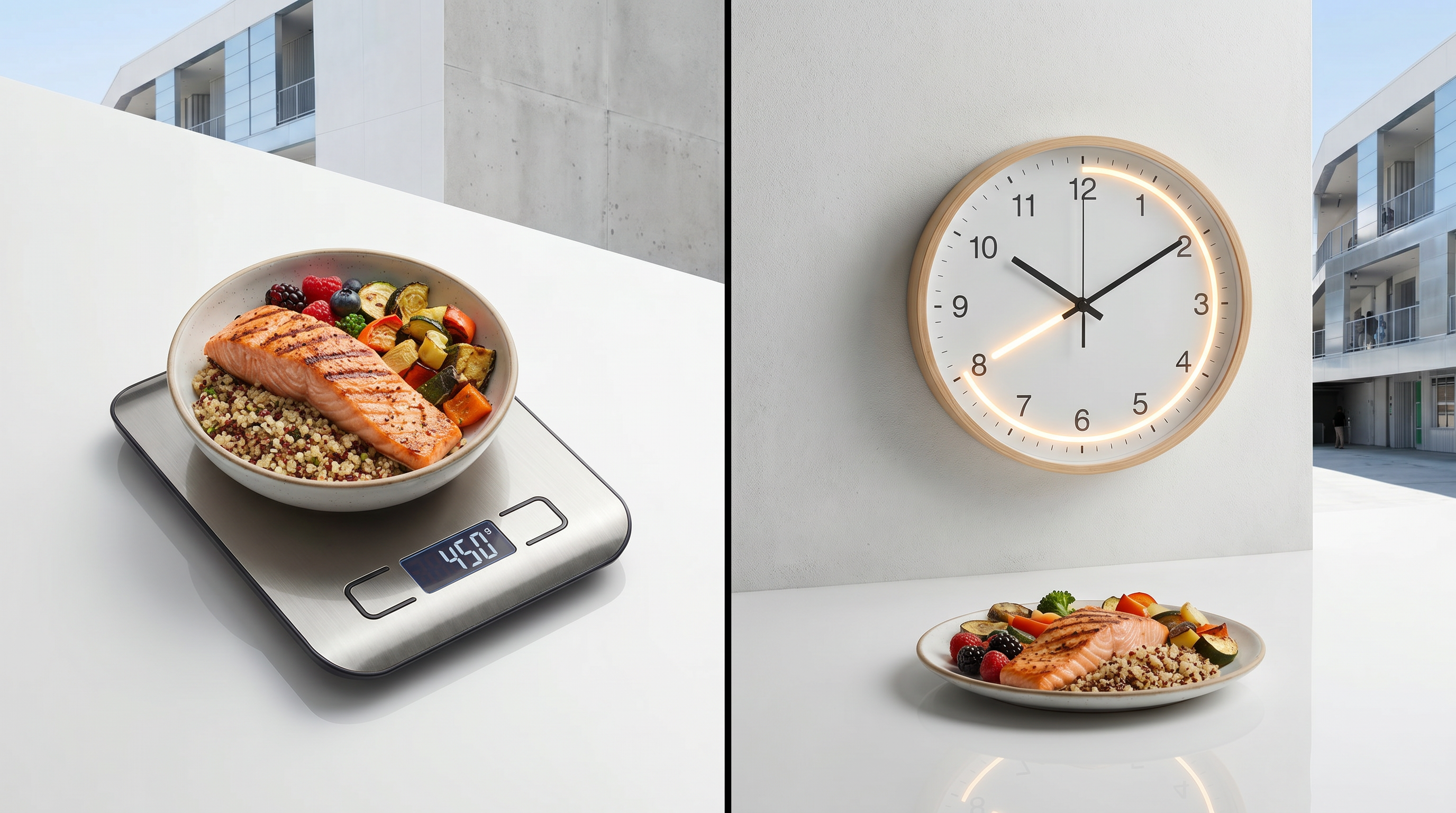
- Traditional Dietitians
- Focus on sustainable energy balance, nutritional quality, and the psychological flexibility of eating throughout the day without strict time rules.
- Clinical Researchers
- Prioritize empirical trial data, noting that adherence to a caloric deficit is the primary driver of health outcomes regardless of meal timing.
- Fasting Advocates
- Emphasize the behavioral simplicity of skipping meals and the potential circadian rhythm benefits of aligning eating windows with daylight.
What's not represented
- · Eating Disorder Recovery Specialists
- · Shift Workers
Why this matters
Millions of people struggle to choose the 'right' diet, often abandoning sustainable habits because they believe they are using the wrong method. Understanding that fasting and calorie counting are equally effective tools allows you to choose the approach that best fits your daily lifestyle without fear of missing out on hidden metabolic magic.
Key points
- Intermittent fasting and daily calorie restriction produce nearly identical weight loss and metabolic improvements over 6 to 12 months.
- A landmark 2026 study confirmed that time-restricted eating without an underlying calorie deficit does not magically improve cardiovascular health.
- Alternate-day fasting yields slightly more weight loss than daily restriction but suffers from lower long-term adherence rates.
- Early time-restricted eating shows slight advantages for blood sugar control compared to late-day eating.
- Both dietary approaches result in some muscle loss, making concurrent resistance training essential for overall health.
For decades, the fitness industry has been locked in a philosophical battle over the optimal method for weight loss. On one side stand the proponents of continuous caloric restriction, the traditional mathematical approach of tracking daily energy intake. On the other side are the advocates of intermittent fasting, specifically time-restricted eating, who argue that manipulating the clock is more powerful than micromanaging the plate. Millions of dieters bounce between these two methodologies, often abandoning sustainable habits because they believe they are using the 'wrong' approach. However, a massive wave of clinical trial data published throughout 2025 and early 2026 has finally provided definitive answers. By stripping away the marketing hype and focusing purely on physiological outcomes, researchers have mapped the exact trade-offs of each strategy, revealing that the secret to metabolic health lies less in the specific protocol and more in human psychology.[6]
The case for continuous caloric restriction is built on the fundamental laws of thermodynamics. By calculating a daily energy target and meticulously logging food intake to stay below that threshold, individuals create a predictable energy deficit. This approach allows for total dietary flexibility; a person can eat six small meals a day or three large ones, provided the total energy load remains suppressed. The primary advantage of this method is its precision. Dieters know exactly how much they are consuming, which makes troubleshooting plateaus straightforward. Furthermore, spreading protein intake evenly throughout the day optimizes muscle protein synthesis, a crucial factor for preserving lean mass during a weight-loss phase.[6]
Conversely, the case against continuous restriction centers entirely on behavioral fatigue. Meticulously weighing portions, scanning barcodes, and logging every macronutrient requires a high degree of daily cognitive effort. For many individuals, this constant hyper-awareness of food breeds anxiety and decision fatigue, eventually leading to burnout. The requirement to track every bite can also turn social events and restaurant meals into stressful mathematical exercises. It is this exact psychological friction that paved the way for the explosive popularity of intermittent fasting, which promised a simpler, tracking-free path to the same destination.[6]
The case for intermittent fasting—most commonly practiced as time-restricted eating, where all calories are consumed within an eight-hour window—relies on behavioral simplicity. By simply skipping breakfast and avoiding late-night snacking, many individuals naturally eliminate hundreds of calories from their daily intake without ever opening a tracking app. Proponents also point to evolutionary biology, arguing that human metabolisms are designed to experience periods of scarcity. Early research in rodent models heavily supported this, suggesting that fasting triggered unique cellular repair processes and metabolic switching that could melt fat and reduce disease risk entirely independent of calorie counts.[5]

However, the case against intermittent fasting highlights its rigidity and potential for unintended consequences. Compressing all daily food intake into a narrow window can lead to gastrointestinal discomfort and makes it exceedingly difficult to consume adequate protein. Furthermore, the restriction can trigger a scarcity mindset, leading some individuals to binge eat during their allowed window, entirely negating the caloric deficit. Socially, skipping morning meals or refusing dinner invitations because the 'eating window has closed' can be just as isolating as weighing food at the table.[6]
To settle the debate, researchers at Columbia University recently published a sweeping meta-analysis in The BMJ, analyzing 99 randomized clinical trials involving over 6,500 participants. The evidence was unequivocal: when it comes to shedding body fat, neither diet possesses a magical advantage. Both continuous caloric restriction and standard intermittent fasting protocols resulted in nearly identical, clinically meaningful weight loss, averaging between four and five percent of total body weight over several months. The researchers concluded that the primary mechanism driving weight loss in time-restricted eating is simply the spontaneous reduction of calories, not a unique metabolic state induced by the fasting window itself.[1][5]
The evidence was unequivocal: when it comes to shedding body fat, neither diet possesses a magical advantage.
The evidence regarding metabolic health and disease prevention tells a similarly matched story. A 2026 systematic review presented at the American Association of Clinical Endocrinology examined patients with type 2 diabetes who were assigned to either fasting or continuous restriction. Over a 12-month period, both groups saw their HbA1c levels—a critical marker of long-term blood sugar control—drop by roughly 0.5 percent. Fasting glucose, lipid profiles, and blood pressure improvements were virtually identical across both cohorts. The data clearly demonstrated that the metabolic benefits were driven by the shedding of body fat, rather than the specific timing of the meals.[3]

This conclusion was further cemented by a 2025 study published in MDPI, which tracked inflammatory cytokines in adults with obesity over a full year. The researchers found that both time-restricted eating and continuous restriction produced similar reductions in visceral fat mass and insulin resistance. Crucially, changes in systemic inflammation markers like C-reactive protein were tied directly to the amount of weight lost, not the dietary method used to achieve it. If a participant lost five percent of their body weight, their inflammation dropped proportionally, regardless of whether they ate three meals a day or fasted for sixteen hours.[4]
The final blow to the idea that fasting possesses unique, weight-independent metabolic magic came from the landmark 2026 ChronoFast study, published in Science Translational Medicine. Researchers tested time-restricted eating in a highly controlled environment where participants were forced to consume their normal maintenance calories within an eight-hour window. Without a caloric deficit, the time-restricted eating protocol failed to produce any measurable improvements in insulin sensitivity, blood sugar levels, or cardiovascular markers. The study definitively proved that calorie reduction, not the eating window itself, is the true driver of the health benefits associated with intermittent fasting.[2]

The ChronoFast study did, however, uncover one unique physiological effect of time-restricted eating: it significantly shifts the body's internal circadian clocks. The timing of food intake acts as a powerful biological cue, altering sleep patterns and cellular rhythms. This aligns with emerging evidence suggesting that if an individual chooses to practice time-restricted eating, placing the eating window earlier in the day—finishing meals by 5:00 PM—yields slightly better blood sugar control than eating late into the night. Aligning food intake with daylight hours appears to optimize the body's natural insulin response.[2][6]
There is one notable outlier in the fasting data: alternate-day fasting. This aggressive protocol, which involves eating normally one day and consuming zero or very few calories the next, was the only fasting strategy to show a slight statistical advantage over continuous restriction. In the BMJ meta-analysis, alternate-day fasting resulted in an average of 1.29 kilograms of additional weight loss compared to daily calorie counting. However, the evidence against this approach is steep; clinical trials consistently report high dropout rates, severe hunger complaints, and poor long-term sustainability, making it an impractical choice for the general public.[1][5]
A critical shared vulnerability between both dietary approaches is the loss of lean muscle mass. When the body is placed in an energy deficit, it breaks down both adipose tissue and muscle tissue for fuel. Recent trial data indicates that both time-restricted eating and continuous restriction result in measurable decreases in fat-free mass. This underscores a universal rule of weight loss: regardless of the dietary protocol chosen, concurrent resistance training and adequate protein intake are absolutely essential to preserve muscle tissue and maintain a healthy resting metabolic rate.[6]
Ultimately, the 2026 clinical landscape provides clear guidance on how to deploy these strategies. Intermittent fasting fits well when an individual has a busy morning schedule, naturally lacks an early appetite, and wants to create a caloric deficit without the cognitive burden of tracking every meal. It is a highly effective behavioral tool for people who prefer eating larger, more satisfying meals less frequently. It also fits well for those looking to align their eating habits with their circadian rhythm by utilizing an early-day eating window.[6]
Conversely, intermittent fasting does not fit well when an individual is a shift worker with erratic hours, an athlete requiring evenly spaced protein feedings for muscle recovery, or someone with a history of disordered eating who might be triggered by strict fasting rules. In these scenarios, continuous caloric restriction fits perfectly. Traditional calorie tracking remains the gold standard for individuals who require dietary flexibility, want to troubleshoot specific macronutrient ratios, or simply enjoy the psychological comfort of eating consistently throughout the day.[6]
How we got here
2010s
Intermittent fasting surges in popularity, driven by animal studies suggesting unique metabolic benefits independent of weight loss.
2024
Early clinical trials begin showing that fasting and calorie counting yield similar short-term results, though long-term data remains scarce.
Mid-2025
A massive meta-analysis in The BMJ of 99 trials confirms that both methods lead to equivalent weight loss and cardiometabolic improvements.
January 2026
The ChronoFast study in Science Translational Medicine proves that time-restricted eating without calorie reduction fails to improve metabolic health.
Viewpoints in depth
Fasting Advocates
Focus on behavioral simplicity and circadian alignment.
For proponents of time-restricted eating, the primary draw is the elimination of decision fatigue. By simply watching the clock rather than weighing every gram of food, adherents find it easier to maintain a caloric deficit in a modern food environment designed to encourage overeating. Furthermore, advocates increasingly focus on 'early' time-restricted eating, pointing to evidence that consuming the bulk of daily calories before sunset better aligns with the body's natural circadian rhythms and insulin sensitivity.
Traditional Dietitians
Prioritize energy balance, protein pacing, and dietary flexibility.
Traditional nutrition professionals argue that while fasting is a useful tool, it is not a physiological magic bullet. They emphasize that continuous caloric restriction teaches better long-term portion control and allows for optimal 'protein pacing'—spreading protein intake evenly across the day to maximize muscle retention. Dietitians also warn that strict fasting windows can trigger binge-eating behaviors in susceptible individuals, advocating instead for a flexible approach focused on overall food quality and sustainable energy balance.
Clinical Researchers
Focus on the empirical equivalence of both methods in controlled trials.
The scientific community's consensus, solidified by the 2025 and 2026 data wave, is that the human body responds primarily to total energy load. Researchers emphasize that in tightly controlled environments where calories are matched, the metabolic differences between fasting and continuous restriction vanish. Their primary concern has shifted away from finding the 'superior' diet and toward improving long-term adherence, noting that the best dietary intervention is simply the one a patient can comfortably sustain for years.
What we don't know
- Whether combining strict early time-restricted eating with a meticulously tracked calorie deficit provides compounding longevity benefits.
- How individual genetic variations and chronotypes dictate which dietary strategy a person will find easier to sustain over decades.
Key terms
- Time-Restricted Eating (TRE)
- A form of intermittent fasting where all daily calories are consumed within a specific window, typically 8 to 10 hours.
- Continuous Energy Restriction (CER)
- The traditional dietary approach of reducing daily caloric intake by a set amount across all meals.
- Alternate-Day Fasting (ADF)
- A regimen alternating between days of normal eating and days of severe calorie restriction or complete fasting.
- HbA1c
- A blood test that measures average blood sugar levels over the past three months, used to monitor metabolic health.
Frequently asked
Do I have to count calories if I do intermittent fasting?
Not necessarily. Many people naturally eat fewer calories when their eating window is restricted, which drives the weight loss without the need for active tracking.
Is fasting better for my metabolism than standard dieting?
No. Recent 2026 clinical trials show that fasting and standard calorie restriction provide identical metabolic benefits, provided the amount of weight lost is the same.
Will I lose muscle on these diets?
Yes, both intermittent fasting and calorie restriction lead to some loss of lean muscle mass unless they are paired with resistance training and adequate protein intake.
Sources
Source coverage
6 outlets
3 viewpoints surfaced






[1]The BMJClinical Researchers
Effect of intermittent versus continuous calorie restriction on body weight and cardiometabolic risk markers
Read on The BMJ →[2]Science Translational MedicineClinical Researchers
Time-restricted eating without calorie reduction does not improve metabolic health
Read on Science Translational Medicine →[3]HCP LiveClinical Researchers
Intermittent Fasting, Calorie Restriction Yield Similar HbA1c, Cardiometabolic Outcomes
Read on HCP Live →[4]MDPIClinical Researchers
Effects of Time-Restricted Eating versus Calorie Restriction on Inflammatory Cytokines
Read on MDPI →[5]Nutrition InsightFasting Advocates
Intermittent fasting offers similar weight loss benefits to calorie counting, study flags
Read on Nutrition Insight →[6]Factlen Editorial TeamTraditional Dietitians
Synthesis by Factlen editorial team
Read on Factlen Editorial Team →

More in fitness
See all 34 stories →Fitness Science
The Science of Pilates: How Low-Impact Resistance Reshapes the Body and Brain
8 sources

Strength Tech
The Science of Digital Resistance: How Smart Home Gyms Compare to Free Weights
6 sources

Fitness Science
Why Rucking Is Emerging as the Ultimate Longevity and Fitness Protocol
9 sources

Zone 2 Training
The Science of Zone 2 Cardio: Why the 'Talk Test' is Outperforming Heart Rate Formulas
7 sources

Every angle. Every day.
Get fitness stories with full source coverage and perspective breakdowns delivered to your inbox.