
The Science of the 'Deep Energy Retrofit': How Older Homes Are Achieving Net-Zero
A whole-building approach to remodeling is transforming drafty, aging houses into hyper-efficient, climate-resilient homes. By combining advanced insulation with electrification, homeowners are cutting energy use by up to 90% while dramatically improving indoor air quality.
By Factlen Editorial Team
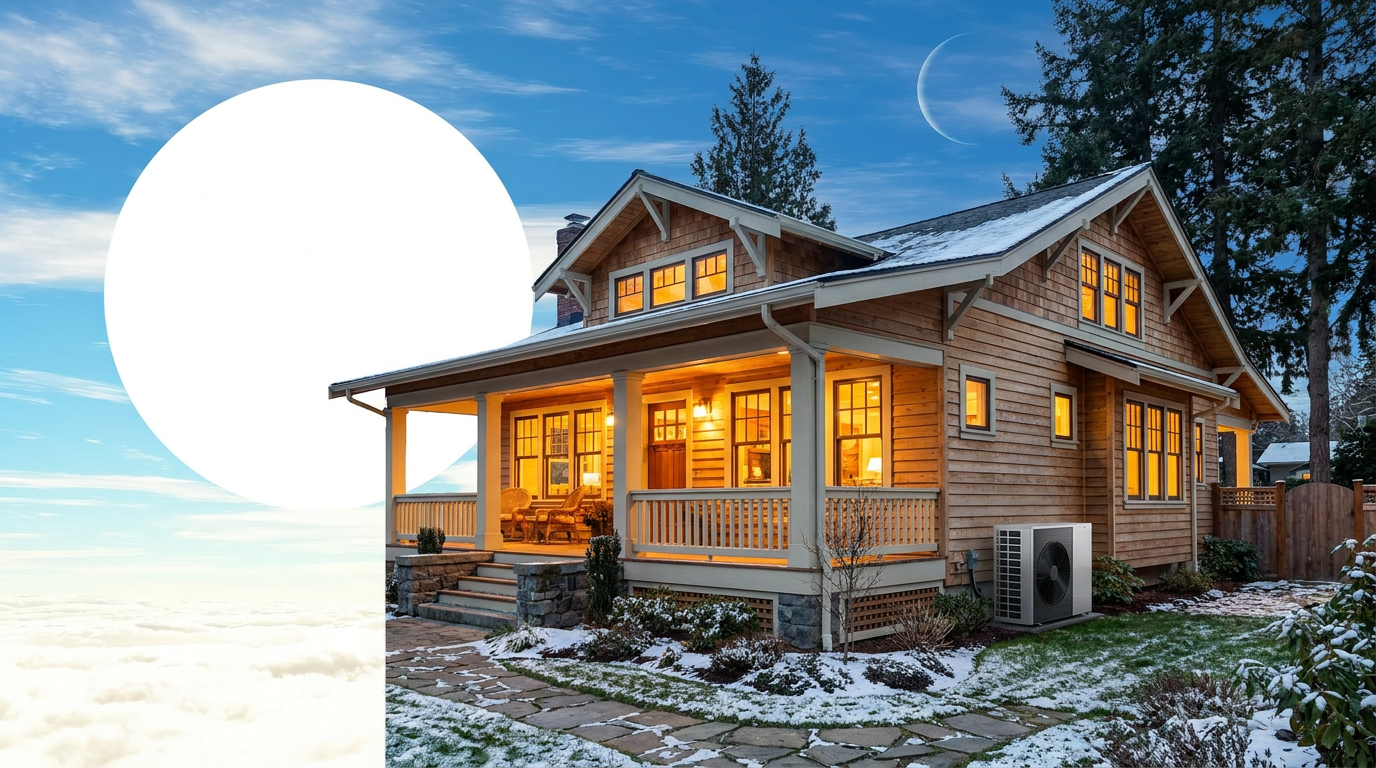
- Building Scientists & Retrofit Advocates
- Argue that a strict 'fabric-first' approach is non-negotiable to guarantee energy reductions, eliminate thermal bridges, and ensure healthy indoor air quality.
- Budget-Conscious Homeowners
- Emphasize the prohibitive upfront costs of deep retrofits, advocating for phased, step-by-step upgrades and strategic appliance sizing to maximize financial ROI.
- Climate Policymakers
- View existing buildings as a massive source of global emissions and treat deep retrofits as critical infrastructure upgrades required to meet 2050 net-zero targets.
What's not represented
- · Historic Preservation Boards
- · Renters in Multi-Family Housing
Why this matters
Buildings account for a massive share of global emissions, and 80% of the homes that will exist in 2050 have already been built. Understanding how to sequence a deep retrofit not only unlocks thousands in annual utility savings and government rebates, but also protects families from extreme temperatures and wildfire smoke.
Key points
- Deep energy retrofits treat the home as an integrated system to cut energy use by up to 90%.
- The 'fabric-first' approach prioritizes aggressive insulation, air sealing, and triple-glazed windows.
- Mechanical ventilation (MVHR) ensures pristine indoor air quality, filtering out pollen and wildfire smoke.
- Insulating before installing a heat pump allows for smaller, cheaper mechanical equipment.
- Phased, step-by-step retrofits help homeowners manage the high upfront costs over time.
Most homes standing today were built in an era when energy was cheap and climate resilience was an afterthought. As a result, the average older house is a sieve, leaking heated or cooled air through poorly insulated walls, drafty windows, and unsealed attics. For decades, the standard approach to home remodeling focused almost entirely on aesthetics—upgrading kitchens, expanding bathrooms, or adding curb appeal. But as energy costs climb and extreme weather events become more frequent, a quiet revolution is reshaping the renovation industry. Homeowners and builders are increasingly turning to the "deep energy retrofit," a comprehensive overhaul designed to fundamentally transform how a building performs.[1][6]
A deep energy retrofit (DER) is not a simple weekend project or a piecemeal upgrade like swapping out an old furnace for a slightly better one. Instead, it is a whole-building analysis and construction process that treats the house as an integrated system. The goal is to reduce the home's on-site energy consumption by 50 to 90 percent, effectively bringing aging architecture up to the rigorous efficiency standards of modern green construction. By addressing the exterior shell, the heating and cooling systems, and the ventilation simultaneously, a deep retrofit achieves a harmony of thermal comfort, durability, and pristine indoor air quality that standard renovations cannot match.[1][3]
The foundational philosophy of a successful deep retrofit is the "fabric-first" approach. Before any mechanical systems are upgraded, the building's envelope—its walls, roof, foundation, and windows—must be optimized to prevent energy from escaping. This begins with aggressive air sealing to close the invisible gaps and cracks that can account for up to 40 percent of a home's heat loss. Contractors use specialized foams, tapes, and membranes to create a continuous airtight barrier around the living space. This step is critical because even the most efficient heating system will waste money if the warm air it generates is immediately lost to the outdoors.[3][6]

Once the home is sealed, high-performance insulation is added to the attic, exterior walls, and basement. The objective is to wrap the house in a thick thermal blanket, meticulously avoiding "thermal bridges." A thermal bridge is a highly conductive material, such as a steel beam or an uninsulated wood stud, that creates a pathway for heat to bypass the insulation and escape the building. By applying continuous exterior insulation or dense-packing wall cavities, builders sever these pathways, ensuring that the interior temperature remains stable regardless of the weather outside.[2][4]
Upgrading the fenestration—the windows and doors—is the final piece of the fabric-first puzzle. Old, single-pane or poorly sealed double-pane windows are notorious weak points in a building's envelope. In a deep retrofit, these are typically replaced with triple-glazed windows featuring low-emissivity coatings and insulated frames. These advanced windows not only block drafts and reduce heat transfer but also provide significant acoustic dampening, turning a noisy urban residence into a quiet sanctuary.[2][3][4][6]
To verify the success of the envelope upgrades, technicians rely on a diagnostic tool called a blower door test. A powerful fan is temporarily sealed into an exterior doorway, pulling air out of the house to depressurize the interior. This forces outside air to rush back in through any remaining leaks, allowing contractors to measure the home's airtightness in "air changes per hour" (ACH). A standard older home might have an ACH of 10 or higher, meaning the entire volume of indoor air leaks out and is replaced by outdoor air ten times every hour. A successful deep retrofit aims to push that number down to 1.0 or lower.[2][4][5][6]

This extreme airtightness introduces a new challenge: if a home cannot "breathe" through natural leaks, moisture, odors, and pollutants can become trapped inside. To solve this, building scientists adhere to the mantra, "build tight, ventilate right." The solution is Mechanical Ventilation with Heat Recovery (MVHR), a system that continuously extracts stale, moist air from kitchens and bathrooms while supplying fresh, filtered outdoor air to bedrooms and living areas.[2][4][6]
This extreme airtightness introduces a new challenge: if a home cannot "breathe" through natural leaks, moisture, odors, and pollutants can become trapped inside.
The brilliance of an MVHR system lies in its heat exchanger. As the warm, stale indoor air is exhausted out of the building, it passes the incoming cold, fresh outdoor air within the unit. The two airstreams never physically mix, but the heat from the outgoing air is transferred to the incoming air, recovering up to 90 percent of the thermal energy that would otherwise be lost. Furthermore, the incoming air is passed through high-grade filters, which strip out pollen, urban exhaust, and even fine particulate matter from wildfire smoke, guaranteeing pristine indoor air quality year-round.[2][3][4][6]
With the building envelope secured and ventilation managed, the retrofit moves to its second phase: electrification. The cornerstone of this phase is the heat pump, a highly efficient device that replaces traditional gas furnaces and air conditioners. Rather than burning fossil fuels to generate heat, a heat pump uses a small amount of electricity to extract ambient thermal energy from the outside air—even in freezing temperatures—and transfers it inside. In the summer, the process reverses, pulling heat out of the house to provide cooling.[3][5]
A critical rule of deep energy retrofits is sequencing: homeowners are strongly advised to complete their insulation and air sealing before installing a heat pump. This strategy, often referred to as the "Watt Diet," relies on the physics of heating loads. By dramatically improving the building envelope first, the home's peak heating and cooling demands drop by 20 to 40 percent. Consequently, the home requires a much smaller, less powerful heat pump to maintain comfort.[4][5]

Sizing down the mechanical equipment offers cascading financial benefits. A smaller heat pump is significantly cheaper to purchase and install, often saving homeowners between $4,000 and $7,000 upfront. More importantly, reducing the home's overall electrical load can help homeowners avoid the need for an expensive electrical panel upgrade—which can cost upwards of $5,000—when transitioning away from gas appliances. The savings generated by buying smaller equipment often cover a substantial portion of the initial insulation costs.[4][5][6]
The final step in a comprehensive deep retrofit is on-site energy generation and storage. With the home's energy demand slashed to a fraction of its former self, it becomes economically feasible to install a rooftop solar photovoltaic (PV) array. Because the house now sips electricity rather than gulping it, a modestly sized solar array can often offset 100 percent of the home's annual energy use, achieving true "net-zero" performance. Adding a home battery system allows residents to store excess solar power for use during peak evening hours or grid outages, providing ultimate energy resilience.[1][3][5]
For homeowners seeking documented quality assurance, the Passive House Institute developed the EnerPHit standard. Recognizing that existing buildings face structural constraints—such as fixed foundations or historic preservation rules—that make the ultra-strict new-build Passive House standard impossible to reach, EnerPHit offers a rigorous but adaptable framework. It requires the consistent use of passive components, such as superior insulation and thermal bridge exclusion, to guarantee a maximum heating demand that is vastly lower than conventional housing.[2][4]
Despite the profound benefits, the primary barrier to deep energy retrofits remains the formidable upfront cost. A comprehensive, all-at-once retrofit can easily range from $50,000 to over $100,000, depending on the size and condition of the home. To mitigate this "sticker shock," many experts advocate for an over-time, phased retrofit plan. By mapping out a step-by-step strategy—perhaps starting with attic insulation and air sealing in year one, upgrading windows in year three, and installing a heat pump in year five—homeowners can spread the financial burden while avoiding the "lock-in" of incompatible, short-term fixes.[1][2][6]
To accelerate adoption, governments are increasingly stepping in with unprecedented financial incentives. In the United States, the Inflation Reduction Act offers thousands of dollars in tax credits and performance-based rebates for heat pumps, electrical upgrades, and weatherization. Similarly, Canada's Greener Homes initiatives and provincial programs provide substantial grants to offset the costs of deep retrofits. When combined with the $2,000 to $5,000 in annual utility savings and a documented 5 to 15 percent boost in property resale value, the long-term return on investment becomes highly compelling.[1][3][5]

Ultimately, the deep energy retrofit represents a fundamental shift in how society views its existing infrastructure. The 80 percent of the building stock that will exist in 2050 has already been built; meeting global climate targets requires transforming these structures from energy liabilities into efficient, resilient assets. Beyond the carbon math, these retrofits offer a tangible upgrade to daily life, providing families with draft-free comfort, lower bills, and a healthy sanctuary insulated from an increasingly unpredictable climate.[1][2][3][6]
Viewpoints in depth
Building Scientists & Retrofit Advocates
Argue that a strict 'fabric-first' approach is non-negotiable to guarantee energy reductions, eliminate thermal bridges, and ensure healthy indoor air quality.
For building scientists, the physics of a home dictate the renovation strategy. They argue that installing high-efficiency mechanical systems in a leaky house is fundamentally wasteful. Organizations like the Passive House Institute emphasize that the building envelope must be perfected first—eliminating thermal bridges and achieving extreme airtightness. They point to data showing that only a comprehensive, whole-system approach can reliably achieve the 50 to 90 percent energy reductions required to meet global climate targets, while simultaneously protecting occupants from external pollutants like wildfire smoke.
Budget-Conscious Homeowners
Emphasize the prohibitive upfront costs of deep retrofits, advocating for phased, step-by-step upgrades and strategic appliance sizing to maximize financial ROI.
While the long-term savings of a deep retrofit are well-documented, the immediate financial reality is daunting for most families. With comprehensive projects often exceeding $50,000 to $100,000, budget-conscious advocates and contractors focus on the economics of the 'Watt Diet.' They champion phased retrofits, where homeowners tackle insulation and air sealing first to reduce their heating load. This strategic sequencing allows them to purchase smaller, cheaper heat pumps later and avoid costly $5,000 electrical panel upgrades, making the transition to net-zero financially viable over a five-to-ten-year horizon.
Climate Policymakers
View existing buildings as a massive source of global emissions and treat deep retrofits as critical infrastructure upgrades required to meet 2050 net-zero targets.
From a macroeconomic and environmental perspective, policymakers view the existing housing stock as a ticking carbon bomb. Because 80 percent of the buildings that will exist in 2050 have already been constructed, new-build green codes are insufficient to meet international climate goals. Consequently, this camp treats deep energy retrofits as essential national infrastructure projects. They advocate for aggressive government intervention—such as the billions allocated in the US Inflation Reduction Act and Canada's Greener Homes initiatives—to subsidize these upgrades, arguing that the public investment pays dividends in reduced grid strain, lower healthcare costs from improved air quality, and massive carbon reductions.
What we don't know
- How quickly the construction industry can train enough specialized contractors to meet the surging demand for deep retrofits.
- Whether future iterations of government rebates will fully cover the upfront costs for low-income homeowners who cannot afford phased upgrades.
Key terms
- Deep Energy Retrofit (DER)
- A whole-building remodeling process that aims to reduce on-site energy use by 50% or more through comprehensive insulation, air sealing, and system upgrades.
- Thermal Bridge
- A highly conductive material in a building's envelope, such as an uninsulated stud, that allows heat to easily bypass insulation and escape.
- Mechanical Ventilation with Heat Recovery (MVHR)
- A ventilation system that continuously supplies fresh, filtered outdoor air while extracting stale indoor air, using a heat exchanger to recover the thermal energy between the two streams.
- EnerPHit
- A rigorous building certification standard created by the Passive House Institute specifically for the energy-efficient retrofitting of existing buildings.
- Blower Door Test
- A diagnostic test using a powerful fan mounted in an exterior doorway to depressurize a home, allowing technicians to measure and locate air leaks.
Frequently asked
What is the difference between a regular energy upgrade and a deep energy retrofit?
A regular upgrade might involve swapping a single appliance, like a furnace. A deep energy retrofit treats the home as an integrated system, combining aggressive insulation, air sealing, and electrification to reduce total energy use by 50 to 90 percent.
Should I install a heat pump or insulate my home first?
Experts strongly recommend insulating and air sealing first. This reduces the home's heating and cooling load, allowing you to purchase a smaller, less expensive heat pump and potentially avoid costly electrical panel upgrades.
What is the EnerPHit standard?
EnerPHit is a certification developed by the Passive House Institute specifically for existing buildings. It provides a rigorous framework for retrofits to achieve massive energy reductions when the strict new-build Passive House standard isn't structurally possible.
How does a deep retrofit improve indoor air quality?
By making the home airtight and installing a Mechanical Ventilation with Heat Recovery (MVHR) system, a deep retrofit continuously filters incoming outdoor air. This removes pollen, pollution, and wildfire smoke while exhausting stale indoor air.
Sources
Source coverage
6 outlets
3 viewpoints surfaced






[1]WikipediaClimate Policymakers
Deep energy retrofit
Read on Wikipedia →[2]Passive House InstituteBuilding Scientists & Retrofit Advocates
EnerPHit – the Passive House certificate for retrofits
Read on Passive House Institute →[3]Green Communities CanadaBuilding Scientists & Retrofit Advocates
Deep Energy Retrofits
Read on Green Communities Canada →[4]NuWatt EnergyBudget-Conscious Homeowners
Heat Pump + Insulation: Which Upgrade Should You Do First?
Read on NuWatt Energy →[5]Fossil Free BuildingsBudget-Conscious Homeowners
A Pocket Guide to All-Electric Retrofits of Single-Family Homes
Read on Fossil Free Buildings →[6]Factlen Editorial TeamClimate Policymakers
Synthesis by Factlen editorial team
Read on Factlen Editorial Team →

More in home
See all 26 stories →Neuroaesthetics
How Neuroaesthetics in Interior Design Shapes Brain Chemistry and Mental Health
7 sources

Kitchen Tech
The Science of Induction Cooking: How Magnets Are Revolutionizing the Modern Kitchen
8 sources
Household Science
Why Enzymatic Cleaners Are Replacing Harsh Chemicals in Homes
8 sources

Soil Science
The Science of No-Dig Gardening: Why Leaving Soil Undisturbed Yields Better Results
8 sources

Every angle. Every day.
Get home stories with full source coverage and perspective breakdowns delivered to your inbox.