
Supreme Court Blocks Alabama From Executing Inmate Using Nitrogen Gas
The U.S. Supreme Court has upheld lower court rulings blocking Alabama from executing Jeffery Lee with nitrogen gas, finding the method may violate the constitutional ban on cruel and unusual punishment.
By Factlen Editorial Team
- Legal Observers
- Focus on the procedural significance of a federal judge permanently banning a legislatively approved execution method and the Supreme Court's willingness to let the block stand.
- Eighth Amendment Advocates
- Contend that the nitrogen protocol causes torturous suffocation and 'air hunger,' violating fundamental constitutional protections against cruel and unusual punishment.
- State Prosecutors & Officials
- Argue that nitrogen hypoxia is a humane, constitutional, and legislatively approved method of execution, and that blocking it delays justice for victims.
What's not represented
- · Victims' Families
- · Correctional Officers administering executions
Why this matters
The ruling sets a major legal precedent by halting a state's primary execution method on Eighth Amendment grounds, forcing states to reconsider how they carry out capital punishment amid ongoing shortages of lethal injection drugs.
Key points
- The U.S. Supreme Court blocked Alabama from executing Jeffery Lee using nitrogen gas.
- The 11th Circuit Court of Appeals ruled the method causes 'air hunger' and violates the Eighth Amendment.
- Lee's jury originally voted 7-5 for life imprisonment, but a judge overrode the recommendation.
- The ruling forces Alabama to consider alternative execution methods, such as a firing squad.
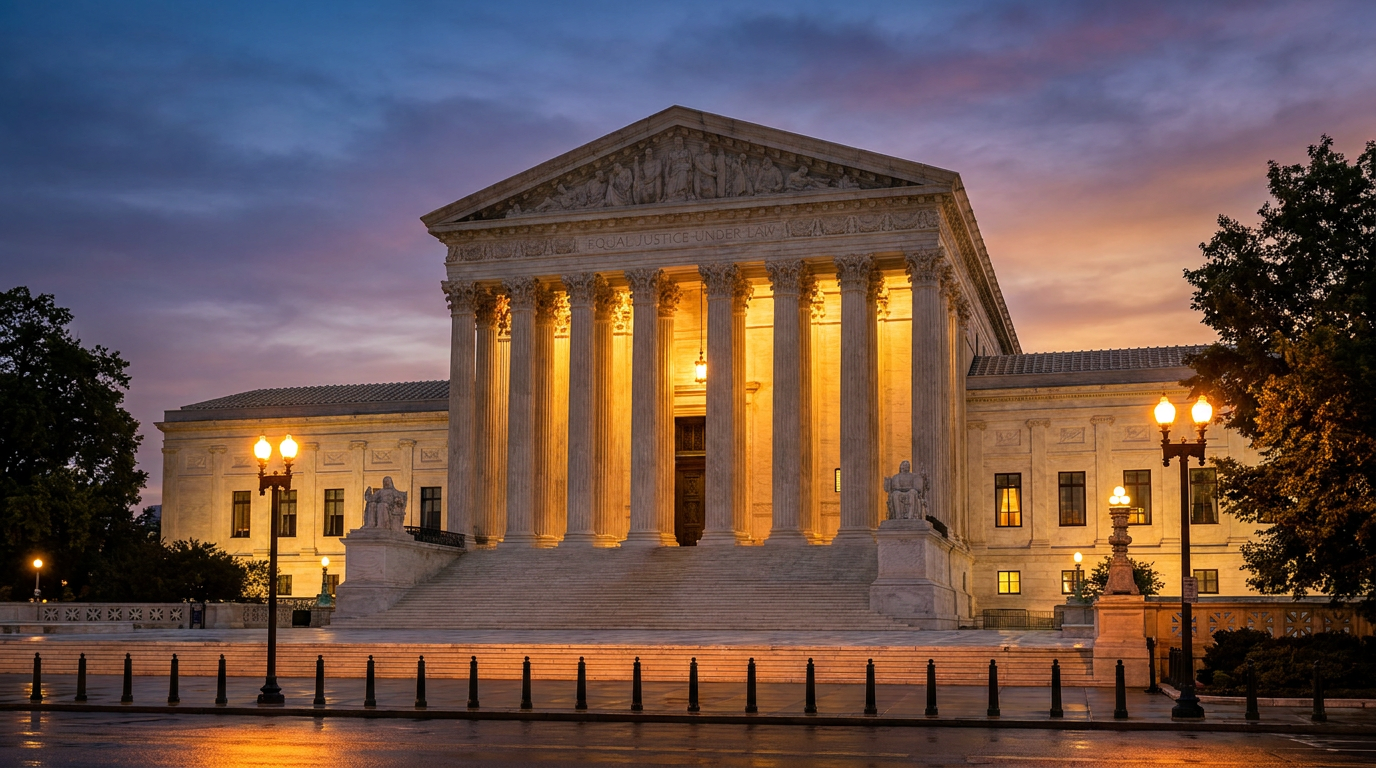
The U.S. Supreme Court has blocked Alabama from executing 49-year-old Jeffery Lee using nitrogen gas, upholding lower court rulings that the relatively new method violates the Constitution's ban on cruel and unusual punishment. In a brief, two-sentence order issued Thursday evening, the high court denied the state's emergency request to proceed with the execution. The decision was not unanimous; conservative Justices Clarence Thomas, Samuel Alito, and Neil Gorsuch dissented, indicating they would have allowed the execution to move forward, though they did not provide a written explanation for their stance.[1][2][3][4][5][7]
The ruling marks a significant legal setback for Alabama, which has heavily relied on nitrogen gas as its primary execution method in recent years. Lee has been incarcerated on death row for over two decades following his conviction for the 1998 murders of Jimmy Ellis and Elaine Thompson during a pawn shop robbery in Orrville, Alabama. His case has long been a flashpoint for death penalty abolitionists due to the highly contested circumstances of his original sentencing.[3][6][7][8]
Notably, the jury in Lee's original trial voted 7-5 to recommend a sentence of life imprisonment without the possibility of parole. However, the trial judge utilized a controversial legal mechanism known as judicial override to reject the jury's recommendation and unilaterally impose the death penalty. While Alabama officially abolished the practice of judicial override in 2017, becoming the last state in the nation to do so, the legislative change was not applied retroactively to Lee's case, leaving his death sentence intact despite the jury's preference for life.[3][7][8]

The execution method at the center of the legal battle, nitrogen hypoxia, involves strapping a tightly fitted respirator mask to the condemned inmate's face and replacing breathable air with pure nitrogen. The total lack of oxygen eventually causes death by asphyxiation. Alabama introduced the method as an alternative to lethal injection, which has faced widespread logistical hurdles nationwide as pharmaceutical companies increasingly refuse to supply the necessary drugs for capital punishment.[4][5][6]
The Supreme Court's decision to halt the execution capped a frantic week of legal maneuvering that culminated on Tuesday when U.S. District Judge Emily C. Marks permanently enjoined the state from using the gas on Lee. This marked an unprecedented federal ban on a legislatively enacted execution method, setting up a high-stakes showdown at the nation's highest court over the boundaries of the Eighth Amendment.[3][4][6][8]
The Supreme Court's decision to halt the execution capped a frantic week of legal maneuvering that culminated on Tuesday when U.S.
Judge Marks's ruling followed a 2-1 decision by the 11th U.S. Circuit Court of Appeals, which concluded that the nitrogen protocol presents a substantial risk of serious harm. The appellate judges noted that the one to three minutes it takes for an inmate to lose awareness constitutes an intolerable time frame of air hunger. This phenomenon exposes the inmate to severe physiological and psychological distress over and above the fact of death itself, which the court found violated constitutional protections.[4][7][8]

Under Supreme Court precedent, death row inmates challenging their execution method must propose a feasible alternative that significantly reduces the risk of severe pain. Lee's legal team suggested execution by firing squad, a method they argued is faster and less prone to botched outcomes. Judge Marks agreed, ruling that a firing squad is readily implemented and serves as a constitutional alternative to the prolonged suffocation associated with nitrogen gas.[5][7][8]
Alabama officials expressed deep frustration with the federal rulings blocking the execution. Governor Kay Ivey stated she was disappointed by the Supreme Court's decision but remains committed to ensuring that justice is ultimately served for the victims' families. The state maintained that inmates quickly lose consciousness under the protocol, characterizing the lower courts' concerns about air hunger as speculative and unfounded.[4][5]
Alabama Attorney General Steve Marshall took a more aggressive stance, arguing that the lower court's injunction was entirely unprecedented in American history. In court filings, his office warned that the ruling expands the concept of cruelty well beyond the bounds of the Eighth Amendment and permanently bans a method the state legislature explicitly approved. Marshall argued that forcing the state to adopt a firing squad protocol would cause unnecessary delays in carrying out lawful sentences.[3][7]

Nitrogen gas has been used in eight executions in the United States, including seven in Alabama and one in Louisiana, and Lee was scheduled to be the ninth person subjected to the method. Previous executions using nitrogen hypoxia have drawn intense scrutiny from human rights advocates and journalists. Witnesses at prior executions reported that inmates shook violently, gasped, and writhed on the gurney for several minutes before succumbing, fueling the legal arguments against the protocol's humaneness.[3][6]
The Supreme Court's order does not commute Lee's death sentence, but it forces Alabama to pivot its approach to capital punishment. The state must now either develop a formal protocol for a firing squad, revert to older methods like the electric chair or lethal injection, or continue fighting the nitrogen ban in lower courts. A spokesperson for the Alabama Department of Corrections confirmed the execution was called off for Thursday night and that the state would not immediately attempt an alternative method.[3][5][6]
How we got here
1998
Jeffery Lee is convicted of a double murder; a judge overrides the jury's recommendation of life in prison and sentences him to death.
2017
Alabama officially abolishes the practice of judicial override in capital cases.
2024
Alabama introduces nitrogen gas as an execution method amid shortages of lethal injection drugs.
June 9, 2026
A federal judge permanently blocks Alabama from using nitrogen gas on Lee.
June 11, 2026
The U.S. Supreme Court denies Alabama's emergency request to proceed with the execution.
Viewpoints in depth
State Prosecutors' View
Argue that nitrogen hypoxia is a humane, constitutional, and legislatively approved method of execution.
State officials and prosecutors contend that blocking the use of nitrogen gas obstructs the state's ability to deliver timely justice for victims of capital crimes. They argue that the lower courts relied on speculative claims about the inmates' suffering, maintaining that individuals quickly lose consciousness under the protocol. The Alabama Attorney General's office has warned that permanently banning a legislatively enacted method based on these claims expands the concept of cruelty beyond historical Eighth Amendment standards.
Eighth Amendment Advocates' View
Contend that the nitrogen protocol is a form of human experimentation that causes torturous suffocation.
Human rights advocates and defense attorneys argue that nitrogen hypoxia violates fundamental constitutional protections against cruel and unusual punishment. They point to witness accounts of previous executions where inmates writhed and gasped for several minutes, describing the sensation of 'air hunger' as intense psychological and physiological torment. This camp emphasizes that the state has a constitutional obligation to utilize alternative methods, such as a firing squad, if they significantly reduce the risk of severe pain.
Legal Observers' View
Focus on the procedural significance of a federal judge permanently banning a legislatively approved execution method.
Legal analysts highlight the unprecedented nature of the federal injunction, noting that the Supreme Court has historically deferred to state legislatures on execution protocols. The fact that the high court allowed the block to stand—despite a conservative majority and three dissenting justices—signals potential limits on how much leeway states will be given to experiment with new execution technologies amid the ongoing shortage of lethal injection drugs.
What we don't know
- How quickly Alabama can develop and implement a formal protocol for execution by firing squad.
- Whether the Supreme Court will eventually hear full arguments on the constitutionality of nitrogen hypoxia.
- How this ruling will impact the seven other states that currently authorize lethal gas as an execution method.
Key terms
- Nitrogen Hypoxia
- An execution method that causes death by replacing breathable oxygen with pure nitrogen gas.
- Eighth Amendment
- The section of the U.S. Constitution that prohibits the federal government from imposing cruel and unusual punishments.
- Judicial Override
- A legal mechanism that allows a trial judge to overrule a jury's sentencing recommendation in a capital case.
- Injunction
- A court order requiring a person or entity to do or cease doing a specific action.
- Air Hunger
- The severe, distressing sensation of breathlessness or suffocation caused by a lack of oxygen.
Frequently asked
What is nitrogen hypoxia?
An execution method where the inmate breathes pure nitrogen gas through a mask, depriving the body of oxygen until death occurs by asphyxiation.
Why did the Supreme Court block the execution?
The Court upheld lower court rulings that the nitrogen protocol causes severe 'air hunger,' violating the Eighth Amendment's ban on cruel and unusual punishment.
Will Jeffery Lee still be executed?
Yes, Lee remains on death row. Alabama may attempt to execute him using an alternative method, such as a firing squad or lethal injection, once a protocol is established.
What is judicial override?
A legal practice where a judge can impose a death sentence even if the jury recommends life in prison. Alabama banned this practice in 2017, but Lee was sentenced before the ban.
Sources
Source coverage
8 outlets
3 viewpoints surfaced








[1]The New York TimesEighth Amendment Advocates
Supreme Court Blocks Alabama From Executing Inmate Using Nitrogen Gas
Read on The New York Times →[2]NPREighth Amendment Advocates
Supreme Court prohibits Alabama from using nitrogen gas for execution
Read on NPR →[3]Associated PressState Prosecutors & Officials
Supreme Court says Alabama cannot proceed with nitrogen gas execution
Read on Associated Press →[4]CBS NewsState Prosecutors & Officials
Supreme Court declines to let Alabama proceed with nitrogen gas execution
Read on CBS News →[5]CNNLegal Observers
Supreme Court blocks Alabama from executing man using nitrogen hypoxia
Read on CNN →[6]PBS NewsHourLegal Observers
Federal judge permanently blocks Alabama from using nitrogen gas for executions
Read on PBS NewsHour →[7]News From The StatesLegal Observers
U.S. Supreme Court upholds block on Alabama nitrogen gas execution
Read on News From The States →[8]Death Penalty Information CenterEighth Amendment Advocates
Alabama Federal Judge Permanently Enjoins State From Using Nitrogen Gas to Execute Jeffery Lee
Read on Death Penalty Information Center →
More in news politics
See all 76 stories →Homelessness Crisis
Trump Administration Suspends Federal Funding for Los Angeles Homelessness Agency
6 sources

Strait of Hormuz
U.S. and Iran Weigh 60-Day Ceasefire to Reopen Strait of Hormuz as Trump Claims Deal is Imminent
7 sources

US-Iran Deal
US and Iran Near Memorandum of Understanding to Reopen Strait of Hormuz and Extend Ceasefire
7 sources

Strait of Hormuz
Trump Calls Off Strikes on Iran, Touts Imminent Peace Deal as Markets Surge
8 sources

Every angle. Every day.
Get news politics stories with full source coverage and perspective breakdowns delivered to your inbox.