
Trump Cancels Strikes on Iran, Claiming Imminent Peace Deal as Markets Surge
President Trump abruptly called off planned military strikes against Iran, announcing that a historic peace agreement is near. While global markets rallied on the prospect of an open Strait of Hormuz, Iranian officials cautioned that no final deal has been signed.
By Factlen Editorial Team
- U.S. Administration
- Views the deal as a historic victory achieved through maximum military pressure.
- Iranian Leadership
- Emphasizes that no final deal is signed and core red lines remain non-negotiable.
- Global Markets
- Prices in a massive economic relief rally due to the reopening of shipping lanes.
- Regional Allies
- Welcomes de-escalation but remains deeply skeptical of Iran's nuclear promises.
What's not represented
- · Iranian civilians affected by the recent strikes and economic sanctions.
- · Commercial shipping crews navigating the dangerous waters of the Persian Gulf.
Why this matters
A peace agreement would end months of military brinkmanship and reopen the Strait of Hormuz, immediately lowering global energy prices and easing inflation. However, if the fragile deal collapses, the U.S. and Iran risk a rapid escalation into a full-scale regional war.
Key points
- President Trump canceled planned military strikes against Iran, citing progress on a peace agreement.
- The proposed deal would reportedly reopen the Strait of Hormuz and lift the U.S. naval blockade on Iranian ports.
- Global financial markets surged and oil prices dropped sharply in response to the de-escalation.
- Iranian officials stated that while progress has been made, no final agreement has been signed.
- The U.S. insists the deal will dismantle Iran's nuclear enrichment program, a point Tehran disputes.
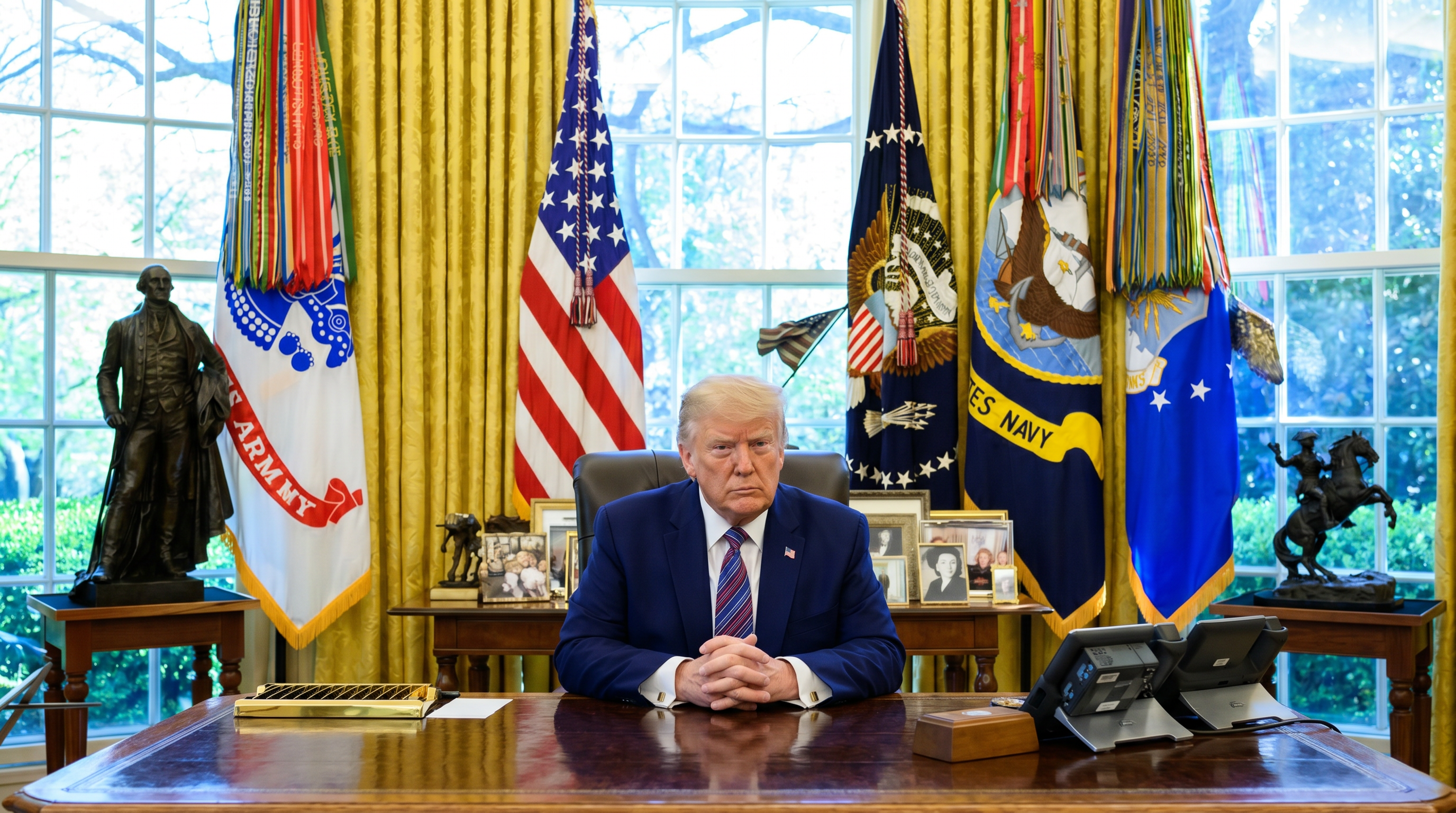
In a sudden reversal after days of escalating military strikes and threats to obliterate critical oil infrastructure, President Donald Trump abruptly changed course late Thursday, canceling a planned wave of bombings and declaring that a historic peace agreement with Tehran is imminent. The decision halts a dangerous spiral of retaliation that had brought the Middle East to the brink of a wider regional war, shifting the immediate focus from military confrontation to high-stakes diplomacy. The announcement marks a significant pivot for an administration that had spent the previous forty-eight hours warning of unprecedented military consequences if Iran did not capitulate to American demands.[1][2]
The announcement, delivered initially via a post on Truth Social and later expanded upon during remarks in the Oval Office, claimed that the highest levels of Iranian leadership had formally approved a deal to end the months-long war. Trump stated that the comprehensive agreement would be signed 'shortly,' suggesting that a formal ceremony could take place over the weekend in Europe, with Vice President JD Vance expected to be in attendance. The president expressed confidence that the diplomatic breakthrough would permanently alter the security landscape of the Persian Gulf, framing the tentative accord as a direct result of his administration's maximum pressure campaign and willingness to use decisive military force.[4][8]
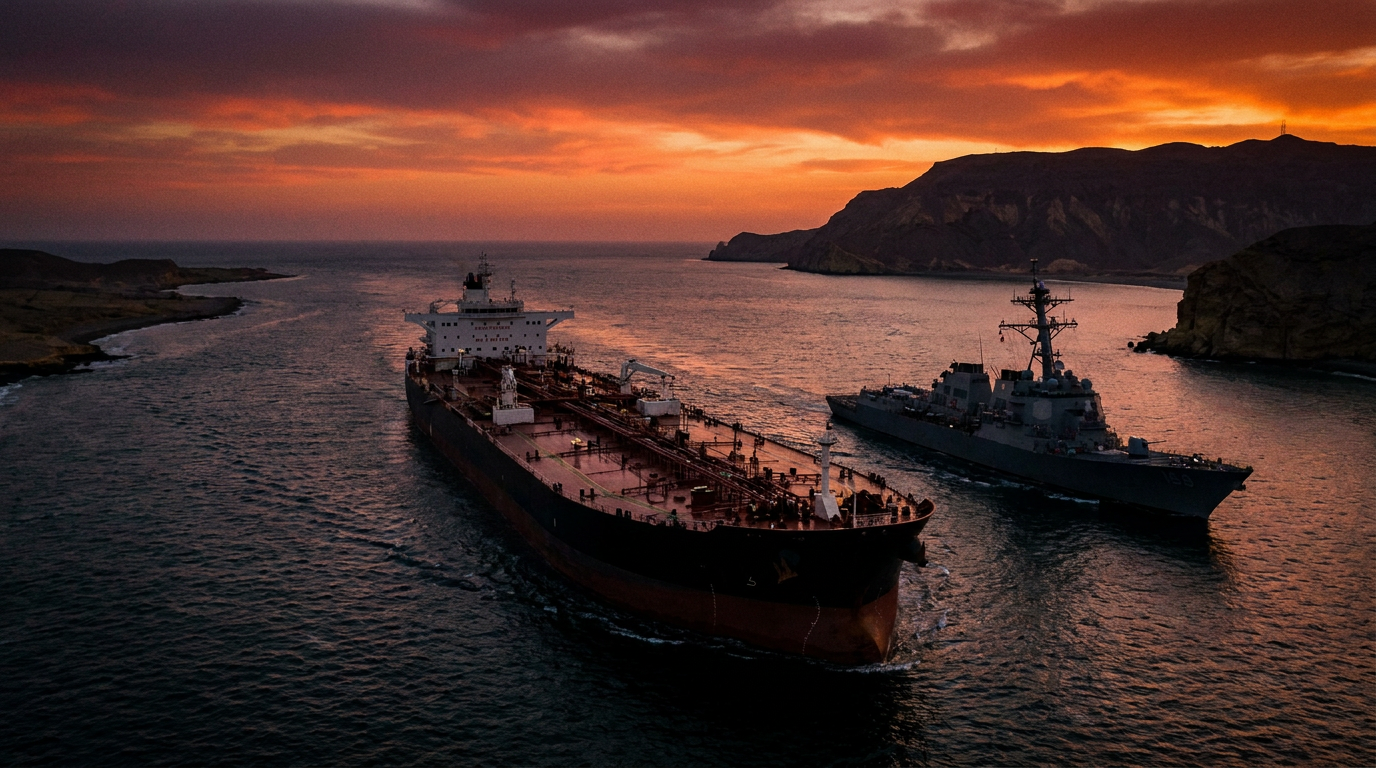
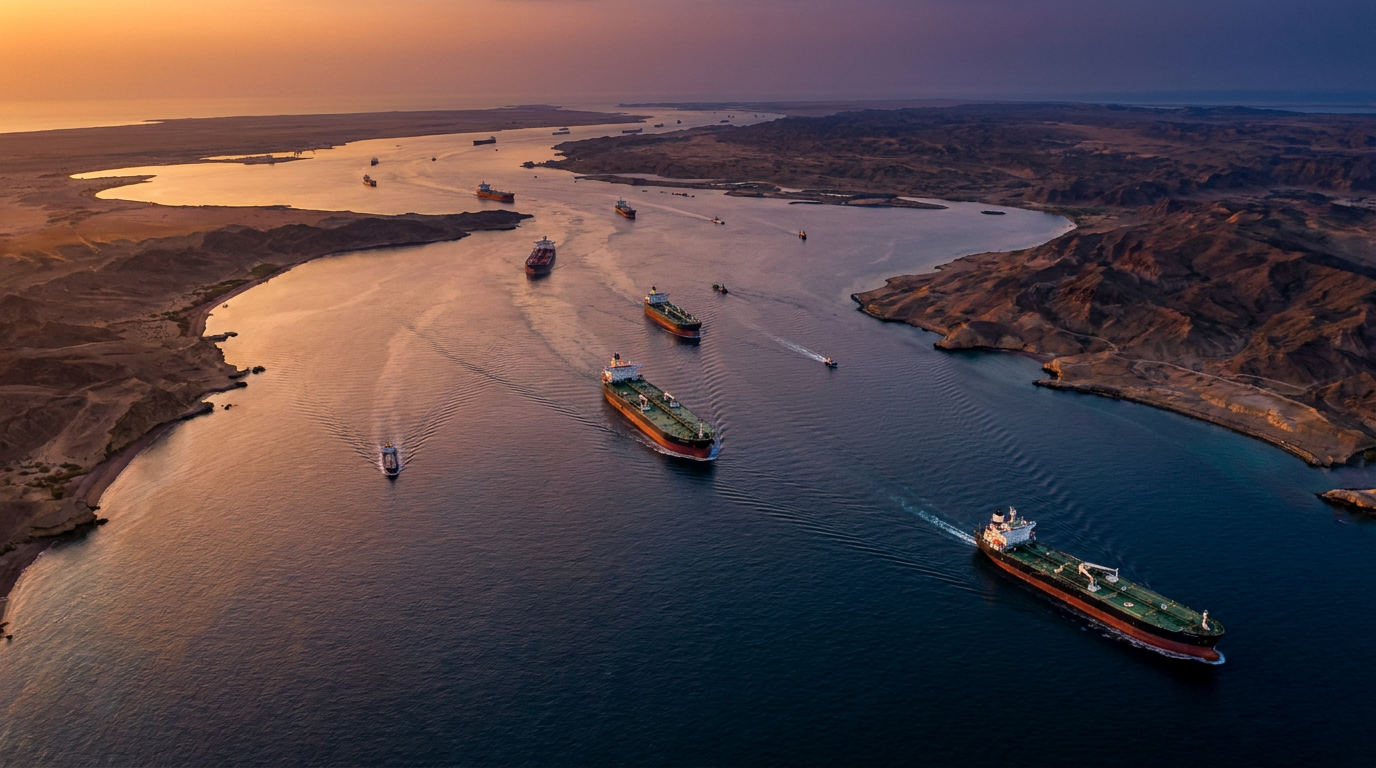
The economic and geopolitical stakes of the conflict are immense. For months, a strict United States naval blockade and a retaliatory Iranian closure of the Strait of Hormuz have choked off a vital maritime artery that normally carries roughly one-fifth of the world's energy supply. The resulting bottleneck has caused a severe spike in global energy prices, fueling inflation across Western economies and forcing central banks to maintain elevated interest rates. Reopening the strait has been a primary objective for international negotiators desperate to stabilize the global economy.[3][7]
Trump's proposed settlement reportedly hinges on a sixty-day cessation of violence, the immediate reopening of the Strait of Hormuz to commercial shipping, and the lifting of the United States blockade on Iranian ports. In exchange for the restoration of maritime trade and a pause in hostilities, the framework establishes a dedicated window to negotiate the dismantling of Iran's nuclear enrichment infrastructure. Negotiators hope this phased approach will build enough mutual trust to tackle the more intractable issues surrounding sanctions relief and weapons development.[8][9]

Financial markets reacted swiftly and aggressively to the de-escalation. Wall Street surged on the news, with the S&P 500 climbing 1.8 percent and the tech-heavy Nasdaq jumping 2.5 percent on Thursday, marking some of the strongest single-day gains in months. The rally rippled across the Asia-Pacific region on Friday, while the price of United States crude oil tumbled to around $86 a barrel as traders rapidly priced in the return of Persian Gulf oil shipments. Investors view the potential reopening of the Strait of Hormuz as the removal of a massive macroeconomic headwind.[3][7]

However, the certainty of the deal remains highly contested, creating a stark contrast between Washington's optimism and Tehran's caution. While the White House projects confidence that the conflict is effectively over, Iranian officials have publicly pushed back against the narrative that a final, binding agreement has been reached. The diplomatic messaging from Tehran suggests that while significant progress has been made on the immediate military de-escalation, the broader political settlement remains a work in progress, and domestic political factions within Iran are still debating the merits of the proposed concessions.[6]
Iranian Foreign Ministry spokesman Esmaeil Baghaei stated on Friday that while large portions of the negotiating text have been resolved, Tehran has 'not reached a final conclusion' on the comprehensive package. Iranian state media outlets cautioned the public to dismiss Trump's claims until a formal understanding is announced directly by the Islamic Republic, noting the United States president's history of premature declarations regarding diplomatic breakthroughs. The cautious tone reflects the deep-seated mistrust that continues to define the bilateral relationship.[6]
The cautious tone reflects the deep-seated mistrust that continues to define the bilateral relationship.
The disconnect highlights the fragile mechanics of the ongoing diplomacy. According to diplomatic sources briefed on the negotiations, while an agreement in principle was reached by working-level negotiators, Iran's Supreme Leader still needs to give his final, definitive approval before any documents can be signed. The core friction point remains the sequencing of economic sanctions relief and the ultimate fate of Iran's nuclear program, two issues that have derailed multiple previous attempts at a lasting peace. Negotiators are acutely aware that any misstep in the drafting of the memorandum could cause the entire framework to collapse.[9][10]
President Trump has insisted that any final pact must ensure Iran never obtains a nuclear weapon, demanding that Tehran's stockpile of highly enriched uranium be either destroyed or removed from the country entirely. Iranian officials, however, have maintained that the current rounds of talks are strictly focused on ending the immediate military conflict and reopening maritime trade, with complex nuclear details relegated to future discussions. This fundamental disagreement over the scope of the immediate deal poses the greatest risk to the weekend signing ceremony.[5][10]
The sudden pivot to diplomacy follows a perilous forty-eight-hour window that brought the region to the absolute brink of all-out war. Earlier on Thursday, Trump had threatened to hit Iran 'very hard,' specifically floating the idea of seizing Kharg Island, Iran's primary oil export terminal. A military strike on Kharg Island would have crippled the Iranian economy and likely triggered a massive, uncontained regional conflict, a scenario that deeply alarmed neighboring Gulf states who rely on regional stability for their own economic survival.[1][2]

United States Central Command forces had already engaged in 'self-defense strikes' earlier in the week, targeting Iranian military surveillance systems and disabling a merchant vessel that was allegedly attempting to run the American blockade in the Gulf of Oman. In retaliation, Iran launched waves of drones and ballistic missiles at United States military bases situated in neighboring Arab states, prompting temporary airspace closures and emergency defense measures in Kuwait and Jordan. The rapid escalation demonstrated how quickly the conflict could spill over borders.[1][8]
The diplomatic breakthrough also appeared to catch key United States allies off guard, underscoring the closely held nature of the negotiations. Israeli Prime Minister Benjamin Netanyahu was reportedly unaware of the impending agreement when Trump posted his initial announcement on social media, as Israeli security officials were actively planning their own defensive postures. The lack of prior consultation highlights the delicate balancing act the United States faces in managing its regional alliances while pursuing direct, high-stakes negotiations with Tehran without alienating its closest partners in the Middle East.[5]
Following a subsequent phone call between the two leaders, Netanyahu's office issued a statement clarifying that Israel is not a formal party to the memorandum of understanding being developed with Iran. Nevertheless, the Israeli government expressed appreciation for Trump's explicit commitment that any final treaty would physically dismantle Iran's nuclear enrichment infrastructure and curb its financial support for regional proxy groups. Israel's ultimate acceptance of the deal will likely depend on the strict enforcement of those nuclear provisions.[5]

For now, the Middle East remains suspended in a volatile gray zone between war and peace. While the immediate threat of a massive United States bombardment has been suspended, the underlying military posture on the ground and at sea remains largely unchanged. The United States naval blockade remains in full effect, and Iranian military forces continue to aggressively monitor commercial traffic approaching the Strait of Hormuz, waiting for official orders to stand down. Military commanders on both sides remain on high alert, fully prepared to resume hostilities if the diplomatic track suddenly falters.[1][4]
The coming days will test whether the conceptual framework agreed upon by negotiators can survive the hard realities of domestic politics in both Washington and Tehran. If successful, the agreement would mark a monumental foreign policy achievement, ending a conflict that has severely destabilized global security and fractured international supply chains. If the fragile consensus collapses, however, the region faces a rapid and potentially devastating return to the military brinkmanship that defined the past week, with even higher stakes for the global economy.[6][9]
How we got here
Early April 2026
The U.S. and Israel pause military attacks on Iran, establishing a fragile ceasefire in the region.
Early June 2026
Hostilities resume as the U.S. strikes Iranian vessels attempting to run a naval blockade, and Iran retaliates with drone attacks on U.S. bases.
June 10, 2026
President Trump threatens massive retaliatory strikes against Iran, specifically targeting the Kharg Island oil terminal.
June 11, 2026
Trump abruptly cancels the planned bombings, announcing on social media that a peace agreement has been approved by Iranian leadership.
June 12, 2026
Global markets surge on the news of a potential deal, though Iranian officials clarify that a final agreement has not yet been signed.
Viewpoints in depth
The U.S. Administration
The White House frames the agreement as a historic victory achieved through maximum military pressure.
President Trump and his allies argue that the threat of overwhelming military force—specifically the prospect of destroying Iran's critical oil infrastructure—forced Tehran to the negotiating table. The administration views the tentative agreement as a total capitulation that will reopen global shipping lanes while securing a commitment to dismantle Iran's nuclear enrichment capabilities.
Iranian Leadership
Tehran emphasizes that no final deal is signed and insists its core red lines remain non-negotiable.
Iranian officials, including the Foreign Ministry, are deliberately downplaying the immediacy of the deal to maintain leverage. They argue that while a framework to end the immediate military conflict and lift the U.S. blockade is largely agreed upon, the specifics of their nuclear program are not part of this initial phase. Hardliners in Tehran insist that any long-term settlement must include the complete unfreezing of Iranian assets and permanent sanctions relief.
Global Markets
Investors and energy traders are pricing in a massive economic relief rally.
The financial sector views the de-escalation as the removal of a massive geopolitical overhang. With the Strait of Hormuz handling roughly 20% of the world's oil supply, the prospect of its reopening immediately crushed crude prices, easing global inflation fears. Wall Street analysts note that if the deal holds, it paves the way for a broader economic recovery, though they remain cautious of sudden reversals.
Israel & Regional Allies
Middle Eastern allies welcome the de-escalation but remain deeply skeptical of Iran's nuclear promises.
While Gulf states heavily lobbied the U.S. to avoid a regional war that could devastate their own infrastructure, Israel remains focused on the nuclear threat. Prime Minister Benjamin Netanyahu's government has made it clear that any diplomatic settlement must physically dismantle Iran's highly enriched uranium stockpile and sever its funding to proxy militias across the region.
What we don't know
- Whether Iran's Supreme Leader will ultimately approve the final text of the agreement.
- How the two nations will resolve their conflicting stances on Iran's highly enriched uranium stockpile.
- The exact timeline for lifting the U.S. naval blockade and fully reopening the Strait of Hormuz.
Key terms
- Strait of Hormuz
- A narrow waterway between the Persian Gulf and the Gulf of Oman through which roughly 20% of the world's oil supply passes.
- Kharg Island
- Iran's primary oil export terminal, located in the Persian Gulf, which handles the vast majority of the country's crude oil exports.
- Highly Enriched Uranium (HEU)
- Uranium that has been processed to a high concentration of the isotope U-235, making it capable of being used in nuclear weapons.
- Naval Blockade
- A military operation in which ships are used to prevent vessels, including commercial cargo and oil tankers, from entering or leaving a country's ports.
Frequently asked
Is the peace deal officially signed?
Not yet. While President Trump announced that an agreement has been approved, Iranian officials state that no final conclusion has been reached and the Supreme Leader must still give approval.
What happens to the Strait of Hormuz?
Under the proposed framework, the Strait of Hormuz would be reopened to commercial shipping, and the U.S. would lift its naval blockade on Iranian ports.
Will Iran give up its nuclear weapons program?
The U.S. insists the deal will dismantle Iran's highly enriched uranium stockpile. However, Iranian officials claim the current agreement only covers the military ceasefire, with nuclear negotiations to follow later.
Why did the stock market surge?
Investors reacted positively to the de-escalation because reopening the Strait of Hormuz lowers global oil prices, which in turn eases inflation fears and boosts economic growth.
Sources
Source coverage
10 outlets
4 viewpoints surfaced










[1]ForbesRegional Allies
Trump Cancels Iran Bombings And Claims Peace Deal Is Approved
Read on Forbes →[2]Washington PostRegional Allies
Trump says he has canceled plans to strike Iran, claiming deal is near
Read on Washington Post →[3]Al JazeeraGlobal Markets
Stocks markets surge as Trump calls off strikes on Iran, touts peace deal
Read on Al Jazeera →[4]Al-MonitorRegional Allies
Trump cancels strikes against Iran planned for Thursday evening
Read on Al-Monitor →[5]Fox NewsU.S. Administration
Trump says Iran deal near after second day of US strikes and attacks
Read on Fox News →[6]The GuardianIranian Leadership
Trump claims US and Iran on verge of signing peace agreement, but Tehran says no final decision made
Read on The Guardian →[7]BloombergGlobal Markets
Stocks Rally as Trump Signals US-Iran Deal Is Near: Markets Wrap
Read on Bloomberg →[8]CBS NewsU.S. Administration
Live Updates: Trump says 'settlement' reached on Iran, signing could be as soon as this weekend
Read on CBS News →[9]AxiosGlobal Markets
Markets surge as Trump announces deal with Iran
Read on Axios →[10]Arms Control AssociationIranian Leadership
Trump Says U.S., Iran Close to Deal
Read on Arms Control Association →
More in news politics
See all 75 stories →Strait of Hormuz
U.S. and Iran Weigh 60-Day Ceasefire to Reopen Strait of Hormuz as Trump Claims Deal is Imminent
7 sources
US-Iran Deal
US and Iran Near Memorandum of Understanding to Reopen Strait of Hormuz and Extend Ceasefire
7 sources
Strait of Hormuz
Trump Calls Off Strikes on Iran, Touts Imminent Peace Deal as Markets Surge
8 sources
Death Penalty
Supreme Court Blocks Alabama From Executing Inmate Using Nitrogen Gas
8 sources
Every angle. Every day.
Get news politics stories with full source coverage and perspective breakdowns delivered to your inbox.