
The Era of User-Controlled Social Media: How Interoperability and Custom Algorithms Are Rewriting the Internet
A new wave of decentralized protocols and custom algorithms is dismantling the walled gardens of social media, giving users unprecedented control over their data, feeds, and digital communities.
By Factlen Editorial Team
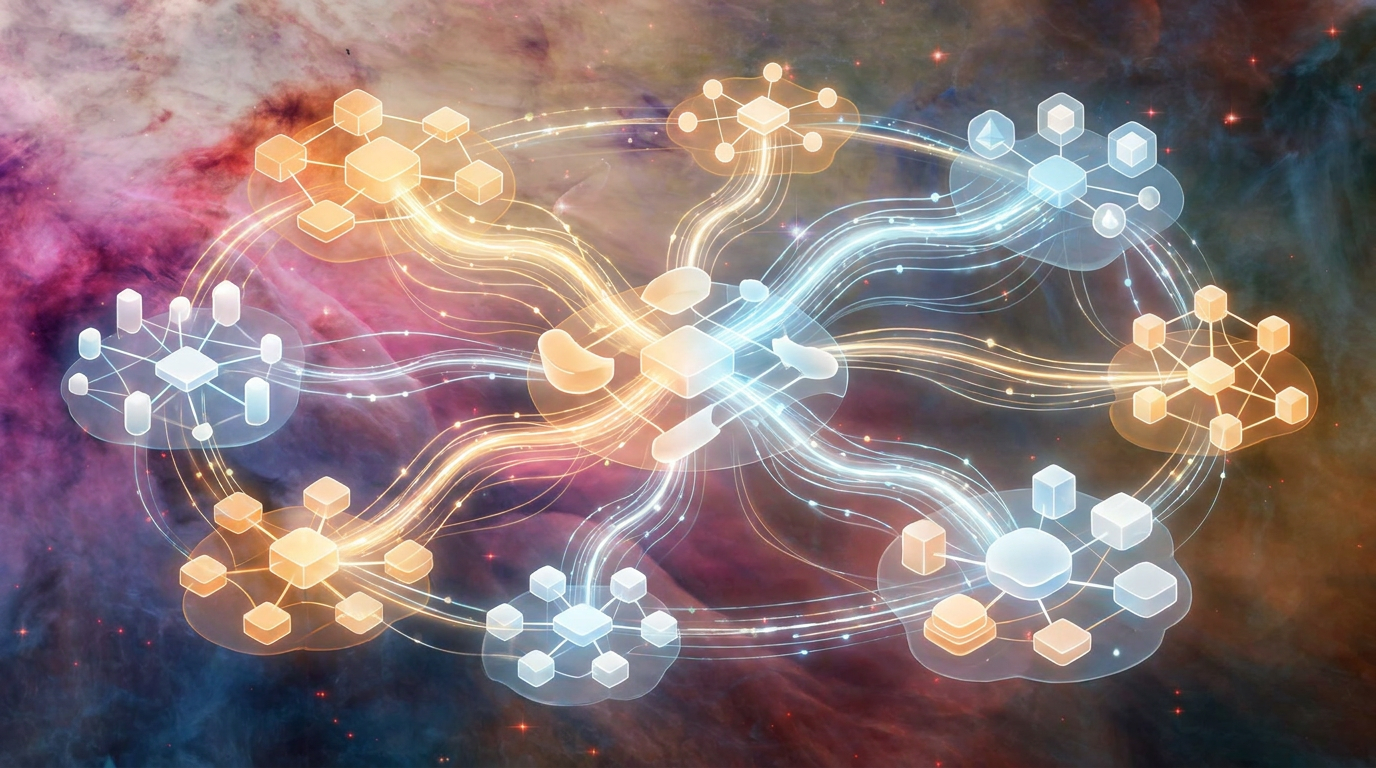
- Decentralized Platform Builders
- The engineers and founders creating the infrastructure for custom algorithms and federated networks.
- Open-Web Advocates
- Champions of digital rights who view interoperability as a fundamental necessity for a healthy internet.
- Commercial Tech Giants
- Massive legacy platforms cautiously adopting open protocols to maintain relevance and appease regulators.
- Trust & Safety Researchers
- Experts concerned with the complexities of moderating decentralized and federated networks.
What's not represented
- · Everyday users who prefer algorithmic curation and find decentralized platforms too complex.
- · Advertisers trying to navigate ad placements in a fragmented, user-controlled ecosystem.
Why this matters
For years, users have been trapped in algorithmic feeds designed to maximize outrage and engagement. The shift toward interoperable, user-controlled networks means you can finally choose what you see, own your digital connections, and leave toxic platforms without losing your friends.
Key points
- Decentralized protocols like ActivityPub and the AT Protocol are breaking down the 'walled gardens' of traditional social media.
- Interoperability allows users on different platforms, such as Threads and Mastodon, to interact seamlessly.
- Platforms like Bluesky offer a 'marketplace of algorithms,' letting users choose custom feeds rather than relying on a single corporate algorithm.
- Data portability ensures users can move to new platforms without losing their followers or digital connections.
- Starter Packs help new users easily find communities and feeds tailored to their interests.
- Moderation in decentralized networks relies on community-level tools like 'defederating' and strict user blocks.
For nearly two decades, the social internet has been defined by "walled gardens." Platforms like Facebook, Twitter, and Instagram locked users into proprietary ecosystems, dictating what they saw through opaque, engagement-driven algorithms. If a user wanted to reach their audience, they had to play by the rules of a single corporate entity, and leaving meant abandoning years of digital connections.[7]
But a fundamental architectural shift is currently rewriting the rules of digital connection. Driven by user fatigue, shifting market dynamics, and regulatory pressure, a new era of "interoperable" social media is taking root, promising to return control to the people who actually create and consume the content.[5][7]
This movement is anchored by two distinct but philosophically aligned technologies: the ActivityPub protocol, which powers the decentralized "Fediverse," and the AT Protocol, the engine behind the rapidly growing network Bluesky. Together, they are proving that social media does not have to be a zero-sum trap.[2][6]
The core mechanism driving this change is interoperability. In the traditional model, a user on one platform cannot seamlessly interact with a user on another. It is as if a Gmail user were forbidden from emailing a Yahoo user, forced instead to maintain separate inboxes for every group of friends.[6]

ActivityPub, a standard officially recognized by the World Wide Web Consortium (W3C) in 2018, shatters this barrier. It acts as a universal translator for social posts, allowing independent servers and entirely different applications to communicate with one another in a standardized format.[6]
The most visible proof of this concept arrived when Meta's Threads, a platform with over 100 million users, began integrating ActivityPub. By toggling a "Fediverse Sharing" setting, Threads users can now broadcast their posts to, and receive replies from, users on entirely different networks like Mastodon, bridging the gap between corporate giants and independent communities.[1][6]
This cross-platform communication fundamentally alters the balance of power. As digital rights advocates point out, the biggest hurdle to leaving a toxic platform has always been the "social graph"—the fear of abandoning the audience and connections built over years. Interoperability makes the social graph portable, allowing users to pack up their digital lives and move to a better provider without starting over.[5][6]
Beyond portability, the new decentralized web is tackling the psychological toll of social media by dismantling the centralized algorithm. On legacy platforms, a single, opaque algorithmic intelligence decides what goes viral, often prioritizing outrage and anxiety to maximize the amount of time users spend scrolling.[4][7]

Beyond portability, the new decentralized web is tackling the psychological toll of social media by dismantling the centralized algorithm.
Bluesky, built on the AT Protocol, has pioneered a radically different approach: the "marketplace of algorithms." Rather than forcing users into a single algorithmic feed designed by the company, the platform allows anyone to build, share, and subscribe to custom feeds.[2][4]
These custom feeds function much like playlists. A user can pin a feed that only shows posts containing cat photos, a feed dedicated to peer-reviewed science, or a feed that exclusively highlights quiet, low-engagement posts from mutual friends to foster intimate conversation.[2][3]
By decoupling the hosting of content from the curation of content, users regain agency over their digital diets. If a user feels overwhelmed by political news or doomscrolling, they do not have to delete the app; they simply switch to a different algorithm that prioritizes gardening, local community events, or positive news.[3][4]
To make this ecosystem accessible to non-technical users, developers have introduced features like "Starter Packs." These curated bundles of up to 150 recommended accounts and custom feeds allow new users to instantly immerse themselves in a tailored, high-quality community without having to painstakingly build their network from scratch.[2][3]

However, this decentralized utopia is not without its uncertainties and friction points. Content moderation remains a profound challenge when there is no central authority to ban bad actors across the entire network.[7]
In a federated system, moderation happens at the server or community level. If one server becomes a haven for harassment or illegal content, other servers can simply sever the connection—a process known as "defederating"—effectively quarantining the bad actors without shutting down the broader network.[1][5]
Individual users also have access to powerful new tools, such as the "nuclear block," which not only hides a harassing user but severs all digital ties, preventing the blocked account from even seeing or quoting the blocker's posts anywhere on the network.[3]
Yet, skeptics worry about the long-term intentions of massive corporate players entering the open web. When a giant like Meta adopts an open protocol, some fear an "embrace, extend, and extinguish" strategy, where the corporation eventually uses its massive market share to dictate the rules of the protocol or swallow smaller competitors.[5][6]

Despite these challenges, the momentum toward user-controlled social media is undeniable. The European Union's Digital Markets Act has already mandated interoperability for messaging apps, and regulators are closely watching the social media space for similar opportunities to enforce open standards.[5]
For the everyday user, the stakes are deeply personal. The transition from walled gardens to open protocols represents a shift from being a captive audience to being an empowered citizen of the digital public square.[7]
As custom algorithms and portable social graphs become the new standard, the internet is slowly returning to its original promise: a decentralized, resilient network where connection is a choice, not a corporate mandate.[7]
How we got here
Jan 2018
The World Wide Web Consortium (W3C) officially recommends ActivityPub as a decentralized social networking standard.
Oct 2022
The first iteration of the Bluesky protocol (AT Protocol) arrives, introducing the concept of portable accounts and custom algorithms.
Jul 2023
Meta launches Threads and announces its commitment to integrating the ActivityPub protocol.
Mar 2024
Threads implements a beta version of fediverse support, allowing cross-platform interaction with Mastodon.
Jun 2024
Bluesky introduces 'Starter Packs' to help users easily onboard and discover custom algorithmic feeds.
Viewpoints in depth
Open-Web Advocates
Champions of digital rights who view interoperability as a fundamental necessity for a healthy internet.
Organizations like the Electronic Frontier Foundation and Open Future argue that the lock-in effect of traditional social media is inherently anti-competitive and harmful to public discourse. They believe that users must have the right to own their social graph—the network of people they follow and who follow them. By championing protocols like ActivityPub, they envision a future where switching social networks is as frictionless as changing email providers, forcing platforms to compete on features and user experience rather than holding audiences hostage.
Decentralized Platform Builders
The engineers and founders creating the infrastructure for custom algorithms and federated networks.
Developers behind platforms like Bluesky and Mastodon are focused on solving the technical and psychological flaws of Web 2.0. They argue that a single, centralized algorithm will always optimize for engagement, which inevitably amplifies outrage. By building 'composable' moderation tools and custom feeds, they aim to give users the tools to curate their own digital environments. Their primary challenge is making these complex decentralized systems as intuitive and user-friendly as the legacy platforms they aim to replace.
Commercial Tech Giants
Massive legacy platforms cautiously adopting open protocols to maintain relevance and appease regulators.
Companies like Meta have begun integrating open protocols, such as adding ActivityPub support to Threads. From their perspective, embracing interoperability is a strategic move to attract creators who demand content portability, while also signaling goodwill to antitrust regulators in the European Union and the United States. However, their participation is viewed with caution by open-web purists, who worry that massive corporations might eventually try to dominate or alter the open standards to serve their own commercial interests.
Trust & Safety Researchers
Experts concerned with the complexities of moderating decentralized and federated networks.
While praising the benefits of user control, safety researchers highlight the profound difficulties of policing a network with no central authority. In a federated system, stopping a coordinated harassment campaign or the spread of illegal material requires cooperation across dozens of independent servers. While tools like 'defederation' and 'nuclear blocks' empower individual communities to protect themselves, researchers warn that bad actors can easily spin up new servers, creating a continuous game of whack-a-mole that places a heavy burden on volunteer server administrators.
What we don't know
- Whether massive corporate platforms like Meta will fully commit to open protocols or attempt to dominate them.
- How decentralized networks will handle large-scale, coordinated disinformation campaigns without a central moderation team.
- If mainstream users will widely adopt custom algorithms, or if the friction of choosing feeds will deter the average consumer.
Key terms
- Fediverse
- A network of interconnected, independently hosted social media servers that can communicate with each other using shared protocols.
- ActivityPub
- An open, decentralized social networking protocol standardized by the W3C, used by platforms like Mastodon and Threads.
- AT Protocol
- The underlying technology of Bluesky, designed specifically for account portability and composable custom algorithms.
- Walled Garden
- A closed platform where the provider controls all content, algorithms, and user data, preventing interaction with outside networks.
- Starter Pack
- A user-curated list of recommended accounts and custom feeds designed to help new users quickly find relevant content.
- Defederating
- The process by which one independent server cuts off communication with another server, usually to block harassment or toxic content.
Frequently asked
Can I use my Threads account to follow people on Mastodon?
Yes. Meta has integrated ActivityPub into Threads, allowing users to turn on 'Fediverse Sharing' to follow and interact with users across different platforms.
What makes Bluesky different from X (formerly Twitter)?
Unlike X, Bluesky allows users to choose their own custom algorithms and switch their data to different servers, preventing a single company from controlling their feed.
Do I need to know how to code to use custom algorithms?
No. On platforms like Bluesky, custom feeds function like playlists; you simply search for a topic you like and 'pin' the feed to your home screen.
What happens to my followers if I leave a decentralized platform?
Because the protocols support data portability, you can transfer your account to a different server or provider and take your social graph (your followers and the people you follow) with you.
Sources
Source coverage
7 outlets
4 viewpoints surfaced







[1]Electronic Frontier FoundationOpen-Web Advocates
How to Post to Mastodon and Bluesky from Threads
Read on Electronic Frontier Foundation →[2]PCMagDecentralized Platform Builders
Getting Started on Bluesky? 5 Unique Features to Check Out Right Away
Read on PCMag →[3]ZDNetDecentralized Platform Builders
Should you join Bluesky? Feeds, Lists, and Starter Packs explained
Read on ZDNet →[4]WiredTrust & Safety Researchers
Bluesky's Custom Algorithms Could Be the Future of Social Media
Read on Wired →[5]Open FutureOpen-Web Advocates
A Public, Interoperable Social Media Space
Read on Open Future →[6]Popular ScienceCommercial Tech Giants
How ActivityPub is setting the stage to weave all your social media feeds together
Read on Popular Science →[7]Factlen Editorial TeamTrust & Safety Researchers
Synthesis by Factlen editorial team
Read on Factlen Editorial Team →

More in technology
See all 58 stories →Web Trust
How Decentralized Social Media Actually Works in 2026
8 sources
Agentic AI
Microsoft and Xiaomi Open-Source New Architectures to Fix AI Agent Amnesia
7 sources

Right to Repair
The Evidence Pack: Do 'Right to Repair' Mandates Actually Reduce E-Waste and Save Money?
8 sources

Social Interoperability
The End of the Walled Garden: How Social Media Interoperability Finally Clicked
6 sources
Every angle. Every day.
Get technology stories with full source coverage and perspective breakdowns delivered to your inbox.