
The Mechanics of Astrotourism: How Dark Sky Parks Are Saving the Night
As light pollution erases the stars for 99% of the developed world, a booming 'astrotourism' industry is turning pristine darkness into a protected, lucrative natural resource.
By Factlen Editorial Team
- Rural Tourism Boards
- View pristine darkness as a highly marketable natural asset that draws high-spending, off-season visitors.
- Conservationists & Astronomers
- Argue that the night sky is a universal human heritage and that light pollution is an urgent ecological threat.
- Lighting Industry Reformers
- Emphasize that preserving the night sky requires engineering smarter, shielded lighting infrastructure.
- Travel Industry Analysts
- Track astrotourism as a major consumer shift toward nature-based travel and digital disconnection.
What's not represented
- · Urban Planners in Mega-Cities
- · Commercial Airlines and Satellite Operators
Why this matters
With artificial light increasing globally, natural darkness is becoming a rare ecological and cultural commodity. The push to protect night skies is not only restoring human circadian health and wildlife habitats, but also injecting billions of dollars into rural economies that commit to turning off the lights.
Key points
- Astrotourism has emerged as a top travel trend for 2026, driven by celestial events and a desire to disconnect.
- 99% of people in the US and Europe live under light-polluted skies, making natural darkness a rare commodity.
- DarkSky International certifies parks and communities that implement strict lighting ordinances to protect the night sky.
- Astrotourism is projected to generate billions of dollars for rural economies, particularly during the winter off-season.
- Preserving dark skies requires shielded, warm-colored lighting fixtures rather than total darkness.
The travel industry in 2026 is increasingly defined by a collective desire to look up. Driven by a highly anticipated total solar eclipse in August and a solar maximum producing vivid auroras at unusually low latitudes, "astrotourism" has emerged as a dominant force in global travel. Tour operators are reporting sold-out itineraries for eclipse paths across Spain and Iceland, while remote desert lodges are seeing unprecedented demand. But beyond the headline-grabbing celestial events, the core of this movement is rooted in something much simpler, and increasingly rare: the search for natural darkness.[1][8]
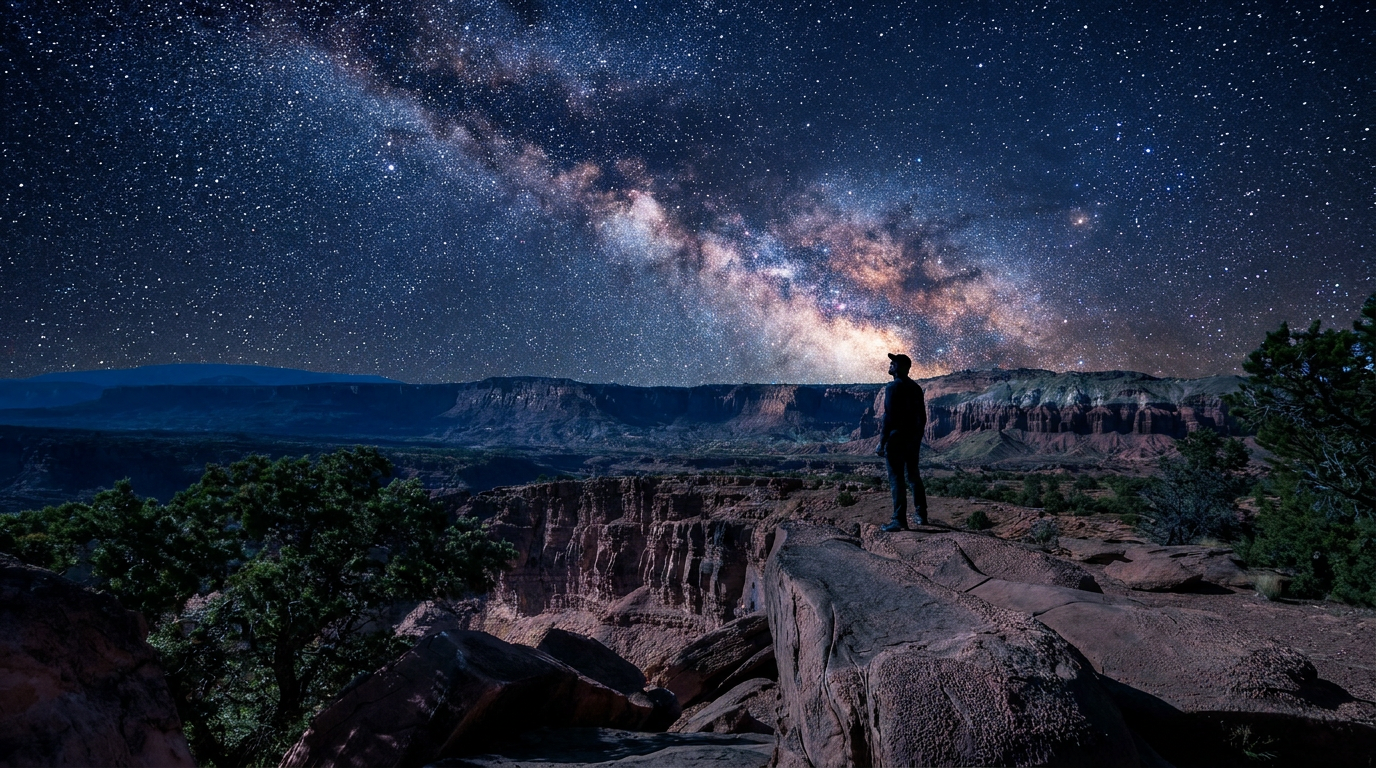
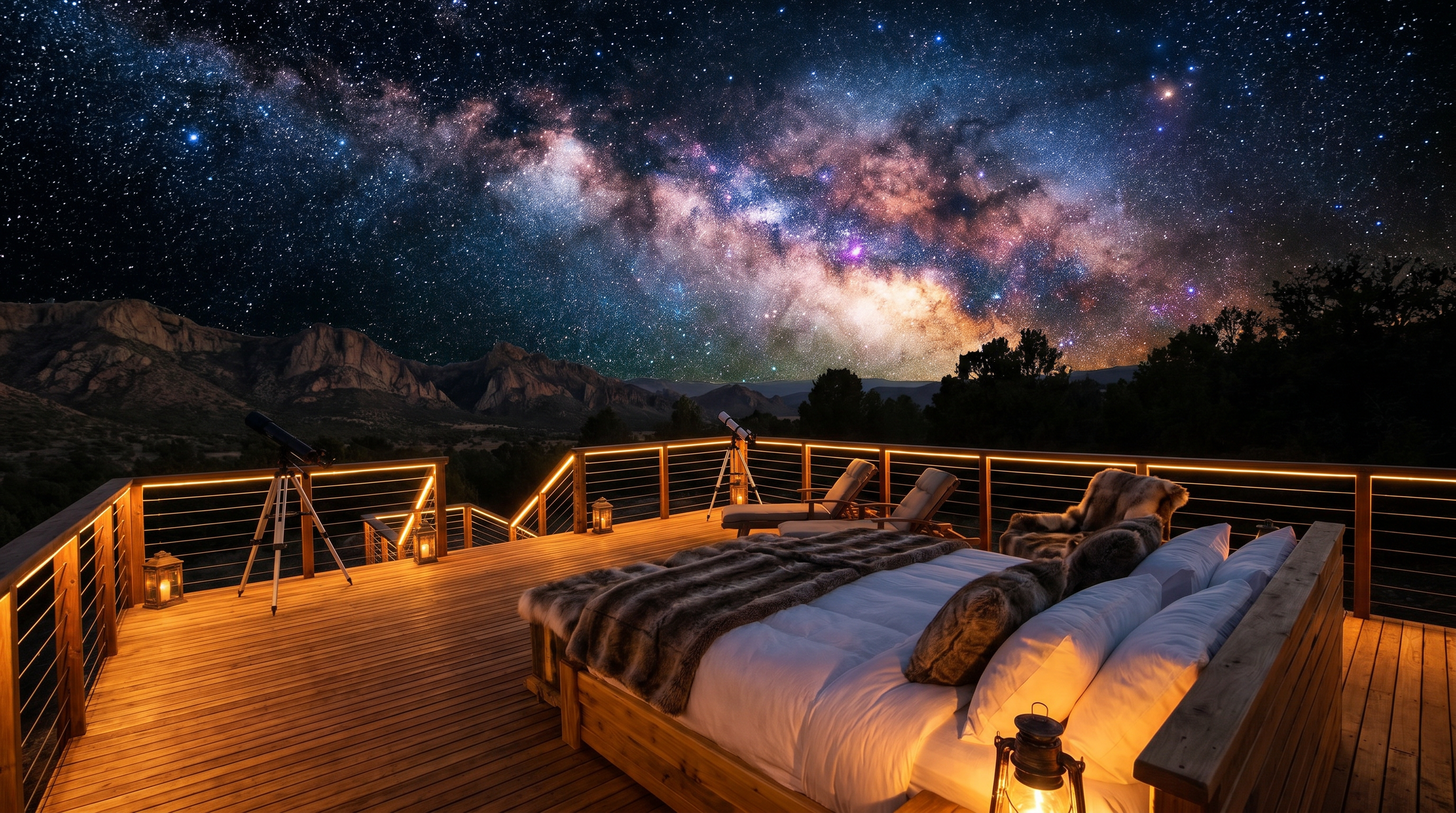
Astrotourism—sometimes called noctourism—is a specialized form of ecotourism centered on experiencing unpolluted night skies. It does not require a telescope or a background in astrophysics. Instead, it caters to travelers seeking the profound, humbling experience of viewing the Milky Way with the naked eye. Industry analysts note that these trips are particularly popular among midlife travelers and multi-generational families looking to disconnect from an intensely digital world and reconnect with a sense of scale and wonder.[1][6]
The surge in demand is directly tied to the scarcity of the resource. For the vast majority of the developed world, the night sky has been effectively erased. Research indicates that 99 percent of people living in the United States and Europe currently reside under skies polluted by artificial light. For roughly 80 percent of North Americans, the Milky Way is completely invisible from their own backyards.[7][8]
This erasure is accelerating. Artificial lighting is increasing by up to 20 percent annually in some global regions, creating a pervasive "skyglow" that washes out the stars. For decades, this was viewed merely as an aesthetic loss for amateur astronomers. Today, it is recognized as a profound environmental and public health issue.[5]

The emerging scientific field of scotobiology studies the biological systems that require natural darkness to function properly. For humans, excessive exposure to artificial light at night disrupts circadian rhythms and melatonin production. This disruption is linked to a cascade of health risks, including sleep disorders, obesity, diabetes, and cardiovascular disease. Even in the short term, travelers often find that light trespass streaming through hotel windows degrades their sleep quality and immune response.[5]
The ecological toll is equally severe. Artificial light disorients the more than 450 bird species that migrate at night, often drawing them into fatal collisions with illuminated structures. It disrupts the feeding habits of nocturnal mammals and famously disorients newly hatched sea turtles trying to find the ocean. Recognizing these stakes, a global movement has mobilized to protect the dark.[7]
The vanguard of this movement is DarkSky International, a nonprofit organization founded by astronomers in 1988. In 2001, the group launched the International Dark Sky Places program, creating a rigorous certification framework for communities, parks, and reserves that commit to preserving their nocturnal environments. Today, achieving this certification is a highly coveted badge of honor for rural destinations.[2]
The vanguard of this movement is DarkSky International, a nonprofit organization founded by astronomers in 1988.
The certification process is intentionally arduous. A prospective Dark Sky Park or Community cannot simply declare itself dark. The process requires years of baseline data collection using sky quality meters, extensive community education, and, most importantly, the adoption of strict municipal lighting ordinances. These ordinances must be legally enforceable and often require a five-year roadmap to retrofit existing public lighting.[2][5]
The scale of these protected areas is growing rapidly. In March 2024, a massive collaborative effort culminated in the certification of the Oregon Outback International Dark Sky Sanctuary. Spanning 2.5 million acres in southeastern Oregon, it became the largest officially designated dark sky place on the planet. The achievement required four years of negotiations among the U.S. Forest Service, the Bureau of Land Management, local ranchers, Indigenous tribes, and business owners to develop a unified lighting management plan.[4]

While ecological preservation is a powerful motivator, the primary engine driving rural communities to adopt these strict ordinances is economics. Pristine darkness is a highly marketable natural asset. When a remote town protects its sky, it attracts a demographic of ecotourists who stay overnight, eat at local restaurants, and hire local guides.[3][6]
The financial impact is staggering. A 2019 economic study conducted for the National Park Service analyzed the potential of astrotourism on the Colorado Plateau—a region spanning parts of Utah, Colorado, Arizona, and New Mexico. The researchers projected that tourists seeking dark skies would spend $5.8 billion in the region over a ten-year period. This influx of capital is expected to generate $2.4 billion in higher wages and support 10,000 new jobs annually.[3]

Crucially, astrotourism helps solve one of the tourism industry's most persistent challenges: seasonality. The clearest, darkest skies—and the longest nights—often occur during the winter months. By promoting stargazing, destinations can attract visitors during their traditional off-seasons, providing year-round economic stability to communities that typically rely on a short summer boom.[3]
To reap these economic benefits, communities must fundamentally rethink their infrastructure. Dark sky preservation does not mean plunging a town into total darkness; it means engineering smarter illumination. Lighting industry reformers advocate for a specific set of design principles to eliminate wasted light.[5][6]
The core tenet is shielding. Fixtures must be designed to direct light exclusively downward, preventing photons from spilling horizontally or escaping into the atmosphere. Additionally, communities are transitioning to low-intensity bulbs with warm color temperatures—typically amber or soft white—which scatter less in the atmosphere and are less disruptive to wildlife than harsh, blue-rich LEDs.[6]

This transition often requires debunking deeply ingrained myths about public safety. Many municipalities operate under the assumption that brighter public spaces are inherently safer. However, research indicates that excessive, glaring lights do not reduce crime and can actually aid criminals by illuminating escape routes and victims. Smart, shielded lighting improves visibility by reducing the blinding glare that ruins human night vision, ultimately creating safer streets for pedestrians and drivers.[5]
The success of these lighting interventions is visible across the globe. The American Southwest remains the epicenter of the movement, with the state of Utah alone boasting 26 certified International Dark Sky Parks. But the trend is fully global, with major astrotourism hubs thriving in Chile's Atacama Desert, New Zealand's Aoraki Mackenzie Reserve, and Scotland's Galloway Forest Park.[1]
As the astrotourism market continues to mature, it represents a rare alignment of environmental conservation and economic development. By treating the night sky not as an empty void, but as a fragile, living heritage, communities are proving that sometimes the most lucrative thing a destination can do is simply turn off the lights and invite the world to look up.[8]
How we got here
1988
Researchers form the International Dark-Sky Association (now DarkSky International) to combat light pollution.
2001
The International Dark Sky Places program launches, creating the first formal certifications for dark sky preservation.
March 2024
The Oregon Outback is certified as the world's largest Dark Sky Sanctuary, protecting 2.5 million acres.
August 2026
A highly anticipated total solar eclipse crosses Spain and Iceland, driving a massive spike in global astrotourism bookings.
Viewpoints in depth
Conservationists & Astronomers
Argue that the night sky is a universal human heritage and that light pollution is an urgent ecological threat.
For conservationists, the loss of the night sky is not merely an aesthetic issue, but a profound ecological crisis. They point to the emerging field of scotobiology, which demonstrates how artificial light disrupts the circadian rhythms of humans and the migratory patterns of wildlife. By promoting astrotourism, they hope to transform travelers into advocates for dark sky preservation, using the awe of the cosmos to drive local and global policy changes regarding light pollution.
Rural Tourism Boards
View pristine darkness as a highly marketable natural asset that draws high-spending, off-season visitors.
Tourism officials in remote areas see dark skies as a vital economic engine. Unlike traditional tourism infrastructure, which requires massive capital investment, the night sky is a pre-existing asset that only requires protection. Furthermore, because stargazing is often optimal during the longer nights of winter, astrotourism provides a crucial influx of revenue during traditional off-seasons, allowing local hotels, restaurants, and guide services to maintain year-round employment.
Lighting Industry Reformers
Emphasize that preserving the night sky requires engineering smarter, shielded lighting infrastructure.
Lighting engineers and urban planners stress that dark sky initiatives do not mean compromising public safety or plunging towns into total darkness. Instead, they advocate for a technological shift toward shielded fixtures that direct light downward and the use of warm-amber LEDs. They argue that this approach actually improves ground-level visibility by eliminating blinding glare, while simultaneously reducing municipal energy costs and protecting the nocturnal environment.
What we don't know
- Whether the rapid deployment of low-earth orbit satellite constellations will eventually degrade the stargazing experience even in certified dark sky parks.
- How quickly major urban centers will adopt dark-sky lighting ordinances, given the massive cost of retrofitting existing infrastructure.
Key terms
- Astrotourism
- Travel centered on experiencing naturally dark skies, stargazing, and celestial events in areas free from severe light pollution.
- Scotobiology
- The study of biological systems and behaviors in humans and wildlife that require natural darkness to function properly.
- Light Trespass
- Artificial light that spills into areas where it is not intended or needed, contributing to ambient skyglow.
- Sky Quality Meter (SQM)
- A specialized instrument used to measure the luminance of the night sky, required for Dark Sky certification.
- Dark Sky Sanctuary
- A public or private land designation given to exceptionally dark, remote areas that commit to strict lighting management plans.
Frequently asked
Do I need a telescope to participate in astrotourism?
No. While observatories are popular, the core of astrotourism is simply traveling to a certified dark sky destination to view the Milky Way and meteor showers with the naked eye.
Does reducing outdoor lighting increase crime?
Studies show that excessive, glaring lights do not inherently reduce crime and can actually help criminals see better. Dark sky initiatives advocate for targeted, shielded lighting that improves visibility without creating blinding glare.
Where is the best place to see dark skies in the US?
The American Southwest is the epicenter of the movement. Utah leads the nation with 26 certified Dark Sky Parks, while the Colorado Plateau and the Oregon Outback offer millions of acres of protected darkness.
Sources
Source coverage
8 outlets
4 viewpoints surfaced








[1]South China Morning PostTravel Industry Analysts
Astrotourism emerges as top global travel trend for 2026
Read on South China Morning Post →[2]Summit DailyRural Tourism Boards
Colorado towns pursue Dark Sky certifications amid astrotourism boom
Read on Summit Daily →[3]National Park ServiceRural Tourism Boards
Night Skies: An Economic Value
Read on National Park Service →[4]Travel OregonRural Tourism Boards
Oregon Outback certified as world's largest Dark Sky Sanctuary
Read on Travel Oregon →[5]Dark Sky ColoradoConservationists & Astronomers
The health and safety impacts of light pollution
Read on Dark Sky Colorado →[6]Tamlite LightingLighting Industry Reformers
Supporting Astrotourism with Dark Sky Approved Lighting
Read on Tamlite Lighting →[7]Destination Stewardship CenterConservationists & Astronomers
Dark Sky International Shines the Light on Destination Stewardship
Read on Destination Stewardship Center →[8]Factlen Editorial TeamTravel Industry Analysts
Synthesis by Factlen editorial team
Read on Factlen Editorial Team →

More in travel
See all 26 stories →Altitude Physiology
The Science of High-Altitude Acclimatization: How the Human Body Adapts to Mountain Travel
6 sources
Astrotourism
How Astrotourism and Dark Sky Parks Are Saving the Night Sky
8 sources
Astrotourism
The Billion-Dollar Business of Darkness: How Astrotourism is Reshaping Travel
7 sources
Astrotourism
The Astrotourism Boom: Why Destinations Are Racing to Protect the Dark
6 sources
Every angle. Every day.
Get travel stories with full source coverage and perspective breakdowns delivered to your inbox.