
How Solid-State Batteries Are Finally Reaching the Road in 2026
After a decade of laboratory promises, solid-state batteries are entering early production, offering electric vehicles double the range, extreme fast charging, and near-total elimination of fire risks.
By Factlen Editorial Team
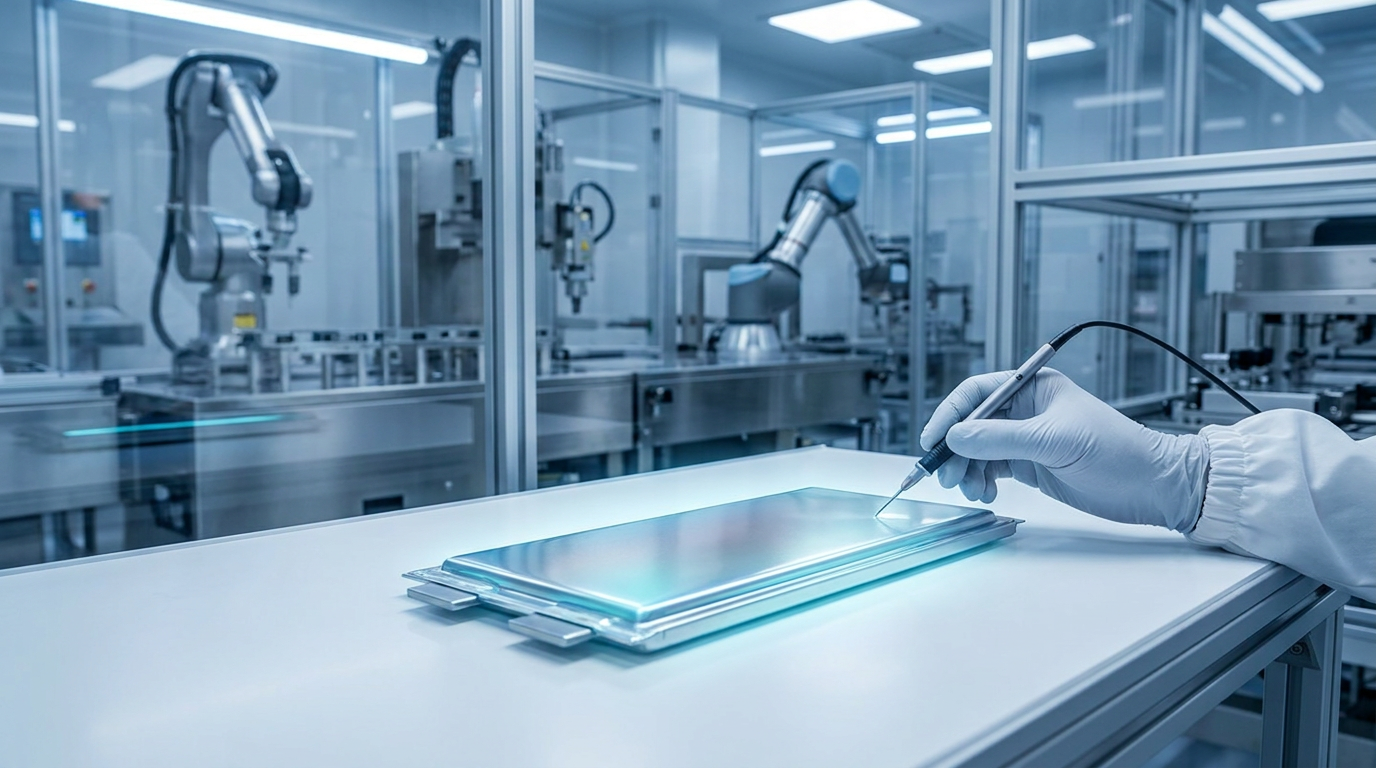
- Automakers & Battery Developers
- Optimistic about rapid commercialization, focusing on the massive leaps in range, safety, and charging speed that will drive consumer demand.
- Materials Scientists
- Focused on the physical hurdles of the technology, particularly the difficulty of maintaining interface stability between solid components as the battery cycles.
- Manufacturing Analysts
- Emphasize the economic realities, noting that high production costs will restrict early solid-state batteries to premium vehicles until economies of scale are reached in the 2030s.
What's not represented
- · Lithium Mining Industry
- · Legacy Auto Mechanics
Why this matters
Solid-state batteries are the final technological leap needed to make electric vehicles unequivocally superior to gas cars. By doubling range and slashing charge times to under 10 minutes, this technology effectively eliminates range anxiety and paves the way for total mass-market EV adoption.
Key points
- Solid-state batteries replace flammable liquid electrolytes with stable solid materials like ceramics or sulfides.
- The technology enables the use of lithium metal anodes, effectively doubling the energy density of current batteries.
- Automakers like Dongfeng and GAC Group are targeting early mass production in late 2026.
- Solid-state cells can safely charge from 10% to 80% in under 10 minutes without degrading.
- High manufacturing costs mean the technology will likely debut in premium vehicles before reaching the mass market in the 2030s.
For the better part of a decade, solid-state batteries have been the electric vehicle industry’s holy grail—a technology perpetually promised to be just five years away. But in 2026, the narrative is finally shifting from laboratory breakthroughs to industrial production lines. Automakers and battery giants are pouring billions into commercializing a technology that promises to fundamentally rewrite the rules of electric mobility. By replacing the flammable liquid guts of conventional batteries with stable solid materials, engineers are unlocking a new paradigm of energy storage. The stakes are immense: the first company to successfully mass-produce these cells will effectively solve the three remaining hurdles to total EV dominance—range anxiety, charging times, and fire risks. As we move through 2026, the race has accelerated from theoretical whitepapers to physical A-sample cells rolling off assembly lines, signaling that the solid-state era is no longer a distant dream, but an impending reality.[1]
To understand why this shift is so monumental, one must look inside the lithium-ion batteries that power everything from smartphones to current electric vehicles. Traditional batteries rely on three main components: a graphite anode, a metal oxide cathode, and a liquid electrolyte that acts as a chemical river, allowing lithium ions to swim back and forth during charging and discharging. A porous plastic separator is required to keep the anode and cathode from touching and short-circuiting. While this architecture has successfully powered the first wave of the EV revolution, it has inherent physical limits. The liquid electrolyte is a flammable organic solvent, which is why battery fires, though statistically rare, are notoriously difficult to extinguish. Furthermore, this liquid limits how fast the battery can be charged and how much energy it can safely store without degrading.[6]
Solid-state batteries elegantly solve these structural flaws by replacing the liquid solvent and the plastic separator with a single piece of solid material—typically a specialized ceramic, polymer, or sulfide glass. This solid electrolyte still allows lithium ions to pass through, but it completely blocks electrons and physically separates the positive and negative sides of the cell. Because there is no flammable liquid, the risk of thermal runaway is virtually eliminated. Comparative testing shows that thermal events in solid-state systems do not begin until internal temperatures reach roughly 247°C, compared to just 90°C for conventional lithium-ion cells. For consumers, this means an EV that is fundamentally safer, even in the event of a severe collision or extreme weather conditions.[1][6]

Beyond safety, the most transformative advantage of the solid electrolyte is its ability to unlock new, vastly superior battery chemistries. In a traditional battery, engineers must use graphite for the anode because the liquid electrolyte reacts poorly with pure lithium metal. But a solid electrolyte is robust enough to suppress the growth of "dendrites"—microscopic, needle-like metallic whiskers that can pierce a liquid battery's separator and cause a catastrophic short circuit. By safely enabling the use of a lithium metal anode, solid-state batteries can store dramatically more energy in the exact same physical footprint.[1][6]
The resulting leap in energy density is staggering. Today’s best commercial lithium-ion batteries deliver an energy density of roughly 200 to 300 watt-hours per kilogram (Wh/kg). In contrast, the solid-state cells entering pilot production in 2026 are targeting 400 to 500 Wh/kg, with theoretical limits pushing even higher. In practical terms, this means an automaker could build an EV with a 600-mile range using a battery pack that is the same size and weight as today's 300-mile packs. Alternatively, they could maintain a 300-mile range while cutting the battery's weight and size in half, resulting in lighter, more efficient, and better-handling vehicles that require fewer raw materials to manufacture.[4][5][8]

Charging speeds are also poised for a revolution. Because the solid electrolyte is highly stable and resistant to lithium plating at high currents, these batteries can accept energy at a blistering pace. Laboratory demonstrations from leading developers have consistently shown the ability to charge a solid-state cell from 10% to 80% in under 10 minutes. If this performance translates reliably to production vehicles, the experience of "refueling" an EV will become nearly indistinguishable from filling up a gas tank at a highway rest stop, effectively collapsing the primary argument against electric vehicle adoption for long-distance travel.[5]
Because the solid electrolyte is highly stable and resistant to lithium plating at high currents, these batteries can accept energy at a blistering pace.
The timeline for getting these batteries onto public roads has compressed significantly in recent months. In early 2026, Greater Bay Technology (GBT), a battery manufacturer backed by China's GAC Group, announced that its first A-sample all-solid-state battery cells had successfully rolled off the production line. These cells, which contain zero liquid electrolyte, passed rigorous needle penetration and thermal shock tests without igniting. GBT has publicly stated its ambition to launch the world’s first mass-producible all-solid-state battery for in-vehicle use by the end of 2026, targeting a staggering 1,000-kilometer (621-mile) driving range.[2]
Other major players are aggressively matching this pace. Chinese automaker Dongfeng recently announced plans to begin mass production of its own solid-state batteries in the second half of 2026, pushing ahead of competitors who had previously targeted 2027. Meanwhile, CATL—the world’s largest battery manufacturer—has secured crucial patents for sulfide-based solid-state designs and initiated pilot production of 500 Wh/kg cells. CATL's internal roadmaps indicate a push to transition from laboratory prototypes to automotive-grade cells ready for pilot-scale vehicle integration by 2027, backed by massive supply chain investments in raw materials like copper foil.[3][4]
Western and Japanese automakers are equally invested in the race, though their timelines are slightly more conservative. Toyota, which holds more solid-state battery patents than any other company in the world, is targeting 2027 to 2028 for its initial rollout. The Japanese giant plans to introduce the technology in hybrid vehicles first, allowing them to scale production volumes before transitioning to full battery-electric vehicles. In the United States, QuantumScape, backed heavily by Volkswagen, has published independently verified data showing its lithium-metal cells surviving over 1,000 charge cycles with minimal degradation, and is currently scaling up its Gigafactory in San Jose.[5][8]

While the industry waits for true all-solid-state batteries to achieve mass-market scale, a transitional technology known as "semi-solid" batteries has already begun to bridge the gap. Semi-solid cells use a hybrid approach, combining a solid electrolyte framework with a small amount of liquid or gel to help maintain conductivity and interface stability. These hybrid batteries are already commercially deployed in industrial drones, robotics, and early-adopter EVs from brands like NIO and FAW. They offer a middle ground: higher energy density and better safety than traditional lithium-ion, but with lower manufacturing barriers than pure solid-state designs.[8]
Despite the immense progress, significant engineering and manufacturing hurdles remain before all-solid-state batteries can become ubiquitous. The most pressing scientific challenge is "interface stability." In a liquid battery, the fluid naturally flows into every microscopic crevice of the electrodes, ensuring perfect contact. In a solid-state battery, two solid materials must remain in perfect physical contact even as the battery naturally expands and contracts during charging and discharging. Maintaining this contact often requires applying immense mechanical pressure to the cell, which complicates the design and weight of the vehicle's overarching battery pack.[7]
Manufacturing costs also present a steep barrier to immediate mass adoption. Producing solid electrolytes—particularly the highly conductive sulfide-based variants—requires entirely new manufacturing techniques, specialized dry rooms, and expensive raw materials. Industry analysts estimate that, as of 2026, sulfide solid-state cells are currently three to five times more expensive to produce than conventional lithium-ion cells. Scaling up production to gigawatt-hour levels while driving down defect rates is a monumental task that will require years of optimization and billions in capital expenditure.[4][7]

Because of these economic realities, the commercialization of solid-state batteries will not be an overnight flip of the switch. When they do arrive in passenger vehicles between 2026 and 2028, they will almost certainly debut in high-end luxury sedans and premium supercars, where buyers can absorb the initial price premium. It will likely take until the early 2030s for economies of scale to bring the cost down to a level where solid-state technology can be integrated into affordable, mass-market commuter cars.[7]
Nevertheless, the trajectory is now irreversibly set. The transition from liquid to solid electrolytes represents the most significant leap in energy storage since the commercialization of the lithium-ion battery in the 1990s. As production lines spool up and the first commercial vehicles prepare to hit the road, the automotive industry is standing on the precipice of a new era. Solid-state technology will not just make electric vehicles better; it will make them unequivocally superior to internal combustion engines in almost every measurable metric, permanently altering the landscape of global transportation.[1]
How we got here
1991
Sony commercializes the first rechargeable lithium-ion battery, relying on a liquid electrolyte.
2010s
Automakers begin heavily funding solid-state research to overcome the physical limits of liquid lithium-ion cells.
2020
QuantumScape goes public, publishing data showing its solid-state cells surviving 1,000 charge cycles.
Early 2026
China's GAC Group rolls its first A-sample all-solid-state battery cells off the production line.
Late 2026
Dongfeng targets the beginning of mass production for its 350 Wh/kg solid-state battery.
2027–2028
Toyota, Nissan, and CATL plan to introduce solid-state cells in hybrid and premium electric vehicles.
Viewpoints in depth
Automakers & Battery Developers
Focused on the transformative consumer benefits that will drive the next wave of EV adoption.
For companies like Toyota, CATL, and QuantumScape, solid-state technology is the definitive answer to consumer hesitation. They argue that by doubling the range and cutting charging times to under 10 minutes, the functional differences between an EV and a gas-powered car disappear. These developers are aggressively pushing timelines, viewing the transition not just as an iterative upgrade, but as a mandatory leap to secure market dominance in the 2030s. Their internal testing data consistently highlights the near-elimination of fire risks, which they believe will be a massive selling point for safety-conscious family vehicle buyers.
Materials Scientists
Emphasizing the immense physical challenges of moving from lab prototypes to durable, road-ready cells.
While acknowledging the theoretical superiority of solid-state chemistry, materials scientists point to the daunting hurdle of 'interface stability.' Because both the electrolyte and the electrodes are solid, maintaining perfect physical contact between them as the battery naturally expands and contracts during use is incredibly difficult. If microscopic gaps form, the battery's performance plummets. Researchers note that solving this often requires applying intense mechanical pressure to the cell pack or developing novel, highly elastic solid electrolytes—engineering feats that are much harder to achieve reliably on a mass-production line than in a controlled laboratory.
Manufacturing Analysts
Highlighting the economic barriers that will delay widespread mass-market adoption.
Industry analysts caution against expecting a sudden, overnight revolution in affordable EVs. They note that manufacturing solid electrolytes, particularly sulfide-based variants, requires entirely new, highly specialized production lines and ultra-dry cleanrooms. Currently, these cells cost three to five times more to produce than conventional lithium-ion batteries. Analysts predict a phased rollout: solid-state batteries will first appear in high-margin luxury vehicles and supercars where buyers can absorb the premium. It will likely take years of scaling and yield optimization before the technology becomes cheap enough to power a standard $30,000 commuter car.
What we don't know
- How quickly manufacturing defect rates can be lowered to make gigawatt-hour scale production economically viable.
- Whether the intense mechanical pressure required by some solid-state designs will offset the weight savings of the cells themselves.
- Exactly how solid-state cells will degrade over a 15-year lifespan in real-world, fluctuating weather conditions outside of laboratory testing.
Key terms
- Solid Electrolyte
- A solid material, such as ceramic or sulfide glass, that conducts lithium ions between the battery's anode and cathode while blocking electrons.
- Lithium Metal Anode
- A highly energy-dense negative electrode made of pure lithium, which can only be safely used when paired with a solid electrolyte.
- Thermal Runaway
- A dangerous chain reaction within a battery where excess heat causes further heat generation, often leading to fires in liquid lithium-ion cells.
- Dendrites
- Microscopic, needle-like metallic growths that can form inside a battery during charging, potentially piercing the separator and causing a short circuit.
- Energy Density
- A measure of how much energy a battery can store relative to its weight, typically expressed in watt-hours per kilogram (Wh/kg).
Frequently asked
Can I buy a solid-state EV today?
Not yet. While "semi-solid" batteries are available in a few early-adopter vehicles in China, true all-solid-state passenger vehicles are expected to debut in premium models between 2026 and 2028.
Why are solid-state batteries safer?
They replace the flammable liquid electrolyte found in traditional lithium-ion batteries with a stable solid material, virtually eliminating the risk of thermal runaway and battery fires.
Will solid-state batteries make EVs cheaper?
Eventually, yes. While initial production costs are currently 3 to 5 times higher than lithium-ion, economies of scale and the need for fewer raw materials per battery pack are expected to lower overall vehicle costs by the 2030s.
What is a semi-solid battery?
It is a transitional technology that uses a mostly solid electrolyte framework but retains a small amount of liquid or gel to help maintain conductivity, offering a middle ground in performance and manufacturing difficulty.
Sources
Source coverage
8 outlets
3 viewpoints surfaced








[1]Factlen Editorial TeamManufacturing Analysts
Synthesis by Factlen editorial team
Read on Factlen Editorial Team →[2]ElectrekAutomakers & Battery Developers
Solid-state EV batteries are coming sooner than expected after another breakthrough
Read on Electrek →[3]CarsGuideAutomakers & Battery Developers
Huge update on groundbreaking EV tech: Timeline for solid-state batteries
Read on CarsGuide →[4]ElectriveMaterials Scientists
CATL secures patent for solid-state batteries
Read on Electrive →[5]MotorLinksAutomakers & Battery Developers
Solid-state batteries 2026: Toyota, QuantumScape, and Samsung
Read on MotorLinks →[6]WikipediaMaterials Scientists
Solid-state battery
Read on Wikipedia →[7]BatteryTechOnlineManufacturing Analysts
Reality: Lithium solid-state batteries promise higher energy density and safety
Read on BatteryTechOnline →[8]IDTechExManufacturing Analysts
Solid-State Batteries 2026-2036: Technology, Forecasts, Players
Read on IDTechEx →

More in automotive
See all 28 stories →Bidirectional Charging
How Bidirectional Charging is Turning Electric Vehicles into Mobile Power Plants
8 sources
Marine Tech
How Hydrofoil Technology is Finally Making Electric Boats Viable
7 sources

Model Y vs R2
2026 Rivian R2 vs. Tesla Model Y Juniper: The Mid-Size Electric SUV Showdown
6 sources
EV Showdown
2026 Rivian R2 vs. Tesla Model Y: The Electric SUV Showdown
7 sources
Every angle. Every day.
Get automotive stories with full source coverage and perspective breakdowns delivered to your inbox.