
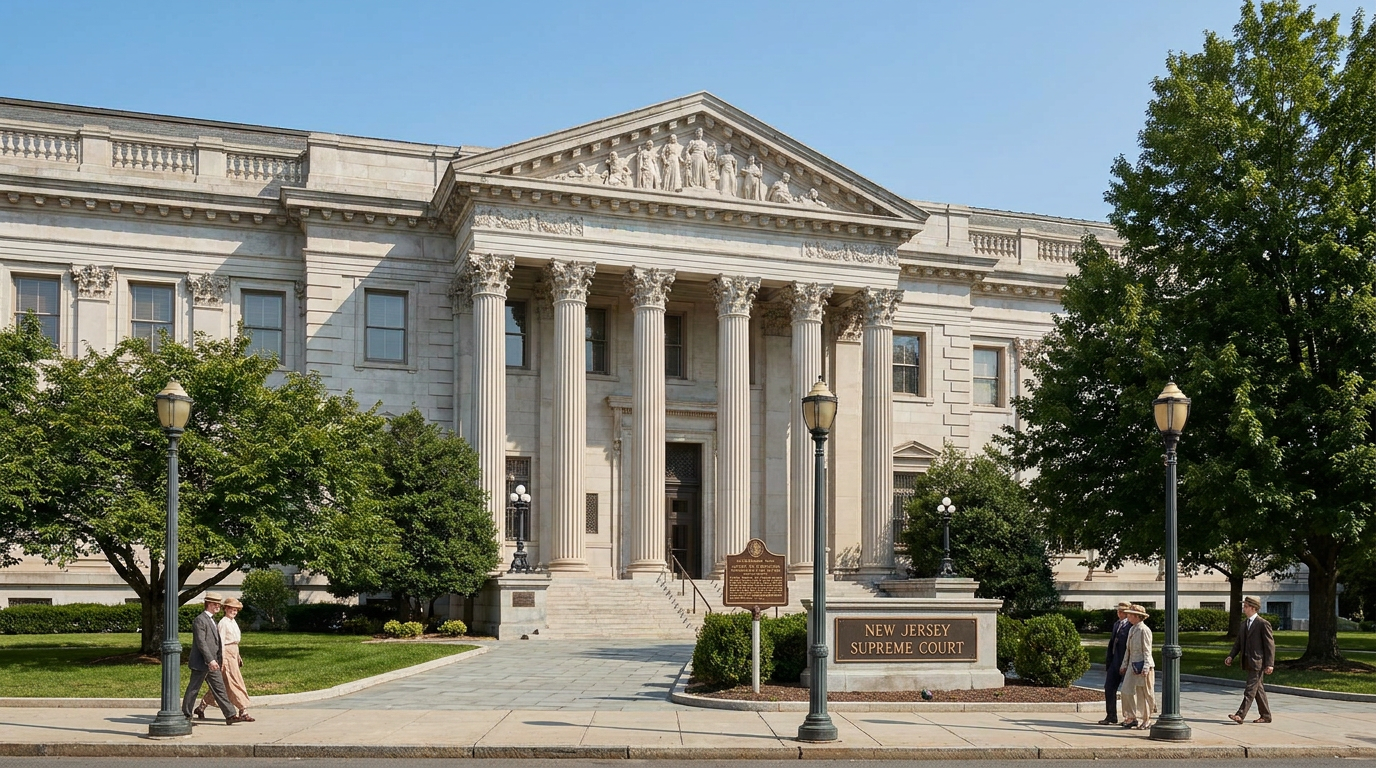
New Jersey Supreme Court Rules Private Email Logs of Public Officials Are Subject to Public Records Law
In a unanimous decision, the New Jersey Supreme Court ruled that logs of government-related emails kept on public officials' personal accounts must be disclosed under the Open Public Records Act (OPRA).
By Factlen Editorial Team
- Transparency Advocates
- Civil liberties groups arguing that public officials must not hide government business on private devices.
- Public Agencies
- Local government bodies concerned about the administrative and technological burdens of extracting data from private servers.
- Judicial Consensus
- Legal framework emphasizing that the nature of the record, not its location, determines its public status.
What's not represented
- · Individual public officials who may feel their personal privacy is compromised by self-auditing requirements.
- · IT administrators tasked with implementing these new compliance and certification protocols for local governments.
Why this matters
This landmark ruling closes a major loophole in state transparency laws, ensuring that public officials cannot shield government business from public scrutiny simply by using their personal email accounts.
Key points
- The New Jersey Supreme Court ruled unanimously that logs of government-related emails on personal accounts are public records.
- The decision closes a loophole that allowed officials to shield public business by using private email addresses.
- Citizens cannot demand a log of an official's entire private account; the ruling applies strictly to government-related communications.
- Public officials must now perform their own searches of private accounts and submit formal certifications detailing their methods.
The New Jersey Supreme Court has unanimously ruled that logs of government-related emails stored on public officials' personal accounts are subject to disclosure under the state's Open Public Records Act (OPRA). The landmark decision closes a significant loophole that transparency advocates feared was being used to shield public business from taxpayer scrutiny.[1][2]
Authored by Justice Fabiana Pierre-Louis, the ruling establishes that the nature of a communication—not the digital server it happens to sit on—determines whether it is a public record. "Because the government-related emails themselves are government records, so too are the logs of the personal email accounts where those emails are housed," Pierre-Louis wrote for the court.[1][3]
The case originated in January 2023 when plaintiff Alex Rosetti filed a records request with the Ramapo-Indian Hills Regional High School Board of Education. Rosetti suspected that board members were privately discussing sweeping agenda changes ahead of a reorganization meeting, circumventing public debate.[1][4]
To investigate, Rosetti requested email logs from both the official and personal accounts of past and current trustees. He sought basic metadata—senders, recipients, dates, times, subjects, and attachment names—for any exchanges involving school board business.[2][4]

While the school board complied by producing redacted logs from official district-issued accounts, it flatly refused to provide logs from the members' personal email addresses. The board argued that it had no legal obligation to produce private logs and that doing so would be technologically burdensome, as the district lacked administrative access to personal email servers like Gmail or Yahoo.[1][2]
The New Jersey League of Municipalities and the state's Attorney General initially supported the school board's position, arguing that OPRA's reach did not extend to the metadata of private accounts. They warned that forcing compliance could create an administrative nightmare for local governments.[1][4]
The Supreme Court, however, dismantled that defense. The justices affirmed an earlier Appellate Division ruling, declaring that emails concerning government business do not lose their status as public records simply because an official chose to use a private device or personal address.[2][3]
"We reiterate that emails related to government business, whether stored on government or private servers, are within OPRA's reach, so using a private email account will not shield those government records from production under OPRA," the decision stated.[1][2]
Despite the sweeping victory for transparency, the court did place boundaries on the ruling to protect genuine personal privacy. The justices clarified that citizens cannot demand a log of an official's entire private email account, as that would expose purely personal communications that fall outside OPRA's jurisdiction.[2][6]
Despite the sweeping victory for transparency, the court did place boundaries on the ruling to protect genuine personal privacy.
Instead, the burden is placed directly on the public officials. Board members and other government employees must actively search their own personal accounts—including inboxes, sent folders, and deleted items—for communications involving public business, and then generate a log from those specific results.[1][2]

To ensure honesty in this self-directed process, the court mandated that officials submit formal certifications describing the exact search parameters they used. This allows lower courts to evaluate whether the searches were thorough, proper, and captured all relevant public business.[1][2]
Transparency organizations, including the ACLU of New Jersey and Libertarians for Transparent Government, celebrated the ruling. CJ Griffin, a prominent public records attorney who represented the advocacy groups, called the decision a "great vindication of the public's right to monitor the actions of its government."[1][2]
Donald Doherty Jr., the attorney representing Rosetti, echoed that sentiment but expressed frustration that the legal battle was necessary in the first place. "Government candor and honesty have all too often been cast aside for either corruption or expediency on every level," Doherty noted following the decision.[1][3]
The ruling arrives during a period of intense debate over public records in New Jersey. In 2024, Governor Phil Murphy signed controversial legislative amendments to OPRA that expanded protections for personal identifying information and altered how special service fees are assessed, changes that some advocates argued weakened the law.[5][6]

In light of those ongoing tensions, the Supreme Court took the opportunity to issue a stern, statewide directive to all public agencies. The justices urged local governments to strictly prohibit the use of personal email for public duties.[1][2]
"The issues in this case could have been avoided altogether if Board members did not use their private email accounts to conduct Board business and instead used only their government-issued email accounts, as intended," Justice Pierre-Louis wrote. By setting this precedent, the court has ensured that the digital evasion of public oversight will no longer be tolerated in New Jersey.[1][6]
How we got here
January 2023
Plaintiff Alex Rosetti files an OPRA request for email logs from the Ramapo-Indian Hills Regional High School Board of Education.
2024
The New Jersey Appellate Division reverses a trial court's denial, ruling that OPRA's broad reach includes emails concerning government business on personal accounts.
June 11, 2026
The New Jersey Supreme Court unanimously upholds the core of the Appellate Division's ruling, mandating the disclosure of government-related email logs from private accounts.
Viewpoints in depth
Transparency Advocates
Civil liberties groups and open-government advocates view the ruling as essential for preventing corruption.
Organizations like the ACLU of New Jersey and Libertarians for Transparent Government argue that allowing public officials to conduct government business on private email accounts creates a dangerous loophole. They contend that without access to these logs, the public has no way of knowing if backroom deals are being made or if officials are circumventing open meeting laws. For these advocates, the Supreme Court's decision is a necessary modernization of OPRA that aligns the law with how modern digital communication actually works.
Public Agencies & School Boards
Local government bodies expressed concern over the administrative and technological burdens of the ruling.
School boards and municipal leagues argued that they do not have administrative access to the private email servers (like Gmail or Yahoo) used by their members. They warned that forcing agencies to produce logs from accounts they do not control could lead to technological nightmares and increased litigation costs. While the court mitigated some of these concerns by requiring officials to perform their own searches, agencies remain wary of the administrative overhead and the potential for innocent mistakes in self-reporting to trigger further OPRA lawsuits.
What we don't know
- How strictly lower courts will evaluate the self-reported search certifications submitted by public officials.
- Whether this ruling will prompt a wave of retroactive OPRA requests targeting the personal email accounts of current and former officials.
Key terms
- Open Public Records Act (OPRA)
- A New Jersey state law that guarantees the public's right to access records maintained by government agencies, designed to promote transparency and accountability.
- Email Log
- A document containing the metadata of email communications, typically including the sender, recipient, date, time, and subject line, without revealing the full body text of the email.
- Metadata
- Data that provides information about other data; in the context of emails, it refers to the routing and descriptive information rather than the actual message content.
- Appellate Division
- The intermediate appellate court in New Jersey's judicial system, which hears appeals from decisions of the trial courts before they reach the Supreme Court.
Frequently asked
What did the New Jersey Supreme Court rule regarding private emails?
The court ruled unanimously that logs of government-related emails stored in public officials' personal email accounts are subject to disclosure under the Open Public Records Act (OPRA).
Does this mean the public can see an official's personal emails?
No. The ruling only applies to emails that discuss government business. Purely personal communications remain private and outside the reach of OPRA.
How will the government extract these logs from private servers?
The court determined that officials must search their own personal accounts for relevant government business and generate a log. They must also sign a certification detailing their search methods to ensure compliance.
Why was this lawsuit filed in the first place?
The case began in 2023 when a citizen requested email logs from school board members, suspecting they were privately discussing sweeping agenda changes ahead of a public meeting.
Sources
Source coverage
6 outlets
3 viewpoints surfaced






[1]NJ Spotlight NewsTransparency Advocates
NJ high court gives transparency advocates a win in records lawsuit
Read on NJ Spotlight News →[2]The Jersey VindicatorTransparency Advocates
New Jersey Supreme Court: Government-related emails in officials' personal accounts are subject to OPRA
Read on The Jersey Vindicator →[3]NJ CourtsJudicial Consensus
ALEX ROSETTI VS. RAMAPO-INDIAN HILLS REGIONAL HIGH SCHOOL BOARD OF EDUCATION
Read on NJ Courts →[4]New Jersey School Boards AssociationPublic Agencies
Appellate Court Rules on OPRA Requests from Public Officials' Personal Computers
Read on New Jersey School Boards Association →[5]Capehart ScatchardPublic Agencies
Open Public Records Act - Full Service Law Firm in Mt. Laurel Township, NJ
Read on Capehart Scatchard →[6]Factlen Editorial TeamJudicial Consensus
Synthesis by Factlen editorial team
Read on Factlen Editorial Team →

More in news politics
See all 98 stories →Metabolic Health
Fact-Checking the 'Exercise Snack': Do 4-Minute Daily Workouts Actually Improve Health?
8 sources

US-Iran Relations
US and Iran Send Mixed Signals on Potential Peace Agreement Amid Ongoing Hormuz Clashes
8 sources

Strait of Hormuz
Trump Claims US-Iran Peace Agreement Reached as Tehran Denies Final Deal and Hormuz Blockade Turns Deadly
8 sources

Carbon Budget
Global Carbon Budget for 1.5°C Will Be Exhausted in Three Years, Major Scientific Report Warns
8 sources

Every angle. Every day.
Get news politics stories with full source coverage and perspective breakdowns delivered to your inbox.