
How Solid-State Batteries Work: The Next Generation of Energy Storage
By replacing flammable liquid electrolytes with stable solid materials, solid-state batteries promise to double electric vehicle range, slash charging times, and eliminate fire risks.
By Factlen Editorial Team
- Automotive Manufacturers
- View solid-state as the key to unlocking mass EV adoption by solving range anxiety and charging times.
- Material Scientists
- Focus on the atomic-level challenges of solid-solid interfaces and dendrite suppression.
- Market & Supply Chain Analysts
- Emphasize the manufacturing hurdles, high initial costs, and the phased timeline from premium to mass market.
What's not represented
- · Fossil Fuel Industry Analysts
- · Lithium Mining Communities
Why this matters
Solid-state batteries are the key to making electric vehicles lighter, safer, and capable of traveling over 600 miles on a single 15-minute charge, removing the final barriers to mass EV adoption.
Key points
- Solid-state batteries replace flammable liquid electrolytes with rigid solid materials like ceramics or polymers.
- The solid barrier prevents dendrite growth, allowing the use of high-capacity lithium metal anodes.
- Energy density can increase from roughly 250 Wh/kg to over 400 Wh/kg, potentially doubling vehicle range.
- Major automakers are targeting 2027 to 2028 for the first commercial rollouts in luxury electric vehicles.
For years, the solid-state battery has been treated as the "holy grail" of the electric vehicle industry—a revolutionary technology perpetually promised but always seemingly a decade away. That narrative is finally fracturing. In June 2026, the transition from laboratory speculation to concrete automotive engineering accelerated dramatically. Major automakers, including Stellantis and Dongfeng, announced significant milestones in integrating advanced solid-state cells into real-world development vehicles. This shift marks the beginning of a new era in energy storage, one that promises to fundamentally rewrite the mathematics of electric mobility, renewable energy, and portable electronics.[1][2][3]
To understand why the automotive and tech industries are pouring billions into this transition, one must look at the limitations of current technology. Traditional lithium-ion batteries have powered the modern world, from smartphones to the first wave of mass-market electric vehicles. However, they are rapidly approaching their theoretical performance ceiling. Range anxiety, prolonged charging times, and the rare but highly publicized risk of thermal runaway—battery fires—remain the primary bottlenecks preventing universal EV adoption. The industry needs a leap forward, not just an incremental upgrade.[1][4]
The anatomy of a conventional battery relies on three primary components: an anode (the negative electrode), a cathode (the positive electrode), and an electrolyte sitting between them. In traditional lithium-ion cells, this electrolyte is a liquid solvent. When a device is drawing power, positively charged lithium ions swim through this liquid bath from the anode to the cathode, while electrons are forced through an external circuit to provide electricity. When the battery is plugged into a wall to recharge, the entire chemical process reverses, sending the ions back to the anode.[4][5]
The problem lies in that liquid. Liquid electrolytes are inherently volatile and highly flammable. If a battery is physically punctured in a crash, or if it overheats due to a manufacturing defect, the liquid can ignite, leading to a catastrophic chain reaction known as thermal runaway. Furthermore, liquid electrolytes degrade over time, especially when subjected to extreme temperatures or the stress of ultra-fast charging, which is why older smartphone and EV batteries gradually lose their capacity to hold a charge.[4][6]
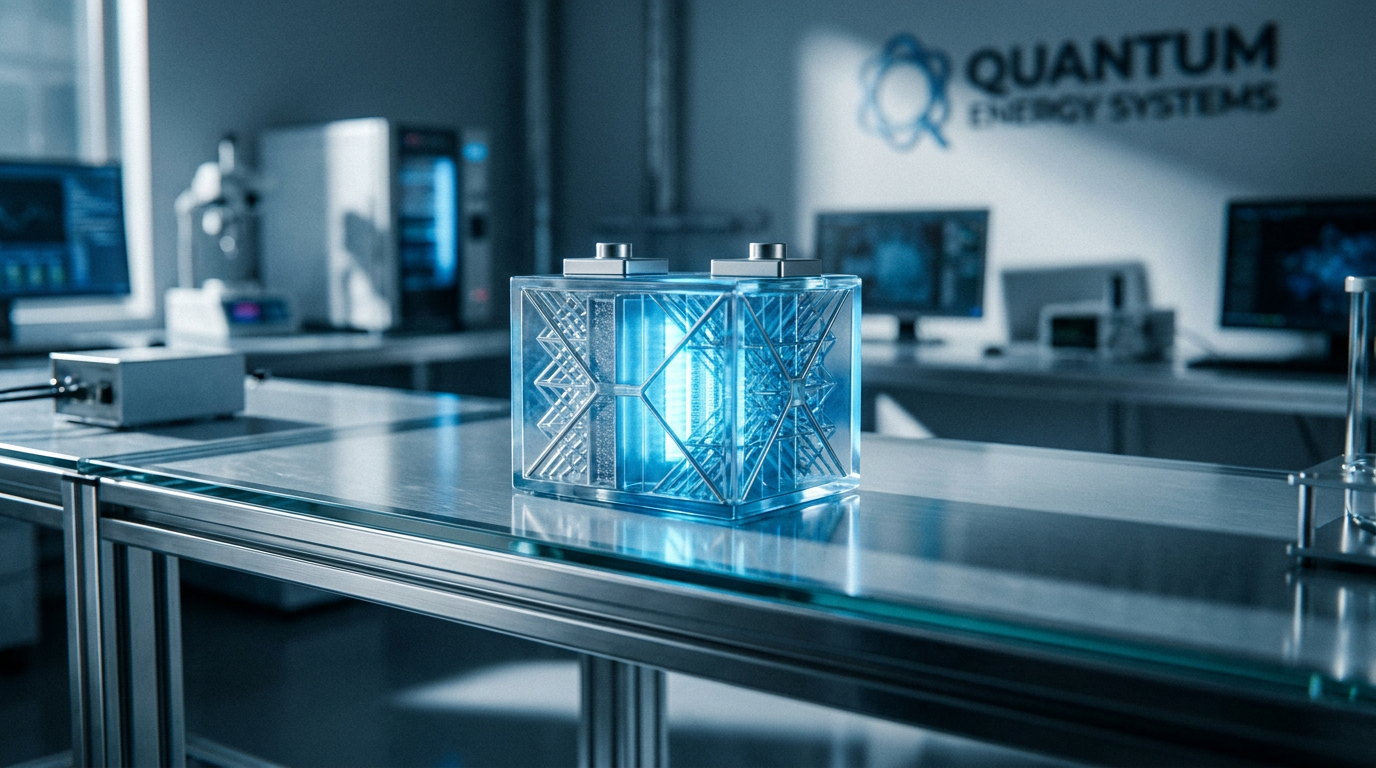
A solid-state battery solves this by replacing the liquid solvent with a rigid, solid material—typically an advanced ceramic, glass, or solid polymer. This solid layer acts as both the electrolyte and the physical separator between the anode and cathode. During operation, lithium ions migrate through the microscopic crystal lattice of the solid material. By eliminating the liquid entirely, engineers instantly remove the primary catalyst for battery fires, creating a fundamentally safer architecture that can withstand extreme heat, cold, and physical deformation.[5][6]

But safety is only half the story; the true prize is energy density. The rigid physical barrier of a solid electrolyte unlocks the ability to use a completely different material for the battery's anode. In liquid batteries, the anode is typically made of graphite. Engineers cannot use pure lithium metal—which holds vastly more energy—because it reacts violently with the liquid and forms "dendrites." Dendrites are microscopic, needle-like metallic growths that sprout from the anode, pierce the battery's separator, and cause explosive short circuits.[4][6]
Because a solid electrolyte is physically tough, it acts as a brick wall that suppresses dendrite growth. This allows battery chemists to safely swap the heavy graphite anode for one made of pure lithium metal. Lithium metal can store up to ten times more energy by weight than graphite. When paired with a high-capacity cathode, this architecture drastically increases the battery's overall energy density, allowing it to store significantly more power in the exact same physical footprint.[4][6]
Because a solid electrolyte is physically tough, it acts as a brick wall that suppresses dendrite growth.
The performance implications are staggering. Current lithium-ion EV batteries typically offer an energy density of 200 to 250 Watt-hours per kilogram (Wh/kg). Emerging solid-state prototypes are consistently demonstrating densities of 350 to over 400 Wh/kg. In practical terms, this means an electric vehicle could travel 800 to 1,000 kilometers (roughly 500 to 600 miles) on a single charge without requiring a larger, heavier battery pack. Alternatively, automakers could build smaller, lighter batteries that offer standard ranges, drastically reducing the overall weight and cost of the vehicle.[2][4]
Charging speeds are also poised for a revolution. Because traditional liquid batteries are highly sensitive to heat, fast-charging them requires aggressive thermal management to prevent damage and thermal runaway. Solid-state batteries, with their inherent thermal stability, can safely accept massive influxes of electrical current. Recent testing by major automotive partnerships has demonstrated the ability to charge a solid-state cell from 15% to 90% capacity in under 18 minutes, bringing the EV charging experience much closer to the convenience of filling a traditional gas tank.[3][4]

If solid-state technology is so vastly superior, the obvious question is why it isn't already in every driveway. The answer lies in the immense difficulty of manufacturing. Creating a solid electrolyte that conducts ions as efficiently as a liquid is a monumental chemistry challenge. Furthermore, ensuring perfect, atomic-level contact between the solid electrodes and the solid electrolyte is incredibly difficult. Unlike a liquid, which naturally flows into every microscopic crevice of an electrode, solid materials require immense precision and pressure to maintain the necessary contact as the battery expands and contracts during use.[1][8]
These manufacturing complexities translate directly to exceptionally high consumer costs. Currently, the raw materials and specialized, highly controlled production environments required for all-solid-state cells push their estimated cost to between $400 and $500 per kilowatt-hour. This is several times more expensive than mature lithium-ion technology, which benefits from decades of optimization. Scaling this delicate laboratory science into massive gigafactories that can churn out millions of flawless cells per day is the primary hurdle the industry is currently racing to overcome before mass-market adoption can begin.[8]
Despite these hurdles, the timeline for commercialization is rapidly solidifying. In June 2026, Stellantis announced the successful integration of Factorial's advanced solid-state cells into a Dodge Charger Daytona development vehicle, initiating real-world road testing across North America. This milestone proved that the cells could be integrated into a patented mechanical architecture designed to handle the unique physical demands of solid-state technology outside of a controlled laboratory environment.[3]
The global race is fiercely competitive. Chinese manufacturers, backed by robust supply chains, are pushing aggressive timelines. Reports indicate that companies like Dongfeng Motor are targeting mass production of solid-state batteries capable of 1,000-kilometer ranges by late 2026. Meanwhile, industry giants like BYD and Toyota have locked in commercial release targets between 2027 and 2028, initially focusing on premium and high-performance sub-brands where buyers can absorb the early technology premium.[2][8]

The impact of this breakthrough extends far beyond passenger cars. The aerospace sector is aggressively pursuing solid-state chemistry for low-altitude aviation and electric vertical take-off and landing (eVTOL) aircraft. In aviation, weight is the ultimate enemy, and the dramatic increase in energy density offered by solid-state cells is considered the key enabler for commercially viable electric flight. By drastically reducing the weight of the battery pack, aerospace engineers can design aircraft that carry meaningful passenger payloads over practical distances without compromising safety.[7]
Consumers should expect a phased rollout rather than an overnight revolution. The industry is currently deploying "semi-solid" batteries—which use a hybrid of solid and liquid materials—as a stepping stone. True all-solid-state batteries will debut in luxury hypercars and premium sedans between 2027 and 2028. By 2030, as manufacturing yields improve and economies of scale take hold, this transformative technology is projected to cascade down to the mass market, permanently altering the landscape of clean energy.[1][2]
How we got here
1990s
Sony commercializes the first lithium-ion battery, revolutionizing portable electronics.
Early 2020s
Automakers and startups pour billions into solid-state research to overcome lithium-ion limitations.
2024–2025
Battery manufacturers successfully demonstrate high-density solid-state cells in laboratory settings.
June 2026
Major automakers, including Stellantis, begin integrating solid-state cells into development vehicles for real-world road testing.
2027–2028
First commercial rollout of all-solid-state batteries expected in luxury and high-performance electric vehicles.
2030
Scaled mass production is projected to bring solid-state technology to mainstream consumer vehicles.
Viewpoints in depth
Material Scientists' View
Focuses on the atomic-level challenges of solid-solid interfaces and dendrite suppression.
For battery chemists and material scientists, the transition to solid-state is a triumph of interface engineering. Their primary focus has been overcoming the high electrical resistance that naturally occurs when two solid materials meet. Unlike a liquid electrolyte, which easily flows into the microscopic pores of an electrode, a solid electrolyte requires immense pressure and perfectly engineered contact layers to allow ions to pass through efficiently. Researchers emphasize that while suppressing lithium dendrites is a massive victory for safety, maintaining that pristine atomic contact over thousands of heating and cooling cycles remains the defining scientific challenge of the decade.
Automakers' View
Focuses on the competitive advantage of offering 600+ mile ranges and 10-minute charging.
Automotive executives view solid-state batteries as the ultimate tool to achieve mass EV adoption and eliminate consumer hesitation. By offering vehicles that can travel over 600 miles on a single charge and recharge in the time it takes to buy a coffee, automakers believe they can finally render internal combustion engines obsolete. Furthermore, the improved safety profile allows them to remove heavy, expensive cooling systems and protective armor from the vehicle chassis, fundamentally changing how cars are designed, packaged, and priced in the future.
Manufacturing Analysts' View
Focuses on the immense capital required to retool factories and scale production.
Supply chain and manufacturing analysts offer a more cautious perspective, focusing on the brutal economics of battery production. They point out that the global lithium-ion industry has spent decades and hundreds of billions of dollars optimizing its gigafactories. Transitioning to solid-state requires entirely new manufacturing equipment, hyper-dry cleanrooms, and novel supply chains for materials like sulfide glass and pure lithium metal. Analysts argue that while the technology works perfectly in the lab, achieving the economies of scale necessary to bring the cost down to parity with traditional batteries will take at least until the early 2030s.
What we don't know
- How quickly manufacturers can scale up production to bring costs down to parity with lithium-ion cells.
- Whether real-world degradation over hundreds of thousands of miles will match the promising laboratory cycle-life data.
- Which specific solid electrolyte material (sulfide, oxide, or polymer) will ultimately dominate the mass market.
Key terms
- Electrolyte
- The medium inside a battery that allows ions to flow between the positive and negative electrodes.
- Anode
- The negative electrode of a battery, where current flows in from the outside circuit during discharge.
- Cathode
- The positive electrode of a battery, where current flows out to power a device.
- Dendrites
- Microscopic, needle-like metal structures that can grow inside a battery and cause catastrophic short circuits.
- Energy Density
- The amount of energy a battery can store relative to its weight, typically measured in Watt-hours per kilogram (Wh/kg).
Frequently asked
What is a solid-state battery?
A battery that uses a solid material—like a ceramic or polymer—to move ions between electrodes, replacing the liquid electrolyte found in traditional batteries.
Why are solid-state batteries safer?
They eliminate the flammable liquid solvents found in traditional lithium-ion batteries, drastically reducing the risk of fires or explosions during a crash or overheating.
When will solid-state batteries be in cars?
Initial premium and luxury models are expected to hit the market between 2027 and 2028, with mass-market adoption projected around 2030.
Do solid-state batteries charge faster?
Yes. Their thermal stability allows them to safely accept much higher charging currents, potentially reaching an 80% charge in just 10 to 15 minutes.
Sources
Source coverage
8 outlets
3 viewpoints surfaced








[1]Factlen Editorial TeamMarket & Supply Chain Analysts
Synthesis by Factlen editorial team
Read on Factlen Editorial Team →[2]The Energy BriefAutomotive Manufacturers
Solid-State EV Battery Release Dates & Timeline (2026)
Read on The Energy Brief →[3]Stellantis MediaAutomotive Manufacturers
Stellantis and Factorial Integrate Advanced Solid-State Battery into Stellantis Development Vehicle and Launch Road Testing
Read on Stellantis Media →[4]OssilaMaterial Scientists
Solid-State Battery vs Lithium-ion | Differences
Read on Ossila →[5]Alternative Energy TutorialsMaterial Scientists
Solid State Batteries - Beyond Lithium-Ion for Storage
Read on Alternative Energy Tutorials →[6]WikipediaMaterial Scientists
Solid-state battery
Read on Wikipedia →[7]Lead IntelligentMarket & Supply Chain Analysts
Solid-State Batteries: Past, Present, and Future
Read on Lead Intelligent →[8]NEWAREMarket & Supply Chain Analysts
BYD's timeline for all-solid-state battery: Installed in vehicles in 2027, and mass-produced on a large scale in 2030.
Read on NEWARE →

More in guides
See all 29 stories →Metabolic Health
The Science of Zone 2 Cardio: Why Slowing Down is the Ultimate Longevity Hack
7 sources

Solid-State Tech
How Solid-State Batteries Work: The Science Behind the Next Generation of Energy Storage
5 sources
Fitness Science
The Cellular Science of Zone 2 Cardio: Why Slowing Down is the Key to Longevity
6 sources

Metabolic Health
The Science of Zone 2 Cardio: Why Slowing Down is the Key to Metabolic Health
7 sources

Every angle. Every day.
Get guides stories with full source coverage and perspective breakdowns delivered to your inbox.