
How Hydrofoil Technology is Finally Making Electric Boats Viable
By lifting hulls above the water to eliminate drag, a new generation of electric hydrofoil boats is solving the marine industry's range problem while cutting emissions by up to 97 percent.
By Factlen Editorial Team
- Marine Innovators
- Focus on the efficiency, speed, and performance breakthroughs of hydrofoil tech.
- Environmental Researchers
- Focus on lifecycle emissions reductions and the protection of marine ecosystems.
- Industry Realists
- Focus on the high costs, maintenance complexities, and market barriers to mass adoption.
What's not represented
- · Combustion engine manufacturers
- · Marina infrastructure operators
Why this matters
The marine sector has lagged far behind the automotive industry in electrification due to the immense energy required to push a hull through water. Hydrofoils bypass this physical barrier, offering a zero-emission, silent, and wake-free alternative that could transform both recreational boating and urban public transit.
Key points
- Hydrofoil technology lifts boat hulls out of the water, reducing energy-draining drag by up to 80 percent.
- The efficiency leap allows electric boats to achieve high speeds and long ranges without requiring prohibitively massive battery packs.
- A comprehensive Life Cycle Assessment found that electric hydrofoil ferries emit 97.5 percent less CO2 than traditional diesel vessels.
- By eliminating hull displacement, hydrofoils generate almost zero wake, protecting fragile shorelines from erosion.
- Despite the environmental and performance benefits, high upfront costs and vulnerability to debris strikes remain hurdles for mass adoption.
For years, the marine industry has watched enviously as the automotive world rapidly electrified. While electric cars have become commonplace on highways, electric boats have struggled to gain traction on the water. The barrier is pure physics: water is incredibly dense. Pushing a traditional boat hull through the water requires approximately ten times as much energy as moving a car of similar weight down a road. This fundamental reality has made marine electrification one of the most stubborn engineering challenges of the clean energy transition.[3]
This immense drag has historically forced electric boat manufacturers into a difficult and costly compromise. They could either build vessels with massive, heavy battery packs that were incredibly expensive and took up most of the usable space, or they could settle for boats with severely limited range and sluggish top speeds. For the average consumer or commercial ferry operator, neither option presented a compelling alternative to the power and convenience of traditional combustion engines. As a result, the electric boating market remained a niche curiosity rather than a true disruptor.[7]
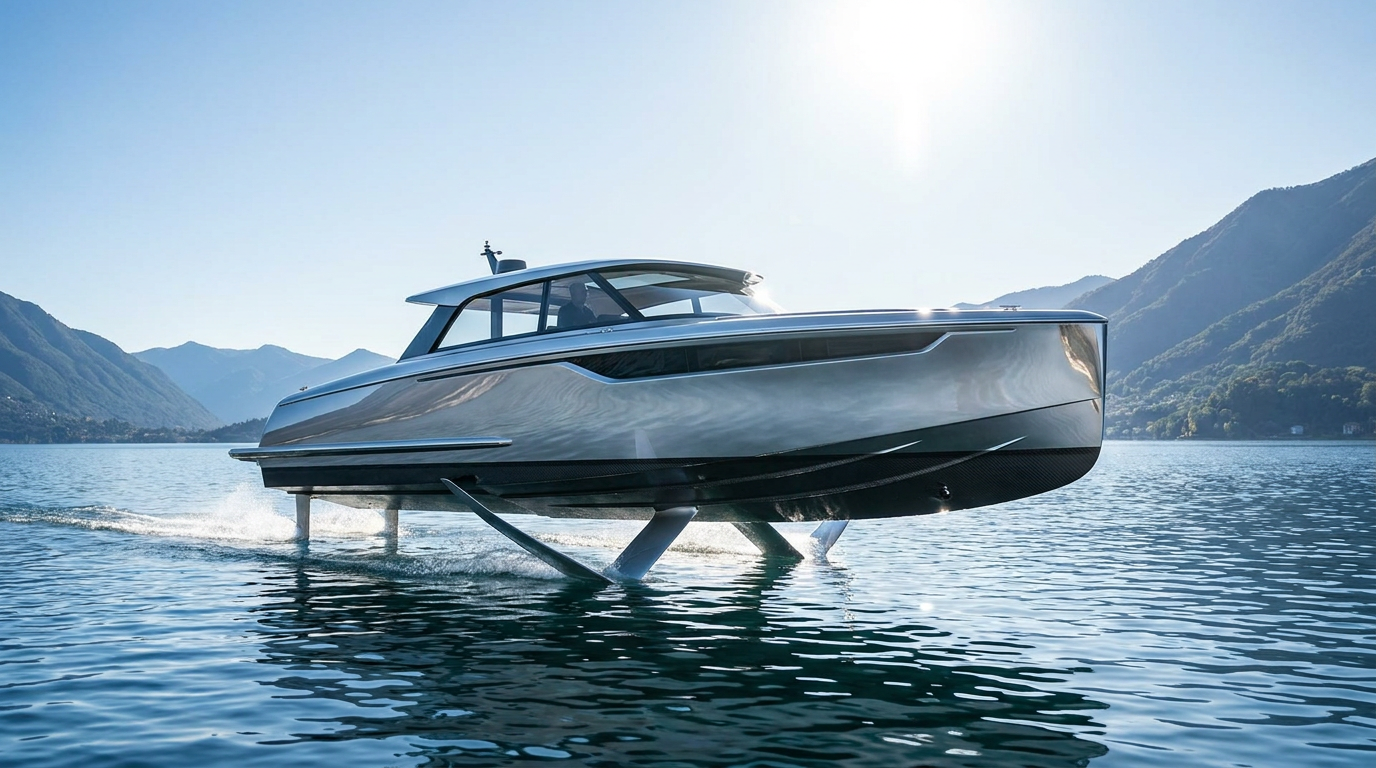
Now, a breakthrough in marine engineering is fundamentally changing the equation. A new generation of electric boats is utilizing hydrofoil technology to bypass the drag problem entirely. By mounting underwater wings—known as foils—beneath the hull, these vessels are able to lift themselves entirely out of the water once they reach a certain speed. This concept, borrowed from aerospace engineering and competitive sailing, effectively turns the boat into a low-flying aircraft, completely altering the physics of how the vessel interacts with the water.[5][7]
The result is a sensation that feels more like flying than sailing. As the hull clears the surface, water resistance drops precipitously. This aerodynamic approach reduces energy consumption by up to 80 percent compared to a traditional planing hull, suddenly making electric propulsion not just viable, but highly efficient. By slicing through the water rather than pushing it out of the way, hydrofoils unlock the true potential of electric motors, allowing them to operate at peak efficiency without constantly fighting the immense friction of the sea.[5]

“When you lift the hull out of the water, you're no longer creating drag and you improve performance by approximately four times,” explains Paul Masojc, Chief Operations Officer at ENVGO, a Canadian company developing the NV1 electric hydrofoil cruiser. This efficiency leap allows hydrofoil boats to achieve the high speeds and long ranges that consumers expect, without requiring impossibly large battery banks. It represents a paradigm shift in marine design, proving that sustainability no longer demands a sacrifice in performance, range, or overall utility for the end user.[3]
The environmental implications of this technology are profound, extending far beyond the simple elimination of tailpipe emissions. A comprehensive Life Cycle Assessment conducted by researchers at Sweden's KTH Royal Institute of Technology compared the carbon footprint of electric hydrofoil ferries to traditional diesel vessels. The findings were staggering: over a 30-year service life, the hydrofoil ferry emitted 97.5 percent less carbon dioxide. This metric provides a holistic view of the technology's true ecological impact, proving its viability as a cornerstone of future green transit.[1][4]
This massive reduction accounts for the entire lifecycle of the vessel, including the extraction of raw materials, the manufacturing of the lithium-ion batteries, and the daily operation of the boat. Because the energy requirement is so low, the carbon debt incurred during battery production is quickly offset by the zero-emission operation, especially when charged via renewable energy grids. Unlike electric cars, which can take years to offset their manufacturing emissions, the extreme efficiency of the hydrofoil means the environmental break-even point is reached in a fraction of the time.[1]
Beyond greenhouse gas emissions, hydrofoils solve two other chronic problems associated with motorized boating: noise pollution and wake damage. Traditional combustion engines create a tremendous amount of underwater noise, which disrupts marine ecosystems, stresses local wildlife, and interferes with the communication of aquatic life like whales and dolphins. Electric hydrofoils, gliding silently above the surface with their motors housed in streamlined underwater pods, are virtually inaudible beneath the waves. This silent operation restores tranquility to heavily trafficked waterways and provides a vastly superior, peaceful experience for the passengers onboard.[5]
Beyond greenhouse gas emissions, hydrofoils solve two other chronic problems associated with motorized boating: noise pollution and wake damage.
Furthermore, because the hull is not displacing water, hydrofoils generate almost zero wake. Traditional boat wakes are a major cause of shoreline erosion, damaging fragile coastal habitats, destroying marine nurseries, and disrupting other waterway users like kayakers and paddleboarders. The wake-free nature of hydrofoils allows them to operate at high speeds in sensitive ecological zones and narrow urban canals without causing environmental degradation. As a result, many municipalities are beginning to exempt hydrofoil vessels from strict speed limits that were originally implemented solely to prevent wake-induced shoreline destruction.[3][5]
The commercial applications of this technology are already being tested in major urban centers, where the need for clean public transit is most acute. In Stockholm, the Swedish manufacturer Candela is preparing to deploy the P-12 Shuttle, a 50-passenger electric hydrofoil ferry designed for public transportation. The city hopes that these fast, efficient vessels can eventually replace its fleet of over 70 diesel ferries, shifting commuter traffic from congested highways onto the waterways. By utilizing the city's natural aquatic infrastructure, Stockholm aims to drastically reduce the municipal transit authority's carbon footprint while cutting commute times in half.[4]
The broader recreational market is also seeing a surge in innovation as the technology trickles down to consumer vessels. Companies like Candela, the US-based Navier, and Canada's ENVGO are designing sleek, high-performance consumer boats that borrow heavily from aerospace engineering. These boats utilize advanced flight controllers—sophisticated software systems that process data from an array of sensors to constantly adjust the angle of the foils. This micro-adjustment happens dozens of times per second, maintaining perfect stability over choppy waves and ensuring a remarkably smooth ride even in rough conditions.[3][7]

To accelerate production and overcome supply chain hurdles, marine startups are increasingly partnering with established automotive brands. Candela, for instance, has forged a strategic partnership with the electric vehicle manufacturer Polestar to supply high-capacity battery packs and charging technology for their vessels. This cross-industry collaboration allows boat builders to leverage the massive economies of scale already achieved by the automotive sector. By utilizing proven automotive batteries, marine manufacturers can drive down component costs, improve overall reliability, and help standardize fast-charging infrastructure across the rapidly growing electric marine ecosystem.[2]
Despite the rapid technological progress, significant hurdles remain before hydrofoils can achieve true mass-market dominance. The upfront cost of these vessels is currently prohibitive for many average consumers, often pricing them strictly in the luxury boating segment. The integration of aerospace-grade carbon fiber, complex flight-control software, and high-voltage electrical systems requires highly specialized, labor-intensive manufacturing processes. Until these companies can scale up production facilities and automate their assembly lines, the premium price tag will continue to limit widespread adoption among casual weekend boaters and smaller commercial operators.[7]
Maintenance and durability also present unique challenges in the unpredictable marine environment. The underwater foils are inherently vulnerable to strikes from submerged debris, floating logs, or marine life, which can cause severe structural damage when the boat is traveling at high speeds. While manufacturers are actively developing advanced collision detection and avoidance systems using forward-looking sonar and radar, the risk of a high-speed foil strike remains a serious concern. For operators navigating poorly maintained waterways or debris-filled rivers, the potential for exorbitant repair bills is a significant deterrent.[7]
Additionally, the marine environment is notoriously harsh on delicate electrical components and complex moving parts. Saltwater corrosion, constant mechanical vibration, and extreme weather conditions require robust waterproofing and specialized engineering that goes far beyond standard automotive requirements. Ensuring that the intricate actuators controlling the hydrofoils remain reliable after years of continuous saltwater exposure adds further complexity and cost to the vessels. This level of sophistication means that routine servicing and repairs often require highly specialized technicians, rather than a standard marina mechanic, complicating the ownership experience for early adopters.[7]

Nevertheless, industry analysts project staggering growth for the sector as the technology matures. The global electric boat market, valued at approximately $7.7 billion in 2025, is projected to reach nearly $21 billion by 2035. As battery technology continues to improve, energy density increases, and production scales up globally, the cost premium of hydrofoils is expected to shrink dramatically. This financial trajectory mirrors the early days of the electric car market, suggesting a similar tipping point is approaching for the marine industry.[6]
Regulatory pressures are also accelerating the transition away from fossil fuels on the water. Stricter environmental regulations, such as the International Maritime Organization's aggressive decarbonization targets and local municipal bans on combustion engines in protected lakes, are forcing the industry to adapt quickly. As more waterways implement zero-emission mandates and strict noise ordinances to protect local ecosystems, electric hydrofoils are uniquely positioned to become the only viable option for high-speed marine transport. These regulatory tailwinds provide a massive incentive for continued investment and innovation in the foiling sector.[2][5]
Ultimately, the marriage of hydrofoil technology and electric propulsion represents the most significant leap in marine design in decades. By elegantly solving the fundamental physics problem that has long held electric boats back, these flying vessels offer a compelling glimpse into the future of maritime mobility. As the technology becomes more accessible, it promises to usher in an era of quieter, cleaner, and vastly more efficient travel on the water, fundamentally transforming our relationship with the world's oceans and lakes.[7]
How we got here
2019
Candela launches the C-7, the world's first electric hydrofoil speedboat in serial production.
2022
KTH researchers publish a Life Cycle Assessment showing hydrofoils reduce lifetime CO2 emissions by 97.5%.
2024
Marine startups like ENVGO and Navier announce next-generation hydrofoil cruisers with advanced aerospace flight controllers.
2025
The Candela P-12 Shuttle begins commercial trials as a public transit ferry in Stockholm.
2026
The global electric boat market sees rapid expansion as battery costs fall and hydrofoil models reach wider consumer availability.
Viewpoints in depth
Marine Innovators
Manufacturers and engineers focused on the efficiency and performance gains of hydrofoil technology.
Companies like Candela and ENVGO argue that hydrofoils are the only viable path to electrifying the marine sector. By eliminating hull drag, they believe they have solved the fundamental physics problem that previously limited electric boats to slow speeds and short ranges. For these innovators, the technology is not just an environmental necessity, but a massive performance upgrade that offers a smoother, quieter, and more exhilarating ride than any combustion engine.
Environmental Researchers
Scientists analyzing the lifecycle emissions and ecological impact of marine transport.
Academic researchers, such as those at the KTH Royal Institute of Technology, emphasize the staggering 97.5 percent reduction in lifetime CO2 emissions that electric hydrofoils offer over diesel alternatives. Beyond carbon, they highlight the critical importance of wake reduction and noise elimination. Traditional boat wakes cause severe shoreline erosion and disrupt aquatic habitats, making hydrofoils a crucial tool for preserving fragile coastal ecosystems and marine life.
Traditional Boaters & Skeptics
Consumers and operators concerned about the practical challenges and high costs of the new technology.
Despite the technological leaps, many traditional boaters remain skeptical of the high upfront costs and complex maintenance required by hydrofoils. The aerospace-grade carbon fiber and advanced flight-control software push these vessels into luxury price brackets. Furthermore, operators worry about the vulnerability of the underwater wings to debris strikes in poorly maintained waterways, fearing that a high-speed collision with a submerged log could result in catastrophic damage and exorbitant repair bills.
What we don't know
- How quickly the specialized aerospace-grade manufacturing processes can scale to bring prices down to mass-market levels.
- Whether marine infrastructure will upgrade fast enough to provide the high-voltage fast-charging networks these vessels require.
- How insurance markets will price the risk of high-speed debris strikes on the expensive carbon-fiber underwater wings.
Key terms
- Hydrofoil
- An underwater wing mounted to a boat's hull that generates lift, raising the vessel out of the water to reduce drag.
- Flight Controller
- A computerized software system that constantly adjusts the angle of the hydrofoils to maintain stability and a smooth ride over waves.
- Life Cycle Assessment (LCA)
- A comprehensive analysis of the environmental impact of a product from the extraction of raw materials through its manufacturing, use, and eventual disposal.
- Planing Hull
- A traditional boat design that uses speed to push the bow up and skim across the surface of the water, which requires immense energy.
Frequently asked
Why are traditional electric boats so slow?
Water is dense, and pushing a traditional hull through it requires massive amounts of energy. Without hydrofoils, electric boats must either carry heavy, expensive batteries or settle for low speeds and short ranges.
Do hydrofoil boats create a wake?
Because the hull is lifted entirely out of the water, hydrofoil boats generate almost zero wake, which prevents shoreline erosion and protects marine habitats.
What happens if a hydrofoil hits a log?
Submerged debris is a significant risk. While manufacturers are developing collision avoidance systems, a high-speed strike on the underwater wings can cause severe damage.
Are electric hydrofoil boats completely silent?
They are virtually silent. Without a combustion engine and with the hull lifted above the water, the only sound is the electric motor and the slight cutting of the foils through the water.
Sources
Source coverage
7 outlets
3 viewpoints surfaced







[1]KTH Royal Institute of TechnologyEnvironmental Researchers
Electric hydrofoil boats beat diesel boats for climate sustainability
Read on KTH Royal Institute of Technology →[2]International Boat IndustryMarine Innovators
Electric Propulsion | Sector Spotlight
Read on International Boat Industry →[3]Boating Industry CanadaMarine Innovators
ENVGO Leads Electric Hydrofoil Development in North America
Read on Boating Industry Canada →[4]Marine LogEnvironmental Researchers
Study indicates foiling e-ferries deliver huge CO2 savings
Read on Marine Log →[5]CandelaMarine Innovators
Electric vs. combustion engine boats; (all you need to know)
Read on Candela →[6]Market Research FutureIndustry Realists
Global Hydrofoil Boat Market Research Report Information
Read on Market Research Future →[7]Factlen Editorial TeamIndustry Realists
Synthesis by Factlen editorial team
Read on Factlen Editorial Team →
More in automotive
See all 29 stories →Bidirectional Charging
How Bidirectional Charging is Turning Electric Vehicles into Mobile Power Plants
8 sources
Battery Tech
How Solid-State Batteries Are Finally Reaching the Road in 2026
8 sources

Marine Tech
How Hydrofoil Technology is Finally Making Electric Boats Viable
7 sources
Model Y vs R2
2026 Rivian R2 vs. Tesla Model Y Juniper: The Mid-Size Electric SUV Showdown
6 sources
Every angle. Every day.
Get automotive stories with full source coverage and perspective breakdowns delivered to your inbox.