
How Bidirectional Charging is Turning Electric Vehicles into Mobile Power Plants
New bidirectional charging technology allows electric vehicles to power homes during blackouts and stabilize public utility grids, transforming cars into massive energy assets.
By Factlen Editorial Team
- Grid Operators & Utilities
- Viewing electric vehicles as a massive, distributed battery network to stabilize the grid.
- Consumer Advocates
- Focusing on the immediate benefits of home resilience and energy bill reduction.
- Automakers & Hardware Providers
- Focusing on standardizing ISO 15118-20 and deploying bidirectional wallboxes to unlock vehicle value.
- Battery Researchers
- Analyzing the long-term impact of bidirectional cycling on lithium-ion cell degradation.
- Editorial Synthesis
- Synthesizing the technical, financial, and infrastructural elements of the bidirectional charging transition.
What's not represented
- · Independent electricians tasked with navigating complex local permitting for bidirectional charger installations.
- · Renters and apartment dwellers who lack the dedicated driveway infrastructure required for V2H setups.
Why this matters
Your electric vehicle is no longer just a depreciating asset sitting in the driveway—it is a massive, mobile power plant. Bidirectional charging unlocks the ability to protect your home from blackouts, slash your daily electricity bills, and help stabilize the public grid, fundamentally changing the economics of car ownership.
Key points
- Bidirectional charging allows electric vehicles to send stored battery power back to homes, appliances, or the public grid.
- Vehicle-to-Home (V2H) technology can power an average household for three to ten days during a blackout.
- Smart charging systems can lower energy bills by charging overnight and powering the home during expensive peak hours.
- Vehicle-to-Grid (V2G) applications help stabilize public utility grids by absorbing excess renewable energy and discharging it during peak demand.
- Bidirectional home chargers currently cost between $4,000 and $8,000, presenting a significant upfront barrier to mass adoption.
- NREL research indicates that smart V2G management can actually extend battery life by optimizing the vehicle's state of charge while parked.
For most of the last century, a car's utility ended the moment it was parked. It sat idle in a driveway or garage for 95 percent of its life, a depreciating asset waiting for the next commute. But the rapid adoption of electric vehicles has fundamentally altered that equation. A modern EV is not just a mode of transportation; it is a massive, mobile energy storage system. To put it in perspective, a standard Tesla Powerwall holds 13.5 kilowatt-hours of electricity. A Ford F-150 Lightning carries up to 131 kilowatt-hours. That is nearly ten times the capacity on wheels, representing an untapped reservoir of power that could fundamentally reshape how homes and electrical grids operate.[1][2]
Unlocking that reservoir is the promise of bidirectional charging, a technology that has spent the last decade in pilot programs and is finally reaching commercial maturity in 2026. Traditional EV charging is a one-way street: alternating current (AC) flows from the grid, is converted to direct current (DC), and fills the car's battery. Bidirectional charging turns that street into a two-way avenue. Through sophisticated onboard inverters or specialized wallboxes, the vehicle can take its stored DC power, convert it back to AC, and push it out to external recipients.[5][6]
This two-way flow is broadly categorized into three distinct applications, often grouped under the umbrella term V2X, or 'Vehicle-to-Everything.' The simplest and most common is Vehicle-to-Load (V2L). This requires no special home equipment; the car simply features standard electrical outlets that can power tools at a job site, run a refrigerator during a camping trip, or keep essential medical devices running in an emergency. While highly useful, V2L is a localized, manual solution that only scratches the surface of what a massive lithium-ion battery can do.[4][6]
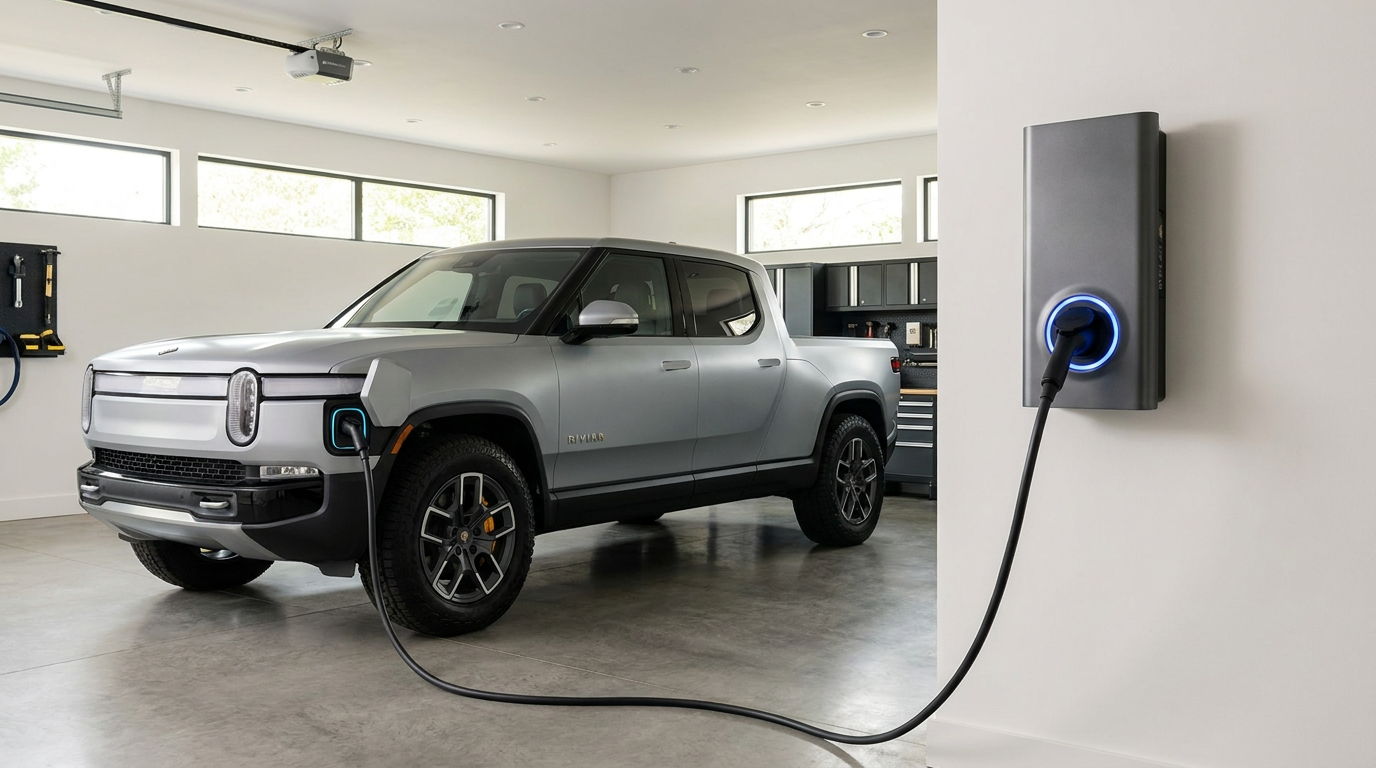
The true paradigm shift begins with Vehicle-to-Home (V2H) technology. With a V2H setup, the EV is connected to a specialized bidirectional charger integrated directly into the home's electrical panel. During a blackout, the system automatically isolates the house from the dead grid and draws power from the car. A fully charged EV can comfortably run an average household—keeping the lights on, the food cold, and the internet connected—for three to ten days without requiring a drop of gasoline or a noisy backup generator.[6][7]

But V2H is not just for emergencies; it is a powerful tool for daily financial arbitrage. Many utility companies now utilize time-of-use pricing, where electricity is cheap overnight but highly expensive during the early evening peak when families return home and turn on appliances. A smart V2H system automatically charges the car during the cheapest hours. Then, from 5:00 PM to 8:00 PM, the house stops pulling from the grid entirely and runs off the car's battery. This daily cycle can drastically reduce a household's energy bill, effectively paying off the hardware investment over several years.[4][5]
The most ambitious application, however, is Vehicle-to-Grid (V2G). Instead of just powering a single home, V2G allows the vehicle to export its stored energy all the way back into the public electrical grid. For utility operators, this is the holy grail of grid stabilization. As the world transitions to renewable energy, the grid faces a persistent mismatch between supply and demand. Solar panels generate abundant power at noon when demand is low, but stop producing just as evening demand spikes—a phenomenon known as the 'duck curve.'[3][8]
The most ambitious application, however, is Vehicle-to-Grid (V2G).
Millions of EVs plugged in across the country could act as a massive, distributed sponge. They can absorb excess solar power during the day, preventing it from being wasted. Then, during the evening peak, utility companies can draw a small percentage of power back from those millions of batteries, eliminating the need to fire up dirty, expensive fossil-fuel peaker plants. In exchange for providing this critical balancing service, EV owners are compensated through utility credits or direct payments, turning their parked car into a revenue-generating asset.[3][4]
Despite this immense potential, the rollout of bidirectional charging has faced significant hurdles, primarily regarding hardware costs and standardization. A standard Level 2 home charger costs a few hundred dollars. In contrast, a bidirectional wallbox—which must contain complex power electronics, inverters, and fail-safes to safely synchronize with the grid—currently costs between $4,000 and $8,000, including installation. This steep upfront premium has kept V2H and V2G out of reach for many early adopters, though prices are expected to fall as manufacturing scales.[5][7]

Furthermore, the industry has spent years battling over communication protocols. Early V2G trials relied almost exclusively on the CHAdeMO charging standard, championed by the Nissan Leaf. However, the vast majority of the global automotive industry has standardized on the Combined Charging System (CCS). It wasn't until the recent finalization and implementation of the ISO 15118-20 communication protocol that CCS vehicles could safely and securely negotiate bidirectional power transfer with charging stations.[4][7]
That standardization is now bearing fruit. In 2026, major automakers are moving aggressively to unlock bidirectional capabilities. Volkswagen, for instance, has begun issuing over-the-air software updates to tens of thousands of its existing ID-series vehicles, instantly granting them V2H readiness. Ford, Hyundai, Kia, and General Motors are increasingly making bidirectional hardware standard on their newer platforms, shifting the bottleneck from the vehicles themselves to the installation of compatible home chargers.[6][7]
As the technology becomes accessible, the most persistent consumer anxiety revolves around battery degradation. An EV battery is the most expensive component of the vehicle, and owners are understandably protective of it. The concern is that using the car to power a home or support the grid introduces micro-cycles—constant small charges and discharges that could prematurely wear out the battery cells and void warranties.[3][8]
However, extensive research from the National Renewable Energy Laboratory (NREL) suggests these fears may be overstated, and in some cases, entirely backward. Lithium-ion batteries degrade fastest when they are left sitting at a 100 percent state of charge for long periods. NREL's data indicates that a smartly managed V2G system, which intentionally draws the battery down to a healthier 60 or 70 percent while the car is parked, can actually extend the overall lifespan of the cells compared to a car that is simply plugged in and kept at maximum capacity.[3][8]

To protect consumers, automakers and software providers are implementing strict parameters. Users can set hard limits via smartphone apps, ensuring the car never discharges below a certain threshold—say, 50 percent—guaranteeing they always have enough range for their morning commute or an unexpected emergency trip. The software handles the complex math of grid demands, battery health, and the owner's schedule invisibly in the background.[1][5]
The transition to a bidirectional energy ecosystem represents a fundamental rewiring of the relationship between transportation and infrastructure. For over a century, cars have been pure consumers of energy. By transforming them into active participants in the electrical grid, bidirectional charging not only makes individual homes more resilient against extreme weather and blackouts but also provides the critical storage infrastructure required to complete the global transition to renewable energy.[1][2][8]
How we got here
2013
Early Vehicle-to-Grid pilot programs begin, primarily utilizing the CHAdeMO charging standard.
2022
The ISO 15118-20 standard is published, creating a universal protocol for bidirectional charging on CCS plugs.
2024
Automakers begin rolling out early V2H capabilities, allowing select trucks and SUVs to provide home backup power.
Early 2026
Over-the-air software updates unlock bidirectional capabilities for tens of thousands of existing EVs, moving the technology toward the mainstream.
Viewpoints in depth
Grid Operators & Utilities
Viewing electric vehicles as a massive, distributed battery network to stabilize the grid.
For utility companies, the transition to renewable energy presents a massive storage problem. Solar and wind generation are intermittent, often producing peak power when demand is lowest. Grid operators view V2G technology as the ultimate solution: a decentralized network of millions of batteries that can absorb excess renewable energy midday and feed it back during the evening peak. This eliminates the need to build expensive, dedicated utility-scale battery farms or rely on fossil-fuel peaker plants.
Consumer Advocates
Focusing on the immediate benefits of home resilience and energy bill reduction.
From the consumer perspective, the primary draw of bidirectional charging is Vehicle-to-Home (V2H) capability. Advocates emphasize the security of having a massive backup battery that can power a household for days during extreme weather events or grid failures. Additionally, consumers are highly motivated by the financial arbitrage of time-of-use rates—charging the car when electricity is cheap and running the house off the battery when rates spike. However, these advocates remain highly critical of the current $4,000 to $8,000 hardware costs, arguing that prices must fall for the technology to become equitable.
Battery Researchers
Analyzing the long-term impact of bidirectional cycling on lithium-ion cell degradation.
Scientists and engineers studying battery chemistry are closely monitoring how V2G and V2H applications affect the lifespan of EV batteries. While consumers fear that extra cycling will ruin their cars, researchers point to data showing that smart management can actually improve battery health. Because lithium-ion cells degrade faster when held at a 100 percent state of charge, using V2G to keep a parked car's battery closer to 60 or 70 percent can reduce chemical stress, counterintuitively extending the overall life of the pack.
What we don't know
- How quickly utility companies will standardize compensation rates for consumers participating in V2G programs.
- Whether the high upfront cost of bidirectional home chargers will drop fast enough to encourage mass adoption before 2030.
- The long-term real-world impact of daily V2H cycling on battery warranties across different automotive brands.
Key terms
- Bidirectional Charging
- Technology that allows electricity to flow both into an electric vehicle's battery and back out to external recipients.
- V2H (Vehicle-to-Home)
- A system that allows an electric vehicle to power a household's electrical panel, providing backup power during outages.
- V2G (Vehicle-to-Grid)
- A system where electric vehicles export stored energy back to the public utility grid to help balance supply and demand.
- V2L (Vehicle-to-Load)
- A feature allowing users to plug standard 120V or 240V appliances directly into outlets built into the electric vehicle.
- ISO 15118-20
- The international communication standard that enables secure bidirectional power transfer over standard CCS charging cables.
Frequently asked
Will bidirectional charging degrade my EV battery faster?
While extra cycling uses the battery, research from the National Renewable Energy Laboratory suggests that smart V2G management can actually extend battery life by keeping the state of charge at optimal levels while parked.
Do I need a special charger for V2H or V2G?
Yes. You need a dedicated bidirectional wallbox containing an inverter to convert the car's DC power back to AC, which currently costs significantly more than a standard Level 2 charger.
Can any electric vehicle power my home?
No. Both the vehicle and the charger must support bidirectional charging. While models like the Ford F-150 Lightning and newer VW ID series support it, it is not yet universal across all EVs.
Sources
Source coverage
8 outlets
5 viewpoints surfaced








[1]Factlen Editorial TeamEditorial Synthesis
Synthesis by Factlen editorial team
Read on Factlen Editorial Team →[2]Department of EnergyGrid Operators & Utilities
Bidirectional Charging and Electric Vehicles for Mobile Storage
Read on Department of Energy →[3]National Renewable Energy LaboratoryBattery Researchers
Electric Vehicles Play a Surprising Role in Supporting Grid Resiliency
Read on National Renewable Energy Laboratory →[4]Octopus EnergyGrid Operators & Utilities
Vehicle-to-grid, V2H & bidirectional charging: the complete UK guide
Read on Octopus Energy →[5]WallboxAutomakers & Hardware Providers
Why Bidirectional Charging is The Next Big Thing for EV Owners
Read on Wallbox →[6]AMP RenewablesConsumer Advocates
V2H and V2G in 2026: Using Your EV as a Home Battery
Read on AMP Renewables →[7]NeoChargeConsumer Advocates
Bidirectional Charging at Home (V2H/V2G) in 2026: Standards, Hardware, and a Readiness Checklist
Read on NeoCharge →[8]MDPIBattery Researchers
Electric Vehicle-to-Grid (V2G) Technologies: Impact on the Power Grid and Battery
Read on MDPI →

More in automotive
See all 28 stories →Battery Tech
How Solid-State Batteries Are Finally Reaching the Road in 2026
8 sources

Marine Tech
How Hydrofoil Technology is Finally Making Electric Boats Viable
7 sources

Model Y vs R2
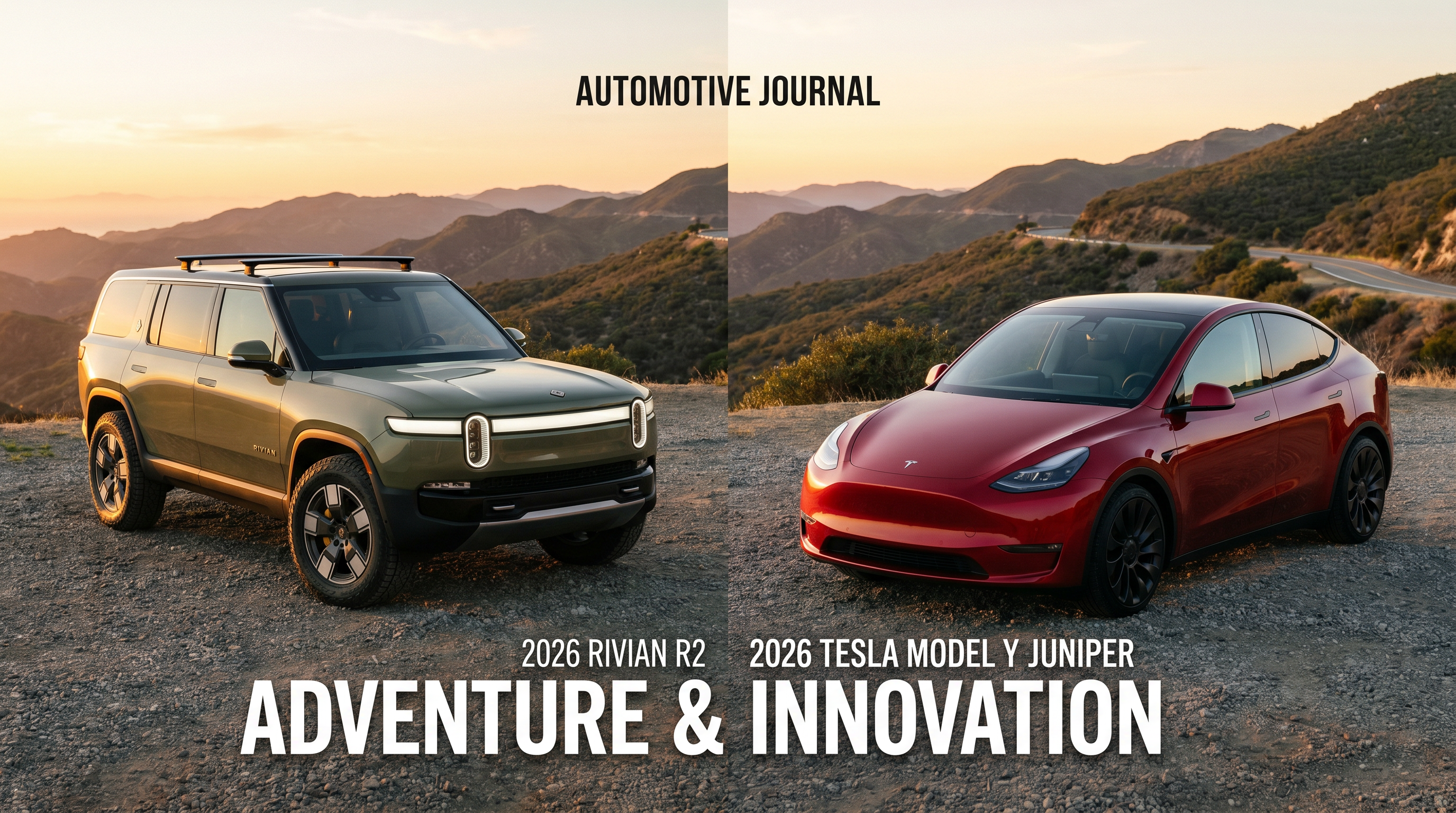
2026 Rivian R2 vs. Tesla Model Y Juniper: The Mid-Size Electric SUV Showdown
6 sources
EV Showdown
2026 Rivian R2 vs. Tesla Model Y: The Electric SUV Showdown
7 sources
Every angle. Every day.
Get automotive stories with full source coverage and perspective breakdowns delivered to your inbox.