
Hardside vs. Softside Carry-On Luggage: The 2026 Trade-Off Analysis
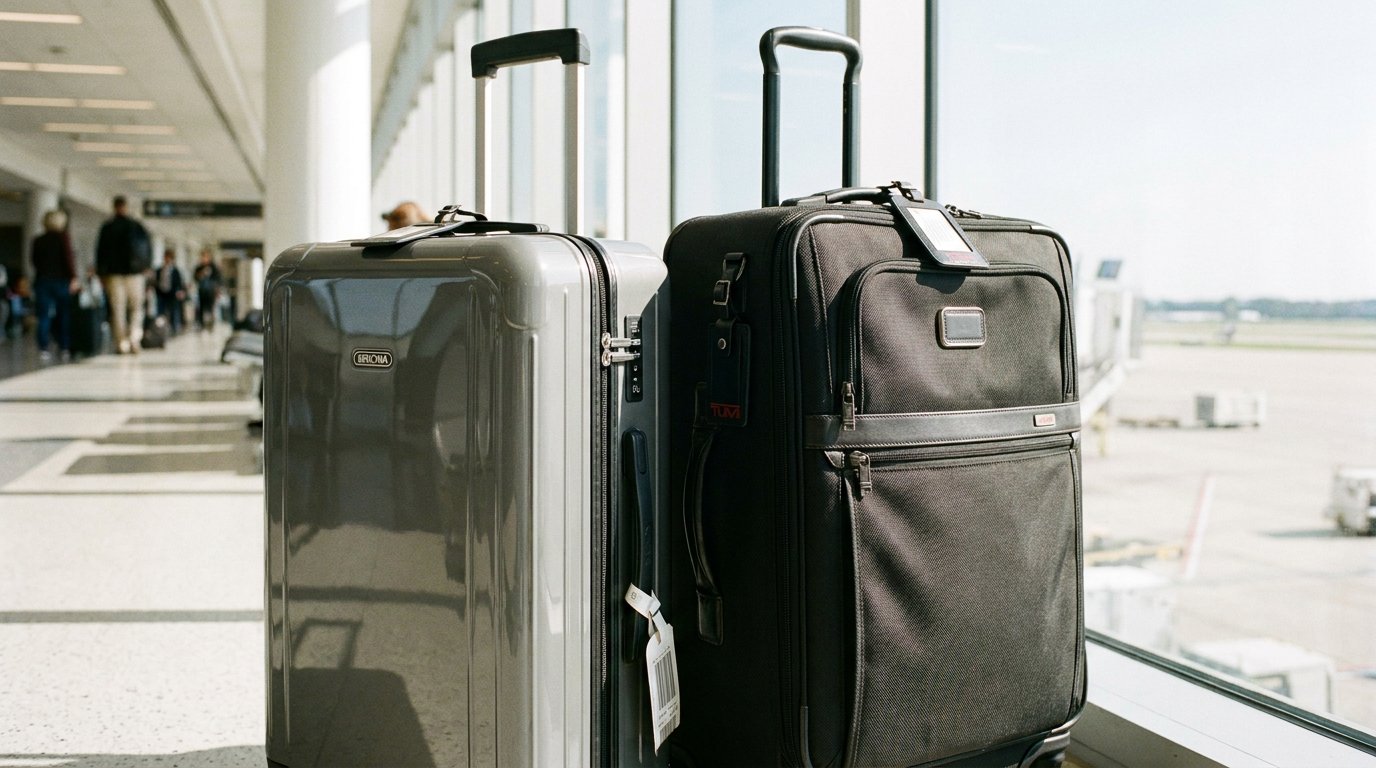
As airlines strictly enforce carry-on weight and dimension limits in 2026, the choice between hardside and softside luggage comes down to packing discipline and accommodation size. This side-by-side comparison weighs the durability and rigid protection of polycarbonate against the flexibility and exterior access of ballistic nylon.
By Factlen Editorial Team
- Hardside Minimalists
- Travelers who prioritize sleek design, rigid protection, and strict dimensional compliance.
- Softside Pragmatists
- Travelers who prioritize exterior organization, spatial flexibility, and durability against scuffs.
What's not represented
- · Backpack-only travelers who reject wheeled luggage entirely for maximum mobility.
- · Travelers with accessibility needs who require specific handle ergonomics over shell material.
Why this matters
With international carriers enforcing strict 7-to-10-kilogram carry-on limits and gate-check fees rising, choosing the wrong suitcase material can cost travelers both money and convenience. Matching your luggage type to your itinerary prevents damaged valuables, avoids airline penalties, and saves crucial floor space in tight hotel rooms.
Key points
- Modern polycarbonate hardside bags can weigh as little as 5.8 pounds, often undercutting softside models.
- Softside luggage features a bucket-style opening that requires half the floor space of a hardside clamshell.
- Hardside luggage prevents overpacking bulges, ensuring the bag fits perfectly into strict airline sizers.
- Softside bags offer exterior pockets, providing crucial quick access to passports, laptops, and liquids.
- Hardside shells offer superior water resistance and protection for fragile items during transit.
As airlines aggressively tighten their carry-on regulations in 2026, the choice between hardside and softside luggage has evolved from a simple aesthetic preference into a calculated logistical decision. International carriers are increasingly enforcing strict weight maximums, often capping cabin baggage at just seven to ten kilograms, alongside rigid dimensional sizer boxes at the boarding gate. In this unforgiving environment, travelers can no longer afford to guess which material best suits their itinerary. The debate between the sleek, rigid protection of polycarbonate and the forgiving, pocket-heavy utility of ballistic nylon requires a meticulous side-by-side trade-off analysis. Selecting the wrong suitcase can result in damaged valuables, frustrating organizational bottlenecks in transit, or hefty unexpected gate-check fees when a bulging bag fails to slide into the airline's metal sizing frame.[6]
The case for hardside luggage centers entirely on structural discipline and elemental protection. Constructed from advanced, lightweight plastics—most notably polycarbonate—these rigid shells provide a formidable barrier against the blunt-force impacts of travel. For passengers transporting fragile electronics, delicate souvenirs, or structured clothing that easily wrinkles, the hard exterior acts as a protective exoskeleton. Furthermore, the modern hardside aesthetic has become synonymous with premium travel, offering a sleek, minimalist profile that glides effortlessly through modern airport terminals. This rigid architecture forces a specific type of packing discipline, requiring travelers to curate their belongings to fit exactly within the unyielding boundaries of the shell.[1][3]
The evidence supporting hardside models is most visible in their dimensional stability and superior weather resistance. Because a polycarbonate shell cannot physically stretch, it serves as an automatic safeguard against overpacking; if the suitcase zips shut, the traveler is virtually guaranteed that it will fit perfectly into the airline's sizer box without triggering a penalty. Additionally, the non-porous plastic exterior easily repels rain, snow, and spills. Travelers caught in a sudden downpour while navigating cobblestone streets can simply wipe the shell dry with a towel, confident that the moisture has not penetrated the barrier to dampen their clothing or electronics inside.[6][7]

The case against hardside luggage focuses heavily on spatial inefficiency and the frustrating realities of exterior wear. The mandatory clamshell design requires the suitcase to be opened completely flat, splitting the bag into two equal halves. While this allows for neat, compartmentalized packing at home, it demands double the floor space when opened. This design quirk transforms into a significant friction point when travelers find themselves in cramped European hotel rooms, micro-apartments, or cruise ship cabins where floor space is at an absolute premium. Without a dedicated luggage rack large enough to support the fully splayed suitcase, travelers are often forced to unpack on the bed or the floor.[4]
The evidence against hardside luggage also includes its vulnerability to cosmetic damage and a distinct lack of accessibility during transit. The smooth, visually appealing plastic surfaces eagerly collect scuffs, scratches, and dents from the moment they are placed on an abrasive surface or bumped against a wall. More critically, the vast majority of hardside carry-ons lack exterior pockets. This means that if a traveler needs to retrieve a laptop, a passport, or a liquid toiletry bag in the middle of a crowded security line, they must lay the entire suitcase flat on the ground and expose their personal belongings to the public just to access a single item.[2][5]
The case for softside luggage is built on a foundation of flexibility, exterior organization, and spatial pragmatism. Woven from incredibly tough, high-denier fabrics like ballistic nylon or heavy-duty polyester, these bags are designed to absorb the bumps, scrapes, and abrasions of travel without showing permanent cosmetic scars. Softside luggage embraces a utilitarian approach to travel, prioritizing function and accessibility over a sleek silhouette. The fabric construction inherently offers more give, allowing travelers to squeeze the bag into tight overhead compartments or the crowded trunks of rideshare vehicles where a rigid plastic box simply would not fit.[2][5]

The case for softside luggage is built on a foundation of flexibility, exterior organization, and spatial pragmatism.
The evidence supporting softside models highlights their superior accessibility and highly efficient footprint. The inclusion of exterior zippered pockets allows travelers to breeze through airport security checkpoints, keeping laptops, boarding passes, and reading materials instantly accessible without ever opening the main compartment. Furthermore, softside bags typically utilize a bucket-style lid opening rather than a split clamshell. This means the suitcase packs like a deep cavern and requires only half the floor space to open, allowing it to rest easily on a standard hotel luggage rack while pushed flush against a wall.[5][7]
The case against softside luggage revolves around the inherent dangers of overpacking and the material's vulnerability to the elements. The very flexibility that makes nylon appealing can quickly become a severe liability at the boarding gate. Because the fabric stretches—and because many softside models feature built-in expansion zippers—travelers are constantly tempted to stuff just one more sweater or pair of shoes into the main compartment. This lack of structural discipline often leads to a distorted, bulging silhouette that completely compromises the bag's original dimensions.[6]
The evidence against softside bags is highly visible at any strict airline counter. A bulging, overstuffed fabric bag will easily fail the rigid metal sizer test, resulting in mandatory gate-check fees and the sudden separation of the traveler from their belongings. Additionally, while high-quality nylon is treated for water resistance, it is rarely waterproof. Heavy, sustained rain can eventually soak through standard fabric and exterior zippers, potentially dampening the contents inside. Softside bags also offer significantly less impact protection, meaning fragile items packed near the edges are highly vulnerable to being crushed if the bag is dropped or jammed into an overhead bin.[6]

When quantifying the trade-offs between the two styles, weight and capacity present surprising data that defies historical assumptions. While travelers have long assumed that fabric is inherently lighter than plastic, modern polycarbonate hardshells can weigh as little as 5.8 pounds empty, often undercutting the 7-to-8-pound average of densely woven, pocket-heavy softside bags. Both styles typically offer a highly comparable 40 to 45 liters of internal packing capacity. The true differentiator is not the volume of space, but how that space is distributed: hardside bags force an even 50/50 split that requires meticulous organization, whereas softside bags offer a single, deep cavern that accommodates bulkier, oddly shaped items.[7]
Hardside luggage fits well when the itinerary involves strict international airline carriers, wet weather destinations, or the transportation of fragile items. It is the optimal choice for travelers who value a sleek, modern aesthetic and possess the packing discipline to live out of a split-compartment system. The rigid dimensions provide peace of mind at the boarding gate, ensuring that the bag will never bulge past the legal carry-on limits, while the hard shell offers unparalleled protection against impacts and precipitation.[6]
Hardside luggage does not fit when the traveler is staying in micro-hotels, hostels, or cruise cabins where floor space is at a premium. It is also a highly frustrating choice for travelers who need constant, quick access to items while in transit, as the lack of exterior pockets forces them to open the entire clamshell in public spaces. Furthermore, travelers who despise the sight of cosmetic scuffs and scratches may find the rapid wear and tear of a plastic shell deeply annoying.[4]

Softside luggage fits well when the journey involves road trips, domestic flights with forgiving overhead bins, or accommodations with severely limited floor space. It excels for travelers who rely heavily on exterior pockets for organization, allowing them to keep their electronics and travel documents within arm's reach. The bucket-style opening is ideal for those who prefer to pack their belongings into one deep main compartment, and the flexible fabric is perfect for squeezing the bag into tight spaces.[5]
Softside luggage does not fit when the traveler lacks packing discipline, as the forgiving fabric practically invites the kind of overstuffing that leads to gate-check penalties. It is also a poor choice for those carrying delicate electronics or fragile souvenirs without dedicated protective sleeves, as the soft exterior cannot absorb heavy impacts. Finally, travelers heading to destinations with heavy, unpredictable rainfall may find that a fabric bag simply cannot provide the elemental protection required to keep their belongings totally dry.[6]
How we got here
Early 2000s
Softside ballistic nylon dominates the carry-on market due to its durability and flexibility.
2010s
The introduction of lightweight polycarbonate revolutionizes hardside luggage, making it viable for carry-on weight limits.
2020
Direct-to-consumer brands popularize the sleek, minimalist hardside aesthetic, shifting market dominance.
2026
Airlines strictly enforce 7-to-10-kilogram limits, forcing travelers to meticulously weigh the empty mass of both hard and soft options.
Viewpoints in depth
The Hardside Minimalists
Advocates for rigid polycarbonate shells emphasize protection and airline compliance.
Proponents of hardside luggage argue that the modern travel environment requires strict dimensional discipline. By utilizing a rigid polycarbonate shell, travelers are physically prevented from overpacking, ensuring their bag will always pass the dreaded airline sizer test. Furthermore, this camp values the superior elemental protection hardshells provide, noting that a quick wipe-down is all it takes to recover from a rainy transit, keeping fragile electronics and clothing perfectly safe inside.
The Softside Pragmatists
Loyalists to ballistic nylon prioritize exterior access and spatial efficiency in tight quarters.
Those who favor softside luggage argue that the realities of travel demand flexibility and quick access. This camp points out that exterior pockets are essential for navigating TSA lines without exposing personal belongings to the entire terminal. Additionally, they highlight the spatial efficiency of the bucket-style opening, which requires only half the floor space of a hardside clamshell—a crucial advantage when unpacking in cramped hotel rooms or cruise ship cabins.
What we don't know
- Whether airlines will eventually standardize carry-on sizer dimensions globally, which currently vary significantly by carrier.
- How next-generation hybrid materials might successfully blend hardside protection with softside exterior access without adding excessive weight.
Key terms
- Polycarbonate
- A highly durable, lightweight plastic used in premium hardside luggage that flexes upon impact to prevent cracking.
- Ballistic Nylon
- A thick, synthetic fabric originally developed for military use, known for its exceptional resistance to tearing and abrasion.
- Clamshell Design
- A suitcase style that opens perfectly in half, requiring the traveler to pack two separate, equal-sized compartments.
- Sizer Box
- The metal frame used by airlines at the boarding gate to strictly measure whether a carry-on bag exceeds maximum dimensions.
Frequently asked
Is hardside or softside luggage lighter?
Surprisingly, modern polycarbonate hardside bags are often lighter than softside bags. Some hardshell models weigh as little as 5.8 pounds, undercutting the 7-to-8-pound average of densely woven ballistic nylon.
Which type fits better in the overhead bin?
Softside luggage has more 'give' and can be squeezed into tight spaces. However, if overpacked, its bulging front can cause it to fail the airline's rigid sizer test before you even board.
Do hardside bags scratch easily?
Yes. While polycarbonate is highly durable against cracking, the smooth exterior is prone to visible scuffs and scratches from normal transit wear and tear.
Which luggage type is better for tight hotel rooms?
Softside luggage is significantly better for tight spaces. Its bucket-style lid requires only half the floor space to open compared to the split clamshell design of hardside bags.
Sources
Source coverage
7 outlets
2 viewpoints surfaced







[1]ForbesHardside Minimalists
Best Carry-On Luggage Of 2026, According To Extensive Testing
Read on Forbes →[2]Good HousekeepingSoftside Pragmatists
The Best Luggage Brands of 2026, Tested and Reviewed
Read on Good Housekeeping →[3]OutdoorGearLabHardside Minimalists
Best Carry-On Luggage of 2026
Read on OutdoorGearLab →[4]PackHackerSoftside Pragmatists
Best Carry On Luggage
Read on PackHacker →[5]TravelproSoftside Pragmatists
Is Hard or Soft Luggage Better for Carry-On?
Read on Travelpro →[6]BaggagePoliciesHardside Minimalists
Hard vs Soft Luggage: 2026 Carry-On Guide
Read on BaggagePolicies →[7]Luggage CouncilSoftside Pragmatists
Hard Shell or Soft Sided Luggage: Which is Best?
Read on Luggage Council →
More in shopping
See all 68 stories →Kitchen Tech
Induction vs. Gas Cooktops: The 2026 Efficiency and Performance Comparison
7 sources

Nursery Gear
Smart Bassinets vs. Traditional: Weighing the Costs, Tech, and Sleep Benefits
7 sources

Gaming Monitors
OLED vs. Mini-LED: The Definitive 2026 Gaming Monitor Comparison
7 sources

Display Tech
OLED vs. Mini-LED TVs: The 2026 Buyer's Guide
8 sources

Every angle. Every day.
Get shopping stories with full source coverage and perspective breakdowns delivered to your inbox.