
The Billion-Dollar Business of Darkness: How Astrotourism is Reshaping Travel
As light pollution erases the night sky for 99% of Americans and Europeans, a booming travel sector is turning pristine darkness into a highly sought-after, certified commodity.
By Factlen Editorial Team
- Conservationists & Ecologists
- View light pollution as a severe environmental toxin and use astrotourism as a financial lever to enforce lighting ordinances that protect nocturnal wildlife.
- Rural Tourism Advocates
- See dark skies as a sustainable natural resource that brings high-value, low-infrastructure overnight revenue to remote communities.
- Experiential Travelers
- Seek out pristine darkness for awe, biological wellness, and the rare opportunity to witness celestial events like the 2026 solar maximum.
What's not represented
- · Local residents in gateway communities facing increased traffic
- · Indigenous groups whose ancestral lands host these parks
Why this matters
By assigning a tangible economic value to natural darkness, astrotourism is incentivizing rural communities to combat light pollution, protecting local ecosystems while offering travelers a profound biological and psychological reset.
Key points
- Astrotourism has evolved into a $1.82 billion market, growing at nearly 11% annually.
- 99% of the population in the US and Europe now lives under skies polluted by artificial light.
- The 2026 solar maximum is driving unprecedented travel to view auroras at lower latitudes.
- Overnight astrotourists spend up to three times more than day-trippers, revitalizing rural economies.
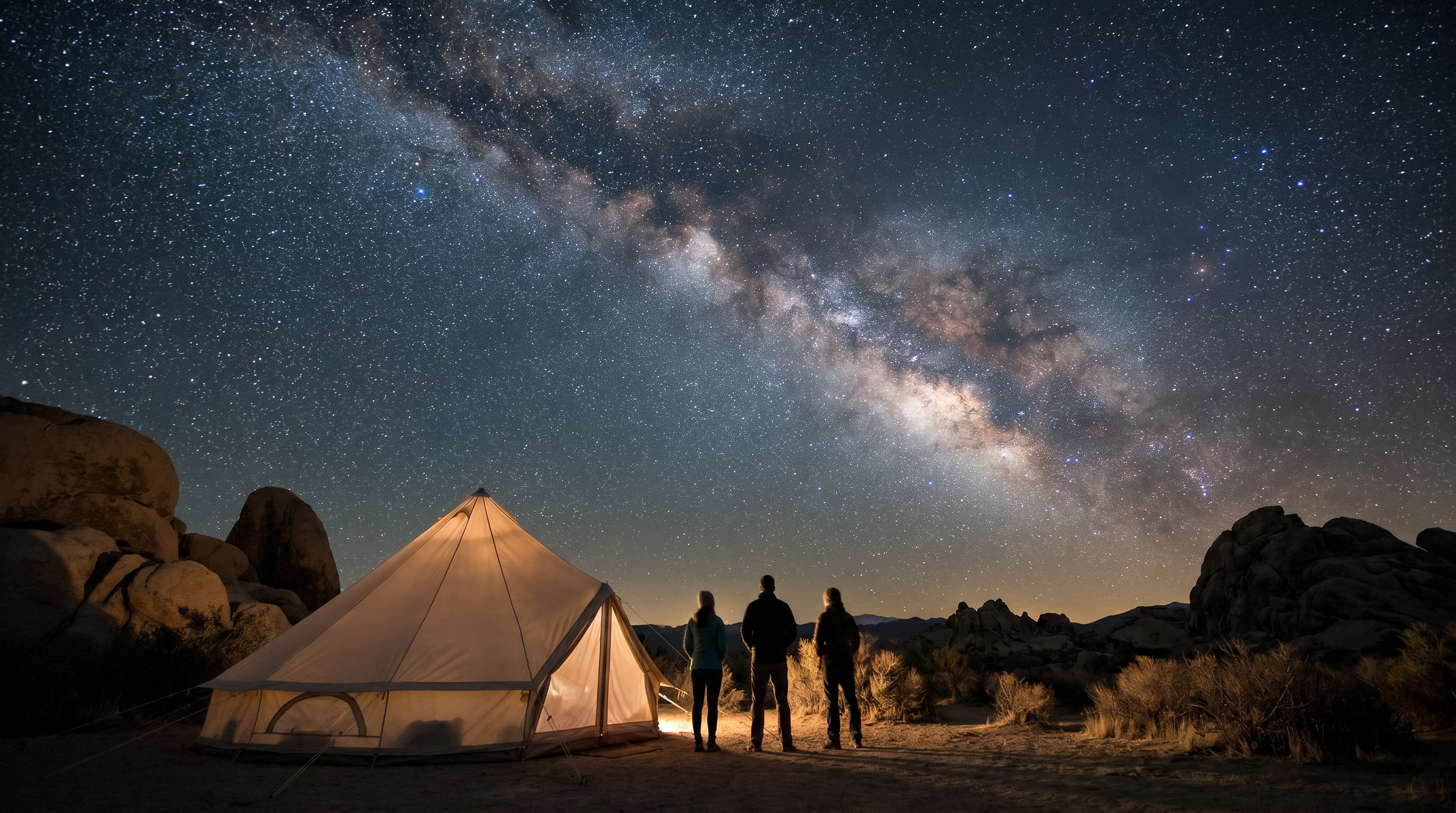
In an era where travel trends often revolve around the newest luxury resort or the most viral culinary hotspot, a profound shift is occurring in how we choose our destinations. Millions of travelers are now journeying to the most remote corners of the globe not for what they can see during the day, but for what emerges when the sun goes down. Astrotourism—travel centered on experiencing pristine, naturally dark skies—has rapidly evolved from a niche hobby for amateur astronomers into one of the defining travel movements of 2026. It is a pursuit born of scarcity, driven by a deep-seated human desire to reconnect with a cosmos that modern infrastructure has effectively erased from our daily lives.[1][5]
The sheer scale of that erasure is staggering. According to conservation data, an estimated 99 percent of the population in the United States and Europe now lives under skies polluted by artificial light. For the vast majority of the developed world, the Milky Way is no longer a nightly spectacle but a mythic concept, obscured by an omnipresent orange haze known as skyglow. This widespread loss of the night sky has transformed true darkness from a ubiquitous natural baseline into a rare, highly sought-after commodity that travelers are increasingly willing to cross oceans to experience.[3][7]
The financial metrics behind this shift reveal a booming industry. The global stargazing tourism market was valued at $1.82 billion in 2025 and is projected to expand at a compound annual growth rate of nearly 11 percent over the next decade. What was once characterized by solitary enthusiasts pitching tents in the desert has matured into a sophisticated hospitality sector. Today's astrotourism encompasses luxury glamping under transparent domes, guided nocturnal wildlife safaris, and exclusive observatory stays, catering to families, corporate retreats, and premium travelers alike.[1][2]

This surging demand is being supercharged by a specific celestial catalyst in 2026: the solar maximum. As the sun reaches the peak of its 11-year activity cycle, intense geomagnetic storms are pushing auroras—the Northern and Southern Lights—to unusually low latitudes. This once-in-a-decade window is prompting a massive influx of bookings to destinations that offer clear, unobstructed views of the horizon. Travel advisors report that eclipse-chasing and aurora-hunting have become primary vacation drivers, fundamentally altering the seasonal booking patterns of the global tourism industry.[1]
But what exactly qualifies a destination as a legitimate haven for stargazers? The gold standard is certification by DarkSky International, a conservation organization that has spent decades fighting light pollution. Through its International Dark Sky Places program, the group has established a rigorous, science-based framework for protecting the nocturnal environment. To date, over 200 locations worldwide have achieved certification, ranging from massive national parks and remote sanctuaries to dedicated reserves and even forward-thinking urban communities.[3]
Achieving this designation is not simply a matter of being located far from a major city. It requires a proactive, sustained commitment to lighting management. Applicants must undergo a grueling review process, submitting extensive empirical data on night sky luminance gathered via Sky Quality Meters or all-sky cameras. More importantly, they must draft and enforce strict outdoor lighting ordinances. These codes mandate the use of fully shielded fixtures, timer controls, and warmer-colored bulbs that direct light exactly where it is needed and nowhere else.[3][7]

The stringent requirements of the DarkSky program serve a dual purpose. While they guarantee an awe-inspiring visual experience for tourists, their primary objective is ecological preservation. Light pollution is increasingly recognized not just as an aesthetic nuisance, but as a severe environmental toxin. Artificial light at night wreaks havoc on nocturnal ecosystems, disrupting the feeding, mating, and migratory patterns of countless species. By establishing protected dark zones, these parks serve as vital refuges for wildlife whose survival depends on the natural rhythms of light and dark.[5][6]
The stringent requirements of the DarkSky program serve a dual purpose.
The biological imperative of darkness extends to human health as well. The proliferation of artificial lighting, particularly the blue-rich light emitted by modern LEDs, has been shown to suppress melatonin production and disrupt human circadian rhythms. This chronic circadian disruption is linked to a host of modern health issues, including sleep disorders and metabolic imbalances. In this context, astrotourism aligns perfectly with the broader wellness travel trend, offering visitors a profound biological reset and a rare opportunity to synchronize their bodies with the natural rotation of the Earth.[3][5]
For the remote communities that host these dark sky reserves, the economic implications are transformative. Because astrotourism fundamentally requires an absence of urban development, it directs tourism dollars away from overcrowded metropolitan hubs and into rural, off-the-beaten-path economies. Furthermore, it requires very little in the way of new, invasive infrastructure. A community does not need to build a massive theme park or a sprawling resort to attract visitors; it simply needs to protect the natural resource it already possesses by turning off the lights.[4][6]
The financial impact of these visitors is disproportionately high due to the nature of the activity. Astrotourists are, by definition, overnight guests. Studies analyzing the economic footprint of dark sky destinations consistently show that overnight visitors spend up to three times as much as day-trippers. They book local lodging, eat at local restaurants, and often hire local guides, injecting vital revenue into rural economies that might otherwise struggle to attract sustained tourism.[4]

A comprehensive study of the Colorado Plateau—a region encompassing parts of Arizona, Colorado, New Mexico, and Utah—illustrates this economic engine in stark terms. Researchers projected that nonlocal tourists drawn specifically by the region's dark skies will spend $5.8 billion over a ten-year period. This influx of capital is expected to generate $2.4 billion in wages and support thousands of jobs annually. Crucially, because stargazing is often optimal during the crisp, clear nights of autumn and winter, astrotourism helps these communities generate reliable income during traditional off-seasons.[4]
Despite the clear ecological and economic benefits, the rapid mainstreaming of astrotourism presents a complex paradox. As pristine, fragile environments become highly publicized travel destinations, they face the very real threat of being loved to death. The influx of vehicles, the construction of new accommodations to house the growing crowds, and the carbon footprint associated with long-haul travel all risk degrading the exact natural conditions that visitors are coming to experience.[6][7]
Managing this tension requires a delicate balancing act from destination marketing organizations and park authorities. Many certified dark sky places are now implementing strict visitor caps, requiring advance reservations, and promoting 'slow travel' itineraries that encourage longer stays rather than quick, high-impact visits. The goal is to maximize the economic benefit per visitor while minimizing the physical footprint on the landscape, ensuring that the nocturnal environment remains undisturbed.[7]

Ultimately, the rise of astrotourism represents a unique alignment of commerce and conservation. By assigning a tangible, multi-billion-dollar value to the absence of artificial light, the travel industry has created a powerful financial incentive for municipalities to adopt responsible lighting practices. When a town realizes that a dark sky is more profitable than a brightly lit one, the political will to enact lighting ordinances materializes almost overnight.[5][7]
As we move deeper into 2026, the appeal of the night sky shows no signs of dimming. In a hyper-connected world defined by glowing screens and relentless artificial illumination, true darkness has become the ultimate luxury. Astrotourism offers more than just a vacation; it provides a humbling, awe-inspiring perspective on our place in the universe, proving that sometimes the most valuable thing a destination can offer is simply the chance to look up.[1][5]
How we got here
1988
The International Dark-Sky Association (now DarkSky International) is founded to combat light pollution.
2001
Flagstaff, Arizona, is recognized as the world's first International Dark Sky Community.
2025
The global stargazing tourism market reaches $1.82 billion, cementing its status as a mainstream travel sector.
2026
The peak of the current solar maximum drives unprecedented global travel to dark sky destinations to view auroras.
Viewpoints in depth
Conservationists & Ecologists
Focus on the biological imperative of darkness and the need to protect nocturnal habitats.
For environmental scientists and organizations like DarkSky International, astrotourism is a means to an end. Their primary concern is the devastating impact of light pollution on nocturnal ecosystems, where artificial light disrupts the mating, feeding, and migratory patterns of countless species. By demonstrating that darkness has a high economic value to tourists, conservationists can successfully lobby local governments to enact and enforce strict lighting ordinances that ultimately protect wildlife and reduce energy waste.
Rural Tourism Advocates
Focus on the economic lifeline that dark skies provide to off-the-beaten-path communities.
Destination marketing organizations and rural municipalities view astrotourism as a highly sustainable economic engine. Unlike traditional tourism that requires massive capital investment in infrastructure, astrotourism relies on a natural resource that already exists. Because stargazing inherently requires overnight stays, these visitors inject significantly more capital into local lodging and dining sectors than day-trippers, providing crucial revenue during traditional off-seasons without requiring the construction of sprawling resorts.
Experiential Travelers
Focus on the psychological and awe-inducing benefits of reconnecting with the cosmos.
For the modern traveler, the appeal of astrotourism is deeply psychological. In a hyper-connected world dominated by screens and artificial illumination, true darkness offers a profound biological and mental reset. These travelers are not necessarily amateur astronomers; they are families and wellness-seekers looking for the humbling, awe-inspiring experience of seeing the Milky Way or the Northern Lights—an experience that 99% of them can no longer access from their own backyards.
What we don't know
- Whether the rapid influx of tourists to fragile, remote dark sky parks will ultimately degrade the ecosystems they are coming to appreciate.
- How the astrotourism market will adjust its pricing and demand once the current solar maximum cycle concludes after 2026.
Key terms
- Light Pollution
- The human-made alteration of outdoor light levels from those occurring naturally, primarily through unshielded or excessive artificial lighting.
- Skyglow
- The brightening of the night sky over inhabited areas, caused by artificial light scattering in the atmosphere.
- Sky Quality Meter (SQM)
- A specialized instrument used to objectively measure the luminance of the night sky, required data for Dark Sky certification.
- Solar Maximum
- The period of greatest solar activity during the Sun's 11-year cycle, resulting in more frequent and intense auroras.
Frequently asked
What qualifies a location as a Dark Sky Park?
It must possess an exceptional quality of starry nights and a nocturnal environment, backed by strict, enforceable outdoor lighting ordinances and strong community support.
Why is astrotourism growing so fast in 2026?
Beyond a general desire for nature, the current solar maximum cycle is producing intense auroras at lower latitudes, creating a rare window for spectacular night-sky viewing.
How does light pollution affect human health?
Exposure to artificial light at night, especially blue light, disrupts circadian rhythms and melatonin production, which can lead to sleep disorders and metabolic imbalances.
Do I need expensive equipment to participate?
No. While amateur astronomers bring telescopes, the primary appeal of certified dark sky destinations is that the Milky Way and thousands of stars are visible to the naked eye.
Sources
Source coverage
7 outlets
3 viewpoints surfaced







[1]InteleTravelExperiential Travelers
Discover why astrotourism is the top travel trend of 2026
Read on InteleTravel →[2]MarketInteloRural Tourism Advocates
Stargazing Tourism Market Size, Share & Trends Analysis Report 2025-2034
Read on MarketIntelo →[3]DarkSky InternationalConservationists & Ecologists
International Dark Sky Places Program
Read on DarkSky International →[4]Miles PartnershipRural Tourism Advocates
Studying Dark Sky Tourism's Potential Economic Impacts
Read on Miles Partnership →[5]Field MagConservationists & Ecologists
Astrotourism Is 2025's Top Travel Trend
Read on Field Mag →[6]ResearchGateConservationists & Ecologists
Astrotourism as an emerging type of sustainable tourism
Read on ResearchGate →[7]Factlen Editorial Team
Synthesis by Factlen editorial team
Read on Factlen Editorial Team →
More in travel
See all 23 stories →Astrotourism
The Astrotourism Boom: Why Destinations Are Racing to Protect the Dark
6 sources
Climate Tourism
The Rise of the 'Coolcation': How Northern Europe Became the New Summer Riviera
8 sources
Altitude Science
The Science of Acclimatization: How Everyday Hikers Conquer 5,000-Meter Peaks
7 sources
Japan Transit
Beyond the Golden Route: How the Hokuriku Shinkansen Extension is Reshaping Travel in Japan
7 sources
Every angle. Every day.
Get travel stories with full source coverage and perspective breakdowns delivered to your inbox.