
Beyond the Golden Route: How the Hokuriku Shinkansen Extension is Reshaping Travel in Japan
The extension of the Hokuriku Shinkansen to Fukui Prefecture has created a highly viable, crowd-free alternative to Japan's congested Tokyo-Kyoto travel corridor. Driven by the cost-saving Hokuriku Arch Pass, the route disperses tourism into rural communities while offering travelers a deeper cultural immersion.
By Factlen Editorial Team
- Slow Travel & Budget Advocates
- Travelers and advisors prioritizing cost savings, cultural immersion, and avoiding over-tourism.
- Regional Development Boards
- Government and transit officials focused on distributing tourism revenue to rural prefectures.
- Editorial Synthesis
- Analytical overview of how infrastructure shapes modern travel patterns.
What's not represented
- · Residents of Tsuruga and Fukui facing sudden tourism influx
- · Tokaido Shinkansen operators losing budget travelers
Why this matters
As over-tourism plagues Japan's major cities, the Hokuriku Arch route offers a practical, budget-friendly solution that saves travelers roughly $130 on rail passes while providing a richer, uncrowded cultural experience. It represents a vital shift toward regenerative tourism that supports rural Japanese economies.
Key points
- The Hokuriku Shinkansen extension to Tsuruga has opened up Japan's western coast to international travelers.
- The route offers a crowd-free alternative to the congested Tokyo-Kyoto 'Golden Route.'
- The Hokuriku Arch Pass saves travelers roughly 20,000 yen compared to the National JR Pass.
- Key stops include the hot springs of Kaga Onsen, Fukui's Dinosaur Museum, and the historic port of Tsuruga.
- The shift distributes vital tourism revenue to rural prefectures while relieving pressure on major cities.
For international travelers planning a trip to Japan in 2026, the specter of over-tourism looms large over the itinerary. The traditional 'Golden Route'—the hyper-efficient corridor connecting Tokyo, Kyoto, and Osaka via the Tokaido Shinkansen—is bursting at the seams. Visitors report elbowing their way through Kyoto’s Arashiyama bamboo grove, standing in hour-long queues for a single bowl of ramen in Tokyo, and struggling to book accommodations months in advance. This concentration of tourism has created a dual crisis: an exhausting experience for the traveler and an unsustainable burden on local infrastructure. As a result, travel advisors and seasoned visitors are increasingly seeking viable alternatives that offer the profound cultural immersion Japan is famous for, without the shoulder-to-shoulder crowds.[5][7]
Enter the 'Hokuriku Arch,' a sweeping transit route that has fundamentally shifted the map of Japanese travel. The catalyst for this transformation was the long-awaited extension of the Hokuriku Shinkansen, which officially opened its new terminus at Tsuruga Station in Fukui Prefecture. By pushing the high-speed rail network further down the Sea of Japan coast, the extension unlocked a vast, historically rich region that was previously considered too remote for the average ten-day vacation itinerary. This infrastructure milestone represents a deliberate pivot away from the congested eastern seaboard, inviting travelers to explore the rugged, mountainous interior and the tranquil western coastline.[2][5]
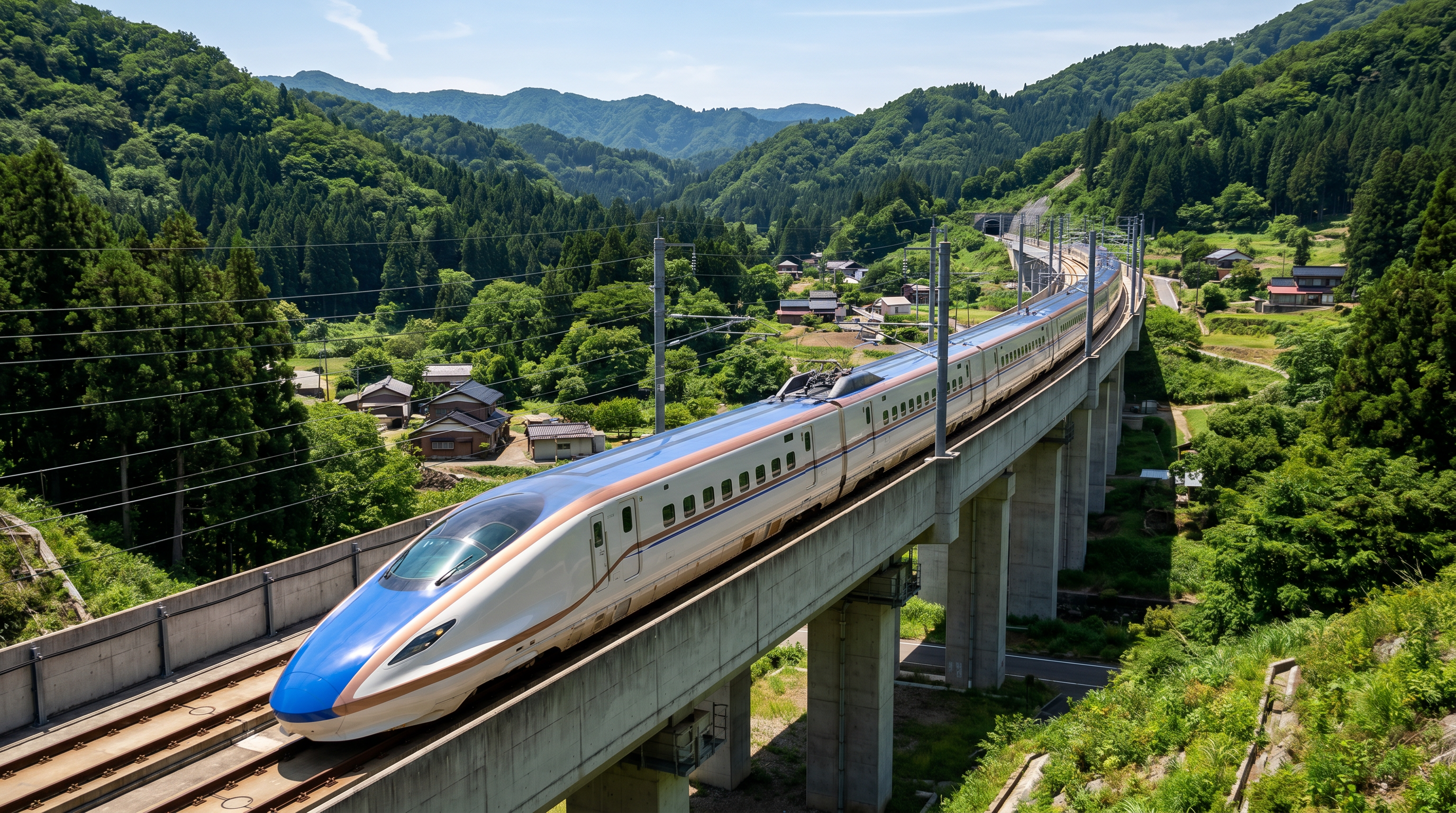
Completed in March 2024, the Tsuruga extension trimmed a crucial 50 minutes off the journey from Tokyo to Fukui. Today, travelers can board the sleek, high-speed Kagayaki train at Tokyo Station and arrive at the Sea of Japan coast in just under three hours. The route weaves through the Japanese Alps, bypassing the urban sprawl of the Tokaido corridor entirely. For decades, Fukui Prefecture was a quiet enclave known mostly to domestic travelers and dedicated Zen practitioners. Now, it stands on the frontier of Japan's inbound tourism strategy, offering a seamless, high-speed connection to a region defined by its natural beauty and historical preservation.[2][5]
By 2026, the Hokuriku Arch has solidified its reputation as the premier antidote to over-tourism. Instead of a linear dash from Tokyo to Kyoto, the Arch route encourages a deliberate, curving journey northward through Nagano, across to Kanazawa, and down the western coast before eventually looping back into the Kansai region (Kyoto and Osaka). This geographic detour disperses foot traffic across multiple prefectures, aligning perfectly with the principles of regenerative tourism. Visitors are no longer just consumers of heavily trafficked landmarks; they become vital participants in the economic revitalization of secondary cities and rural communities that have eagerly awaited their arrival.[1][5]

The financial mechanism driving this geographic shift is the Hokuriku Arch Pass, a specialized regional rail ticket available exclusively to foreign tourists. Following massive, widely publicized price hikes to the standard National JR Pass in recent years, the Arch Pass emerged as a highly economical alternative. Budget-conscious travelers quickly realized that if their primary goal was to travel between Tokyo and the Kansai region, they did not need a nationwide ticket. The Arch Pass provided the perfect compromise, offering unlimited travel along the scenic northern route at a fraction of the cost of the national equivalent.[4][6]
While the Arch Pass experienced its own scheduled price adjustments in March 2026, the underlying value proposition remains incredibly strong. A seven-day Hokuriku Arch Pass still offers savings of roughly 20,000 yen (approximately $130) compared to the seven-day National JR Pass for a standard Tokyo-to-Kansai round trip. This substantial financial incentive has prompted thousands of travelers to rethink their itineraries, effectively paying them to take the road less traveled. The pass covers not only the Hokuriku Shinkansen but also the connecting limited express trains and local lines necessary to complete the journey.[3][6]
The primary trade-off for these savings is pure travel time versus the depth of the experience. A direct Nozomi train on the Tokaido line can rocket a passenger from Tokyo to Kyoto in about two and a half hours. In contrast, traveling the full Hokuriku Arch route takes roughly five hours of pure transit time. However, travel experts emphasize that the Arch route is explicitly designed for multi-day stopovers rather than a single, uninterrupted journey. The five hours are meant to be broken up over several days, transforming the transit itself into the core of the vacation rather than a mere logistical hurdle.[6][7]
Leaving the neon expanse of Tokyo, the Hokuriku Shinkansen first sweeps through Nagano, the mountainous host city of the 1998 Winter Olympics. From there, it pushes to the Sea of Japan, arriving at Kanazawa in Ishikawa Prefecture. Kanazawa has long been the anchor of the Hokuriku region, famous for its impeccably preserved Edo-era samurai and geisha districts, as well as Kenrokuen, widely considered one of Japan's three most beautiful landscape gardens. While Kanazawa has seen a steady rise in tourism since its own Shinkansen connection opened in 2015, it serves as the perfect gateway to the newly accessible territories further south.[1][4]
Leaving the neon expanse of Tokyo, the Hokuriku Shinkansen first sweeps through Nagano, the mountainous host city of the 1998 Winter Olympics.
The real frontier unlocked by the recent extension lies south of Kanazawa, beginning with the city of Komatsu. Komatsu is home to the towering Mount Hakusan, a dormant volcano that rises 2,702 meters into the sky and serves as one of Japan's three holy mountains. Beyond its natural grandeur, the area features a highly unique sculpture garden hidden within an old rock quarry, marked by a giant Buddha head that watches over the surrounding forests. It is a stark reminder of rural Japan's eccentric and deeply spiritual landscape, far removed from the polished shrines of the former capital.[1]
Further down the Shinkansen line, travelers encounter Kaga Onsen and Awara Onsen. These historic hot spring resort towns offer the quintessential ryokan (traditional inn) experience, complete with tatami-matted rooms, multi-course kaiseki dinners, and steaming mineral baths. Unlike the highly commercialized and frequently overcrowded hot spring hubs of Hakone or Beppu, the onsen towns of Ishikawa and Fukui maintain a tranquil, rustic atmosphere. Visitors can soak in the therapeutic waters and stroll through quiet village streets without jostling for space, capturing a slice of traditional Japanese leisure that is becoming increasingly rare on the Golden Route.[2][5]

Upon arriving at Fukui Station, the atmosphere shifts dramatically as travelers are greeted by life-sized, animatronic dinosaur statues. Fukui Prefecture is the undisputed paleontology capital of Japan, home to the Fukui Prefectural Dinosaur Museum. Recognized as one of the top dinosaur museums globally, the facility is a massive architectural marvel nestled in the hills, housing complete skeletons and interactive excavation exhibits. The Shinkansen extension has transformed this world-class educational facility from a remote, difficult-to-reach destination into a highly accessible day trip, making Fukui a major draw for families and science enthusiasts.[2]
Beyond paleontology, Fukui offers a profound dive into deep-rooted Zen history. The prefecture is home to Eiheiji Temple, founded in the 13th century by the Buddhist scholar Dogen. Nestled deep within a misty, cedar-lined valley, Eiheiji remains an active monastery where hundreds of monks practice rigorous Soto Zen discipline. The temple complex provides a stark, tranquil contrast to the bustling, photo-obsessed crowds at Kyoto's famous temples. Visitors to Eiheiji are invited to observe the quiet rhythms of monastic life, offering a moment of genuine spiritual reflection that defines the 'slow travel' ethos of the Hokuriku Arch.[5]
Gastronomy plays an equally pivotal role in the region's rising appeal. The Sea of Japan coast is renowned for its harsh winters, which yield some of the highest-quality seafood in the country. Fukui is particularly famous for Echizen crab, a premium variety of snow crab that is highly prized in Japanese culinary circles. For decades, domestic food tourists have flocked to the region during the winter months to feast on the sweet, delicate crab meat and sample the prefecture's exceptional local sake, brewed using pristine mountain runoff. The Shinkansen now delivers international foodies directly to the source.[2][5]
The Shinkansen line currently terminates at Tsuruga, a quiet, picturesque port city with a profound and moving history. Tsuruga Port once flourished as an international hub connecting Japan to the European mainland via the Trans-Siberian Railway. The Port of Humanity Tsuruga Museum chronicles the city's remarkable legacy of compassion, detailing its role in welcoming Polish orphans in the 1920s and Jewish refugees fleeing Europe with visas issued by diplomat Chiune Sugihara during World War II. It is a poignant, historically significant stop that adds a layer of deep humanitarian resonance to the journey.[2]
From the terminus at Tsuruga, the Hokuriku Arch connects travelers to their final destinations in Kyoto and Osaka. Because the Shinkansen tracks do not yet reach the Kansai region, passengers seamlessly transfer to the Thunderbird or Haruka limited express trains. This final leg of the journey bridges the tranquil, rural landscapes of the Hokuriku region with the bustling, neon-lit metropolis of Kansai. The transfer process at Tsuruga Station was specifically designed for high-volume efficiency, ensuring that the transition between the bullet train and the limited express network is as smooth as possible for travelers with luggage.[3][4]
For the local economies of Ishikawa and Fukui, the steady influx of Shinkansen travelers represents a vital economic lifeline. Japan is currently grappling with severe rural depopulation, and the distribution of tourism dollars away from oversaturated hubs is a critical strategy for regional survival. The Hokuriku Arch effectively funnels international wealth into local ryokans, family-owned restaurants, artisan workshops, and regional transit networks. By choosing this route, travelers are actively participating in a form of regenerative tourism, ensuring that the economic benefits of Japan's inbound travel boom are shared across the country rather than hoarded by a few mega-cities.[1][7]

However, this sudden accessibility is not without its growing pains. Local municipalities in Fukui are currently racing to build the necessary infrastructure to accommodate the international surge. This includes expanding English-language signage, upgrading local bus networks to handle larger crowds, and training hospitality staff who may have never previously interacted with foreign tourists. There is a delicate balancing act at play: local leaders want to welcome the economic boost of the Shinkansen without sacrificing the quiet, authentic charm that makes the Hokuriku region so appealing in the first place.[5][7]
Looking ahead, the Hokuriku Shinkansen is slated for one final, monumental extension. Plans are currently underway to connect Tsuruga directly to Kyoto and Osaka, eliminating the need for the limited express transfer entirely. However, this massive infrastructure project involves complex tunneling through the mountains of Kyoto Prefecture and is not expected to be completed until the 2040s. Until that final link is forged, Tsuruga will remain the crucial pivot point of the Hokuriku Arch, serving as the gateway between the northern coast and the southern capitals.[4]
Ultimately, the Hokuriku Arch remains a deliberate, rewarding choice for the mindful traveler in 2026. It asks visitors to trade the pure speed of the Tokaido corridor for a deeper, more expansive exploration of Japan's lesser-known prefectures. By embracing the five-hour journey, travelers save money, escape the crushing crowds of over-tourism, and discover a side of Japan defined by ancient dinosaurs, mist-shrouded Zen temples, and historic hot springs. It is a blueprint for the future of sustainable travel in Japan, proving that sometimes, taking the long way around is the best decision a traveler can make.[5][7]
How we got here
1997
The first segment of the Hokuriku Shinkansen opens, connecting Tokyo to Nagano in time for the 1998 Winter Olympics.
2015
The line is extended from Nagano to Kanazawa, bringing a surge of tourism to Ishikawa Prefecture.
March 2024
The Shinkansen is extended further south to Tsuruga in Fukui Prefecture, cutting travel times significantly.
March 2026
Price adjustments are implemented for the Hokuriku Arch Pass, though it remains a budget-friendly alternative.
2040s (Planned)
The final segment connecting Tsuruga directly to Kyoto and Osaka is scheduled for completion.
Viewpoints in depth
Slow Travel Advocates
Emphasizing cultural immersion over checking off famous landmarks.
For travelers exhausted by the hyper-efficiency and overcrowding of the Tokaido corridor, the Hokuriku Arch represents a return to 'slow travel.' This camp argues that the five-hour journey is a feature, not a bug, encouraging multi-day stopovers in secondary cities. They value the preservation of traditional ryokan culture in Kaga Onsen and the uncrowded Zen environment of Eiheiji Temple over the convenience of a two-hour direct train.
Regional Economic Planners
Viewing the Shinkansen extension as a vital tool for wealth distribution.
Local governments and tourism boards in Ishikawa and Fukui view the Shinkansen as an economic lifeline. By diverting a fraction of the millions of tourists who normally travel between Tokyo and Kyoto, these rural prefectures can revitalize aging towns and sustain local artisan industries. Their primary focus is ensuring that local transit networks—like buses from Tsuruga Station to historical sites—can handle the new influx without disrupting residents.
What we don't know
- Whether local bus and taxi infrastructure in Fukui can scale quickly enough to handle peak-season international crowds.
- The exact timeline and final funding structure for the Shinkansen's ultimate extension to Kyoto and Osaka in the 2040s.
Key terms
- Shinkansen
- Japan's network of high-speed railway lines, commonly known as bullet trains.
- Golden Route
- The heavily trafficked tourist corridor connecting Tokyo, Kyoto, and Osaka, typically traveled via the Tokaido Shinkansen.
- Ryokan
- A traditional Japanese inn that typically features tatami-matted rooms, communal baths, and local cuisine.
- Echizen Crab
- A premium variety of snow crab caught off the coast of Fukui Prefecture, highly prized in Japanese gastronomy.
Frequently asked
What is the Hokuriku Arch Pass?
It is a discounted regional rail pass for foreign tourists that covers unlimited travel between Tokyo and Osaka via the Hokuriku Shinkansen and connecting limited express trains.
How much time does the Hokuriku Shinkansen save?
The March 2024 extension to Tsuruga cut travel time from Tokyo to Fukui by about 50 minutes, making the trip under three hours.
Does the Hokuriku Shinkansen go all the way to Kyoto?
Not yet. Currently, the Shinkansen terminates at Tsuruga. Passengers must transfer to the Thunderbird or Haruka limited express trains for the final leg to Kyoto and Osaka. A direct Shinkansen extension is planned for the 2040s.
Is the Hokuriku Arch Pass cheaper than the National JR Pass?
Yes. Even with recent price adjustments, the Arch Pass saves travelers roughly 20,000 yen compared to the 7-day National JR Pass.
Sources
Source coverage
7 outlets
3 viewpoints surfaced






[1]Japan National Tourism OrganizationRegional Development Boards
Go Beyond Japan's Major Cities: Hokuriku Shinkansen Extension in 2024
Read on Japan National Tourism Organization →[2]Government of JapanRegional Development Boards
Hokuriku Shinkansen Extension to Tsuruga
Read on Government of Japan →[3]JR EastRegional Development Boards
Osaka-Tokyo Hokuriku Arch Pass
Read on JR East →[4]Japan-GuideSlow Travel & Budget Advocates
Hokuriku Arch Pass
Read on Japan-Guide →[5]HokuList JapanSlow Travel & Budget Advocates
Beyond the Golden Route: Your Definitive Guide to the New Fukui Shinkansen Extension
Read on HokuList Japan →[6]Japan Travel ShibaSlow Travel & Budget Advocates
Save $165 on your Japan trip! The Hokuriku Arch Pass is the cheapest way to travel
Read on Japan Travel Shiba →[7]Factlen Editorial TeamEditorial Synthesis
Synthesis by Factlen editorial team
Read on Factlen Editorial Team →

More in travel
See all 19 stories →Astrotourism
The Rise of Astrotourism: How Dark Sky Reserves Are Saving the Night
9 sources

Food Tourism
The Rise of Regenerative Food Tourism: Why Travelers Are Trading Fine Dining for Ancestral Foodways
8 sources
Digital Nomad Visas
The 2026 Guide to Digital Nomad Visas: How Remote Workers Are Relocating Globally
7 sources

Aviation Tech
How Next-Generation Technology is Defeating Clear-Air Turbulence
7 sources
Every angle. Every day.
Get travel stories with full source coverage and perspective breakdowns delivered to your inbox.