
The Science of Acclimatization: How Everyday Hikers Conquer 5,000-Meter Peaks
As high-altitude treks like Everest Base Camp and Mount Kilimanjaro surge in popularity, success relies less on elite athleticism and more on the strict physiological science of oxygen management.
By Factlen Editorial Team
- Expedition Guides
- Prioritize practical trail management, pacing, and behavioral interventions.
- High-Altitude Physiologists
- Focus on the biological mechanisms of oxygen deprivation and cellular adaptation.
- Medical Professionals
- Focus on risk mitigation, symptom recognition, and emergency response.
What's not represented
- · Indigenous high-altitude populations (like the Sherpa or Quechua) who possess genetic adaptations to low oxygen
- · Recreational trekkers who have had to abandon climbs due to severe AMS
Why this matters
Understanding the biology of altitude adaptation transforms high-altitude trekking from a dangerous gamble into a manageable, accessible adventure. For the thousands of travelers attempting bucket-list peaks each year, knowing how to manipulate their body's oxygen economy is the difference between a successful summit and a medical evacuation.
Key points
- At 5,000 meters, barometric pressure drops so significantly that each breath delivers only half the oxygen available at sea level.
- The body adapts by increasing respiration, shifting to carbohydrate metabolism, and producing more red blood cells.
- Safe acclimatization requires limiting sleeping elevation gains to 300–500 meters per day once above 3,000 meters.
- The 'climb high, sleep low' strategy exposes the body to thin air during the day while allowing recovery at lower elevations overnight.
- Physical fitness does not prevent altitude sickness; pacing, hydration, and gradual ascent are the only effective preventative measures.
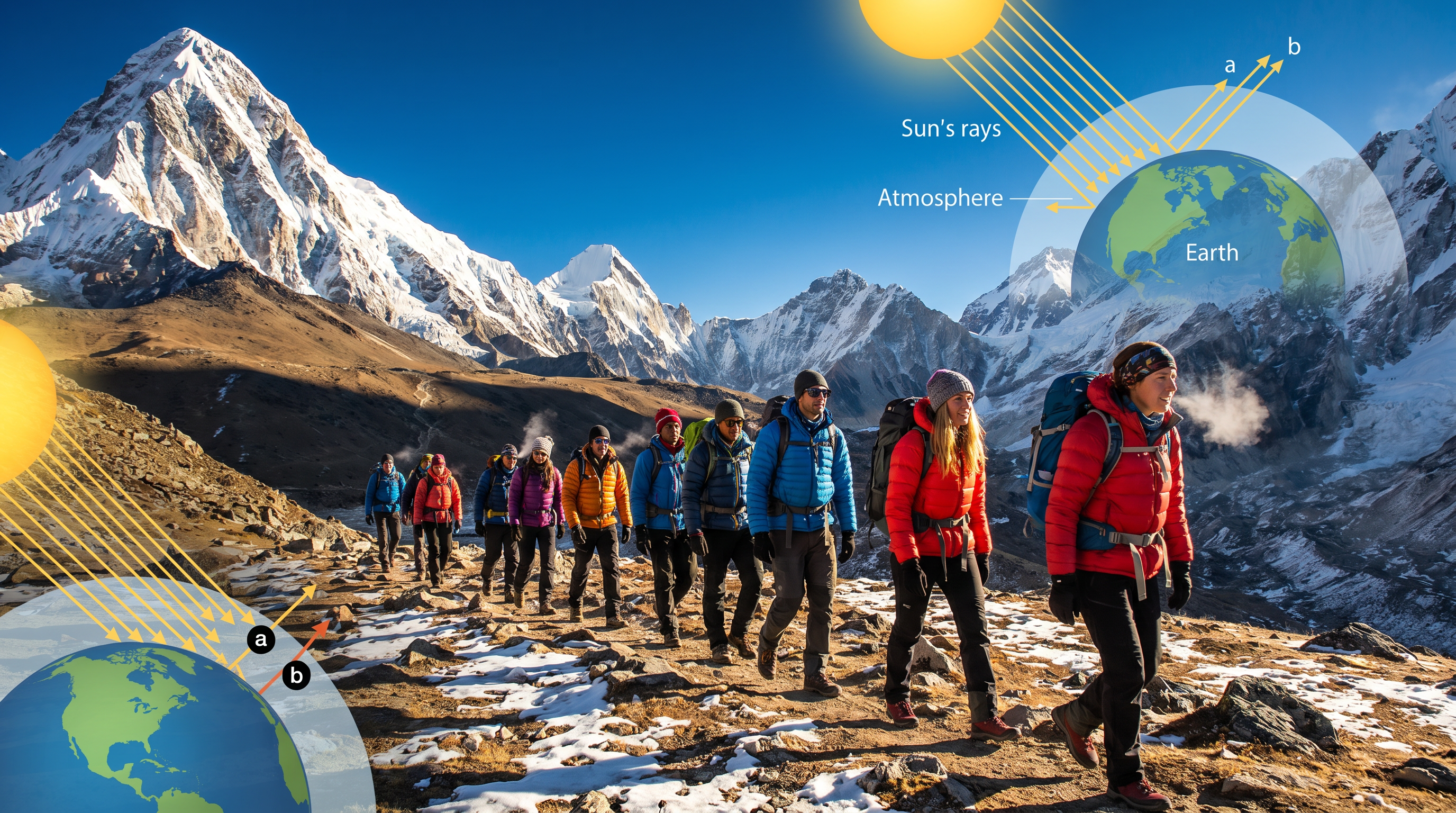
Every year, tens of thousands of everyday travelers trade their office desks for the rugged trails of the Himalayas and the Andes. They set their sights on iconic milestones like Everest Base Camp in Nepal or the summit of Mount Kilimanjaro in Tanzania. These are not technical climbs requiring ropes and ice axes; they are walking routes accessible to anyone with a solid baseline of fitness. Yet, a significant percentage of these hopeful trekkers never reach their destination, forced to turn back not by muscular failure, but by an invisible barrier: atmospheric pressure.[3][4][7]
The core challenge of high-altitude travel is a matter of physics. At sea level, the air we breathe contains roughly 21 percent oxygen. As trekkers ascend toward 5,000 meters (16,400 feet), that percentage remains exactly the same. However, the barometric pressure drops dramatically. With less pressure compressing the atmosphere, oxygen molecules spread further apart. By the time a hiker reaches Everest Base Camp at 5,364 meters, each breath delivers only about half the oxygen it would at sea level.[1][3][7]
This sudden deficit triggers an immediate physiological alarm system. The body detects the onset of hypoxia—a state of low oxygen—and scrambles to compensate. The autonomic nervous system increases the resting heart rate and accelerates the respiratory rate, forcing the lungs to work harder even when the trekker is standing completely still. This is the first phase of acclimatization, a biological stopgap designed to keep the brain and vital organs adequately supplied with fuel.[2][4][7]
Beneath the surface, a fascinating metabolic shift also occurs. At extreme elevations, the human body alters its preferred fuel source. While endurance athletes at sea level rely heavily on burning fat for sustained energy, fat oxidation requires a massive amount of oxygen. To conserve its precious oxygen supply, the altitude-stressed body shifts to burning carbohydrates, which require significantly less oxygen to metabolize. This is why high-altitude expedition diets are heavily skewed toward rice, potatoes, and pasta.[3][7]

While the heart and lungs handle the immediate crisis, the body begins a slower, more permanent adaptation process. The kidneys detect the low oxygen levels in the blood and release a hormone called erythropoietin (EPO). EPO travels to the bone marrow, stimulating the production of new red blood cells. These extra cells act as a fleet of new cargo ships, increasing the blood's overall capacity to transport whatever oxygen the lungs manage to harvest from the thin mountain air.[4][7]
Because this red blood cell production takes days to ramp up, itinerary design becomes a matter of medical necessity rather than mere scheduling. The foundational principle of altitude management is "climb high, sleep low." Trekkers are encouraged to hike to a higher elevation during the day to expose their bodies to thinner air, triggering the acclimatization response. However, they must descend to a lower elevation to sleep, giving their bodies a richer oxygen environment in which to recover and adapt overnight.[1][2][5]
To enforce this biological timeline, expedition guides adhere to strict mathematical limits. Once a trekker crosses the 3,000-meter (9,800-foot) threshold, medical guidelines dictate that their sleeping elevation should not increase by more than 300 to 500 meters per day. Pushing beyond this limit dramatically increases the risk of the body failing to adapt, leading to a cascade of dangerous symptoms.[1][5][6]
To enforce this biological timeline, expedition guides adhere to strict mathematical limits.
Furthermore, safe itineraries mandate a full acclimatization day for every 1,000 meters of elevation gained. On the classic Everest Base Camp route, this typically means spending two nights at Namche Bazaar (3,440 meters) and two nights at Dingboche (4,410 meters). These are not rest days for the legs; they are physiological adaptation days. Trekkers use these days to hike up to nearby ridges, deliberately stressing their systems before returning to the village to sleep.[1][5]

Hydration plays a surprisingly critical role in this adaptation process. Mountain air is notoriously dry, and the increased respiratory rate means trekkers exhale a massive amount of water vapor with every breath. This rapid fluid loss thickens the blood, making it harder for the heart to pump and severely hindering the acclimatization process. To counteract this, climbers must consume between three and five liters of water daily, a volume that requires constant, deliberate drinking.[2][3][6]
When the body fails to adapt quickly enough to the dropping pressure, Acute Mountain Sickness (AMS) sets in. AMS is the most common ailment on high-altitude trails, affecting more than 75 percent of climbers on rapid-ascent peaks like Kilimanjaro. Symptoms typically mirror a severe hangover: a throbbing headache, profound fatigue, dizziness, and a sudden loss of appetite. The loss of appetite is particularly problematic, as the body is simultaneously demanding high-carbohydrate fuel to sustain its metabolic shift.[3][4][6]
If mild AMS is ignored and the trekker continues to ascend, the condition can escalate into life-threatening emergencies. High-Altitude Pulmonary Edema (HAPE) occurs when pressure changes cause fluid to leak into the lungs, drowning the victim from the inside. High-Altitude Cerebral Edema (HACE) is the swelling of the brain with fluid, leading to confusion, loss of coordination, and eventually coma. The only definitive cure for severe AMS, HAPE, or HACE is immediate, rapid descent to a lower altitude.[3][4][7]
To mitigate these risks, many trekkers turn to pharmacological assistance. The most widely used medication is Acetazolamide, commonly known by the brand name Diamox. Unlike painkillers that merely mask a headache, Diamox actively accelerates the acclimatization process. It works by forcing the kidneys to excrete bicarbonate in the urine, which makes the blood slightly more acidic. This acidity tricks the brain into thinking there is an excess of carbon dioxide, stimulating deeper and faster breathing, particularly during sleep when respiration naturally slows down.[2][4][6]

A common misconception among novice climbers is that elite physical fitness provides immunity to altitude sickness. In reality, a marathon runner is just as likely to develop AMS as a casual weekend hiker. While cardiovascular fitness improves muscular endurance and makes the physical act of walking easier, it does not change the fundamental rate at which the body produces red blood cells or adapts to barometric pressure drops. In fact, highly fit individuals often fall victim to AMS because they ascend too quickly, outpacing their body's biological limits.[3][4][7]
This is why the mantra on Mount Kilimanjaro is "pole pole," a Swahili phrase meaning "slowly, slowly." Experienced guides deliberately set a plodding, almost frustratingly slow pace from the very first day. This intentional restraint prevents overexertion, keeps the heart rate manageable, and ensures that the body's oxygen demand never exceeds the environment's meager supply.[3][7]
Ultimately, high-altitude trekking is a masterclass in biological humility. The mountains do not care about a hiker's VO2 max, their expensive gear, or their sheer willpower. Success above 5,000 meters requires submitting to the strict, unyielding timeline of human physiology. By understanding the science of acclimatization, pacing the ascent, and listening closely to the body's signals, everyday adventurers can safely navigate the thin air and stand on the roof of the world.[4][7]
Viewpoints in depth
High-Altitude Physiologists
Focus on the biological mechanisms of oxygen deprivation and cellular adaptation.
Medical researchers and physiologists view high-altitude trekking as a controlled stress test on the human body. They emphasize that acclimatization is a rigid biological process governed by the kidneys' release of erythropoietin (EPO) and the subsequent production of red blood cells. From this perspective, altitude sickness is not a random illness but a predictable mechanical failure that occurs when a trekker's ascent rate outpaces their body's cellular adaptation timeline. They advocate for strict adherence to elevation limits and prophylactic medications like Diamox to artificially stimulate the respiratory drive.
Expedition Guides
Prioritize practical trail management, pacing, and behavioral interventions.
For the Sherpas of Nepal and the guides of Kilimanjaro, altitude management is less about blood chemistry and more about behavioral discipline. They enforce the "pole pole" (slowly, slowly) pace to physically prevent clients from overexerting themselves in the thin air. Guides focus heavily on hydration enforcement, nutrition monitoring, and psychological support, knowing that trekkers often lose their appetite and motivation as the air thins. Their primary tool is itinerary design—forcing rest days and "climb high, sleep low" routines to manually guide the client's body into adaptation.
Medical Professionals
Focus on risk mitigation, symptom recognition, and emergency response.
Wilderness medicine experts approach high altitude with a focus on triage and worst-case scenarios. They categorize Acute Mountain Sickness (AMS) on a spectrum that can rapidly deteriorate into fatal conditions like High-Altitude Pulmonary Edema (HAPE) or Cerebral Edema (HACE). Their primary directive is that any symptom of illness at altitude must be treated as AMS until proven otherwise. They stress that while medications and oxygen can buy time, the only definitive cure for severe altitude sickness is immediate, rapid descent, regardless of the time of day or the trekker's proximity to the summit.
What we don't know
- Why certain individuals are genetically predisposed to adapt to altitude quickly while others consistently struggle, regardless of fitness.
- The exact long-term neurological impacts of repeated exposure to extreme high-altitude environments on recreational climbers.
- Whether emerging nutritional supplements can genuinely accelerate red blood cell production as effectively as traditional acclimatization.
Key terms
- Acclimatization
- The physiological process by which the body gradually adapts to lower oxygen levels at high altitudes, primarily by producing more red blood cells.
- Acute Mountain Sickness (AMS)
- A common condition caused by rapid exposure to low amounts of oxygen at high elevation, characterized by headaches, nausea, and fatigue.
- Hypoxia
- A state in which the body or a region of the body is deprived of adequate oxygen supply at the tissue level.
- HAPE (High-Altitude Pulmonary Edema)
- A severe, life-threatening form of altitude sickness where fluid accumulates in the lungs, preventing effective oxygen transfer.
- Acetazolamide (Diamox)
- A prescription medication that accelerates acclimatization by acidifying the blood, which stimulates deeper and faster breathing.
- Erythropoietin (EPO)
- A hormone produced by the kidneys in response to low oxygen levels that stimulates the bone marrow to produce more red blood cells.
Frequently asked
Does being physically fit prevent altitude sickness?
No. While cardiovascular fitness improves endurance, it does not change the biological rate at which your body adapts to low barometric pressure. Highly fit individuals often get sick because they ascend too quickly.
Why do trekkers lose their appetite at high altitudes?
Low air pressure causes gas in the gut to expand, leading to bloating. Additionally, the body produces more leptin, a hormone that signals fullness, suppressing the desire to eat.
What does 'climb high, sleep low' mean?
It is an acclimatization strategy where trekkers hike to a higher elevation during the day to trigger the body's adaptation response, but descend to a lower, more oxygen-rich elevation to sleep and recover.
What should I do if my altitude sickness gets worse?
If symptoms escalate beyond a mild headache and include severe nausea, confusion, or fluid in the lungs, the only definitive cure is immediate descent to a lower altitude.
Sources
Source coverage
7 outlets
3 viewpoints surfaced







[1]Himalayan GlacierExpedition Guides
Everest Base Camp altitude preparation
Read on Himalayan Glacier →[2]KE Adventure TravelExpedition Guides
Guide to Trekking at High Altitude
Read on KE Adventure Travel →[3]Hike KilimanjaroExpedition Guides
Kilimanjaro altitude sickness prevention science
Read on Hike Kilimanjaro →[4]Eco-Africa ClimbingHigh-Altitude Physiologists
Altitude Sickness on Kilimanjaro: Prevention and Management
Read on Eco-Africa Climbing →[5]Skyline TreksMedical Professionals
High Altitude Acclimatization Trekking Guide
Read on Skyline Treks →[6]Discovery World TrekkingMedical Professionals
Altitude Sickness Prevention on Everest Base Camp Trek
Read on Discovery World Trekking →[7]Factlen Editorial TeamHigh-Altitude Physiologists
Synthesis by Factlen editorial team
Read on Factlen Editorial Team →

More in travel
See all 23 stories →Astrotourism
The Billion-Dollar Business of Darkness: How Astrotourism is Reshaping Travel
7 sources
Astrotourism
The Astrotourism Boom: Why Destinations Are Racing to Protect the Dark
6 sources

Climate Tourism
The Rise of the 'Coolcation': How Northern Europe Became the New Summer Riviera
8 sources
Japan Transit
Beyond the Golden Route: How the Hokuriku Shinkansen Extension is Reshaping Travel in Japan
7 sources
Every angle. Every day.
Get travel stories with full source coverage and perspective breakdowns delivered to your inbox.