
Sodium-Ion Batteries Enter Mass Production, Unlocking Cheaper, Winter-Proof EVs
In mid-2026, the world's first mass-produced passenger EVs powered by sodium-ion batteries are hitting the market. The breakthrough chemistry slashes costs and retains over 90% of its range in extreme cold, paving the way for genuinely affordable electric cars.
By Factlen Editorial Team
- Battery Innovators
- Focus on the chemical breakthroughs, safety metrics, and the scaling of a new global supply chain.
- Automotive Manufacturers
- Emphasize the practical vehicle applications, cost savings, and the unlocking of the budget EV market.
- Market Analysts
- Analyze the broader economic impact, the dual-chemistry strategy, and how it hedges against lithium shortages.
What's not represented
- · Lithium Mining Executives
- · Traditional Auto Dealerships
Why this matters
By replacing expensive, constrained lithium with abundant sodium, this technology breaks the price floor on electric vehicles, making the $25,000 EV a reality. Furthermore, its ability to perform flawlessly in freezing temperatures eliminates the winter range anxiety that has long deterred drivers in northern climates.
Key points
- The first mass-produced passenger EVs powered by sodium-ion batteries are launching in mid-2026.
- Sodium is significantly cheaper and more abundant than lithium, drastically lowering vehicle production costs.
- The new cells retain over 90% of their capacity at -40°C, solving the EV winter range problem.
- Energy density has reached 175 Wh/kg, allowing for practical driving ranges of over 400 kilometers.
The global transition to electric vehicles has long been bottlenecked by two stubborn hurdles: the high cost of entry and the dreaded winter range drop. For years, the automotive industry’s strict reliance on lithium-ion chemistry meant that electric vehicles remained fundamentally expensive to produce and highly vulnerable to freezing temperatures. This dynamic alienated a massive segment of potential buyers, particularly those in northern climates or those waiting for a genuinely affordable entry-level model. However, in mid-2026, the automotive industry is crossing a historic threshold to solve both problems simultaneously. The world’s first mass-produced passenger electric vehicles powered by sodium-ion batteries are officially rolling off assembly lines and into consumer hands.[4][5]
Led by Chinese battery giant CATL and major automakers like Changan and GAC, this rollout marks the moment a technology long confined to research laboratories becomes a commercial reality. To understand why this matters, one must look at the mechanism of the battery itself. Traditional EV batteries rely on lithium, cobalt, and nickel—metals that are expensive, geographically constrained, and subject to volatile price swings. Sodium-ion technology swaps lithium for sodium, one of the most abundant elements on Earth. Because sodium can be easily extracted from seawater and common rock salt, the raw material costs for these new batteries plummet compared to their lithium counterparts.[2][4][6]

This fundamental shift in chemistry is being hailed by industry analysts as the key to unlocking the genuinely affordable $25,000 electric vehicle. By removing the most expensive and supply-constrained components from the battery pack, automakers can finally democratize electric mobility for the mass market. Beyond cost savings, sodium-ion batteries possess a unique and highly marketable superpower: extreme cold-weather resilience. In traditional lithium-ion batteries, freezing temperatures cause the liquid electrolyte to thicken, slowing down the movement of lithium ions and drastically reducing the vehicle's effective driving range.[4][6]
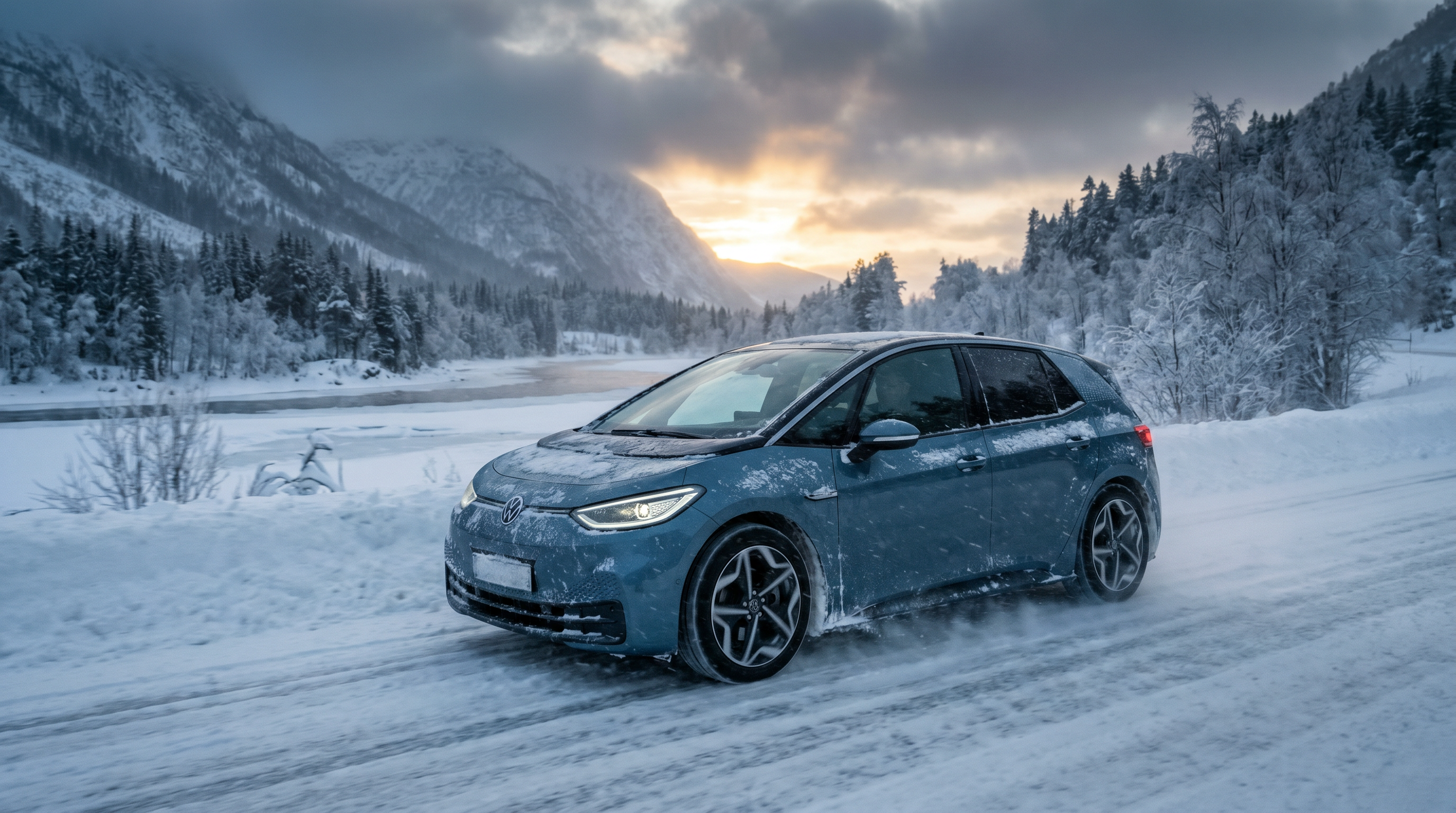
Sodium ions, however, maintain their mobility even in deep freezes. CATL’s new "Naxtra" sodium-ion cells have demonstrated the remarkable ability to retain over 90 percent of their usable capacity at temperatures as low as -40 degrees Celsius (-40 degrees Fahrenheit). In rigorous winter testing conducted in places like Yakeshi, Inner Mongolia, these batteries continued to discharge stably even when ambient temperatures plunged to -50 degrees Celsius. For drivers in northern climates, this technological leap effectively eliminates the winter range anxiety that has historically deterred widespread EV adoption.[2][5]

Sodium ions, however, maintain their mobility even in deep freezes.
Historically, the primary drawback of sodium-ion technology was its relatively low energy density. Because sodium atoms are larger and heavier than lithium atoms, early prototypes simply could not hold enough energy per kilogram to power a passenger car effectively without making the vehicle prohibitively heavy. However, that ceiling has now been shattered. The latest mass-production cells achieve an impressive energy density of 175 watt-hours per kilogram (Wh/kg). This crucial metric matches the performance of current lithium-iron-phosphate (LFP) batteries, which currently power millions of standard-range electric vehicles worldwide.[3][4]
This breakthrough in energy density translates directly to highly practical driving ranges for everyday consumers. The Changan Nevo A06, which holds the title of the first production sedan to utilize the Naxtra battery, delivers a certified range of over 400 kilometers (roughly 250 miles) on a single charge. Charging speeds have also seen dramatic improvements alongside capacity. The new sodium-ion cells support 4C ultra-fast charging architectures, allowing the battery pack to reach an 80 percent state of charge in just 11 to 15 minutes at a compatible fast-charging station.[1][2][3]

Furthermore, the safety profile of sodium-ion chemistry has proven to be remarkably robust, offering peace of mind to consumers and regulators alike. In extreme abuse tests—including multi-directional crushing, electric drill penetration, and the complete sawing of a fully charged battery pack—the cells exhibited no smoke, fire, or explosion. These cells are integrated into vehicles using advanced Cell-to-Pack (CTP) manufacturing techniques. By eliminating intermediate modules, engineers can pack more active material into the same physical footprint, maximizing the vehicle's overall efficiency and structural integrity.[2][5]
Despite these overwhelming advantages, industry experts do not foresee sodium completely replacing lithium in the near future. Instead, the global market is rapidly shifting toward a "dual-chemistry" ecosystem where both technologies play complementary roles. In this new paradigm, sodium-ion batteries will dominate the budget, compact, and cold-weather vehicle segments. Meanwhile, lithium-ion and emerging solid-state batteries—which are currently targeting 600-mile ranges for commercial release by 2028—will be reserved for premium luxury sedans and heavy-duty vehicles that require maximum energy density regardless of cost.[3][7]

By shifting millions of mass-market vehicles to sodium-based power, the automotive industry relieves immense pressure on the global lithium supply chain. This strategic diversification makes the entire electric vehicle transition more sustainable, less vulnerable to mining bottlenecks, and insulated from geopolitical trade disputes over critical minerals. As these pioneering vehicles hit the roads in the second half of 2026, the electric vehicle landscape is fundamentally changing. The era of the affordable, winter-proof electric car has officially arrived, proving that the future of driving might just be powered by salt.[3][6]
How we got here
2021
CATL publicly demonstrates its first generation of sodium-ion battery concepts, initiating intensive R&D.
Late 2024
Early pilot programs begin testing sodium-ion cells in commercial delivery vans to validate real-world durability.
April 2025
CATL unveils the 'Naxtra' battery brand, promising passenger-grade energy density and extreme longevity.
February 2026
Changan and CATL officially unveil the Nevo A06, the world's first mass-produced passenger EV powered by sodium.
Mid-2026
The first commercial sodium-ion passenger vehicles begin rolling off assembly lines and reaching consumers.
Viewpoints in depth
Battery Manufacturers
Companies like CATL view sodium as a necessary parallel technology to stabilize the global supply chain.
For the world's largest battery makers, the push into sodium isn't about replacing lithium, but protecting the industry from its bottlenecks. By shifting mass-market and budget vehicles to sodium, manufacturers can reserve constrained lithium and cobalt supplies for premium, long-range models. This 'dual-chemistry' strategy hedges against volatile raw material prices and ensures that the broader transition to electric mobility isn't derailed by mining shortages.
Automakers
Car brands see sodium-ion as the key to unlocking the budget EV market and winning over cold-weather buyers.
Automakers have struggled to produce genuinely profitable electric vehicles priced under $25,000 due to the stubborn floor on lithium battery costs. Sodium-ion breaks that floor. Furthermore, brands like Changan and GAC are leveraging the technology's extreme cold-weather resilience as a major selling point, targeting consumers in northern climates who have historically avoided EVs due to winter range anxiety.
Industry Analysts
Market watchers emphasize that while sodium is a breakthrough, it will take years to achieve true global scale.
While the 2026 rollout proves the technology is commercially viable, analysts caution that the global supply chain for sodium-ion components is still in its infancy compared to the massive, optimized lithium ecosystem. Scaling production to meet global demand will require billions in new factory investments. Additionally, analysts note that solid-state lithium batteries, expected to arrive in premium cars by 2028, will keep lithium relevant for the foreseeable future.
What we don't know
- How quickly battery manufacturers outside of China will be able to scale their own sodium-ion supply chains.
- Whether consumers will fully embrace the 'dual-chemistry' market, where budget cars use sodium and luxury cars use lithium.
Key terms
- Sodium-ion battery (Na-ion)
- A rechargeable battery that uses sodium ions to carry the electrical charge, offering a cheaper and more abundant alternative to lithium.
- Energy density
- The amount of energy a battery can store relative to its weight, typically measured in watt-hours per kilogram (Wh/kg). Higher density means longer driving range.
- Lithium iron phosphate (LFP)
- A popular, cost-effective type of lithium-ion battery currently used in many standard-range EVs, which sodium-ion is now competing against.
- Cell-to-Pack (CTP)
- A manufacturing method that integrates battery cells directly into the vehicle's battery pack, skipping the intermediate module stage to save space and weight.
Frequently asked
Why is sodium better than lithium for batteries?
Sodium is thousands of times more abundant and cheaper to source than lithium. It also performs significantly better in freezing temperatures and carries a lower risk of fire.
Do sodium-ion batteries have a shorter range?
Historically yes, but 2026 breakthroughs have pushed their energy density to 175 Wh/kg. This allows for a practical range of around 400 kilometers (250 miles), matching many standard lithium-ion vehicles.
When can I buy a sodium-ion EV?
The first mass-produced models, like the Changan Nevo A06, are hitting the market in mid-2026. Global availability is expected to expand rapidly over the next two years as automakers scale production.
Sources
Source coverage
7 outlets
3 viewpoints surfaced







[1]ElectrekBattery Innovators
Sodium-ion EV battery breakthrough delivers 11-min charging and 450 km range
Read on Electrek →[2]Car News ChinaAutomotive Manufacturers
Changan and CATL unveil world's first mass-produced sodium-ion passenger EV
Read on Car News China →[3]Balkan Green Energy NewsBattery Innovators
First car with sodium ion batteries entering mass production
Read on Balkan Green Energy News →[4]EVTech.NewsBattery Innovators
CATL Sodium-Ion EV Batteries Enter Mass Production in 2026
Read on EVTech.News →[5]New AtlasAutomotive Manufacturers
Production EV packing sub-zero-operation sodium-ion batteries on its way
Read on New Atlas →[6]CarsGuideMarket Analysts
Sodium ion batteries could be the key to budget EVs for BYD, GAC and others
Read on CarsGuide →[7]CleanTechnicaMarket Analysts
Solid-State Battery Milestones Appear Encouraging For Near Future
Read on CleanTechnica →
More in automotive
See all 23 stories →Battery Tech
Solid-State Batteries Cross the Commercial Threshold in 2026
7 sources

Battery Tech
Solid-State EV Batteries Move From Lab to Assembly Line in 2026
7 sources
EV Battery Health
The Science of EV Battery Health: Why Your Car Will Likely Outlast Its Power Pack
9 sources
Rail Tech
The Rise of Hydrogen Trains: How Water-Vapor Transit is Replacing Diesel
7 sources

Every angle. Every day.
Get automotive stories with full source coverage and perspective breakdowns delivered to your inbox.