
The Strategic Stakes of Kharg Island: Why the U.S. is Threatening Iran's Oil Hub
As the U.S.-Iran conflict teeters on the edge of full-scale resumption, President Trump has threatened to seize Kharg Island, the deep-water terminal that handles 90% of Iran's crude exports. Military experts warn that occupying the island could leave U.S. troops highly vulnerable, even as negotiators scramble to finalize a fragile peace settlement.
By Factlen Editorial Team
- Maximum Pressure Advocates
- Argue that threatening Iran's core economic assets is necessary to force a diplomatic surrender.
- Tactical Skeptics
- Warn that an occupation force would be highly vulnerable to asymmetric retaliation.
- Economic Pragmatists
- Focus on the devastating domestic toll the war is taking on the Iranian public.
- Global Market Watchers
- Fear that disrupting Kharg Island will trigger a worldwide energy supply shock.
What's not represented
- · OPEC+ Oil Producers
- · Neighboring Gulf Arab States
Why this matters
A U.S. seizure or destruction of Kharg Island would not only devastate Iran's already fragile economy but could also trigger a massive shock to global energy markets, sending fuel prices and inflation soaring worldwide.
Key points
- President Trump threatened to seize Kharg Island, Iran's primary deep-water oil export terminal, amid a collapsing ceasefire.
- The island handles up to 95% of Iran's crude exports, making it the lifeblood of the country's struggling economy.
- Military experts warn that occupying the island would leave U.S. ground troops highly vulnerable to Iranian missiles and drones.
- Shortly after issuing the threat, Trump claimed a comprehensive peace settlement had been reached, though Iran has not confirmed the deal.
President Donald Trump escalated the rhetoric in the ongoing war with Iran on Thursday, threatening to seize the country's most critical economic asset: Kharg Island. In a social media post, Trump warned that the United States would hit Iran "VERY HARD TONIGHT" and eventually take control of the island and other oil infrastructure. The goal, he stated, was to assume total control of Iran's oil and gas markets, explicitly comparing the proposed operation to the U.S. intervention in Venezuela's oil sector earlier this year.[2][4]
The threat comes amid a fragile and collapsing ceasefire that was initially established in April. Following a renewed exchange of tit-for-tat strikes between U.S. and Iranian forces over the past two days, the prospect of a full-scale resumption of the conflict—which began in late February—has loomed large over the region.[5][7]
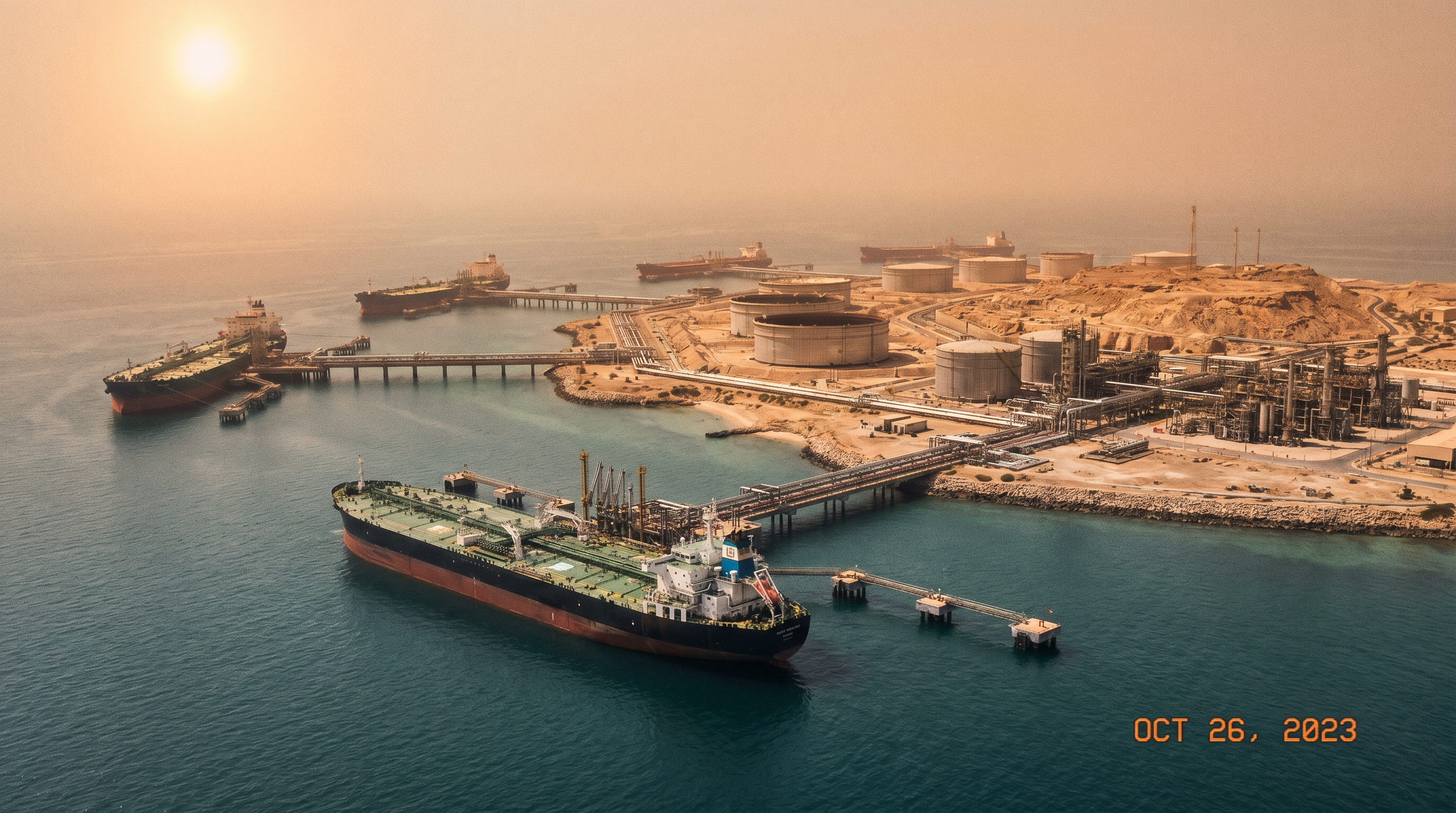
To understand the gravity of the threat, one must look at the geography and economics of Kharg Island. Located roughly 20 miles off Iran's northern Gulf coast, the small island is the beating heart of the Islamic Republic's energy sector. Historically, it has handled between 85 and 95 percent of the country's crude oil exports.[4][5]
The island's outsized importance is a product of bathymetry—the measurement of water depth. Iran's mainland coastline is largely too shallow to accommodate the massive drafts of modern supertankers. Kharg Island, surrounded by deep water, provides the necessary clearance for these vessels to dock, load millions of barrels of crude, and navigate out through the Persian Gulf.[2][4]

From a strictly tactical perspective, military analysts assess that the United States has the capability to capture the island. U.S. forces previously conducted strikes against Kharg in March, which the administration claimed "totally obliterated" the military targets stationed there.[4][5]
However, military experts draw a sharp distinction between seizing the island and holding it. Occupying Kharg Island would require a substantial deployment of U.S. ground troops and a massive logistical tail to support them.[5][6]
Former U.S. Central Command chief Gen. Joseph Votel noted that while a relatively small force of 800 to 1,000 troops might be enough to initially secure the facility, they would be highly exposed. Because the island sits just 21 miles from the Iranian mainland, an occupying force would be well within range of Iran's formidable arsenal of ballistic missiles, artillery, and suicide drones.[5][6]
Critics of the proposed operation warn that such a deployment could backfire catastrophically. Defense analysts have cautioned that placing American soldiers on a static, isolated outpost so close to the Iranian coast would essentially provide Tehran with a captive target, turning U.S. troops into hostages under constant barrage.[6]
Critics of the proposed operation warn that such a deployment could backfire catastrophically.
Conversely, proponents of the strategy argue that threatening Kharg Island provides the ultimate leverage. Hawkish voices contend that controlling the export hub would completely bankrupt the Iranian government, forcing Tehran to capitulate on broader strategic issues, including its nuclear program and its blockade of the Strait of Hormuz.[6]
The economic pressure on Iran is already severe. The ongoing war has inflicted massive damage on the country's infrastructure, with some estimates suggesting the cost of the conflict is nine times the value of Iran's annual budget.[3]
Inside Iran, the domestic situation is increasingly dire. The national currency, the toman, has plummeted in value, overall inflation has surged past 70 percent, and food prices have more than doubled. Millions of Iranians have been pushed into poverty as factories close and unemployment spikes, leaving the population whipsawed between fear of further escalation and desperate hope for an economic reprieve.[3][8]

Yet, the economic risks of a Kharg Island seizure extend far beyond Iran's borders. Removing Iranian crude from the global market—or triggering a massive retaliatory strike by Iran against the oil infrastructure of neighboring Gulf Arab states—could send global energy prices skyrocketing.[5][6]
The global economy is already grappling with the inflationary pressures of restricted shipping through the Strait of Hormuz, a critical maritime chokepoint that Iran has heavily disrupted since the war began. A sudden shock to the oil supply could exacerbate inflation worldwide, a risk that commodity traders are watching with mounting anxiety.[6]
The sheer magnitude of these risks may explain the rapid diplomatic whiplash that followed the initial threat. Shortly after posting his ultimatum, Trump appeared to walk back the immediacy of a ground invasion during an interview with Fox News. While maintaining that taking Kharg Island was his "preference," he expressed doubt over whether the American public "has the stomach for it," citing a desire to bring troops home rather than entangle them in a prolonged occupation.[1][5]
Trump also indicated a reluctance to target civilian infrastructure like power plants, acknowledging that such strikes would cause immense suffering for the Iranian people. This hesitation suggests that the threat to seize the oil hub may be designed more as a high-stakes negotiating tactic than an imminent operational plan.[1][5]

By Thursday afternoon, the administration's posture shifted dramatically from military threats to diplomatic optimism. Trump announced from the Oval Office that a "great settlement" had been reached to end the war, claiming that a formal signing could take place as soon as the weekend.[7]
The proposed deal reportedly aims to extend the ceasefire, reopen the Strait of Hormuz, and establish a framework to dismantle Iran's nuclear program—the primary justification cited by the U.S. and Israel for launching the war in February.[7]
However, the situation remains shrouded in uncertainty. Iranian officials have not publicly confirmed the existence of a finalized agreement, and the sporadic exchange of missile fire and drone attacks has continued to test the boundaries of the nominal truce.[7]
How we got here
Feb 28, 2026
The United States and Israel launch a coordinated war against Iran.
March 2026
U.S. forces conduct strikes on Kharg Island, obliterating military targets but sparing oil infrastructure.
April 2026
A fragile ceasefire is established, temporarily pausing the heaviest fighting.
June 10-11, 2026
The ceasefire collapses as U.S. and Iranian forces exchange a renewed wave of tit-for-tat strikes.
June 11, 2026
President Trump threatens to seize Kharg Island, before later claiming a peace settlement is near.
Viewpoints in depth
U.S. Administration's View
Seizing Kharg Island provides the ultimate leverage to force Iran into a comprehensive peace deal.
Proponents of the maximum-pressure strategy argue that Iran's economy is entirely dependent on the crude oil flowing through Kharg Island. By threatening to seize or blockade the terminal, the U.S. aims to bankrupt the Iranian government, thereby eliminating its ability to fund proxy militias, sustain its nuclear program, or continue disrupting global shipping in the Strait of Hormuz. From this perspective, the threat of economic annihilation is the only language that will force Tehran to accept a permanent settlement.
Military Skeptics' View
Occupying the island presents an unacceptable tactical risk to American ground forces.
Defense analysts and former military commanders warn that while the U.S. Navy and Air Force could easily capture Kharg Island, holding it would be a logistical nightmare. Stationing hundreds of American troops on a small, isolated landmass just 20 miles from the Iranian coast would place them within easy range of Iran's vast arsenal of ballistic missiles, artillery, and suicide drones. Skeptics argue this would effectively hand Tehran a captive group of American hostages, escalating the war rather than ending it.
Iranian Civilians' View
The population is trapped between the devastating economic fallout of the war and the fear of further military escalation.
For ordinary Iranians, the geopolitical maneuvering over Kharg Island translates into immediate domestic suffering. The country's economy is already buckling under the weight of the conflict, with the national currency plummeting and inflation soaring past 70 percent. The destruction or seizure of the country's primary revenue source would likely trigger a total economic collapse, pushing millions more into poverty. Consequently, much of the public is desperate for a diplomatic resolution that lifts the blockade and stabilizes the cost of living.
What we don't know
- Whether the U.S. military has actually drawn up operational plans for a ground invasion of Kharg Island, or if the threat was purely a negotiating tactic.
- If Iran's leadership has formally agreed to the 'great settlement' announced by President Trump.
- How global oil markets will react if the Strait of Hormuz remains restricted despite the proposed peace deal.
Key terms
- Kharg Island
- A small Iranian island in the Persian Gulf that serves as the country's primary deep-water port for exporting crude oil.
- Bathymetry
- The measurement of water depth in oceans, seas, or lakes, which dictates where massive cargo ships and supertankers can safely navigate.
- Strait of Hormuz
- A narrow, strategically vital waterway between the Persian Gulf and the Gulf of Oman through which a significant portion of the world's oil supply passes.
- Asymmetric Warfare
- A conflict between opposing forces of vastly different military power, where the weaker side uses unconventional tactics like drones, proxy militias, and cyberattacks.
Frequently asked
Why is Kharg Island so important to Iran?
Kharg Island handles up to 95% of Iran's crude oil exports. Its deep waters allow massive supertankers to dock, which is impossible along Iran's shallow mainland coast.
Has the U.S. attacked Kharg Island before?
Yes. In March 2026, U.S. forces conducted strikes that reportedly obliterated military targets on the island, though they spared the oil infrastructure at the time.
Why are military experts warning against a U.S. takeover?
Experts warn that occupying the island would require ground troops who would be highly vulnerable to Iranian missiles and drones, given the island is only 20 miles from the mainland.
Is a peace deal between the U.S. and Iran imminent?
President Trump announced that a 'great settlement' has been reached and could be signed soon, but Iranian officials have not yet confirmed the agreement.
Sources
Source coverage
8 outlets
4 viewpoints surfaced








[1]Fox NewsMaximum Pressure Advocates
Five American weapons that could bring Iran’s oil fortress to its knees
Read on Fox News →[2]PBS NewsMaximum Pressure Advocates
Trump threatens to take 'total control' of Iran's oil industry with major strikes
Read on PBS News →[3]The GuardianEconomic Pragmatists
Could Iran's escalating economic crisis weaken negotiating position with US?
Read on The Guardian →[4]CBS NewsGlobal Market Watchers
Why is Kharg Island important? What to know about the Iranian island Trump says U.S. may seize
Read on CBS News →[5]ReutersTactical Skeptics
US takeover of Iran's Kharg Island might be quick but would pose risks to troops, experts say
Read on Reuters →[6]NewsweekTactical Skeptics
Kharg Island Takeover Feud Reignited—'Game Changer' or Hostage 'Disaster'
Read on Newsweek →[7]The Washington PostGlobal Market Watchers
Trump says he has canceled plans to strike Iran, claiming deal is near
Read on The Washington Post →[8]The New York TimesEconomic Pragmatists
Whipsawed Between Fear and Relief, Iranians Hope for War’s End
Read on The New York Times →
More in news politics
See all 58 stories →US-Iran Relations
US and Iran Reach 'Great Settlement' as Trump Cancels Military Strikes
8 sources
US-Iran Relations
Trump Claims 'Great Settlement' With Iran as US Prepares to Deport Iranian Asylum Seekers to Central African Republic
7 sources
Immigration Policy
US Prepares to Deport Iranian Asylum-Seekers to Central African Republic Under New Deal
6 sources
Third-Country Deals
U.S. to Deport Iranian and Syrian Asylum Seekers to Central African Republic in New Deal
6 sources
Every angle. Every day.
Get news politics stories with full source coverage and perspective breakdowns delivered to your inbox.