
Digital Trust Standard Reaches 6,000 Members as Hardware Integration Goes Mainstream
The Coalition for Content Provenance and Authenticity (C2PA) has crossed a major adoption milestone in 2026, with leading camera manufacturers and social platforms deploying cryptographic media verification at scale.
By Factlen Editorial Team
- Provenance Advocates
- Believe cryptographic proof of origin is the most sustainable way to restore trust in digital media.
- Hardware & Platform Integrators
- Focus on embedding trust seamlessly at the point of capture and distribution to ensure a verifiable chain of custody.
- Regulatory & Security Analysts
- View machine-readable labeling as a necessary legal safeguard, while warning that bad actors will still exploit unwatermarked open-source models.
What's not represented
- · Independent creators concerned about the privacy implications of hardware-level identity tracking.
- · Open-source AI developers who argue that mandatory watermarking stifles grassroots innovation.
Why this matters
As generative AI makes it nearly impossible to distinguish real photos and videos from synthetic fakes, this standard provides a mathematical guarantee of authenticity. For readers, the widespread rollout of Content Credentials means you will soon be able to click an icon on a news photo or social media post and see exactly who created it, when it was taken, and whether AI was used.
Key points
- The C2PA standard reached 6,000 members in early 2026, marking a shift from software development to massive global deployment.
- Hardware manufacturers, including Google and Sony, are embedding cryptographic signing directly into smartphone chips and broadcast cameras.
- The newly released C2PA 2.3 specification extends digital provenance capabilities to live video broadcasts.
- Impending regulations, such as the EU AI Act, are forcing platforms to adopt machine-readable labeling under threat of massive fines.
- Despite the progress, untraceable open-source AI models and metadata-stripping platforms remain significant vulnerabilities in the ecosystem.
In early 2026, the Coalition for Content Provenance and Authenticity (C2PA) marked its fifth anniversary by crossing a massive threshold: over 6,000 members and affiliates are now actively deploying its Content Credentials standard. The milestone coincides with the release of the C2PA 2.3 specification, which expands the framework's capabilities beyond still images to include live video broadcasting.[1]
The rapid adoption of the standard represents a fundamental shift in how the technology industry is combating the flood of synthetic media. Between 2023 and 2025, global deepfake incidents surged by 900%, overwhelming traditional detection tools. Rather than fighting a losing battle to detect every fake image generated by continuously improving AI models, the C2PA framework focuses on proving what is real at the point of creation.[6]
The system works by embedding a cryptographically signed manifest directly into a media file. This "Content Credential" records who created the file, when it was captured, and what tools were used. Crucially, the signature is mathematically bound to the file's pixel data; if a bad actor alters the image, the cryptographic hash no longer matches, and the provenance chain immediately breaks.[6]

While the standard spent its early years in software development, 2026 has become the year of hardware integration. The most significant consumer milestone arrived with the Google Pixel 10, which utilizes its Titan M2 hardware security chip to cryptographically sign photographs by default at the moment of capture.[4][5]
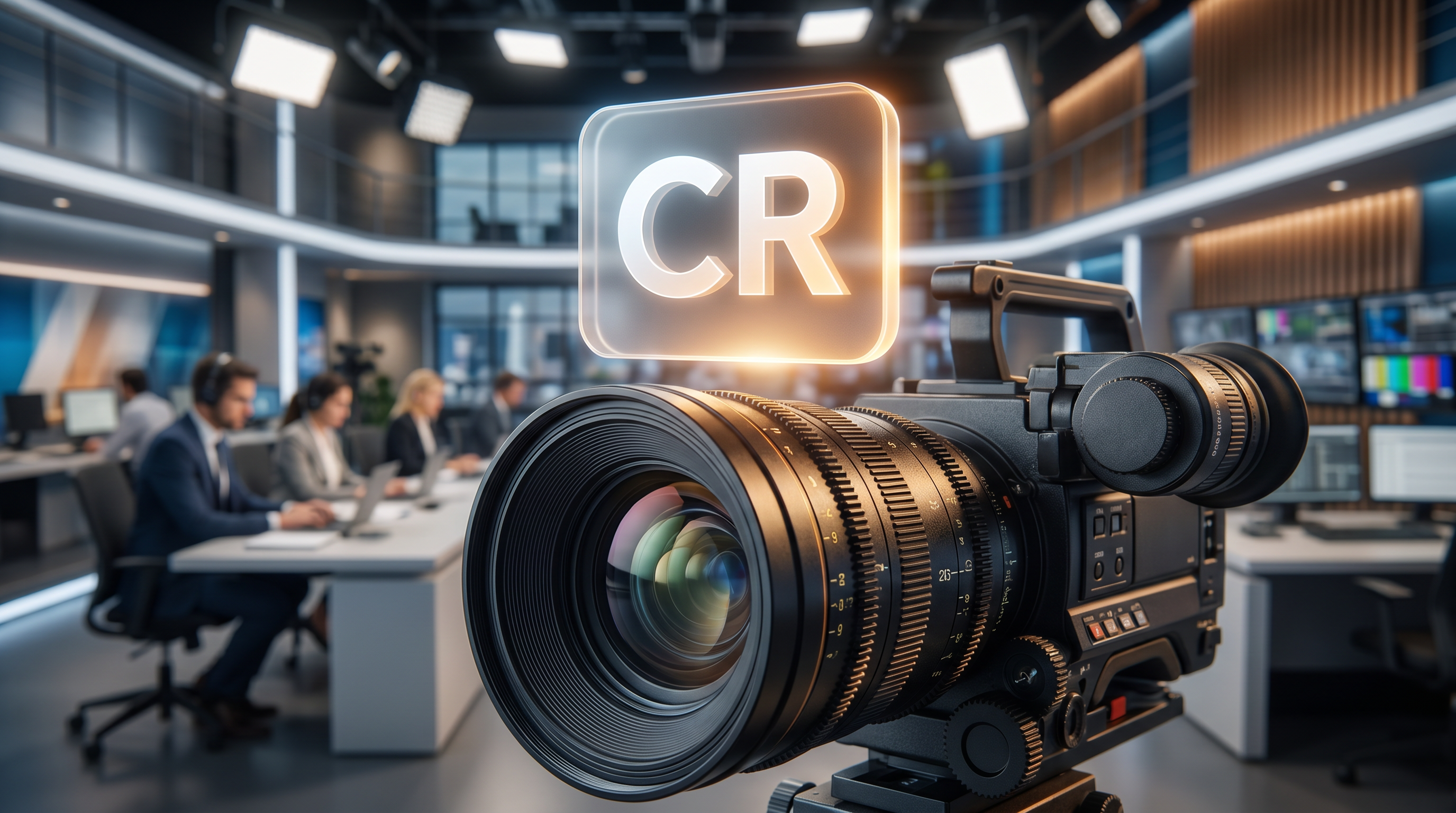
Professional photography and broadcast journalism are seeing similar hardware adoption. Leica, Nikon, Canon, and Panasonic have all introduced C2PA-capable cameras. Meanwhile, Sony's PXW-Z300 camcorder recently became the world's first broadcast camera with native C2PA signing, allowing news organizations to issue verifiable sharing URLs that maintain a chain of custody from the lens to the audience.[4]
Professional photography and broadcast journalism are seeing similar hardware adoption.
On the distribution side, major social and professional platforms are integrating the standard directly into their user interfaces. TikTok has automatically detected and labeled over 1.3 billion AI-generated videos, while LinkedIn now displays a "CR" (Content Credentials) icon in the corner of verified posts. Microsoft has also begun embedding C2PA metadata across its Microsoft 365 ecosystem.[3][5]
E-commerce platforms are quietly driving adoption as well. Over 80% of leading AI image generation platforms have adopted standardized watermarking, and 67% of major online marketplaces now screen uploaded product imagery for AI markers. Images containing unverified AI watermarks are increasingly flagged for review or restricted from promotional placements, forcing vendors to adopt transparent workflows.[7]
The most powerful catalyst for the standard's explosive growth, however, is impending regulation. The European Union's AI Act, which begins enforcement in August 2026, mandates machine-readable labeling for AI-generated content. Companies failing to comply face staggering penalties of up to €15 million or 3% of their global annual turnover.[2][3][5]

In the United States, California's SB 942 took effect in January 2026, imposing parallel transparency requirements on covered AI systems. Furthermore, the California state government recently established an AI vendor certification framework that requires state agencies to adopt watermarking and provenance standards for digital media procurement.[3][6]
Despite the unprecedented momentum, cybersecurity experts caution that C2PA is not a silver bullet. The fundamental limitation of the ecosystem is that malicious actors can simply use rogue, open-source AI models that do not embed watermarks or provenance metadata. Content generated by these unwatermarked tools remains entirely untraceable by current standard detectors.[3]
Additionally, the provenance chain remains fragile on the open web. The chain of custody breaks the moment a non-compliant platform strips metadata during the image upload and transcoding process—a common practice designed to reduce file sizes.[4]

Acknowledging these limitations, regulators and industry leaders are converging on a multi-layered defense strategy. The latest EU Code of Practice mandates a combination of C2PA metadata, invisible watermarking, and robust audit logging. As these technologies weave together in 2026, the presence of a Content Credential is rapidly becoming the foundational baseline for digital trust.[3][5]
How we got here
Feb 2021
The C2PA coalition is founded by Adobe, Arm, BBC, Intel, Microsoft, and Truepic.
Jan 2025
Leica releases the first consumer camera with built-in hardware signing for Content Credentials.
Sept 2025
Google launches the Pixel 10, becoming the first mass-market smartphone to cryptographically sign photos by default.
Feb 2026
C2PA releases version 2.3, extending cryptographic provenance to live video broadcasts.
Aug 2026
The EU AI Act's Article 50 enforcement begins, mandating machine-readable labeling for AI-generated content.
Viewpoints in depth
The Provenance Strategy
Shifting the focus from detecting fakes to mathematically proving authenticity.
Advocates for the C2PA standard argue that the traditional approach to combating misinformation—building AI detectors to spot AI fakes—is a losing battle. As generative models improve, synthetic media becomes visually indistinguishable from reality. Instead, the provenance approach flips the paradigm: it assumes content is unverified unless it carries a cryptographically signed manifest proving its origin. By embedding this proof at the hardware level, advocates aim to create a 'whitelist' of trusted media, making the absence of credentials a signal for caution.
The Security Skeptics
Highlighting the persistent gaps in the watermarking ecosystem.
While celebrating the hardware milestones, cybersecurity analysts point out a structural vulnerability in the provenance ecosystem: it relies on voluntary participation. Malicious actors creating political deepfakes or financial scams do not use compliant commercial tools; they use rogue, open-source AI models that strip or ignore watermarking requirements entirely. Furthermore, the chain of custody is fragile. If a user uploads a verified image to a platform that aggressively compresses files, the metadata is often stripped, breaking the cryptographic signature and rendering the authentic image indistinguishable from a fake.
What we don't know
- How aggressively social media platforms will penalize or downrank content that lacks verifiable provenance metadata.
- Whether open-source AI developers will voluntarily adopt watermarking standards, or if regulatory crackdowns will be required.
- How quickly legacy media organizations will upgrade their entire content management systems to preserve metadata during the publishing process.
Key terms
- C2PA
- The Coalition for Content Provenance and Authenticity, an open standard for tracing the origin and edit history of digital media.
- Content Credentials
- The consumer-facing brand and "CR" icon used to display C2PA provenance data on images and videos.
- Cryptographic Hash
- A unique mathematical signature bound to a file's pixels; any alteration to the image breaks the hash and invalidates the file's history.
- Provenance
- The verifiable history of a piece of digital media, from its original capture through any subsequent edits.
Frequently asked
Does C2PA prevent deepfakes from being created?
No. The standard proves the authenticity of real media and compliant AI generations, rather than trying to block the creation of fake media by bad actors.
Can the Content Credentials metadata be faked?
The metadata is cryptographically signed and mathematically bound to the image's pixels. If a bad actor alters the image, the signature breaks and the credential becomes invalid.
Do I need special software to see the credentials?
Major platforms like LinkedIn and TikTok are building the "CR" icon directly into their interfaces, and free online verification tools are widely available for anyone to check a file.
Sources
Source coverage
7 outlets
3 viewpoints surfaced







[1]C2PA.aiProvenance Advocates
C2PA Turns Five, Launches Content Credentials 2.3
Read on C2PA.ai →[2]TechTargetRegulatory & Security Analysts
How watermarking AI content benefits businesses
Read on TechTarget →[3]AI BuzzRegulatory & Security Analysts
AI Watermarking vs Fingerprinting: Tracking Fake Content (2026)
Read on AI Buzz →[4]SoftwareSeniHardware & Platform Integrators
C2PA Adoption in 2026 Hardware Platforms and Verification Reality
Read on SoftwareSeni →[5]VESS LabsHardware & Platform Integrators
Embedding 'Who, When, and What Created' into Images — What is C2PA Content Credential
Read on VESS Labs →[6]ChatPicProvenance Advocates
C2PA Content Credentials: Expert Guide to Photo Authenticity
Read on ChatPic →[7]Rewarx StudioHardware & Platform Integrators
How AI Watermarks Will Change What You Can Sell Online
Read on Rewarx Studio →

More in meta
See all 23 stories →Digital Culture
The Rise of the 'Cozy Web': How Internet Users Are Reclaiming Digital Third Places
7 sources

Accessibility Tech
Meta's Open-Source AI and Wearables Spark a New Era for Accessibility Tech
7 sources

Local AI
How Small Language Models Are Bringing AI Offline in 2026
6 sources
Mixed Reality
Meta Quest 3 vs. Apple Vision Pro: The 2026 Spatial Computing Buyer's Guide
7 sources

Every angle. Every day.
Get meta stories with full source coverage and perspective breakdowns delivered to your inbox.