
The Quiet Revolution: How Grid-Scale Batteries Are Rewiring the Global Power System
Driven by plummeting costs and policy incentives, utility-scale battery storage is scaling exponentially, solving renewable energy's intermittency problem and saving consumers millions.
By Factlen Editorial Team
- Grid Reliability Managers
- Focus on grid stability, managing the massive surge in data center load, and winter peak risks.
- Energy Economists
- Focus on market growth, cost curves, and the economic superiority of batteries over gas peakers.
- Clean Energy Advocates
- View batteries as the final key to retiring fossil fuels and achieving 24/7 carbon-free energy.
What's not represented
- · Local communities living near large battery installations
- · Battery recycling and end-of-life supply chain managers
Why this matters
Grid-scale batteries are solving the biggest flaw of renewable energy—intermittency—by storing midday solar power for nighttime use. This quiet infrastructure boom is lowering consumer electricity bills, preventing blackouts, and making a 24/7 carbon-free grid a physical reality.
Key points
- The U.S. is projected to add 24 GW of utility-scale battery storage in 2026, accounting for 28% of all new capacity.
- Global battery storage additions reached a record 108 GW in 2025, driven by plummeting costs and policy incentives.
- Batteries solve renewable intermittency by storing midday solar power and discharging it during evening demand peaks.
- In Texas, 5 GW of grid-scale battery storage saved consumers an estimated $750 million in 2024 by preventing price spikes.
- Grid operators warn that while 4-hour batteries excel at daily peaks, long-duration storage is still needed for multi-day winter storms.
The global power grid is undergoing its most profound physical transformation in a century. For decades, electricity had to be consumed the exact millisecond it was generated, requiring operators to constantly match power plant output to human demand. Today, massive grid-scale battery storage systems are severing that link, acting as giant shock absorbers for the energy transition.
The sheer volume of deployment has shattered historical forecasts. The U.S. Energy Information Administration (EIA) projects that developers will add 24 gigawatts (GW) of utility-scale battery storage to the American grid in 2026 alone. This accounts for 28% of all new electric generating capacity planned for the year, cementing batteries as a foundational pillar of modern infrastructure.[1]
This is not just an American phenomenon; it is a synchronized global scale-up. The International Energy Agency (IEA) reports that global battery storage capacity additions reached 108 GW in 2025—a staggering 40% year-over-year surge. While China and the U.S. lead the charge, Europe is accelerating rapidly. The European Union installed a record 27.1 gigawatt-hours (GWh) of new storage last year, effectively increasing its capacity tenfold in just four years.[2][6]

The core problem these batteries solve is intermittency. Solar panels flood the grid with cheap, carbon-free power at noon, but production drops to zero precisely when evening demand peaks as people return home. Historically, grid operators relied on expensive, carbon-intensive natural gas "peaker" plants to bridge this daily gap.
Batteries solve this structural flaw through a mechanism known as "peak shaving." By absorbing excess solar power during the day and discharging it during the evening rush, batteries flatten the demand curve. In Texas, the Electric Reliability Council of Texas (ERCOT) reported that battery output hit an all-time record of over 8 GW in late 2025, providing essential megawatts when the system was most strained.[5]
Beyond simply moving power through time, batteries provide critical "ancillary services" that keep the lights on. The grid must maintain a strict electrical frequency to function. When a traditional power plant trips offline, batteries can inject power in milliseconds—far faster than a mechanical gas turbine can spin up—preventing cascading blackouts and stabilizing the network.[2][5]

The primary driver of this infrastructure boom is economics, not just environmental policy. The cost of lithium iron phosphate (LFP) battery packs—the preferred chemistry for grid applications—has plummeted over the last decade. Combined with policy incentives like the U.S. Inflation Reduction Act's 30% investment tax credit for standalone storage, batteries are now routinely outcompeting new gas peaker plants on price.[2][8]
The primary driver of this infrastructure boom is economics, not just environmental policy.
These cost reductions are directly flowing to consumers. The Center for American Progress estimates that the addition of 5 GW of grid-scale battery storage in Texas in 2024 contributed to $750 million in energy cost reductions. By deploying cheap stored solar power during peak hours, batteries prevented extreme wholesale price spikes that would have otherwise been passed on to ratepayers.[3]
This battery boom arrives just in time to meet an unprecedented challenge: surging electricity demand. After decades of relatively flat load growth, the proliferation of artificial intelligence data centers, electric vehicles, and industrial reshoring is placing immense strain on the power system.[4]
The North American Electric Reliability Corporation (NERC) warned in its 2026 Long-Term Reliability Assessment that U.S. peak electricity demand could rise by up to 25% over the next decade. NERC projects that summer peak load will increase by an astonishing 224 GW, driven heavily by the digital economy and electrification efforts.[4]

While batteries excel at managing daily summer peaks, winter presents a distinctly different threat profile. S&P Global notes that NERC anticipates a 2.5% spike in peak winter power demand for the 2025-2026 season. During multi-day winter storms, solar production drops and heating demand skyrockets, testing the physical limits of the current battery fleet.[7]
This highlights the primary limitation of today's storage technology: duration. Most utility-scale lithium-ion systems are designed to discharge at maximum output for only two to four hours. While ERCOT notes that 4-hour systems are increasingly becoming the standard, lithium-ion cannot economically bridge a week-long weather event—a phenomenon known in the industry as a "dunkelflaute."[5]
To achieve a fully decarbonized, resilient grid, the industry is racing to commercialize long-duration energy storage (LDES). Technologies like iron-air batteries, which rust and un-rust iron to store power for up to 100 hours, and advanced flow batteries are moving from pilot projects to commercial deployment, though they remain years behind lithium-ion in manufacturing scale.[8]

Even with the technology ready, deployment is currently constrained by bureaucracy. Hundreds of gigawatts of proposed battery projects are stuck in interconnection queues, waiting for grid operators to study their impact and approve their physical connection to the transmission system. Reforming this permitting process is widely viewed as the next major policy hurdle.[4][5]
Despite these operational hurdles, the trajectory of the grid is clear. Grid-scale batteries have evolved from a niche environmental experiment into the central nervous system of modern power delivery. As deployment continues to compound globally, the vision of a reliable, affordable, and 24/7 clean energy system is rapidly shifting from theoretical modeling to operational reality.[8]
How we got here
2021
Global battery storage capacity remains a niche market, with early pilot projects proving the concept.
August 2022
The US passes the Inflation Reduction Act, introducing a 30% investment tax credit for standalone energy storage.
2024
Texas adds 5 GW of grid-scale battery storage, saving consumers an estimated $750 million during peak demand events.
2025
Global battery storage additions break records, reaching 108 GW, driven heavily by deployments in China and the US.
January 2026
NERC releases its Long-Term Reliability Assessment, highlighting batteries as essential to managing a historic 25% surge in projected US electricity demand.
Viewpoints in depth
Clean Energy Advocates
The battery boom proves baseload fossil fuels are obsolete.
Advocates argue that the rapid scale-up of battery storage is the death knell for fossil fuels. They point to the $750 million in consumer savings in Texas as concrete evidence that renewables paired with storage is now the cheapest, most reliable path forward. By accelerating battery deployment, they argue, the grid can safely retire aging coal and gas plants without sacrificing reliability or raising consumer rates.
Grid Reliability Managers
A crucial tool, but not a panacea for severe weather events.
While acknowledging batteries as an essential "multi-tool" for frequency regulation and daily peak shaving, grid operators take a more cautious stance. Organizations like NERC warn that the current fleet of 4-hour lithium-ion batteries cannot replace the firm, multi-day capacity of thermal plants needed during severe winter storms. They stress that until long-duration storage is commercialized, a diverse mix of energy sources remains necessary to prevent blackouts during extended lulls in renewable generation.
Energy Economists
The new infrastructure gold rush driven by compounding cost curves.
Economists focus on the market dynamics driving the boom. They highlight how the combination of the Inflation Reduction Act's tax credits and plummeting LFP cell prices has fundamentally altered capital allocation in the energy sector. Standalone storage is now viewed as one of the most lucrative infrastructure investments of the decade, routinely outcompeting natural gas peaker plants purely on a cost-return basis.
What we don't know
- How quickly long-duration energy storage (LDES) technologies, like iron-air batteries, can scale to commercial viability.
- Whether grid operators can reform the interconnection queue fast enough to clear the backlog of proposed storage projects.
- How the battery supply chain will adapt to the massive surge in demand without over-relying on a single country for raw materials.
Key terms
- BESS
- Battery Energy Storage System; the industry term for large-scale battery installations used to store and distribute electricity on the grid.
- Peak Shaving
- The practice of discharging stored energy during periods of highest electricity demand to reduce strain on the grid and lower wholesale power prices.
- Frequency Regulation
- The continuous, second-by-second balancing of power supply and demand to maintain the grid's standard electrical frequency, preventing blackouts.
- Interconnection Queue
- The waiting list of proposed power projects applying to connect to the regional electric grid, currently a major bottleneck for new storage.
- Long-Duration Energy Storage (LDES)
- Emerging technologies, such as iron-air or flow batteries, designed to store energy for 10 to 100+ hours to bridge multi-day weather events.
- Peaker Plant
- A power plant, typically burning natural gas, that only operates during times of exceptionally high electricity demand.
Frequently asked
What is a grid-scale battery?
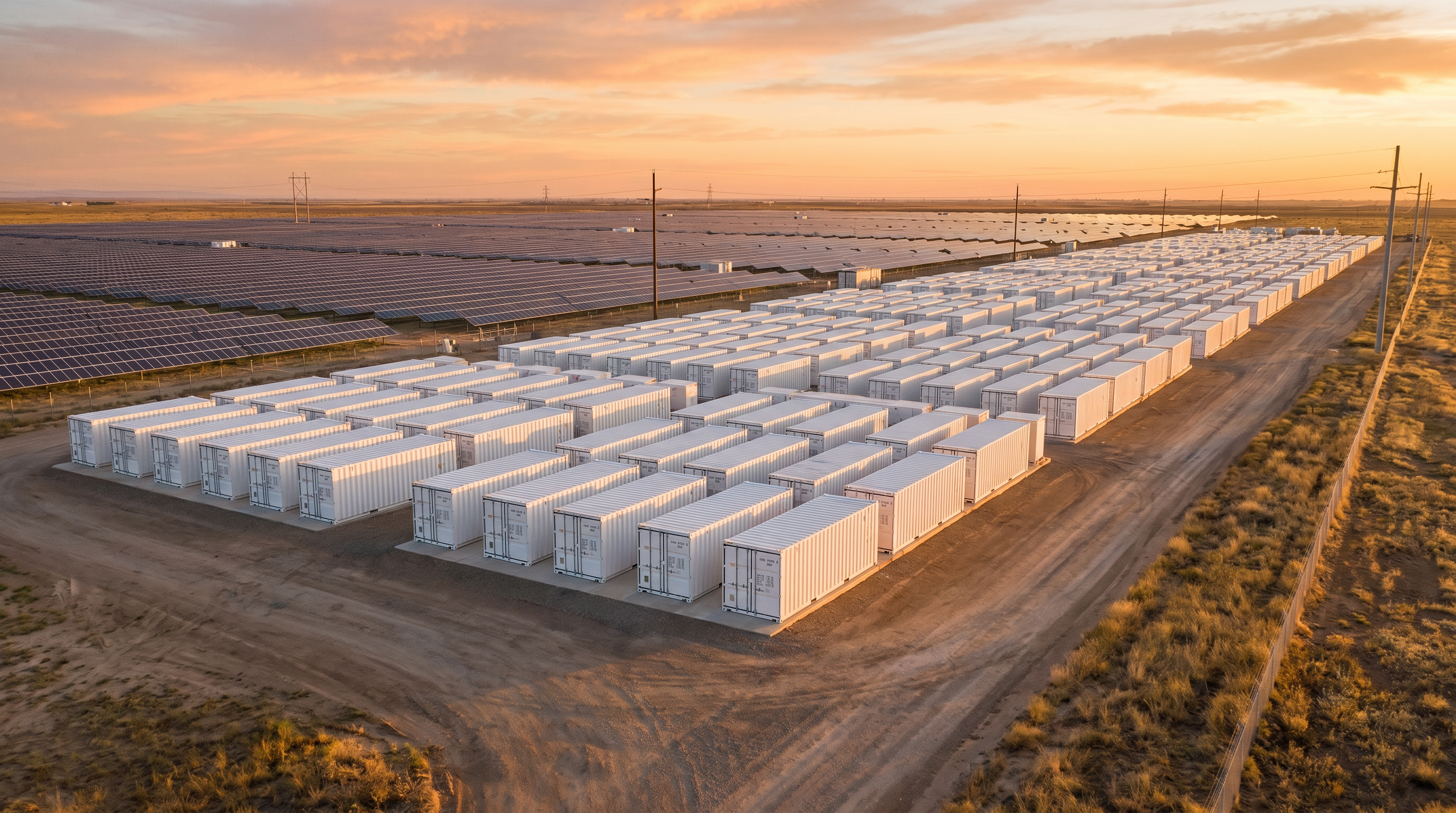
A massive energy storage system, often the size of several shipping containers, connected directly to the power grid to store excess electricity and release it when demand is high.
How long can these batteries power the grid?
Most current utility-scale lithium-ion batteries are designed to discharge at their maximum output for two to four hours, covering the daily evening peak in electricity demand.
Are batteries cheaper than natural gas plants?
Yes, for short-duration peak demand. The plummeting cost of lithium-ion cells has made battery storage more economical than building new natural gas 'peaker' plants in many regions.
What happens during a multi-day winter storm?
This is the 'duration gap.' Current lithium-ion batteries cannot economically store power for multiple days. Grid operators still rely on thermal power plants or emerging long-duration storage technologies for extended weather events.
Sources
Source coverage
8 outlets
3 viewpoints surfaced








[1]U.S. Energy Information AdministrationEnergy Economists
New U.S. electric generating capacity expected to reach a record high in 2026
Read on U.S. Energy Information Administration →[2]International Energy AgencyEnergy Economists
Battery storage is scaling up and taking on a larger system role
Read on International Energy Agency →[3]Center for American ProgressClean Energy Advocates
A Plan for American Electricity Affordability
Read on Center for American Progress →[4]North American Electric Reliability CorporationGrid Reliability Managers
Long-Term Reliability Assessment (2026)
Read on North American Electric Reliability Corporation →[5]Electric Reliability Council of TexasGrid Reliability Managers
Understanding Battery Energy Storage Systems – Current and Future
Read on Electric Reliability Council of Texas →[6]SolarPower EuropeClean Energy Advocates
New storage capacities in the EU
Read on SolarPower Europe →[7]S&P GlobalGrid Reliability Managers
NERC reliability assessment anticipates 2.5% spike in peak winter power demand
Read on S&P Global →[8]Factlen Editorial TeamEnergy Economists
Synthesis by Factlen editorial team
Read on Factlen Editorial Team →
More in energy
See all 9 stories →Dual-Use Solar
How Agrivoltaics is Solving the Land-Use Conflict Between Farming and Solar Energy
8 sources
Methane Tracking
The Methane Accountability Era: How Satellites and EU Import Rules Are Forcing a Global Cleanup
8 sources

Grid Storage
Grid-Scale Battery Costs Plummet to Record Lows, Pushing Renewables Past Coal in Historic Milestone
7 sources
Virtual Power Plants
How Virtual Power Plants Are Rewiring the Electrical Grid
8 sources
Every angle. Every day.
Get energy stories with full source coverage and perspective breakdowns delivered to your inbox.