
Enhanced Geothermal Systems Reach Commercial Scale as Drilling Costs Plummet
Next-generation geothermal technology is moving from the lab to the grid, backed by hundreds of millions in new financing and massive power purchase agreements from tech giants. By adapting oil and gas drilling techniques, developers are unlocking 24/7 clean energy from hot, dry rock.
By Factlen Editorial Team
- Geothermal Developers
- Argue that EGS is a bankable infrastructure asset ready to scale and meet gigawatt-level demand.
- Policy & Research Institutions
- Emphasize the necessity of federal R&D, regulatory streamlining, and state-level procurement mandates to derisk the technology.
- Tech Offtakers & Grid Planners
- View next-generation geothermal as the essential 'clean firm' resource needed to power AI data centers 24/7.
What's not represented
- · Local communities near EGS sites
- · Water conservation advocates in arid regions
Why this matters
As artificial intelligence and electrification drive unprecedented electricity demand, the grid desperately needs power sources that are both carbon-free and available 24/7. Enhanced geothermal systems provide a scalable solution that could stabilize energy prices, decarbonize heavy industry, and ensure grid reliability without relying on fossil fuels.
Key points
- Enhanced Geothermal Systems (EGS) have moved from research demonstrations to commercial deployment, unlocking clean energy from hot, dry rock.
- By adapting horizontal drilling techniques from the oil and gas industry, developers have slashed drilling times by 70% and halved well costs.
- The explosive energy demands of AI data centers have driven over 1 gigawatt of new Power Purchase Agreements for geothermal energy.
- Recent breakthroughs in high-temperature seismic monitoring allow operators to safely manage the microseismicity associated with fluid injection.
- Federal tax credits and state-level procurement mandates are providing the long-term financial certainty needed to scale the industry.
The global energy transition has hit a formidable bottleneck: the explosive growth of artificial intelligence, data centers, and widespread electrification requires massive amounts of electricity, but wind and solar cannot provide power around the clock. Enter the quiet revolution happening beneath our feet. For decades, geothermal energy was a niche resource, geographically constrained to rare volcanic regions where natural hot springs bubbled near the surface. Today, a suite of technological breakthroughs is unlocking the ambient heat of the Earth's crust almost anywhere, transforming geothermal from a regional novelty into a highly scalable pillar of the clean energy grid. This shift promises to deliver the "holy grail" of energy: power that is entirely carbon-free, yet as reliable and dispatchable as a natural gas plant.[7]
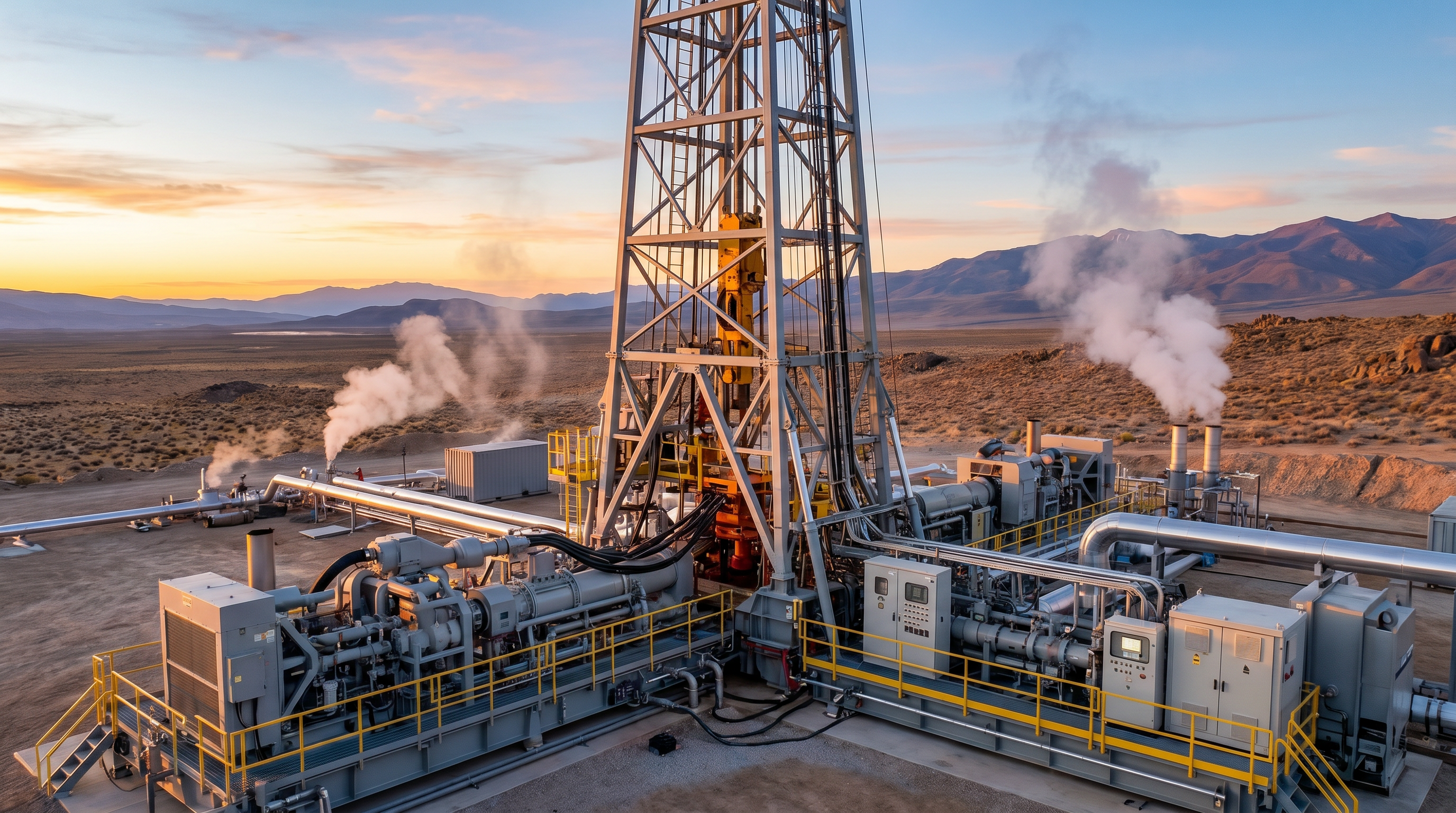
The core innovation driving this paradigm shift is known as Enhanced Geothermal Systems, or EGS. Traditional hydrothermal power relies on finding naturally occurring underground reservoirs of hot, permeable fluid—a geological rarity. EGS, by contrast, engineers its own reservoirs in hot, dry, impermeable rock located thousands of meters underground. By injecting fluid under high pressure to create or open existing micro-fractures—a technique adapted directly from the oil and gas industry's hydraulic fracturing playbook—EGS allows water to circulate through the hot rock, absorb the Earth's ambient heat, and return to the surface to drive steam turbines. This closed-loop circulation effectively mines the heat of the earth without requiring a natural aquifer.[1][7]
The evidence for EGS's commercial viability has rapidly solidified over the past two years, moving the technology out of the laboratory and onto the grid. A comprehensive analysis by the Information Technology and Innovation Foundation highlights that EGS produces energy at a commercial scale by drilling deeper and applying horizontal drilling techniques that maximize the well's surface-area contact with the hot rock. Because the Earth's crust is universally hot if you drill deep enough, EGS theoretically allows for power plants to be built near major industrial demand centers, rather than being restricted to specific geological anomalies in remote locations.[1]

The primary historical barrier to deep geothermal deployment was the exorbitant cost of drilling through hard, crystalline granite deep underground. However, early commercial results indicate a steep learning curve that is driving costs down dramatically. At Fervo Energy's flagship Cape Station project in Utah, engineers reported that drilling times fell by 70 percent over the course of their first eight horizontal wells. Correspondingly, the cost per well plummeted from nearly $9.4 million to $4.8 million. This near halving of capital expenditure mirrors the early cost-reduction curves of solar photovoltaics and wind turbines, suggesting that EGS is rapidly approaching price parity with traditional fossil fuels.[6]
This rapid cost reduction has triggered a wave of institutional investment, signaling that next-generation geothermal is moving from a risky science experiment to a bankable infrastructure asset. In March 2026, Fervo Energy secured $421 million in non-recourse financing to fund the construction of the first phase of its 500-megawatt Cape Station. Financial analysts note that securing traditional project finance for a first-of-a-kind clean technology is notoriously difficult, as banks are highly risk-averse. This massive funding package is a watershed moment that validates the operational consistency, safety, and commercial readiness of EGS technology in the eyes of Wall Street.[2]
The demand side of the equation is being supercharged by the technology sector's insatiable appetite for energy. Tech giants operating massive AI data centers require "clean firm" power—electricity that is both carbon-free and available 24/7, regardless of weather conditions or time of day. According to the 2025 U.S. Geothermal Market Report published by the National Laboratory of the Rockies, utilities and corporate buyers signed power purchase agreements for over 1 gigawatt of next-generation geothermal capacity between 2021 and 2025. This includes landmark, multi-hundred-megawatt deals between geothermal developers and companies like Google, Meta, and Southern California Edison.[4][5]

The demand side of the equation is being supercharged by the technology sector's insatiable appetite for energy.
The success of these early commercial ventures is deeply rooted in sustained federal research and development. The U.S. Department of Energy's Frontier Observatory for Research in Geothermal Energy (FORGE), located in Utah, served as the critical proving ground for EGS techniques. By absorbing the initial technical risks and openly sharing subsurface data with the broader industry, the federal government enabled private startups to iterate on well designs and stimulation methods without bearing the full financial burden of early-stage failure. This public-private synergy has shaved years off the commercialization timeline for advanced geothermal.[1][3]
Despite the immense optimism, scaling EGS requires rigorous monitoring of subsurface activity to ensure public safety. The process of injecting fluids under high pressure to shear rock inevitably induces microseismicity—tiny tremors that are typically imperceptible at the surface but require careful management to prevent larger induced earthquakes. To address this, scientists at the Lawrence Berkeley National Laboratory recently achieved a major breakthrough by developing a custom high-temperature seismometer capable of operating continuously in extreme 338-degree Fahrenheit conditions deep underground.[3]
Deployed nearly 7,000 feet underground at the Cape Station site, this advanced sensor operated flawlessly for seven months, providing the world's longest continuous seismic record at such extreme temperatures. This high-fidelity data allows operators to map fracture networks in real-time, optimizing fluid flow while ensuring that the engineered reservoir remains safely within strict regulatory limits. Transparent, long-term monitoring is considered absolutely essential for earning and maintaining public trust as EGS projects expand out of remote deserts and into more populated regions across the country.[3][7]

Beyond technology and finance, state and federal policies are playing a crucial role in accelerating deployment. The World Resources Institute notes that state-level procurement mandates have been the most powerful demand-side lever for the industry. California's Public Utilities Commission, for instance, issued landmark orders requiring load-serving entities to procure gigawatts of clean, firm resources. This explicitly created a guaranteed market for geothermal developers to bid against other baseload technologies, ensuring that if they build the plants, there will be a guaranteed buyer for the electricity.[5]
At the federal level, the preservation of technology-neutral clean electricity tax credits through 2033 provides the long-term revenue certainty required for capital-intensive infrastructure projects. Furthermore, new regulations aimed at streamlining the permitting process on public lands are beginning to alleviate one of the industry's most persistent bottlenecks. By mandating annual competitive lease sales and adding categorical exclusions for smaller test projects, federal agencies are allowing developers to move from initial exploration to power generation much faster than in previous decades.[1][5]

While the evidence strongly supports the technical and commercial viability of EGS, several practical uncertainties remain. The supply chain for specialized high-temperature drilling equipment and the highly trained workforce required to operate it must scale exponentially to meet projected gigawatt-level demand. Additionally, while EGS can utilize non-potable groundwater, the absolute volume of fluid required for initial reservoir stimulation and ongoing cooling in arid regions presents a localized environmental challenge. Developers are actively working to mitigate this through advanced closed-loop designs and air-cooling systems, but water management remains a critical variable.[1][7]
Ultimately, the data from the past two years paints a compelling picture of a technology that has decisively crossed the commercialization threshold. By marrying the advanced drilling capabilities of the fossil fuel era with the urgent climate imperatives of the 21st century, enhanced geothermal systems offer a pragmatic, scalable solution to the grid's most stubborn problem. As costs continue to decline and early utility-scale projects deliver on their promises, the heat beneath our feet is poised to become a foundational pillar of the global clean energy economy.[1][6][7]
How we got here
2018
The U.S. Department of Energy establishes the FORGE initiative in Utah to research and derisk Enhanced Geothermal Systems.
2023
Fervo Energy's Project Red in Nevada becomes the first commercial-scale EGS facility to deliver electricity to the grid.
2024
Tech giants including Google and Meta sign landmark Power Purchase Agreements to procure next-generation geothermal energy for their data centers.
March 2026
Fervo Energy secures $421 million in non-recourse project financing for its 500-megawatt Cape Station, signaling EGS's transition to a highly bankable asset class.
Viewpoints in depth
Geothermal Developers
Argue that EGS is a bankable infrastructure asset ready to scale and meet gigawatt-level demand.
Companies like Fervo Energy and Eavor argue that EGS is no longer a science experiment but a bankable infrastructure asset. By aggressively adapting horizontal drilling and fiber-optic sensing from the shale boom, they have proven that drilling costs and timelines can be slashed dramatically. Their primary focus is now on securing massive power purchase agreements and scaling supply chains to deploy gigawatts of capacity before 2030.
Tech Offtakers & Grid Planners
View next-generation geothermal as the essential 'clean firm' resource needed to power AI data centers 24/7.
For the entities actually buying the power, EGS is the missing puzzle piece for a fully decarbonized grid. Tech giants building AI data centers and utilities managing peak loads argue that wind, solar, and batteries alone cannot guarantee 24/7 reliability. They view next-generation geothermal as the ultimate 'clean firm' resource—capable of matching the baseload reliability of nuclear or natural gas without the associated emissions or fuel supply risks.
Policy & Research Institutions
Emphasize the necessity of federal R&D, regulatory streamlining, and state-level procurement mandates to derisk the technology.
Think tanks and national laboratories emphasize that while the technology is ready, its widespread deployment depends heavily on policy frameworks. They point to the success of the DOE's FORGE project as proof that government-backed R&D is essential for derisking early-stage tech. Moving forward, they advocate for streamlined permitting on federal lands, sustained tax credits, and state-level mandates that force utilities to procure clean, firm power.
What we don't know
- How quickly the specialized supply chain for high-temperature drilling components can scale to meet gigawatt-level deployment goals.
- Whether the localized water requirements for reservoir stimulation will constrain EGS development in severely arid regions.
- How long grid interconnection queues will delay fully funded geothermal projects from actually delivering power to consumers.
Key terms
- Enhanced Geothermal Systems (EGS)
- A technology that generates electricity by injecting fluid into hot, dry rock deep underground to create an artificial reservoir of heat.
- Firm Power
- Electricity generation that is guaranteed to be available at any given time, regardless of weather conditions or time of day.
- Hydro-shearing
- A technique used to open and slightly shift existing natural fractures in underground rock by injecting water under high pressure.
- Power Purchase Agreement (PPA)
- A long-term contract between an electricity generator and a buyer (like a utility or tech company) to purchase power at a set price.
- Microseismicity
- Very faint earth tremors, often induced by human activities like fluid injection, that are typically too small to be felt by humans.
Frequently asked
What is the difference between traditional and enhanced geothermal?
Traditional geothermal relies on naturally occurring underground hot springs, which are rare. Enhanced Geothermal Systems (EGS) create artificial reservoirs by injecting fluid into hot, dry rock, allowing power plants to be built almost anywhere.
Does EGS use hydraulic fracturing?
Yes, EGS uses a modified form of hydraulic fracturing called hydro-shearing to open existing fractures in deep rock. However, unlike oil and gas fracking, it does not use chemical proppants and operates in a closed-loop system.
Can EGS cause earthquakes?
Injecting fluid underground can cause microseismicity (tiny tremors). Operators use advanced fiber-optic sensors and seismometers to monitor the rock in real-time, ensuring activity remains well below the threshold of being felt at the surface.
Why are tech companies investing in geothermal?
Tech companies need massive amounts of electricity to run AI data centers 24/7. Because wind and solar are intermittent, geothermal provides the constant, carbon-free 'firm power' required to meet their climate pledges without sacrificing reliability.
Sources
Source coverage
7 outlets
3 viewpoints surfaced







[1]Information Technology and Innovation FoundationPolicy & Research Institutions
Advanced Geothermal Energy Is Widely Available, Clean, and Maybe Cheap Enough to Make a Big Impact
Read on Information Technology and Innovation Foundation →[2]ESG TodayGeothermal Developers
Fervo Secures $421 Million to Build U.S. Geothermal Energy Plant
Read on ESG Today →[3]Lawrence Berkeley National LaboratoryPolicy & Research Institutions
Scientists Develop New Technology to Continuously Monitor Geothermal Energy Operations
Read on Lawrence Berkeley National Laboratory →[4]National Laboratory of the RockiesTech Offtakers & Grid Planners
2025 U.S. Geothermal Market Report
Read on National Laboratory of the Rockies →[5]World Resources InstitutePolicy & Research Institutions
As Geothermal Heats Up in US States, Key Policy Levers Can Advance Its Next Generation
Read on World Resources Institute →[6]IEC e-techGeothermal Developers
Geothermal energy is gaining momentum
Read on IEC e-tech →[7]Factlen Editorial TeamPolicy & Research Institutions
Synthesis by Factlen editorial team
Read on Factlen Editorial Team →
More in energy
See all 8 stories →Methane Tracking
The Methane Accountability Era: How Satellites and EU Import Rules Are Forcing a Global Cleanup
8 sources

Grid Storage
Grid-Scale Battery Costs Plummet to Record Lows, Pushing Renewables Past Coal in Historic Milestone
7 sources
Virtual Power Plants
How Virtual Power Plants Are Rewiring the Electrical Grid
8 sources

Nuclear Tech
Next-Generation Nuclear: How Small Modular Reactors Could Power the AI Revolution
9 sources
Every angle. Every day.
Get energy stories with full source coverage and perspective breakdowns delivered to your inbox.