
Trump Demands $350 Billion Defense Reconciliation Bill Include Sweeping Voter ID Law
President Trump is pressuring Congress to bypass the Senate filibuster to pass a record defense budget alongside the SAVE America Act, setting up a high-stakes clash over military funding and election rules.
By Factlen Editorial Team
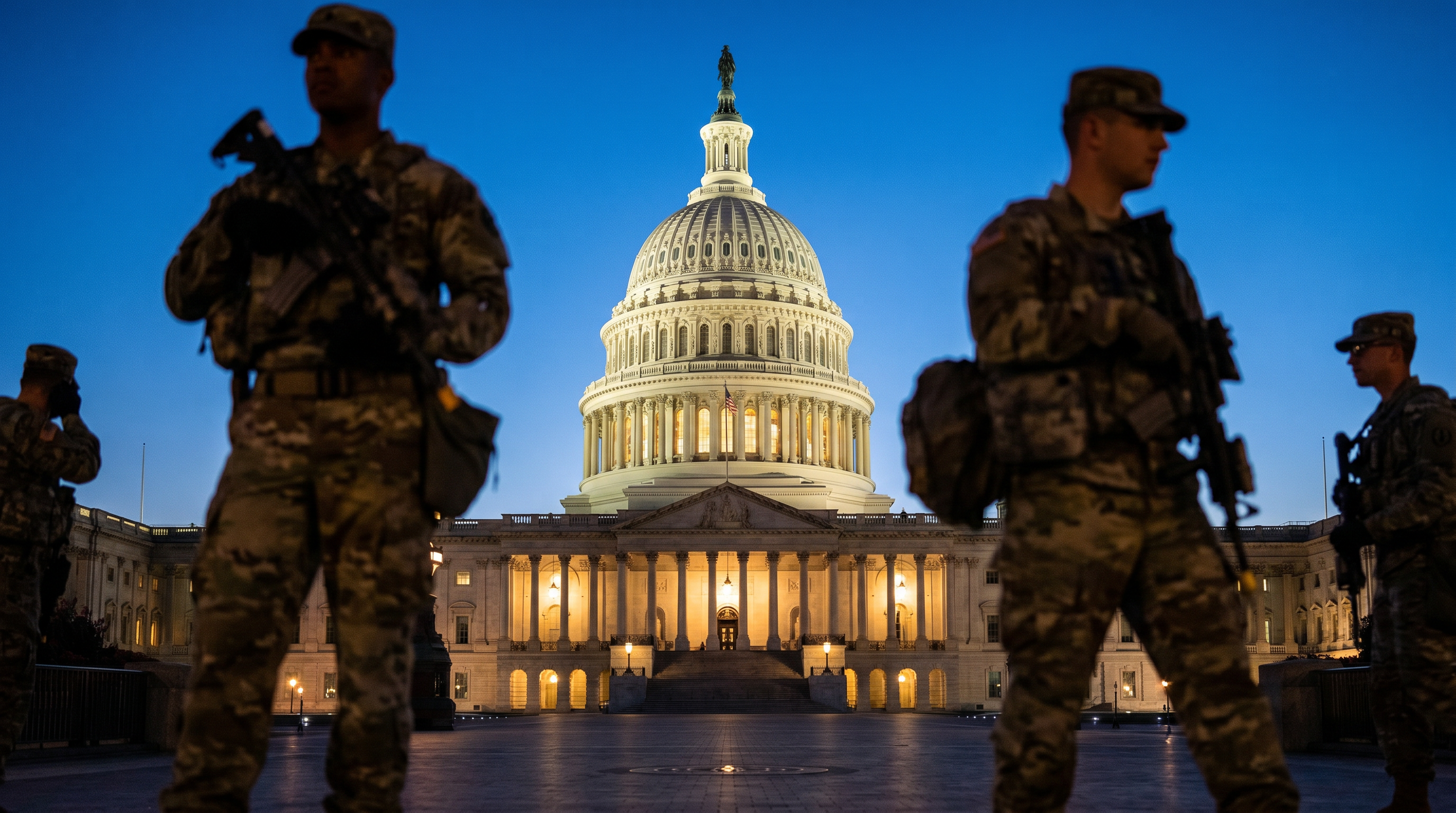
- Defense Institutionalists
- Military advocates fear the strategy jeopardizes national security funding.
- Voting Rights Defenders
- Opponents warn the legislation acts as a massive voter suppression tool.
- Election Security Advocates
- Supporters argue the bill is a common-sense measure to protect the integrity of the ballot box.
What's not represented
- · Local election administrators tasked with implementing the new ID verification systems
- · Active-duty military personnel awaiting defense funding
Why this matters
If enacted, the legislation would fundamentally alter how Americans register and vote by requiring physical proof of citizenship nationwide, while simultaneously injecting unprecedented partisan policy into the Pentagon's funding stream.
Key points
- President Trump is demanding Congress pass a $350 billion defense budget reconciliation bill with the SAVE America Act attached.
- The SAVE America Act requires documentary proof of citizenship to register to vote and photo ID to cast a ballot.
- Voting rights groups warn the ID and photocopy requirements will disenfranchise millions of eligible voters, particularly seniors.
- Top Republican appropriators have warned against using the partisan reconciliation process to fund the military, citing fiscal instability.
- The Senate parliamentarian has previously ruled that the voting legislation violates the Byrd Rule, blocking it from reconciliation.
On June 11, 2026, President Donald Trump took to Truth Social to demand that congressional Republicans immediately pass a $350 billion budget reconciliation bill for defense. Crucially, he insisted that the package include the SAVE America Act, a sweeping overhaul of federal election laws. "No games, no delays, and no weak compromises! Do this ASAP," the president wrote, setting up a high-stakes legislative clash.[1][4]
The demand merges two of the administration's top priorities ahead of the 2026 midterms: military expansion and voting restrictions. The White House has requested a historic $1.5 trillion defense budget for fiscal year 2027. While $1.15 trillion of that is moving through the standard National Defense Authorization Act (NDAA), the administration carved out the remaining $350 billion to be passed via a separate reconciliation vehicle.[2][8]

Budget reconciliation is a special legislative procedure created in 1974. It allows bills related to spending, revenue, and the federal debt limit to bypass the Senate's standard 60-vote filibuster threshold. Under reconciliation, a bill can pass with a simple 51-vote majority, making it a powerful tool for a unified party to enact its agenda over minority opposition.[1]
The policy rider Trump wants attached—the Safeguard American Voter Eligibility (SAVE) America Act—passed the House in February 2026 but stalled in the Senate. The legislation would require individuals to present documentary proof of U.S. citizenship, such as a passport or birth certificate, when registering to vote in federal elections. It also mandates that voters present a government-issued photo ID at the polls.[3][5]
The bill introduces strict new hurdles for absentee voting as well. Voters casting ballots by mail would be required to include a physical photocopy of an eligible photo ID with their submission. Advocacy groups warn this provision creates a significant logistical barrier for voters who do not own or have easy access to a printer or photocopier.[6]

Voting rights organizations and Democrats argue the SAVE America Act will disenfranchise millions of eligible citizens. An estimated 20.7 million voting-age Americans do not possess a current driver's license. Furthermore, roughly one in five Americans who have been married have both a divorce and a remarriage in their background, meaning their current legal name often does not match their birth certificate, complicating the registration process.[7]
Voting rights organizations and Democrats argue the SAVE America Act will disenfranchise millions of eligible citizens.
The AARP has explicitly warned that the legislation could disproportionately affect citizens over 50. Older adults frequently face complications from expired IDs, mobility issues that make securing new documents difficult, and the aforementioned name-change mismatches. Submitting the last four digits of a Social Security number by mail, an alternative offered in the bill, also raises concerns about identity theft.[6]

Proponents of the bill argue that strict identification and citizenship checks are necessary to restore public confidence in the electoral process and prevent noncitizens from influencing federal races. Trump has repeatedly stated that passing the legislation is his top priority to guarantee the security of the 2026 midterms.[3][4]
Election experts note that it is already illegal for noncitizens to vote in federal elections. The Illegal Immigration Reform and Immigrant Responsibility Act of 1996 explicitly prohibits the practice, and all states currently require new voters to attest to their citizenship under penalty of perjury. Documented instances of noncitizen voting remain exceedingly rare.[5]
Even if Republicans unify behind the strategy, the SAVE America Act faces a massive procedural roadblock: the Byrd Rule. Named after former Senator Robert Byrd, this rule prohibits "extraneous" policy provisions from being included in budget reconciliation bills. The Senate parliamentarian, the chamber's nonpartisan legislative umpire, has previously ruled that the SAVE America Act is primarily a policy change, not a budgetary measure.[4]
Frustrated by the procedural constraints, Trump has previously demanded that Senate Republicans fire the parliamentarian to force the bill through. However, overriding the parliamentarian's guidance would require a level of procedural hardball that many institutionalist senators have historically resisted.[4]
The resistance is not limited to the voting provisions. Top Republican appropriators are openly warning against using reconciliation to fund the military at all. Senator Mitch McConnell recently stated that relying on a partisan reconciliation bill for $350 billion in defense spending is a "terrible risk" that creates fiscal instability for the Pentagon. Senator Susan Collins echoed the sentiment, noting it disrupts the base funding process.[2]
Defense hawks are particularly hesitant to load defense appropriations with highly partisan, non-defense policy riders. Attaching a controversial election law to funding for munitions stockpiles and the Golden Dome missile defense shield risks politicizing the Department of Defense and stalling critical national security investments if the bill fails.[4][8]
As the November midterms approach, the standoff highlights the escalating tension between the administration's electoral focus and the practical realities of governing. With Senate Majority Leader John Thune acknowledging that Republicans currently "don't have the votes" to pass the SAVE America Act through regular order, the fate of both the voting overhaul and a massive slice of the U.S. defense budget remains highly uncertain.[3]
How we got here
1996
Congress passes a law explicitly banning noncitizens from voting in federal elections.
February 2026
The House of Representatives passes the SAVE America Act, but it stalls in the Senate.
April 2026
The White House requests a record $1.5 trillion defense budget, splitting it between base funding and reconciliation.
June 11, 2026
President Trump demands Congress immediately pass the $350 billion defense reconciliation bill with the SAVE America Act attached.
Viewpoints in depth
Election Security Advocates
Supporters argue the bill is a common-sense measure to protect the integrity of the ballot box.
Proponents of the SAVE America Act maintain that the current honor system—where voters simply attest to their citizenship under penalty of perjury—is insufficient. They argue that requiring documentary proof of citizenship and photo identification is the only way to mathematically guarantee that noncitizens are not participating in federal elections. For this camp, attaching the measure to a must-pass defense bill is a necessary tactical maneuver to overcome Democratic obstruction and secure the midterms.
Voting Rights Defenders
Opponents warn the legislation acts as a massive voter suppression tool.
Civil rights groups and organizations like the AARP argue the bill solves a non-existent problem while creating massive logistical hurdles for legal citizens. They point to the millions of Americans who lack a current driver's license, do not have a passport, or whose legal names no longer match their birth certificates due to marriage or divorce. Requiring mail-in voters to find a photocopier to submit their ID, they argue, is a deliberate attempt to suppress turnout among older, disabled, and lower-income voters.
Defense Institutionalists
Military advocates fear the strategy jeopardizes national security funding.
For traditional defense hawks and congressional appropriators, the primary concern is the stability of the Pentagon's budget. They argue that funding multi-year weapons programs and munitions stockpiles through a highly partisan reconciliation process is inherently risky. By attaching a deeply controversial voting law to the package, they warn the administration is politicizing the military and risking a scenario where critical defense funding fails to pass Congress altogether.
What we don't know
- Whether Republican leadership in the Senate will attempt to overrule or fire the parliamentarian to force the bill through.
- How the Pentagon will adjust its procurement plans if the $350 billion reconciliation package fails to pass.
- If the administration will eventually decouple the voting legislation from the defense funding to ensure the military budget is approved.
Key terms
- Budget Reconciliation
- A fast-track legislative process that protects budget-related bills from being filibustered in the Senate.
- Byrd Rule
- A Senate rule that prohibits lawmakers from including non-budgetary policy provisions in reconciliation bills.
- Senate Parliamentarian
- The chamber's nonpartisan official who advises on the interpretation of Senate rules and procedures.
- National Defense Authorization Act (NDAA)
- The annual federal law that specifies the budget and expenditures of the U.S. Department of Defense.
Frequently asked
What is budget reconciliation?
A special legislative process that allows bills related to spending and revenue to pass the Senate with a simple 51-vote majority, bypassing the 60-vote filibuster.
Is it currently legal for noncitizens to vote?
No. The Illegal Immigration Reform and Immigrant Responsibility Act of 1996 explicitly prohibits noncitizens from voting in federal elections.
How would the SAVE America Act change mail-in voting?
It would require voters to include a physical photocopy of an eligible photo ID with their absentee ballot submission.
Sources
Source coverage
8 outlets
3 viewpoints surfaced








[1]The GuardianDefense Institutionalists
US president urges congressional Republicans to use budget reconciliation procedure to enact his priorities
Read on The Guardian →[2]Breaking DefenseDefense Institutionalists
Two top appropriators express doubt that a third reconciliation bill with defense funding will pass
Read on Breaking Defense →[3]NewsweekElection Security Advocates
Trump's push to pass sweeping election legislation stalls in Senate
Read on Newsweek →[4]Democracy DocketVoting Rights Defenders
Trump says Pentagon wants anti-voting restrictions in defense bill
Read on Democracy Docket →[5]Bipartisan Policy CenterVoting Rights Defenders
What to Know About the SAVE America Act's Proof of Citizenship Requirement
Read on Bipartisan Policy Center →[6]AARPVoting Rights Defenders
How the SAVE America Act Could Affect Older Voters
Read on AARP →[7]Vote.orgVoting Rights Defenders
The Practical Impact of the SAVE America Act on Voter Registration
Read on Vote.org →[8]Politico ProDefense Institutionalists
Trump's mega defense budget hangs on reconciliation
Read on Politico Pro →

More in news politics
See all 47 stories →Platform Moderation
Evidence Pack: Do Crowdsourced Fact-Checks Actually Change Political Misperceptions?
7 sources

Supreme Court
Supreme Court Strikes Down EPA Power Plant Emissions Rules in 6-3 Decision
7 sources
Cabinet Nomination
Trump Nominates Jay Clayton for Director of National Intelligence Amid FISA Standoff
7 sources
Defense Spending
U.K. Defense Secretary John Healey Resigns Over Military Funding Dispute, Deepening Crisis for Starmer
8 sources
Every angle. Every day.
Get news politics stories with full source coverage and perspective breakdowns delivered to your inbox.