
SpaceX Shatters Records With $75 Billion IPO, Reaching $1.77 Trillion Valuation
Elon Musk's aerospace and communications giant has priced the largest initial public offering in history, bypassing traditional Wall Street mechanics to raise $75 billion.
By Factlen Editorial Team
- Tech Bulls & Retail Investors
- View the valuation as justified by SpaceX's launch monopoly, Starlink's global reach, and the untapped potential of orbital AI.
- Value Skeptics & Institutional Analysts
- Warn that the company is burning cash and relying on unproven science-fiction projects to justify a 95x sales multiple.
- Market Strategists
- Focus on the structural impact of the massive listing, warning of liquidity drains and index-inclusion volatility.
What's not represented
- · Terrestrial data center operators
- · Environmental advocacy groups
Why this matters
This isn't just a milestone for the space industry; it's a structural shift for the stock market. With an unprecedented 30% of shares allocated to retail investors and an immediate fast-track into major index funds, millions of retirement portfolios will soon be directly exposed to SpaceX's ambitious, high-risk bets on artificial intelligence and interplanetary colonization.
Key points
- SpaceX has priced its IPO at $135 per share, raising a record-breaking $75 billion.
- The $1.77 trillion valuation makes it one of the ten most valuable public companies on Earth.
- Proceeds will fund Starship development, Mars colonization, and orbital artificial intelligence data centers.
- Despite generating $18.7 billion in revenue last year, the company remains unprofitable and carries $29 billion in debt.
SpaceX priced its initial public offering at $135 per share on Thursday, raising $75 billion in the largest public market debut in history. The landmark listing catapults the once-fledgling aerospace startup into the upper echelons of global finance, cementing its transition from a disruptive rocket manufacturer to a foundational pillar of the modern space economy.[1][5]
The sheer scale of the offering eclipses the previous global record set by Saudi Aramco's $29.4 billion listing in 2019. When trading begins Friday on the Nasdaq under the ticker symbol SPCX, the company will instantly become one of the ten most valuable publicly traded corporations on Earth, boasting an implied valuation of $1.77 trillion.[1][4]
Bypassing traditional Wall Street mechanics, CEO Elon Musk dictated a fixed $135 price tag rather than conducting a standard roadshow with a sliding price range. This unconventional maneuver shifted the burden of price discovery directly to the public market. Despite the unorthodox approach, institutional demand was fierce, with the offering reportedly oversubscribed by nearly four times.[7]

In a highly unusual move for a mega-cap offering, SpaceX earmarked roughly 30% of the float for retail investors—three times the standard allocation. This ensures that mom-and-pop investors get early access to the highly anticipated stock, but it also exposes them to immense volatility right out of the gate as the market digests the company's towering valuation.[3][5]
The massive capital injection is earmarked for a deeply futuristic roadmap. Following its merger with Musk's artificial intelligence startup xAI earlier this year, SpaceX is increasingly pitching itself not just as a transportation company, but as an integrated space and AI infrastructure behemoth.[6]
The company's prospectus outlines ambitious plans to build solar-powered AI data centers in orbit. By moving compute infrastructure into space, SpaceX aims to capture a slice of a projected $22.7 trillion market for business-oriented AI products, circumventing the terrestrial power grid constraints that currently bottleneck the tech industry.[4][5]
The company's prospectus outlines ambitious plans to build solar-powered AI data centers in orbit.
Closer to Earth, the company's Starlink division remains its primary economic engine. Operating a constellation of roughly 8,000 satellites in low Earth orbit, Starlink is currently SpaceX's only profitable business unit. It provides high-speed broadband to consumers, maritime fleets, commercial airlines, and defense contractors across the globe.[3][6]
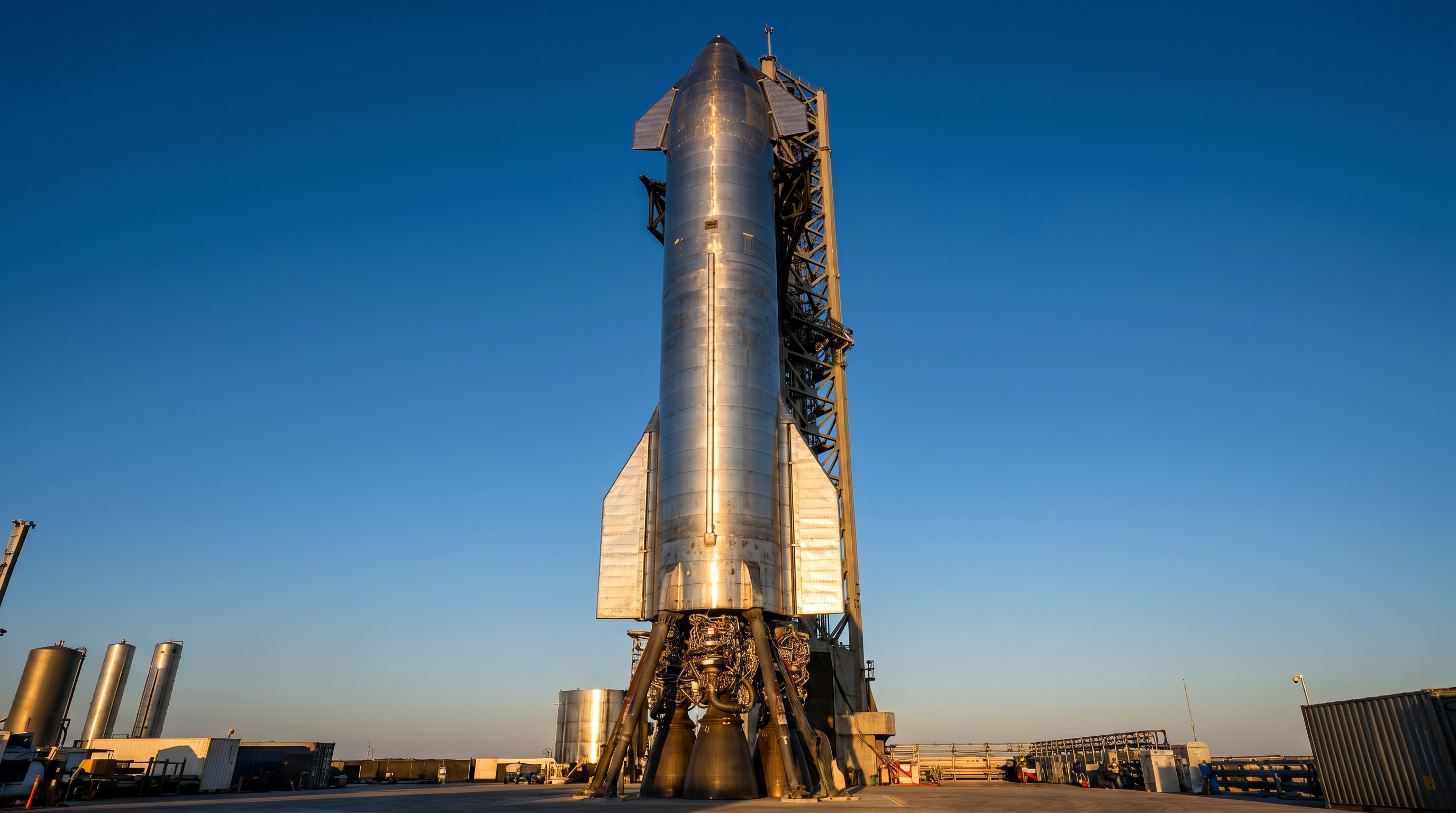
The ultimate goal, however, remains interplanetary. A significant portion of the IPO proceeds will fund the continued development of the massive Starship rocket system. Musk insists that perfecting the fully reusable, heavy-lift vehicle is the crucial prerequisite for establishing a self-sustaining human colony of one million people on Mars.[4][6]
Despite the soaring valuation and grand ambitions, traditional financial metrics paint a precarious picture. SpaceX generated an impressive $18.7 billion in revenue last year, but the capital-intensive nature of its operations resulted in a $4.9 billion net loss. The company also carries roughly $29 billion in debt.[3][6]

At $1.77 trillion, investors are paying roughly 95 times historical sales—a massive premium even compared to highly profitable Big Tech firms. Analysts at Morningstar have argued the stock is "priced for perfection," estimating a fair value closer to $780 billion until the orbital AI platform proves it can actually outcompete terrestrial computing.[6]
The prospectus also highlights significant governance dynamics. Musk will retain a tight grip on the company, holding more than 80% of the stock's voting power. This structure allows him to pursue long-term, capital-intensive projects without bowing to the short-term earnings pressure that typically restrains public companies.[1][6]
The sheer size of the SPCX listing is already sending ripples through Wall Street. Market strategists warn of a potential liquidity drain, as institutional investors may be forced to sell off shares in other mega-cap technology stocks to free up the cash required to build positions in the aerospace giant.[8]

Furthermore, the stock is expected to be fast-tracked into the Nasdaq 100 index within 15 trading days. This inclusion will force hundreds of billions of dollars in passive exchange-traded funds to automatically purchase SPCX shares, generating a wave of mechanical buying regardless of the underlying fundamentals.[4]
As the opening bell rings on Friday, the broader market will render its verdict. The debut will not only test the limits of investor faith in Elon Musk's vision but will also set the tone for a looming wave of highly anticipated artificial intelligence public offerings expected later this year.[1][2]
How we got here
2002
Elon Musk founds Space Exploration Technologies Corp. (SpaceX) in El Segundo, California.
2019
Saudi Aramco sets the global IPO record by raising $29.4 billion.
2024
SpaceX relocates its corporate headquarters from California to Starbase, Texas.
Early 2026
SpaceX merges with Musk's artificial intelligence startup, xAI, expanding its mandate to include orbital compute infrastructure.
June 3, 2026
SpaceX bypasses traditional bookbuilding, announcing a fixed IPO price of $135 per share.
June 11, 2026
The company officially prices the offering, raising $75 billion ahead of its Nasdaq debut.
Viewpoints in depth
Tech Bulls & Retail Investors
Argue that SpaceX is not just a rocket company, but the foundational infrastructure for the next century.
Supporters view the $1.77 trillion valuation as entirely justified by the company's unique positioning. They point to the combined monopolies of Starlink's global internet, the dominant launch business, and the untapped potential of orbital AI data centers. For this camp, investing in SpaceX is akin to buying the railroad infrastructure of the space economy before the tracks are fully laid.
Value Skeptics & Institutional Analysts
Point to the massive disconnect between the company's current revenue and its near-$2 trillion price tag.
Financial purists warn that the company is burning cash, carrying $29 billion in debt, and relying on unproven, capital-intensive science fiction projects to justify a 95x sales multiple. Analysts at firms like Morningstar argue that until orbital data centers prove they can outcompete terrestrial computing on cost and latency, the stock is priced for a perfection that SpaceX may not be able to deliver.
Market Strategists
Focus on the structural impact of the listing on the broader stock market.
Market observers note that the sheer size of the IPO, combined with fast-tracked index inclusion, will force passive funds to buy in mechanically. They warn this dynamic could drain liquidity from other mega-cap technology stocks as portfolio managers rebalance, potentially injecting unprecedented volatility into the broader market during the stock's first few weeks of trading.
What we don't know
- Whether SpaceX's ambitious plan to build solar-powered artificial intelligence data centers in orbit is technologically or economically viable.
- How the broader stock market will react to the sudden liquidity drain as institutional investors reallocate capital to buy SPCX shares.
- When, or if, the company's massive investments in the Starship program will translate into bottom-line profitability.
Key terms
- Initial Public Offering (IPO)
- The process of offering shares of a private corporation to the public in a new stock issuance, allowing the company to raise capital from public investors.
- Float
- The regular shares a company has issued to the public that are available for investors to trade on the open market.
- Price Discovery
- The overall process by which buyers and sellers arrive at a specific price for an asset in the marketplace.
- Index Inclusion
- When a stock is added to a major market index (like the Nasdaq 100), forcing mutual funds and ETFs that track that index to automatically purchase the stock.
- Oversubscribed
- A situation in which the demand for a new issue of stock is greater than the number of shares available.
Frequently asked
When does SpaceX stock start trading?
Shares are expected to begin trading on the Nasdaq on Friday, June 12, 2026, under the ticker symbol SPCX.
Can regular people buy the IPO?
Yes. In an unusual move, SpaceX allocated roughly 30% of the offering to retail investors, though institutional demand has vastly outstripped supply.
Is SpaceX a profitable company?
No. While its Starlink satellite internet division is profitable, the overall company posted a $4.9 billion net loss last year on $18.7 billion in revenue.
Why is the valuation so high?
Investors are pricing in the company's dominant launch monopoly, the global expansion of Starlink, and ambitious future plans for space-based artificial intelligence infrastructure.
Sources
Source coverage
8 outlets
3 viewpoints surfaced








[1]BloombergTech Bulls & Retail Investors
SpaceX IPO Raises $75 Billion in Biggest Debut of All Time
Read on Bloomberg →[2]NYTTech Bulls & Retail Investors
SpaceX IPO: How Our Reporters Assess the Sky-High Valuation and Potential Economic Impact
Read on NYT →[3]CNBCValue Skeptics & Institutional Analysts
SpaceX is way ahead of competitors with Starlink, but growth is harder heading into IPO
Read on CNBC →[4]BNN BloombergMarket Strategists
Elon Musk's SpaceX is about to make its debut on Wall Street. What to know.
Read on BNN Bloomberg →[5]Los Angeles TimesTech Bulls & Retail Investors
SpaceX is set to shatter records with a $75-billion IPO
Read on Los Angeles Times →[6]DWValue Skeptics & Institutional Analysts
SpaceX IPO holds both promise and peril
Read on DW →[7]ReutersMarket Strategists
SpaceX targets $135 per share, with a total raise of $75 billion
Read on Reuters →[8]The Motley FoolMarket Strategists
Stock Market Today, June 11: Micron, Intel, and Nvidia Lead Rebound and SpaceX IPO Approaches
Read on The Motley Fool →
More in business
See all 27 stories →Space Economy
SpaceX Raises $75 Billion in Largest IPO in History as Retail Demand Surges
6 sources
Executive Talent
The Rise of the Fractional Executive: How Mid-Sized Companies Are Rethinking the C-Suite in 2026
6 sources

SpaceX IPO
SpaceX Prices Record $75 Billion IPO, Reaching $1.77 Trillion Valuation
10 sources
Space Economy
SpaceX Raises $75 Billion in Largest Initial Public Offering in History
10 sources
Every angle. Every day.
Get business stories with full source coverage and perspective breakdowns delivered to your inbox.