
SpaceX Raises $75 Billion in Largest Initial Public Offering in History
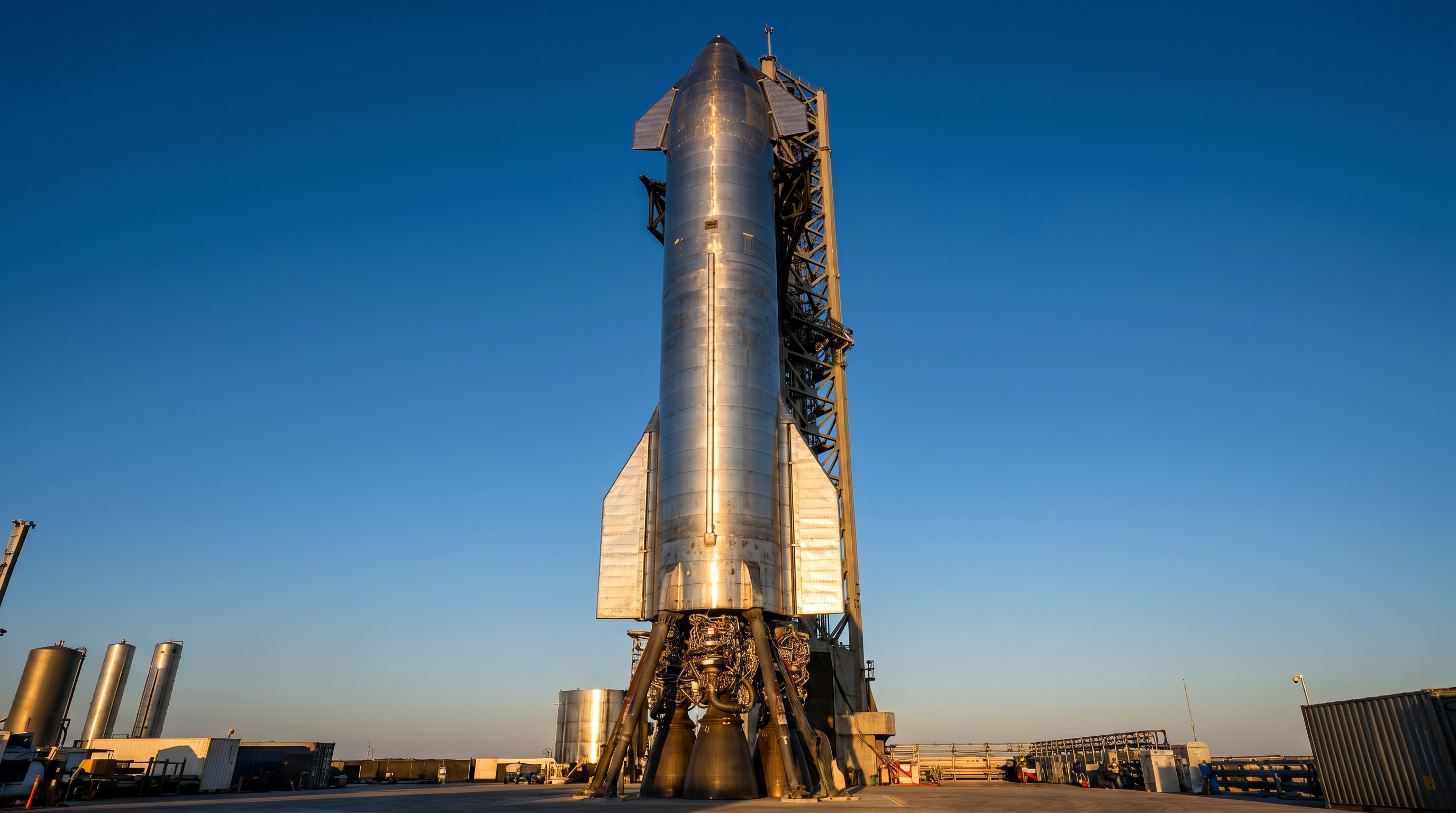
Elon Musk's aerospace company has officially gone public, pricing shares at $135 to raise a record-breaking $75 billion. The landmark debut signals massive investor confidence in the commercial space economy and the company's Starlink satellite network.
By Factlen Editorial Team
- Bullish Tech Investors
- View the valuation as justified by SpaceX's near-monopoly on space logistics and the massive future potential of the orbital economy.
- Cautious Market Analysts
- Highlight the risks of a sky-high valuation, pointing to the slowing growth rate of Starlink and the capital-intensive nature of spaceflight.
- Ecosystem Optimists
- Focus on the positive ripple effects the massive liquidity event will have on funding for early-stage deep-tech and aerospace startups.
What's not represented
- · Legacy aerospace manufacturers
- · Retail investors excluded from early allocations
Why this matters
SpaceX's transition to a public company opens the commercial space sector to everyday retail investors for the first time. The massive influx of capital will accelerate global broadband expansion and interplanetary logistics, while serving as a powerful catalyst for the broader technology and startup markets.
Key points
- SpaceX has priced its IPO at $135 per share, raising $75 billion in the largest public debut in history.
- The massive offering has triggered a broader market rally, sending bank stocks to record highs.
- Starlink remains the company's primary profitable engine, though analysts note growth is becoming harder to sustain.
- The $75 billion capital injection will fund Starship development, space-based data centers, and Mars exploration initiatives.
- The successful debut is expected to open the IPO window for other deep-tech and aerospace startups.
In a watershed moment for both the aerospace industry and global financial markets, SpaceX has officially priced its initial public offering, raising an unprecedented $75 billion. The company offered 555.6 million shares at $135 each, cementing its status as the largest public debut in history.[1][6]
The sheer scale of the offering dwarfs previous record-holders, surpassing the massive debuts of state-owned giants and legacy tech conglomerates. For years, SpaceX operated as the crown jewel of the private markets, heavily guarded by institutional investors and venture capital. Now, the gates have opened, allowing the broader public to take a direct financial stake in the commercialization of space.[6][7]

The ripple effects of the mega-IPO were felt immediately across Wall Street. Bank stocks surged to record highs on Thursday, driven by a combination of optimism surrounding the massive underwriting fees generated by the SpaceX deal and easing geopolitical tensions. The successful pricing has injected a wave of euphoria into trading floors, signaling a robust appetite for risk and innovation.[5][10]

At the heart of the company's sky-high valuation is Starlink, SpaceX's sprawling satellite internet constellation. Currently standing as the company's primary profitable business unit, Starlink has revolutionized global connectivity by beaming high-speed broadband to remote regions, maritime vessels, and commercial airlines. Investors view the network's recurring subscription revenue as the financial bedrock supporting the company's more speculative interplanetary ambitions.[2][3]
However, the road ahead for Starlink is not without friction. Market analysts note that while the service is lightyears ahead of its competitors, maintaining its explosive growth rate is becoming increasingly difficult. As the company attempts to penetrate denser urban markets and navigate complex international regulatory environments, customer acquisition costs are expected to rise.[2]
However, the road ahead for Starlink is not without friction.
Despite these near-term growth hurdles, institutional demand for the stock has been insatiable. Order books were massively oversubscribed, driven by a belief that SpaceX's future roadmap—which includes establishing data centers in orbit and deploying the fully reusable Starship rocket for heavy logistics—will unlock entirely new sectors of the economy. Some investors are betting that these futuristic revenue streams will materialize much sooner than the company's official projections suggest.[1][9]

The historic size of the offering has also drawn scrutiny from lawmakers concerned about market mechanics. Senator Elizabeth Warren issued a letter to major stock exchanges questioning the oversight of the IPO, specifically highlighting the waiting periods for index fund inclusion and the mechanisms in place to protect retail investors from post-debut volatility.[4]
Financial reporters and valuation experts have spent weeks attempting to model the economic impact of the listing. Traditional price-to-earnings ratios struggle to capture the value of a company that simultaneously operates as a global telecom provider, a defense contractor, and the sole entity capable of returning humans to the lunar surface. The consensus is that SpaceX is being priced not just on its current cash flow, but on its near-monopoly over orbital access.[3][7]
For the broader startup ecosystem, the SpaceX IPO is being hailed as a massive unlocking event. Venture capitalists anticipate that the successful debut will pry open the IPO window for a backlog of deep-tech and aerospace startups that have been waiting for favorable market conditions. The liquidity generated by this event is expected to flow back into early-stage space ventures, accelerating innovation across the sector.[8][9]
The $75 billion war chest will be immediately deployed to scale the company's most capital-intensive projects. Chief among them is the rapid mass-production of Starship, the colossal launch vehicle designed to carry massive payloads—and eventually human settlers—to Mars. Additionally, funds will be channeled into upgrading Starlink's laser-linked satellite infrastructure to increase bandwidth and reduce latency.[1][10]

From a geopolitical standpoint, the public listing of SpaceX adds a new layer of transparency to a company deeply intertwined with national security. As a primary contractor for NASA and the Department of Defense, SpaceX's financial health and operational cadence are critical to maintaining the United States' strategic advantage in space. Public quarterly earnings calls will now provide unprecedented visibility into the economics of these government partnerships.[3][6]
As trading officially commences, all eyes will be on the opening bell to see where the market ultimately settles the price. Regardless of the immediate stock performance, the $75 billion raise stands as a monumental achievement—a testament to the belief that the next great economic frontier lies beyond Earth's atmosphere.[7][10]
How we got here
2002
Elon Musk founds SpaceX with the goal of reducing space transportation costs and enabling the colonization of Mars.
2008
The Falcon 1 becomes the first privately developed liquid-fueled rocket to reach orbit, saving the company from bankruptcy.
2020
SpaceX successfully launches humans to the International Space Station, marking a new era of commercial crew flights.
2024
Starlink achieves global coverage and reports its first full year of profitability, becoming the financial engine of the company.
June 2026
SpaceX goes public, raising $75 billion in the largest initial public offering in financial history.
Viewpoints in depth
Institutional Investors
Viewing the stock as a generational asset that provides a monopoly on orbital logistics.
For large asset managers and institutional funds, SpaceX represents a highly unique proposition: a company that effectively controls the infrastructure of low-Earth orbit. These investors are largely looking past near-term valuation metrics and focusing on the company's insurmountable lead in launch cadence and reusability. They argue that as the space economy expands to include orbital manufacturing and asteroid mining, SpaceX will serve as the toll road for all off-planet commerce.
Market Regulators
Focused on the unprecedented scale of the debut and the protections required for retail participants.
Regulatory bodies and lawmakers are approaching the mega-IPO with a degree of caution. The sheer size of the $75 billion raise means that SpaceX's stock performance will have an outsized impact on broader market indices once included. Regulators are scrutinizing the allocation process to ensure that retail investors are not left holding the bag if early institutional backers decide to take profits, while also examining the national security implications of a publicly traded defense contractor.
Aerospace Competitors
Watching closely as SpaceX secures an overwhelming capital advantage in the space race.
For legacy aerospace companies and emerging launch startups, the SpaceX IPO is a daunting development. The $75 billion cash infusion provides SpaceX with a war chest that dwarfs the R&D budgets of its closest rivals. Competitors fear this capital will allow SpaceX to aggressively subsidize its launch costs, further cementing its monopoly and forcing the rest of the industry into rapid consolidation or niche markets.
What we don't know
- How the stock will perform in its first week of retail trading once the initial institutional lock-ups expire.
- Whether Starlink can maintain its profitability margins as it attempts to expand into highly regulated international markets.
- How the transition to a public company will affect SpaceX's famously aggressive and risk-tolerant engineering culture.
Key terms
- Initial Public Offering (IPO)
- The process of offering shares of a private corporation to the public in a new stock issuance, allowing the company to raise capital from public investors.
- Starlink
- SpaceX's satellite internet constellation, designed to provide high-speed broadband coverage globally, particularly to remote and underserved areas.
- Order Book
- The list of orders from institutional investors indicating their interest in buying shares during an IPO, used to determine the final price of the stock.
- Index Fund Waiting Period
- The mandatory time frame before a newly public company can be included in major market indices, such as the S&P 500, which triggers automatic buying by passive funds.
Frequently asked
How much money did SpaceX raise in its IPO?
SpaceX raised a record-breaking $75 billion by pricing 555.6 million shares at $135 each.
Why is SpaceX going public now?
The company is seeking massive capital to fund its most ambitious and expensive projects, including the Starship rocket program, space-based data centers, and eventual missions to Mars.
Is the company currently profitable?
While SpaceX's overall profitability fluctuates due to heavy research and development costs, its Starlink satellite internet division is currently its primary profitable business unit.
Can everyday people buy SpaceX stock?
Yes. Now that the company has completed its initial public offering, retail investors will be able to purchase shares through standard brokerage accounts once trading officially begins.
Sources
Source coverage
10 outlets
3 viewpoints surfaced








[1]BloombergBullish Tech Investors
SpaceX IPO Raises $75 Billion in Biggest Debut of All Time
Read on Bloomberg →[2]CNBCCautious Market Analysts
SpaceX is way ahead of competitors with Starlink, but growth is harder heading into IPO
Read on CNBC →[3]NYTCautious Market Analysts
SpaceX IPO: How Our Reporters Assess the Sky-High Valuation and Potential Economic Impact
Read on NYT →Warren questions SpaceX IPO oversight in new letter to exchanges
Read on CNBC →Bank Stocks Hit Record Highs on US-Iran Deal Hopes, IPO Optimism
Read on Bloomberg →[6]ReutersBullish Tech Investors
SpaceX shatters records with $75 billion IPO, igniting space economy
Read on Reuters →[7]Wall Street JournalCautious Market Analysts
Investors Flock to SpaceX's Historic Public Offering Despite Valuation Concerns
Read on Wall Street Journal →[8]TechCrunchEcosystem Optimists
What SpaceX's massive IPO means for the next generation of space startups
Read on TechCrunch →[9]Financial TimesEcosystem Optimists
SpaceX debut injects unprecedented momentum into global IPO market
Read on Financial Times →[10]Fox BusinessBullish Tech Investors
SpaceX IPO fuels market rally as Elon Musk's space venture goes public
Read on Fox Business →
More in business
See all 27 stories →Space Economy
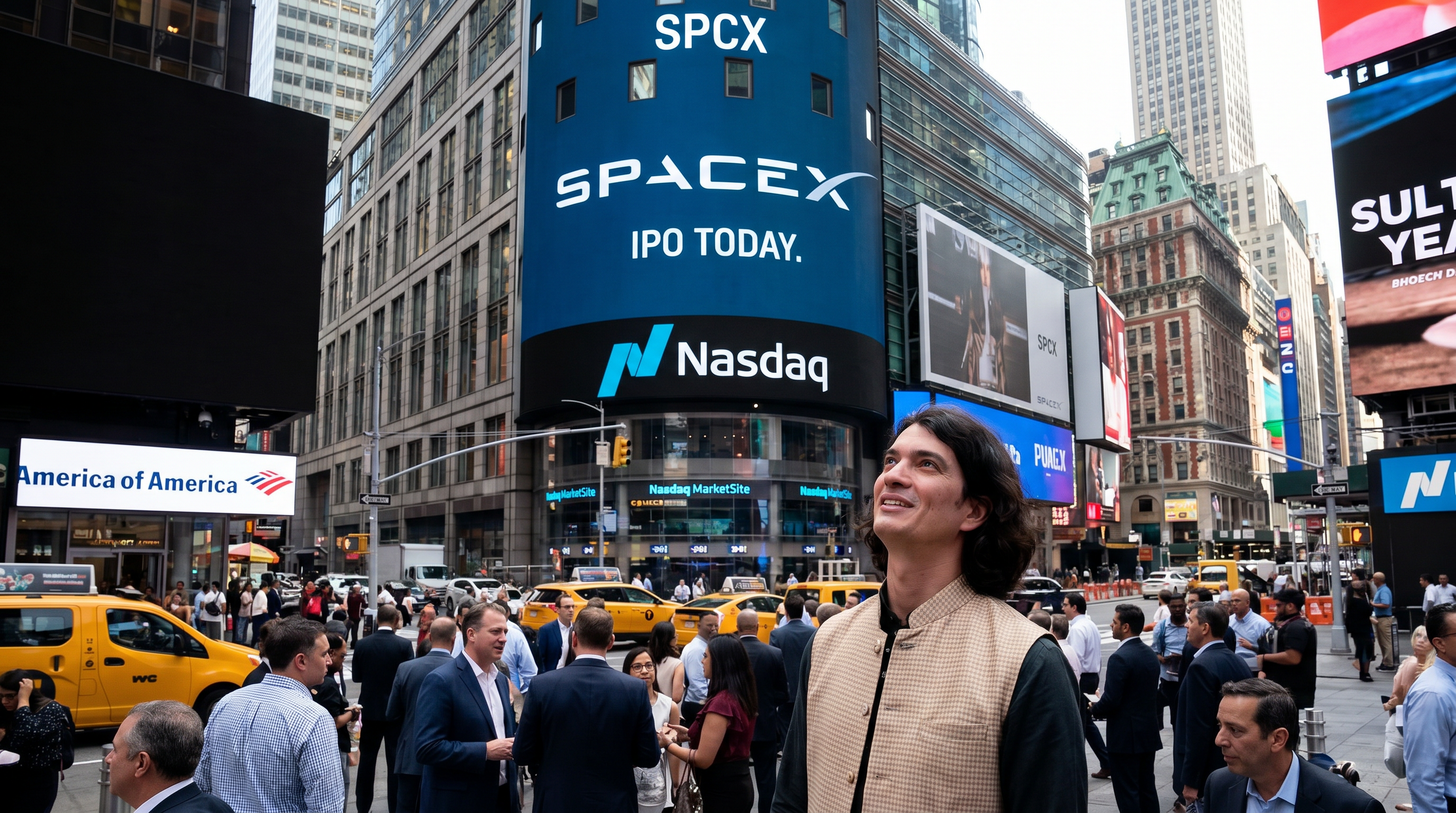
SpaceX Raises $75 Billion in Largest IPO in History as Retail Demand Surges
6 sources
Executive Talent
The Rise of the Fractional Executive: How Mid-Sized Companies Are Rethinking the C-Suite in 2026
6 sources

SpaceX IPO
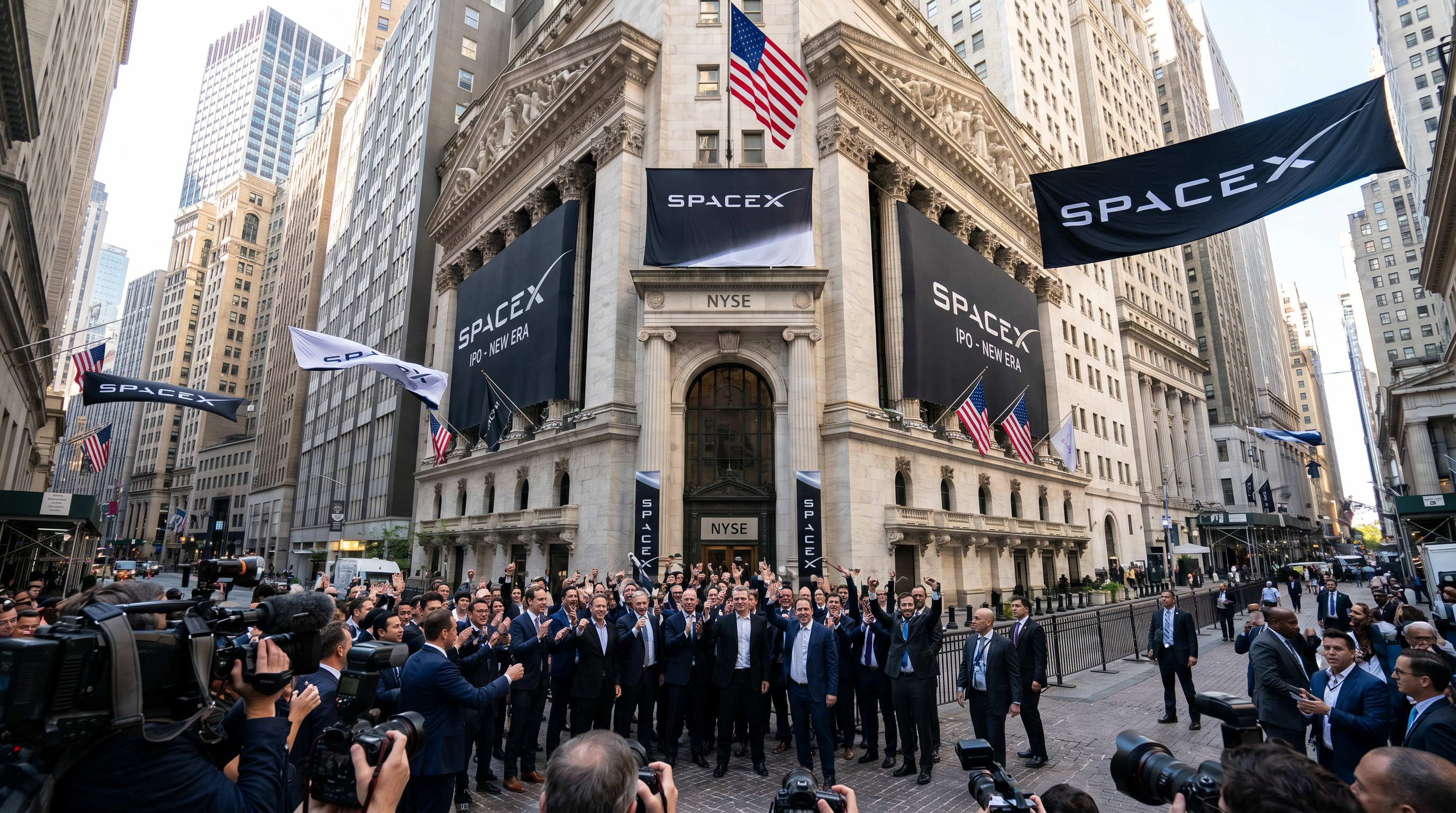
SpaceX Prices Record $75 Billion IPO, Reaching $1.77 Trillion Valuation
10 sources
Space Economy
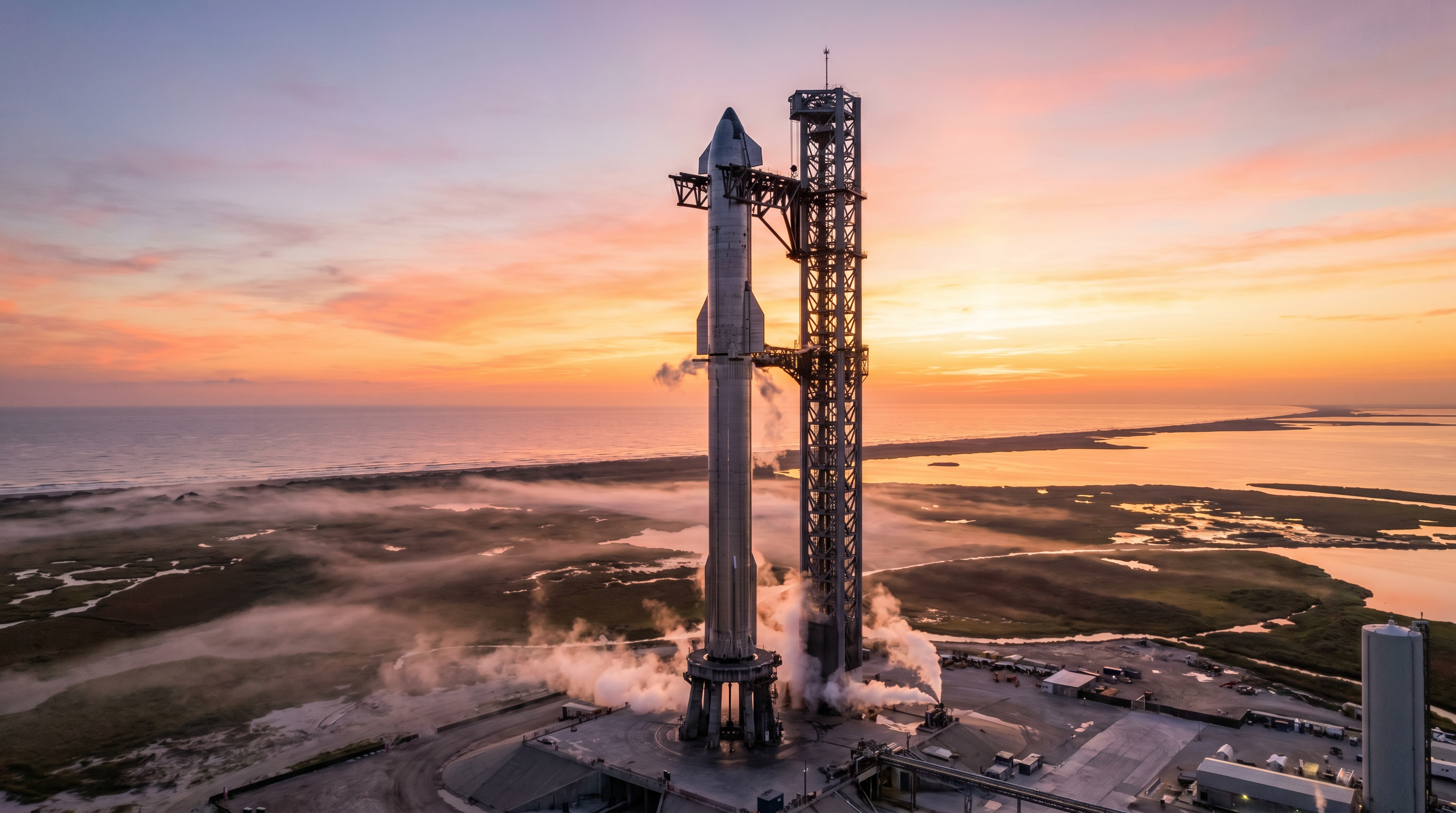
SpaceX Shatters Records With $75 Billion IPO, Reaching $1.77 Trillion Valuation
8 sources
Every angle. Every day.
Get business stories with full source coverage and perspective breakdowns delivered to your inbox.