
The Great Re-Bundling: Major Streaming Services Launch 'Super Bundles' to Combat Subscription Fatigue
Media giants are teaming up to offer massive, unified streaming packages, saving consumers up to 45% a month and simplifying the chaotic app landscape.
By Factlen Editorial Team
- Consumer Advocates
- Argues that super bundles provide much-needed financial relief and simplify the chaotic user experience of managing multiple apps.
- Streaming Executives
- Focuses on bundling as a necessary strategy to reduce subscriber churn, stabilize monthly revenue, and achieve long-term profitability.
- Media Analysts
- Views the trend as the inevitable 'cable-fication' of streaming, where platforms recreate the old pay-TV model but with better on-demand technology.
What's not represented
- · Independent content creators whose work may be marginalized in mega-bundles
- · International viewers who do not yet have access to these US-centric packages
Why this matters
With the average household juggling multiple streaming apps and facing rising monthly costs, these new consolidated bundles offer a rare opportunity to significantly lower entertainment bills. The shift also reduces the mental headache of managing multiple passwords, billing cycles, and interfaces.
Key points
- Major streaming platforms are partnering to offer consolidated 'super bundles' to consumers.
- Comcast's expanded StreamSaver allows users to bundle up to five services for $35 a month.
- A standalone Disney+, Hulu, and Max bundle is now available, saving users over $20 monthly.
- The shift aims to combat 'subscription fatigue' and reduce high monthly cancellation rates.
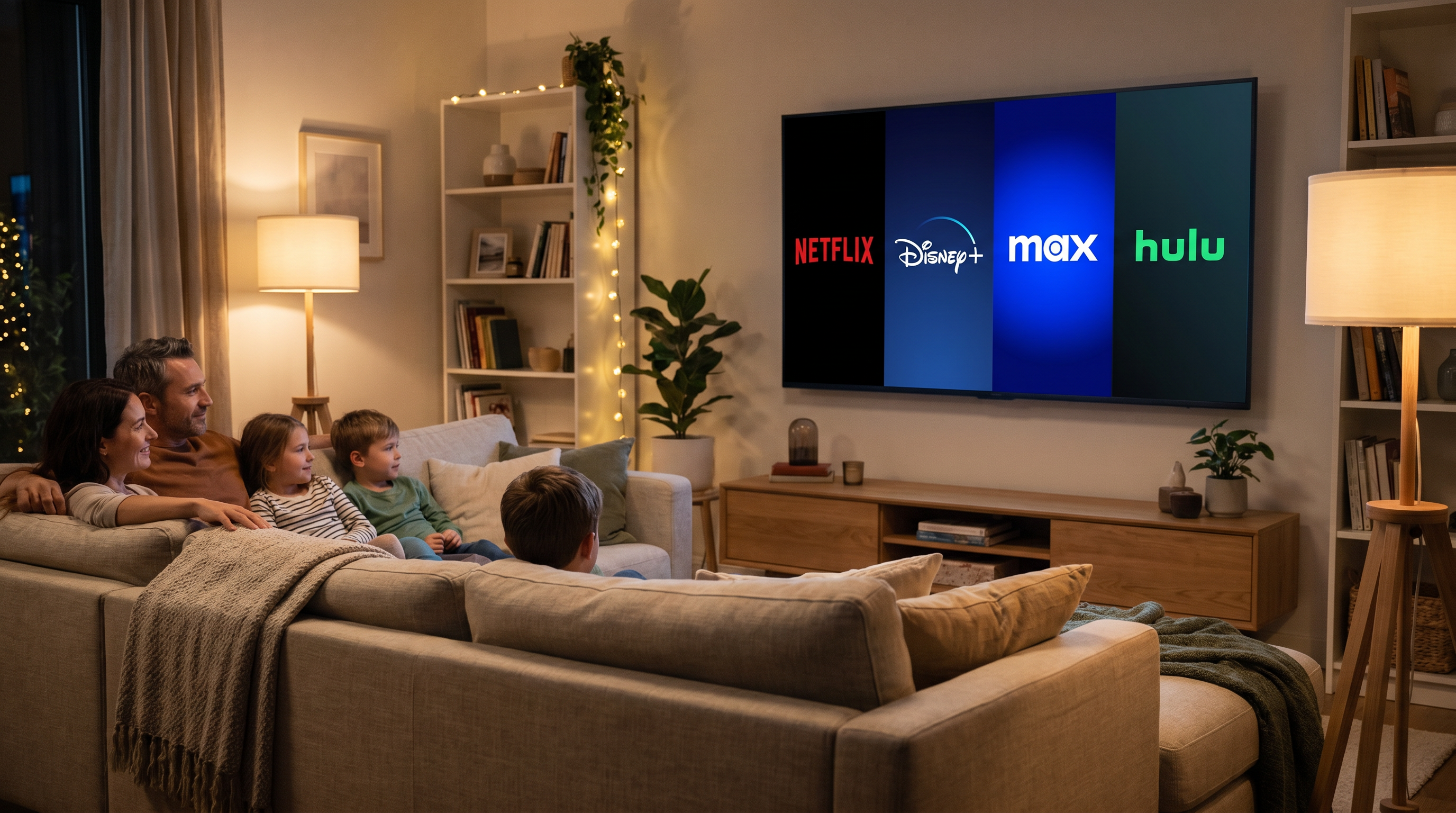
The era of paying $100 a month across eight different streaming apps is finally drawing to a close. In a major win for consumer wallets, the entertainment industry has officially entered the "Super Bundle" era this summer, bringing unprecedented discounts to the living room.[1][3]
Driven by peaking "subscription fatigue," major media conglomerates have stopped fighting each other for individual sign-ups and started teaming up. The result is a wave of unified, heavily discounted packages that allow viewers to access the biggest platforms—Netflix, Disney+, Hulu, Max, Apple TV, and Peacock—on a single, manageable bill.[2][4]
The most aggressive move comes from Comcast, which just expanded its "StreamSaver" marketplace to include eight different bundle combinations. Originally launched as a modest trio of Netflix, Peacock, and Apple TV, the service now incorporates the massive Disney+, Hulu, and Max ecosystems into its digital storefront.[1][5]
For consumers, the math is undeniably compelling. Comcast's ultimate tier packages all five eligible services—Peacock Premium, Netflix Standard, Apple TV, the Disney+/Hulu bundle, and Max Basic—for just $35 a month. Purchased individually, these ad-supported tiers (alongside Apple's ad-free tier) would cost significantly more, meaning the mega-bundle delivers a 45% monthly discount.[4][5]

Even for cord-cutters who do not use a traditional internet provider's marketplace, the standalone studios are offering massive double- and triple-play discounts directly to the public. The highly anticipated Disney+, Hulu, and Max bundle is now available for $20 a month with ads, or $33 a month for the premium ad-free experience.[3][6]
The highly anticipated Disney+, Hulu, and Max bundle is now available for $20 a month with ads, or $33 a month for the premium ad-free experience.
This specific partnership represents a savings of over $20 a month compared to maintaining separate subscriptions for the three platforms. Subscribers simply link their accounts and can even watch select Hulu and Max content directly inside the Disney+ app, drastically reducing the friction of constantly switching interfaces to find a movie.[3]
The industry-wide shift is a direct response to a breaking point in consumer patience. According to early 2026 economic data, more than one in four U.S. adults reported canceling entertainment subscriptions specifically to manage household budgets amid rising costs.[2]
The phenomenon, widely dubbed "subscription fatigue," reached critical mass as monthly cancellation rates hovered above 22% throughout the year. Viewers became exhausted by the mental and financial toll of tracking multiple billing cycles, leading to a surge in "churn and return" behavior—where users subscribe for one month to binge a specific show, then immediately cancel.[2][7]

For streaming executives, this high churn rate transformed from a nuisance into an existential threat. Wall Street, which once rewarded platforms purely for adding new subscribers at any cost, has aggressively pivoted to demanding profitability, stable revenue, and long-term retention.[2]
Bundling solves the retention problem beautifully for the studios while saving the consumer money. Industry data shows that viewers are significantly less likely to cancel a bundled service than a standalone app, simply because the combined library offers enough variety—from live sports to prestige dramas and family animation—to satisfy a whole household year-round.[2][4]
The irony, of course, is that the streaming industry has essentially reinvented the traditional cable package it originally sought to destroy. However, analysts note a crucial difference that makes this a distinct win for the public: today's bundles are entirely on-demand, free of hidden broadcast fees or hardware rentals, and can be canceled with a single click rather than a painful phone call.[5][6]

As the summer of 2026 unfolds, the streaming wars have transitioned from a bitter battle for exclusive content to a race for the most convenient, cost-effective packaging. For viewers who just want to watch their favorite shows without needing a spreadsheet to track their spending, the great re-bundling is a welcome and lucrative relief.[2][3]
How we got here
2024
Early streaming bundles emerge, such as the initial Netflix, Peacock, and Apple TV combination.
2025
Major platforms enact widespread price hikes, pushing individual ad-free subscriptions toward $20 a month and accelerating consumer fatigue.
Early 2026
Cancellation rates spike as over 25% of U.S. adults report dropping entertainment subscriptions to manage household budgets.
June 2026
The 'Super Bundle' era officially launches with expanded StreamSaver options and the standalone Disney/Hulu/Max mega-bundle.
Viewpoints in depth
Consumer Advocates
Super bundles provide much-needed financial relief and simplify the chaotic user experience.
For years, consumers have complained about the fragmentation of the streaming landscape, which forced them to juggle half a dozen apps, passwords, and billing cycles just to watch their favorite shows. Consumer advocates view the new wave of mega-bundles as a massive win for household budgets. By consolidating services, viewers can save upwards of $20 to $70 a month, depending on their internet provider and package choices. Furthermore, the ability to manage everything from a single digital storefront reduces the mental load of 'subscription fatigue' and makes it easier to track exactly where entertainment dollars are going.
Streaming Executives
Bundling is a necessary strategy to reduce subscriber churn and stabilize monthly revenue.
From the boardroom perspective, the era of chasing raw subscriber growth at any cost is over. Streaming platforms are now focused on profitability, and their biggest enemy is 'churn'—the tendency of viewers to subscribe for a single month to binge a hit show, then immediately cancel. Executives have realized that bundled subscribers are significantly 'stickier.' When a household has access to live sports on Peacock, prestige dramas on Max, and family content on Disney+ all under one bill, the perceived value skyrockets, making them far less likely to hit the cancel button during a slow content month.
Media Analysts
The trend represents the inevitable 'cable-fication' of streaming, recreating the old pay-TV model.
Industry analysts point out the deep irony of the current moment: streaming services, which originally disrupted the television industry by unbundling the traditional cable package, are now frantically re-bundling themselves. However, analysts note that this new iteration of the 'cable package' is vastly superior for the consumer. Unlike legacy pay-TV, these streaming bundles are entirely on-demand, free of hidden broadcast fees or hardware rentals, and can be canceled with a single click. It is a market correction that balances the studios' need for predictable revenue with the consumers' demand for flexibility.
What we don't know
- Whether the discounted bundle pricing will remain stable long-term or gradually creep up like traditional cable bills.
- How streaming revenue will be divided behind the scenes among the fiercely competitive parent companies sharing a single bundle.
Key terms
- Subscription Fatigue
- The mental and financial exhaustion consumers experience from managing, tracking, and paying for numerous individual subscription services.
- Churn Rate
- The percentage of subscribers who cancel their streaming service within a given time period, often after finishing a specific show.
- SVOD
- Subscription Video On Demand, the industry term for paid streaming platforms like Netflix, Disney+, or Max.
- Super Bundle
- A single, heavily discounted monthly package that combines multiple competing streaming services from different parent companies.
Frequently asked
What is the cheapest way to get Disney+, Hulu, and Max?
The platforms now offer a combined standalone bundle starting at $20 per month for the ad-supported tier, saving subscribers over $20 compared to buying them separately.
Do these new streaming bundles include ad-free options?
Yes. While the heavily advertised base bundles feature ad-supported tiers, consumers can upgrade to premium, ad-free versions for a higher monthly fee (such as $33/month for the ad-free Disney/Hulu/Max bundle).
What is Comcast's StreamSaver?
StreamSaver is a digital marketplace for Xfinity internet and TV customers that allows them to bundle up to five major streaming services—including Netflix, Apple TV, and Peacock—for a single discounted price of up to $35 a month.
Can I keep my existing accounts if I buy a bundle?
Yes. When you sign up for a bundle, you can link your existing streaming accounts so you do not lose your profiles, watch history, or algorithmic recommendations.
Sources
Source coverage
7 outlets
3 viewpoints surfaced







[1]CNETMedia Analysts
Comcast Expands StreamSaver With Disney Plus, Hulu and HBO Max Bundles
Read on CNET →[2]ForbesStreaming Executives
The New Streaming Reality: Bundling Is Back As Subscription Fatigue Peaks
Read on Forbes →[3]Business InsiderConsumer Advocates
The best streaming deals and bundles in June 2026
Read on Business Insider →[4]Broadband TV NewsStreaming Executives
Comcast expands StreamSaver with Disney+, Hulu and HBO Max
Read on Broadband TV News →[5]The DeskStreaming Executives
Comcast adds HBO Max, Disney Plus to StreamSaver bundle
Read on The Desk →[6]Cord Cutter WeeklyConsumer Advocates
The best streaming service deals and bundles
Read on Cord Cutter Weekly →[7]Note.comMedia Analysts
The Expansion of the Subscription Economy and Its Critical Point
Read on Note.com →

More in entertainment
See all 28 stories →Game Accessibility
Gaming Accessibility Reaches Historic Milestone as Nintendo Joins Summer Game Fest Showcase
7 sources

Digital Publishing
How Vertical-Scrolling Webtoons Rewrote the Rules of the Global Comic Industry
6 sources
Digital Minimalism
Why Gen Z is Trading Smartphones for Flip Phones and Digital Cameras
8 sources

Classic IP Revival
Konami Hands 'Castlevania' Reins to 'Dead Cells' Creators in Major Win for Indie-AAA Partnerships
8 sources

Every angle. Every day.
Get entertainment stories with full source coverage and perspective breakdowns delivered to your inbox.