
How Parametric Insurance is Rewriting the Rules of Disaster Recovery
Instead of waiting months for damage assessments, a new wave of data-driven insurance policies pays out automatically the moment a specific weather threshold is crossed.
By Factlen Editorial Team
- Insurtech Innovators
- Believe data-driven triggers will eventually replace traditional claims adjusting entirely.
- Consumer Protection Advocates
- Warn about the dangers of basis risk and ensure buyers understand it is not full indemnity.
- Traditional Underwriters
- View parametric models as a valuable supplement, but not a replacement for traditional underwriting.
What's not represented
- · Independent claims adjusters whose traditional livelihoods are threatened by automated payouts.
Why this matters
As extreme weather events become more frequent, traditional insurance claims can take months to process, leaving families and businesses stranded. Parametric insurance offers a lifeline of immediate liquidity, fundamentally changing how communities survive and rebuild after a crisis.
Key points
- Parametric insurance pays out automatically based on data triggers rather than subjective damage assessments.
- Payouts are typically wired within 48 to 72 hours, providing crucial immediate liquidity after a disaster.
- The model eliminates the need for claims adjusters, reducing friction and administrative costs.
- Basis risk remains a challenge, as policyholders may suffer damage even if the specific data threshold is not met.
- Financial experts recommend using parametric policies as a supplement to traditional indemnity insurance, not a replacement.
The traditional insurance claim process is universally dreaded. After a disaster strikes, property owners face a grueling marathon of filing paperwork, waiting for adjusters to arrive, and negotiating the final value of their payouts.[7]
But a rapidly growing financial technology is flipping this model on its head. Known as parametric insurance, this approach abandons the subjective damage assessment entirely in favor of objective, indisputable data.[1][6]
Instead of paying for the exact cost of the damage sustained by a property—a traditional model known as indemnity—parametric insurance pays a pre-agreed sum if a specific, measurable event occurs.[5]
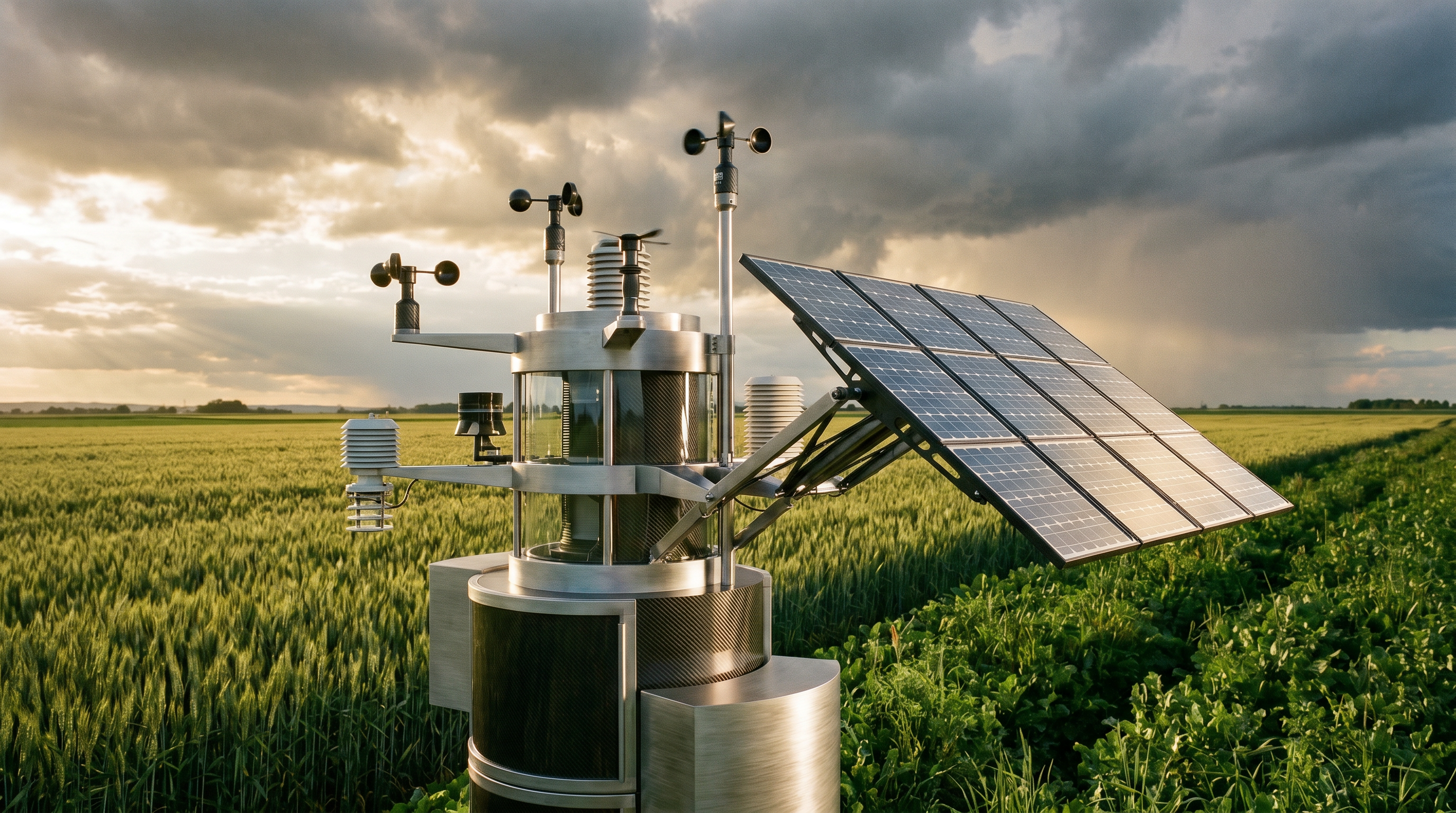
If a hurricane's wind speeds hit 120 miles per hour at a specific GPS coordinate, or if an earthquake registers a 6.5 magnitude on the Richter scale, the policy triggers automatically without any human intervention.[3]

The immediate and most transformative benefit is speed. Because there is no need to send a human adjuster to inspect a collapsed roof or a flooded basement, payouts can be wired directly into a policyholder's bank account within 48 to 72 hours.[4]
This rapid liquidity is crucial for survival. For a small business, a fast $50,000 payout means making payroll, securing a contractor immediately, and buying emergency supplies, rather than waiting six months and potentially going bankrupt in the interim.[3][8]
The core concept isn't entirely new; the World Bank has used sovereign-level parametric catastrophe bonds for decades to inject emergency funds into developing nations immediately after large-scale natural disasters.[2]
What has fundamentally changed in 2026 is the democratization of the technology. Advances in satellite imagery, highly localized IoT (Internet of Things) sensors, and blockchain-based smart contracts have made it possible to offer these policies to individual farmers, small businesses, and retail homeowners.[1][8]

What has fundamentally changed in 2026 is the democratization of the technology.
For example, an agricultural cooperative can now purchase a policy that triggers if soil moisture levels drop below a certain percentage for 30 consecutive days. The data feed, often called an 'oracle,' communicates directly with the digital insurance contract.[6]
Once the threshold is breached, the smart contract executes the payment automatically. There is no haggling over whether the drought caused a 40% or 50% yield loss; the data is the ultimate and final arbiter of the claim.[7]
However, this data-driven certainty introduces a unique vulnerability known in the insurance industry as 'basis risk,' which remains the primary hurdle for widespread consumer adoption.[5]
Basis risk is the gap between the actual loss experienced by the policyholder and the payout triggered by the parameters. If a policy triggers at 100 mph winds, but a storm hits 98 mph and still tears the roof off a building, the policyholder receives absolutely nothing.[5][6]

Conversely, a policyholder might experience zero actual damage from a 105 mph wind because their building was heavily fortified, but they would still receive the full payout simply because the parameter was met.[1]
To mitigate this cliff-edge scenario, modern insurtech companies are designing highly localized, multi-tiered triggers. A policy might pay out 25% at 90 mph, 50% at 100 mph, and 100% at 110 mph, smoothing out the risk curve.[8]
Regulators are also watching this space closely. The National Association of Insurance Commissioners (NAIC) has emphasized that while parametric products offer vital speed, they must be clearly explained so consumers do not mistake them for comprehensive indemnity coverage.[5]
Ultimately, parametric insurance is not designed to replace traditional property and casualty insurance. Instead, financial advisors and risk managers strongly recommend it as a supplementary layer of protection.[3][6]

The traditional indemnity policy covers the exact cost of rebuilding the physical structure over the long term, while the parametric policy provides the immediate, unrestricted cash needed for emergency response, debris removal, and business continuity.[4]
How we got here
1990s
The World Bank and large reinsurers pioneer catastrophe bonds to provide sovereign nations with immediate disaster relief.
2010s
Micro-insurance pilots in developing nations use basic weather data to protect smallholder farmers against drought.
2020s
Advances in IoT sensors and blockchain smart contracts allow for automated, trustless payouts without human adjusters.
2026
Parametric policies become mainstream retail products for small businesses and homeowners facing climate volatility.
Viewpoints in depth
Insurtech Innovators
Believe data-driven triggers will eventually replace traditional claims adjusting entirely.
Technology advocates argue that the friction of human claims adjusters is an outdated relic of the 20th century. By utilizing blockchain smart contracts and hyper-local IoT sensors, they believe the insurance industry can operate with perfect mathematical efficiency. In their view, the speed of capital deployment is the most critical factor in disaster recovery, and any system that delays payouts for months is fundamentally broken.
Consumer Protection Advocates
Warn about the dangers of basis risk and ensure buyers understand it is not full indemnity.
Regulatory bodies and consumer advocates are primarily concerned that retail consumers do not fully understand the all-or-nothing nature of parametric triggers. They warn that a homeowner whose roof is destroyed by 98 mph winds will feel cheated if their policy required 100 mph to trigger. Their focus is on mandating clear disclosures so that buyers understand they are purchasing a financial derivative based on weather data, rather than a guarantee to rebuild their home.
Traditional Underwriters
View parametric models as a valuable supplement, but not a replacement for traditional underwriting.
Legacy insurers maintain that while speed is valuable, true indemnity is necessary for complete recovery. They point out that no sensor can accurately capture the nuanced, localized damage of a complex disaster like a wildfire or a flood. Therefore, they view parametric insurance as an excellent tool for providing emergency liquidity, but insist that traditional underwriting and human adjusters will always be required to assess the true cost of rebuilding.
What we don't know
- How courts will handle disputes if a policyholder claims the designated sensor or oracle malfunctioned during a storm.
- Whether the cost of localized IoT sensors will drop enough to make hyper-local, property-specific triggers affordable for average homeowners.
Key terms
- Indemnity
- A traditional insurance model that pays out based on the exact assessed value of the physical damage incurred.
- Basis Risk
- The risk that the actual damage suffered by a policyholder does not match the payout triggered by the policy's data parameters.
- Oracle
- An independent, trusted data feed that automatically reports real-world events (like wind speed or earthquake magnitude) to a smart contract.
- Smart Contract
- Self-executing code on a blockchain that automatically wires funds when predefined conditions are met, eliminating the need for human approval.
Frequently asked
Can I buy parametric insurance for my home?
Yes, though it is currently more common for businesses and farms. Specialized startups are beginning to offer retail policies for homeowners in high-risk hurricane and earthquake zones.
Does this replace my standard homeowner's insurance?
No. Financial advisors strongly recommend using parametric policies as a supplementary layer for immediate emergency cash, while keeping traditional insurance to cover full rebuilding costs.
Who decides if the weather actually hit the trigger?
The policy relies on an independent, pre-agreed data source, often called an oracle. This is usually a trusted third party like a national meteorological agency or specific satellite data feeds.
Sources
Source coverage
8 outlets
3 viewpoints surfaced








[1]Swiss Re InstituteTraditional Underwriters
The Rise of Parametric Solutions in Climate Adaptation
Read on Swiss Re Institute →[2]World BankTraditional Underwriters
Catastrophe Bonds and Parametric Payouts for Sovereign Nations
Read on World Bank →[3]Financial TimesInsurtech Innovators
How data-triggered insurance is saving small businesses
Read on Financial Times →[4]BloombergInsurtech Innovators
Parametric insurance market projected to hit $29B by 2030
Read on Bloomberg →[5]National Association of Insurance CommissionersConsumer Protection Advocates
Understanding Parametric Insurance: A Regulatory Guide
Read on National Association of Insurance Commissioners →[6]Factlen Editorial TeamTraditional Underwriters
Synthesis by Factlen editorial team
Read on Factlen Editorial Team →[7]The EconomistInsurtech Innovators
The end of the claims adjuster?
Read on The Economist →[8]Insurance JournalInsurtech Innovators
Tech startups disrupt traditional property coverage with data triggers
Read on Insurance Journal →

More in finance
See all 43 stories →Mega-IPOs
The Mechanics of a Mega-IPO: How Retail Investors Can Navigate the SpaceX Debut
6 sources

Rewards Ecosystem
The Mechanics of Credit Card Rewards: How the Points Ecosystem Actually Works
8 sources

Baby Bonds
How the New 'Fostering the Future' Accounts Work for Youth in State Care
7 sources

Foster Youth Policy
How State-Sponsored 'Baby Bonds' Are Rewriting the Financial Future for Foster Youth
4 sources

Every angle. Every day.
Get finance stories with full source coverage and perspective breakdowns delivered to your inbox.