
How the New 'Fostering the Future' Accounts Work for Youth in State Care
A new federal initiative allows state agencies to open tax-advantaged investment accounts for foster children, providing a $1,000 seed deposit to help them build long-term wealth.
By Factlen Editorial Team

- Child Welfare Advocates
- Argue that financial autonomy is the missing piece in foster care transitions and praise the protection of survivor benefits.
- Conservative Policymakers
- Frame the accounts as a tool for individual liberty, asset ownership, and reducing long-term government dependency.
- State Administrators
- Focus on the logistical complexities of tracking accounts and managing sign-ups across jurisdictions.
What's not represented
- · Former foster youth who have aged out of the system
Why this matters
One in five foster youth face homelessness after aging out of the system. By providing a dedicated, compounding financial asset, this policy gives vulnerable young adults a tangible safety net for housing, education, or career training when state support ends.
Key points
- The U.S. Treasury has launched 'Fostering the Future Accounts' to provide investment portfolios for foster youth.
- State child welfare agencies can now act as legal guardians to open the accounts and secure a $1,000 federal seed deposit.
- The funds track a stock index and grow tax-free until the youth turns 18.
- States are encouraged to deposit a foster child's Social Security survivor benefits into the accounts rather than keeping the funds.
- Twenty-three state governors have already pledged to participate in the enrollment process.
Every year, thousands of young adults "age out" of the U.S. foster care system. Without a family safety net, the transition to independence is notoriously brutal—one in five face homelessness, and only half secure steady employment by age 24.[2]
Now, a new federal initiative aims to change that trajectory by giving foster youth a financial head start. On June 11, First Lady Melania Trump and Treasury Secretary Scott Bessent announced the launch of "Fostering the Future Accounts," a program designed to provide tax-advantaged investment portfolios to children in state care.[2][4]
The initiative is a specialized spinoff of the "Trump Accounts"—the federal investment vehicles created by the One Big Beautiful Bill Act. Under the broader program, the U.S. Treasury deposits a $1,000 seed investment for any child born between January 2025 and December 2028, provided a parent opens the account.[1][3]
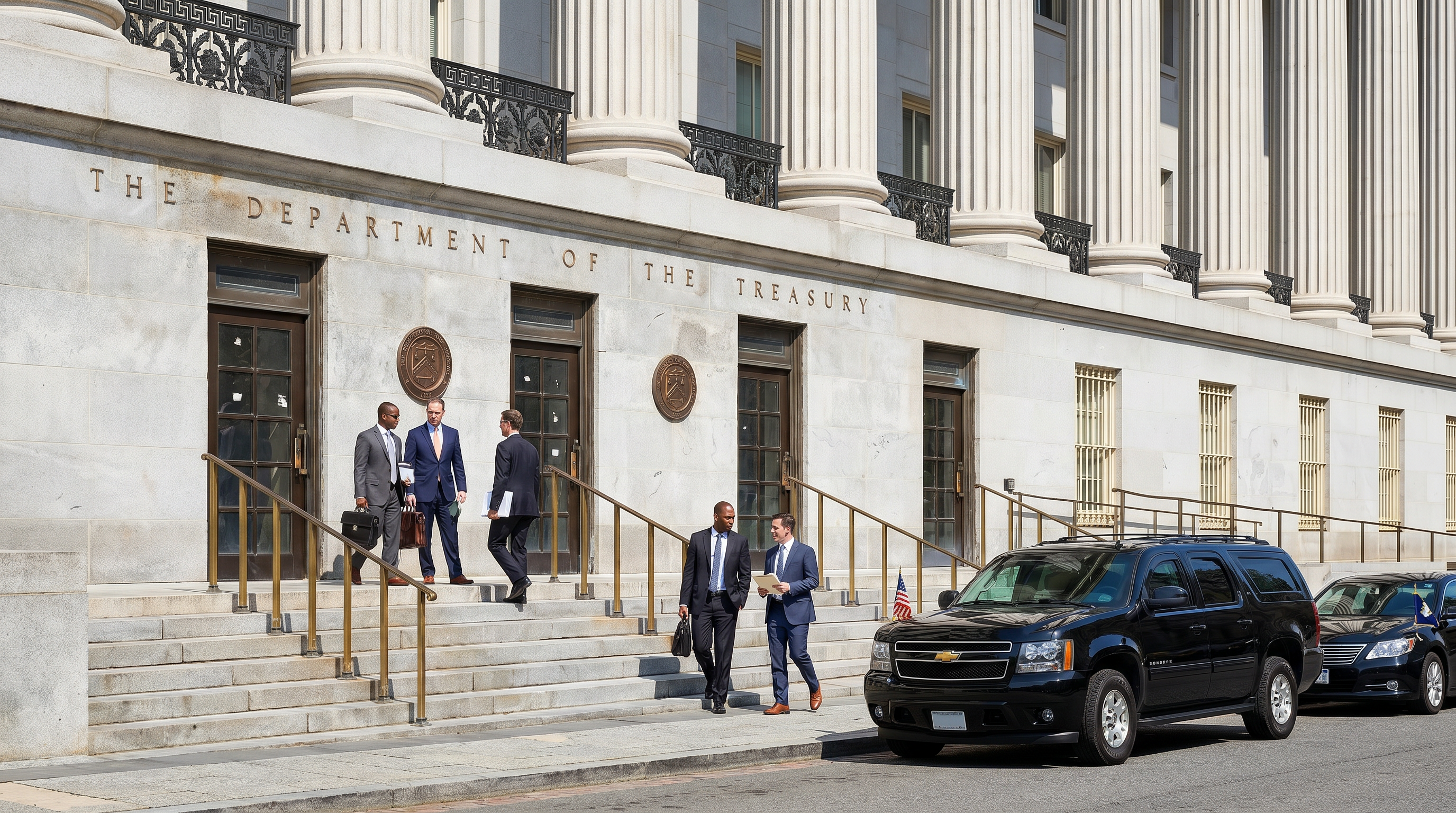
For the roughly 330,000 children currently in the U.S. foster system, that parental requirement posed a massive bureaucratic hurdle. The new Treasury guidance solves this by formally allowing state child welfare agencies to act as legal guardians for the sole purpose of opening and managing these accounts.[2][4]

Once the $1,000 is deposited, the funds track a stock index and grow tax-free. According to estimates from the White House Council of Economic Advisers, a single $1,000 deposit for a baby born in 2026 could grow to $5,800 by age 18, and over $18,000 by age 28, assuming historical market returns and no additional contributions.[2][5]
When the child turns 18, they gain full access to the funds. At that point, the portfolio is treated similarly to an Individual Retirement Account (IRA), with withdrawals taxed as ordinary income. The goal is to provide a crucial financial cushion for rent, education, or career development at the exact moment state support typically ends.[1][3]

When the child turns 18, they gain full access to the funds.
The program relies heavily on state-level execution. At the launch event, the First Lady announced that 23 governors had already pledged to participate and begin the enrollment process.[2][5]
Georgia became one of the first states to officially commit, announcing that all eligible foster children in the state would be automatically enrolled. Meanwhile, Oklahoma pledged to deposit an additional $250 into every eligible child's account, demonstrating how states can stack local funds on top of the federal seed money.[3][6]
Perhaps the most consequential policy shift involves Social Security survivor benefits. Historically, many state child welfare agencies have quietly intercepted the Social Security checks of foster children whose parents have died, using the funds to reimburse the state for the cost of their care.[4][7]
The new Treasury guidelines provide explicit flexibility for states to deposit those federal survivor benefits directly into the child's Fostering the Future Account instead. These deposits count toward an annual contribution limit of $5,000, allowing a child's rightful benefits to build their personal wealth rather than subsidizing state budgets.[4][7]

Economists note that the mechanics of the program closely mirror "baby bonds"—a concept long championed by progressive wealth-inequality researchers. While states like California and Connecticut have experimented with targeted baby bonds, this initiative represents the first time the concept has been deployed at a federal scale, albeit under a conservative banner emphasizing individual liberty and asset ownership.[7]
Despite the bipartisan appeal of wealth-building, logistical questions remain. MarketWatch notes that while states are responsible for the initial sign-up process, tracking these accounts as children move between foster homes, return to biological families, or cross state lines will require robust data management.[1]
Child welfare advocates have cautiously praised the initiative, noting that financial autonomy is the missing piece in most foster care transitions. If successfully implemented, the program shifts the government's role from merely funding a child's temporary care to actively investing in their permanent independence.[3][7]
How we got here
Summer 2025
The One Big Beautiful Bill Act is signed into law, creating the broader 'Trump Accounts' program for newborns.
June 11, 2026
First Lady Melania Trump and Treasury Secretary Scott Bessent announce the 'Fostering the Future' spinoff specifically for foster youth.
July 4, 2026
The accounts officially open for contributions, allowing state child welfare agencies to begin the enrollment process.
Viewpoints in depth
Child Welfare Advocates
Argue that financial autonomy is the missing piece in foster care transitions and praise the protection of survivor benefits.
Advocates have long criticized the practice of state agencies intercepting Social Security survivor benefits to pay for a child's foster care. They view the new Treasury guidelines as a massive victory, allowing those funds to be routed into a protected trust. Furthermore, they emphasize that the $1,000 seed money, while modest, provides a psychological boost and a tangible safety net for youth who otherwise age out of the system with zero assets.
Conservative Policymakers
Frame the accounts as a tool for individual liberty, asset ownership, and reducing long-term government dependency.
For the administration and the 23 participating Republican governors, the initiative is rooted in the philosophy of the 'ownership society.' By providing capital rather than just social services, they argue the government is empowering foster youth to make independent choices about their education and housing. The focus is on utilizing private market growth—through stock index tracking—to build wealth, rather than relying on perpetual welfare programs.
State Administrators
Focus on the logistical complexities of tracking accounts and managing sign-ups across jurisdictions.
While supportive of the goal, state-level bureaucrats are bracing for an administrative heavy lift. Child welfare agencies must now act as financial guardians, filling out Form 4547 to establish the accounts. Administrators point out the difficulty of tracking these investments as children move between foster homes, get adopted, or cross state lines, noting that robust data management systems will be required to ensure no child loses access to their funds.
What we don't know
- How seamlessly states will be able to track accounts for children who move across state lines or return to their biological families.
- Whether private employers and philanthropic organizations will step up to make additional contributions to the accounts.
Key terms
- Trump Accounts
- Tax-advantaged investment accounts created by the One Big Beautiful Bill Act, providing a $1,000 federal seed deposit for eligible newborns.
- Baby Bonds
- Government-funded trust accounts set up for children at birth, designed to close wealth gaps and provide capital for adulthood.
- Aging Out
- The process where a youth in the foster care system reaches the age of majority and transitions to independence without state support.
- Survivor Benefits
- Social Security payments made to the children of a deceased parent who had worked and paid into the system.
Frequently asked
Who is eligible for a Fostering the Future Account?
Foster children who are U.S. citizens born between January 1, 2025, and December 31, 2028, are eligible for the federal seed money.
How does the money grow over time?
The funds are invested to track a broad stock index, allowing them to grow tax-free until the child reaches adulthood.
What happens when the child turns 18?
The youth gains full access to the account. It is treated similarly to an IRA, meaning withdrawals are taxed as ordinary income.
Can states still take a foster child's Social Security benefits?
While states previously intercepted these benefits to cover care costs, the new initiative allows states to deposit up to $5,000 a year of survivor benefits directly into the child's investment account.
Sources
Source coverage
7 outlets
3 viewpoints surfaced







[1]MarketWatchState Administrators
Foster children are getting their own version of ‘Trump accounts,’ but major questions remain
Read on MarketWatch →[2]Associated Press
First lady Melania Trump announces investment accounts for foster children
Read on Associated Press →[3]MorningstarChild Welfare Advocates
Foster children are getting their own version of 'Trump accounts'
Read on Morningstar →[4]U.S. Department of the TreasuryConservative Policymakers
Treasury and First Lady Melania Trump Announce Fostering the Future Accounts
Read on U.S. Department of the Treasury →[5]The White HouseConservative Policymakers
First Lady Melania Trump Launches Fostering the Future Accounts
Read on The White House →[6]State of GeorgiaConservative Policymakers
Georgia to Enroll Eligible Foster Children in Trump Accounts
Read on State of Georgia →[7]Factlen Editorial TeamChild Welfare Advocates
Synthesis by Factlen editorial team
Read on Factlen Editorial Team →

More in finance
See all 41 stories →Rewards Ecosystem
The Mechanics of Credit Card Rewards: How the Points Ecosystem Actually Works
8 sources

Foster Youth Policy
How State-Sponsored 'Baby Bonds' Are Rewriting the Financial Future for Foster Youth
4 sources

Foster Youth Finance
How the New 'Fostering the Future' Accounts Aim to Build Wealth for Foster Youth
6 sources
Withdrawal Strategies
The Evidence for Dynamic Retirement Spending: Why the 4% Rule Is Evolving
7 sources

Every angle. Every day.
Get finance stories with full source coverage and perspective breakdowns delivered to your inbox.