
How the New 'Fostering the Future' Accounts Aim to Build Wealth for Foster Youth
A new federal initiative will provide $1,000 seed investments to eligible foster children, utilizing state agencies to bypass traditional barriers to wealth-building.
By Factlen Editorial Team
- Federal Policymakers
- Argues that providing tangible financial assets is the most effective way to ensure long-term economic independence.
- Child Welfare Advocates
- Emphasizes that while the funds are crucial, the bureaucratic process must be flawless so vulnerable youth don't lose access.
- Financial Industry Leaders
- Focuses on the mathematical benefits of compound growth and the necessity of early market exposure.
What's not represented
- · Former foster youth who have aged out of the system
- · State-level caseworkers tasked with managing the administrative load
Why this matters
For the 330,000 children in the U.S. foster care system, aging out often means facing immediate financial hardship. This program leverages compound interest to provide them with a tangible financial asset upon reaching adulthood, fundamentally changing how the state supports vulnerable youth.
Key points
- The Treasury Department will provide a $1,000 seed deposit to eligible foster children born between 2025 and 2028.
- State child welfare agencies have been granted the authority to act as guardians to open the accounts.
- The accounts can accept up to $5,000 annually from states, private organizations, and employers.
- Funds grow tax-free and are treated similarly to an IRA when accessed at age 18.
- The initiative aims to combat the high rates of homelessness and unemployment among youth aging out of foster care.
For the roughly 330,000 children currently navigating the United States foster care system, turning 18 often triggers a daunting and immediate financial cliff. Without the traditional safety net of family wealth, parental co-signers, or a stable home to return to, young adults aging out of state care face steep odds in securing housing, funding higher education, or building long-term economic stability. The statistics surrounding this transition are historically grim: according to federal data, one in five foster youth experiences homelessness shortly after aging out of the system, and only half manage to secure gainful employment by the time they reach age 24. For decades, the primary response from state and federal governments has been to offer temporary services and protective measures, rather than tangible financial assets that can appreciate over time.[2][3]
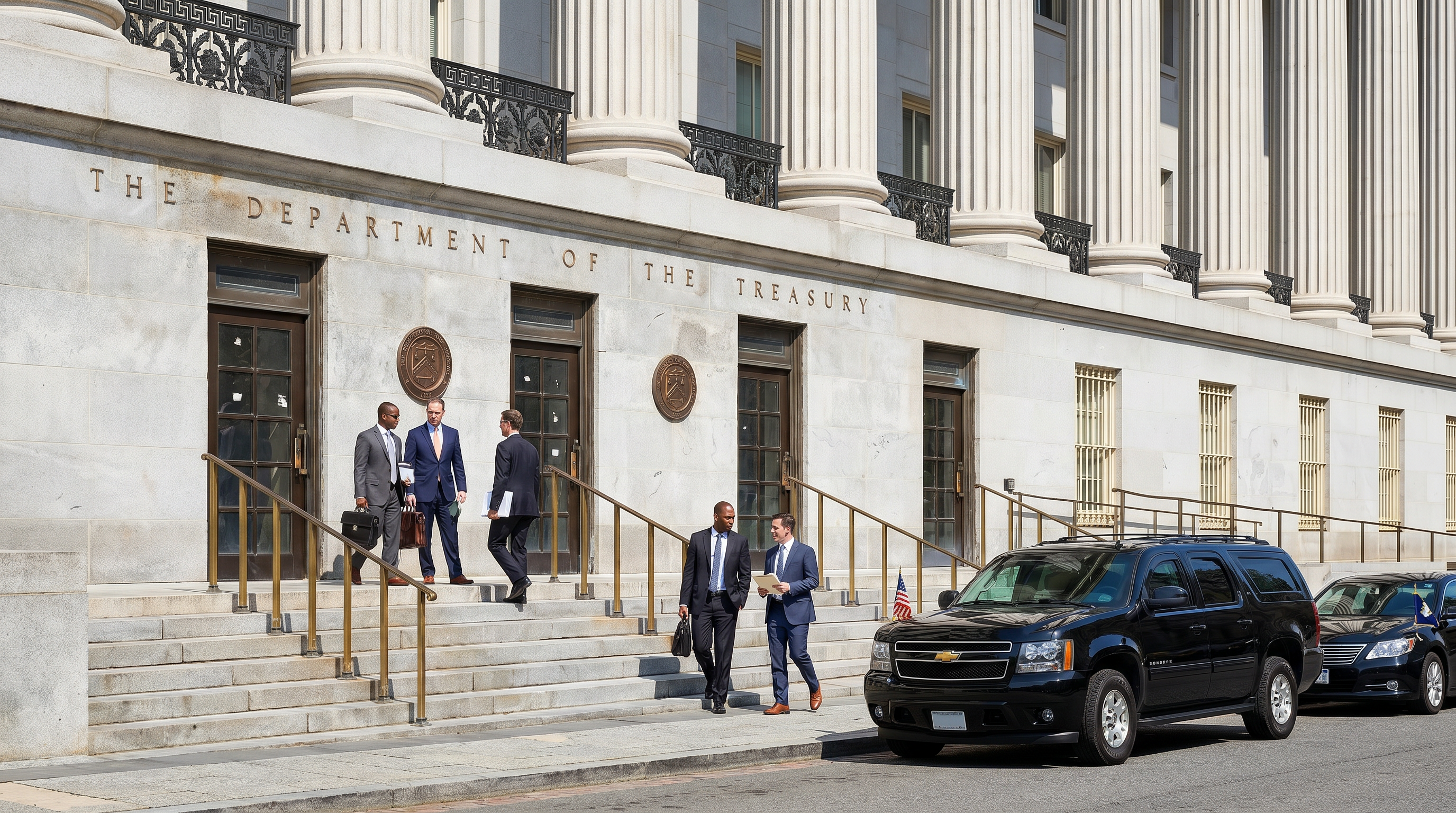
A new federal initiative aims to fundamentally alter that trajectory by replacing the standard model of temporary assistance with a permanent, wealth-building financial asset. On Thursday, First Lady Melania Trump and Treasury Secretary Scott Bessent officially unveiled "Fostering the Future Accounts," a dedicated savings and investment vehicle specifically designed for youth residing in state care. The program is structured to ensure that foster children are not left behind in the broader push to democratize asset ownership, providing them with a concrete financial runway that they can access upon reaching the age of majority. By shifting the focus from mere survival to long-term economic stewardship, the initiative represents a significant philosophical pivot in how the federal government approaches child welfare.[2][3][6]
The Fostering the Future program serves as a specialized expansion of the newly introduced "Trump Accounts"—a national "baby bond" initiative created by recent federal legislation to build long-term financial security for American children. Under the core framework of this program, the United States Treasury Department provides a one-time, $1,000 seed deposit for eligible children who are U.S. citizens born between January 2025 and December 2028. The funds are placed into a tax-advantaged investment account, typically an index fund, where they can grow uninterrupted over the course of the child's minority. The overarching goal is to leverage the mathematical power of compound interest, ensuring that children enter adulthood with a baseline of private ownership and financial autonomy.[1][3]

However, the standard architecture of these investment accounts presented an immediate logistical hurdle for children in the foster system. Typically, these tax-advantaged accounts must be established and overseen by a parent or legal guardian, creating a nearly insurmountable barrier for children who have been separated from their families or whose parental rights have been terminated. To bridge this critical gap, the Treasury Department, working in tandem with the Department of Health and Human Services and the Office of Management and Budget, issued historic federal guidance. This new directive explicitly allows state, territorial, and tribal child welfare agencies to act as eligible guardians for the sole purpose of opening and maintaining these accounts on behalf of the children in their care.[1][3]
This administrative adjustment is the linchpin of the Fostering the Future initiative, ensuring that the children who arguably stand to benefit the most from early financial intervention are seamlessly woven into the fabric of the program from its inception. By empowering state agencies to handle the initial paperwork and account creation, the federal government is attempting to bypass the bureaucratic friction that often prevents vulnerable populations from accessing financial aid. Treasury Secretary Scott Bessent emphasized that it is not enough for the program to function smoothly for children in stable homes; the system must be engineered to ensure that foster youth encounter absolutely no barriers when their accounts are established.[3][6]
The financial mechanics of the program rely heavily on the principle of compound growth over an extended time horizon. By establishing an investment account early in a child's life, the initial seed capital has nearly two decades to appreciate before it can be withdrawn. The White House Council of Economic Advisers has modeled the potential outcomes, estimating that a single $1,000 deposit placed in a standard index fund could grow to approximately $5,800 by the time the child turns 18. If the funds are left untouched until age 28, that balance could exceed $18,000, assuming historical market growth rates continue. For a young adult transitioning out of foster care, a $5,800 asset represents a transformative safety net—enough to secure an apartment lease, purchase a reliable vehicle for commuting, or cover initial community college tuition.[3][5]

The financial mechanics of the program rely heavily on the principle of compound growth over an extended time horizon.
While the federal government provides the initial $1,000 seed deposit, the accounts are designed to accept outside capital to accelerate wealth accumulation. The program framework allows states, private non-profit organizations, employers, and extended family members to contribute additional funds, up to a general annual limit of $5,000 per account. This flexibility transforms the accounts into a centralized financial hub for the child, capable of receiving various streams of support throughout their time in the foster system. Furthermore, state agencies are being actively encouraged by the Treasury Department to direct any existing survivor benefits or Supplemental Security Income (SSI) that the child may be entitled to directly into these tax-advantaged accounts, protecting the funds and allowing them to grow tax-free.[1][3]
State-level participation is critical to the program's success, as the burden of enrollment and ongoing administration falls largely on local child welfare departments. At the time of the announcement, 23 governors had already committed to participating in the rollout, pledging to allow their state agencies to begin the complex process of identifying eligible children and establishing their accounts. Several states are already moving to augment the federal baseline with their own localized contributions. Oklahoma, for instance, has announced that it will provide an additional $250 deposit for every eligible child residing in the state, effectively boosting the initial seed capital by twenty-five percent and demonstrating how state governments can leverage the federal framework.[1][2]
In Arkansas, Governor Sarah Huckabee Sanders announced that all eligible foster youth within the state's borders will be automatically enrolled in the program through the Division of Children and Family Services. State officials highlighted that establishing a savings account is a vital step in positioning children to thrive as adults, acknowledging that the process is historically fraught for youth entering state care. By automating the enrollment process at the state level, Arkansas aims to close the wealth gap and ensure that every vulnerable child has a dedicated financial asset waiting for them upon graduation from the system. This proactive approach is expected to serve as a blueprint for other participating states as the program scales nationally.[4]

The financial services industry has broadly welcomed the initiative, recognizing the long-term economic benefits of expanding market access to historically marginalized demographics. Groups like the Investment Company Institute (ICI) have publicly applauded the expansion, noting that children in foster care deserve the exact same opportunity to benefit from compound growth as their peers in traditional households. Industry leaders have emphasized that providing the capital is only the first step; the accounts must be paired with robust, mandatory financial literacy training. Teaching these young adults how to manage their portfolios, understand tax implications, and budget their withdrawals is viewed as a critical component of ensuring the funds are utilized effectively to build a secure financial future.[5][6]
Despite the widespread bipartisan support and industry backing, significant logistical and administrative questions remain regarding the practical execution of the program. Market analysts and child welfare advocates have pointed out that tracking a child's financial assets as they move between different foster homes, transition across state lines, or experience changes in their legal guardianship status will require a highly sophisticated, interoperable database. It remains unclear exactly how state agencies will coordinate with the federal Treasury to ensure that an account opened in one jurisdiction seamlessly follows a child who is relocated to another, preventing the funds from becoming lost or abandoned in bureaucratic limbo.[1][6]
Furthermore, the ultimate success of the Fostering the Future initiative will depend heavily on the withdrawal process when the beneficiaries finally reach the age of majority. Under the current rules, children gain access to the funds when they turn 18, at which point the accounts are treated similarly to an Individual Retirement Account (IRA), with withdrawals taxed as ordinary income. Advocates stress that state agencies must establish clear, frictionless protocols to hand over control of these assets to the young adults. If a youth aging out of the system is forced to navigate a labyrinth of paperwork or track down former caseworkers to access their own money, the empowering nature of the program could be severely undermined.[1][6]

If these administrative hurdles can be successfully navigated, the Fostering the Future accounts represent a profound evolution in the American social safety net. By moving beyond the traditional paradigm of offering temporary services and protective custody, the government is acknowledging that true economic independence requires the ownership of capital. For the thousands of young adults who exit the foster care system each year, this initiative offers a tangible mechanism to replace the anxiety of an uncertain future with the security of a growing financial asset, fundamentally altering their trajectory as they enter adulthood.[2][3][6]
How we got here
2025
The broader 'Trump Accounts' baby bond program is established via federal legislation to provide seed investments for American children.
June 11, 2026
First Lady Melania Trump and Treasury Secretary Scott Bessent announce the 'Fostering the Future' spinoff specifically for foster youth.
July 4, 2026
The accounts officially open for enrollment and initial contributions across participating states.
January 2043
The first cohort of eligible children born in 2025 will turn 18 and gain legal access to their accumulated funds.
Viewpoints in depth
Federal Policymakers
Argues that providing tangible financial assets is the most effective way to ensure long-term economic independence.
Officials at the Treasury and participating state governors emphasize that true economic freedom requires capital ownership. By providing a seed deposit and leveraging compound growth, they argue the government can break cycles of intergenerational poverty and reduce the long-term reliance on state welfare programs. They view this policy as a shift from merely managing poverty to actively building wealth for the nation's most vulnerable demographic.
Child Welfare Advocates
Emphasizes that while the funds are crucial, the bureaucratic process must be flawless so vulnerable youth don't lose access.
Advocacy groups like the National Foster Parent Association strongly support the initiative but caution that execution is everything. They point out that foster youth frequently move between homes and jurisdictions, making it easy for accounts to become lost in administrative red tape. They stress the need for seamless tracking and mandatory financial literacy training before the youth turn 18, ensuring they are prepared to manage the sudden influx of capital.
Financial Industry Leaders
Focuses on the mathematical benefits of compound growth and the necessity of early market exposure.
Organizations like the Investment Company Institute view the program as a vital tool for democratizing investment. They highlight that giving marginalized youth early exposure to index funds not only builds wealth but also fosters a broader understanding of the financial system, which pays dividends throughout their adult lives. They advocate for pairing the financial deposits with robust educational resources to maximize the long-term impact.
What we don't know
- How the accounts will be seamlessly tracked if a child moves across state lines or changes guardianship.
- The specific mechanisms states will use to deliver mandatory financial literacy training before the youth turn 18.
- Whether future administrations will expand the eligibility window beyond children born between 2025 and 2028.
Key terms
- Fostering the Future Accounts
- A specialized tax-advantaged savings and investment vehicle designed specifically for youth in the foster care system.
- Compound Interest
- The process where the value of an investment grows because the earnings on the principal amount also earn interest over time.
- Baby Bonds
- A public policy concept where the government provides a publicly funded trust account for children, designed to close wealth gaps.
- Age of Majority
- The legally defined age (usually 18) at which a person assumes control over their own legal and financial affairs, often triggering an exit from the foster system.
Frequently asked
Who is eligible for these new accounts?
Foster children who are U.S. citizens born between January 1, 2025, and December 31, 2028.
Who manages the account while the child is a minor?
State child welfare agencies are authorized to act as the legal guardian to open and oversee the account until the child turns 18.
Can other people contribute to the account?
Yes, states, private organizations, employers, and family members can contribute up to a combined $5,000 annually.
How are the withdrawals taxed?
When accessed at age 18, the accounts are treated similarly to an Individual Retirement Account (IRA), with withdrawals taxed as ordinary income.
Sources
Source coverage
6 outlets
3 viewpoints surfaced





[1]MarketWatchChild Welfare Advocates
Foster children are getting their own version of 'Trump accounts,' but major questions remain
Read on MarketWatch →[2]The Washington TimesChild Welfare Advocates
First lady Melania Trump announced new savings avenues for youth in foster care: Fostering the Future Accounts
Read on The Washington Times →[3]U.S. Department of the TreasuryFederal Policymakers
Remarks by Secretary Scott Bessent on Fostering the Future Accounts
Read on U.S. Department of the Treasury →[4]Arkansas Governor's OfficeFederal Policymakers
Sanders Announces All Arkansas Foster Youth to Receive Trump Accounts
Read on Arkansas Governor's Office →[5]Investment Company InstituteFinancial Industry Leaders
ICI Applauds First Lady Melania Trump for Her Work To Ensure Foster Children Receive Access to Trump Accounts
Read on Investment Company Institute →[6]Factlen Editorial Team
Synthesis by Factlen editorial team
Read on Factlen Editorial Team →

More in finance
See all 41 stories →Rewards Ecosystem
The Mechanics of Credit Card Rewards: How the Points Ecosystem Actually Works
8 sources

Baby Bonds
How the New 'Fostering the Future' Accounts Work for Youth in State Care
7 sources

Foster Youth Policy
How State-Sponsored 'Baby Bonds' Are Rewriting the Financial Future for Foster Youth
4 sources

Withdrawal Strategies
The Evidence for Dynamic Retirement Spending: Why the 4% Rule Is Evolving
7 sources

Every angle. Every day.
Get finance stories with full source coverage and perspective breakdowns delivered to your inbox.