
SpaceX Prices Record $75 Billion IPO, Reaching $1.77 Trillion Valuation
Elon Musk's aerospace and technology conglomerate has shattered records with the largest initial public offering in history, driven by massive retail demand and the profitability of its Starlink network.
By Factlen Editorial Team
- Retail & Growth Investors
- View SpaceX as a multi-industry monopoly spanning space, telecom, and AI, justifying its historic premium.
- Fundamental Analysts
- Warn that the company's 94x revenue multiple and heavy AI cash burn create a severe disconnect from underlying financial realities.
- Corporate Governance Advocates
- Express concern over Elon Musk's 82% voting control and the lack of traditional IPO price discovery protecting index funds.
What's not represented
- · Competitor launch providers
- · Terrestrial telecom companies
Why this matters
SpaceX's public debut fundamentally reshapes the global equity markets, introducing a $1.77 trillion heavyweight that blends aerospace, global telecommunications, and artificial intelligence. For retail investors and passive index funds alike, it represents an unprecedented bet on the commercialization of space and the physical infrastructure of the AI boom.
Key points
- SpaceX raised $75 billion at a $1.77 trillion valuation, making it the largest IPO in history.
- The company bypassed the traditional roadshow, offering shares at a fixed price of $135.
- Starlink is the company's financial engine, generating $11.4 billion in revenue with a 63% margin.
- The launch division and xAI segment are currently operating at a loss due to massive capital expenditures.
- Elon Musk retains 82.4% of the shareholder voting power through super-voting shares.
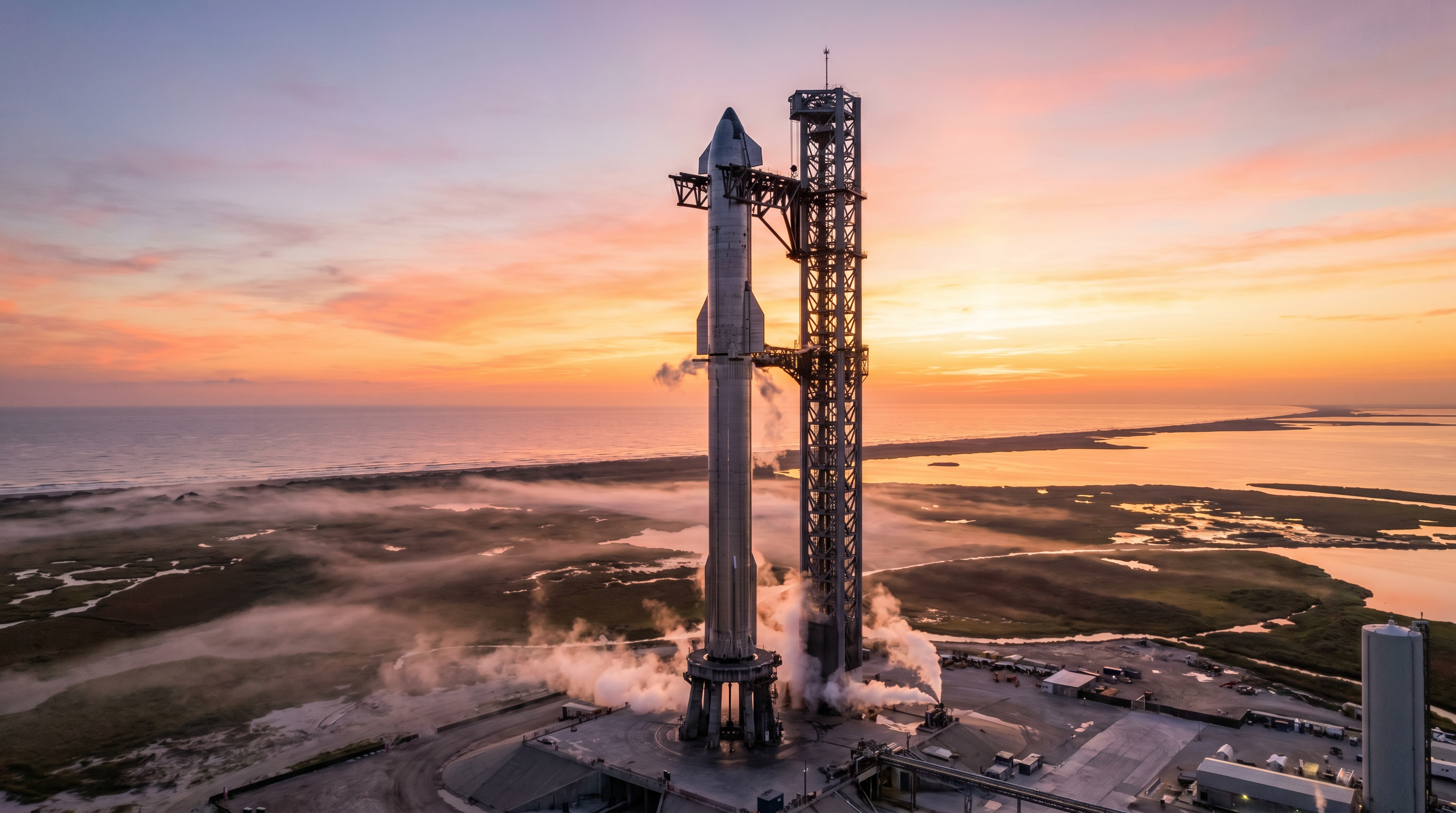
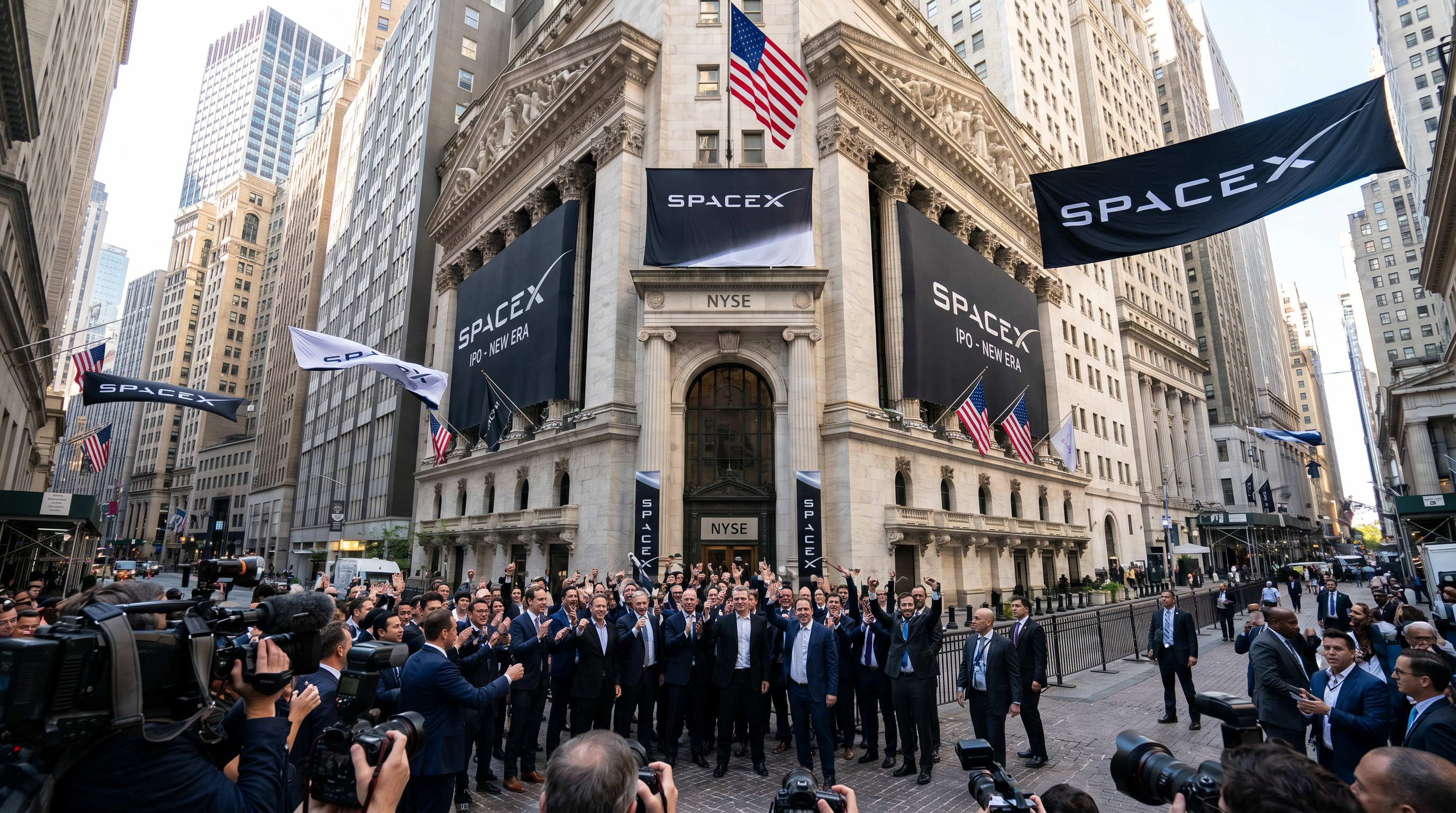
On June 11, 2026, SpaceX priced the largest initial public offering in history, raising $75 billion and securing a staggering $1.77 trillion valuation.[1][2]
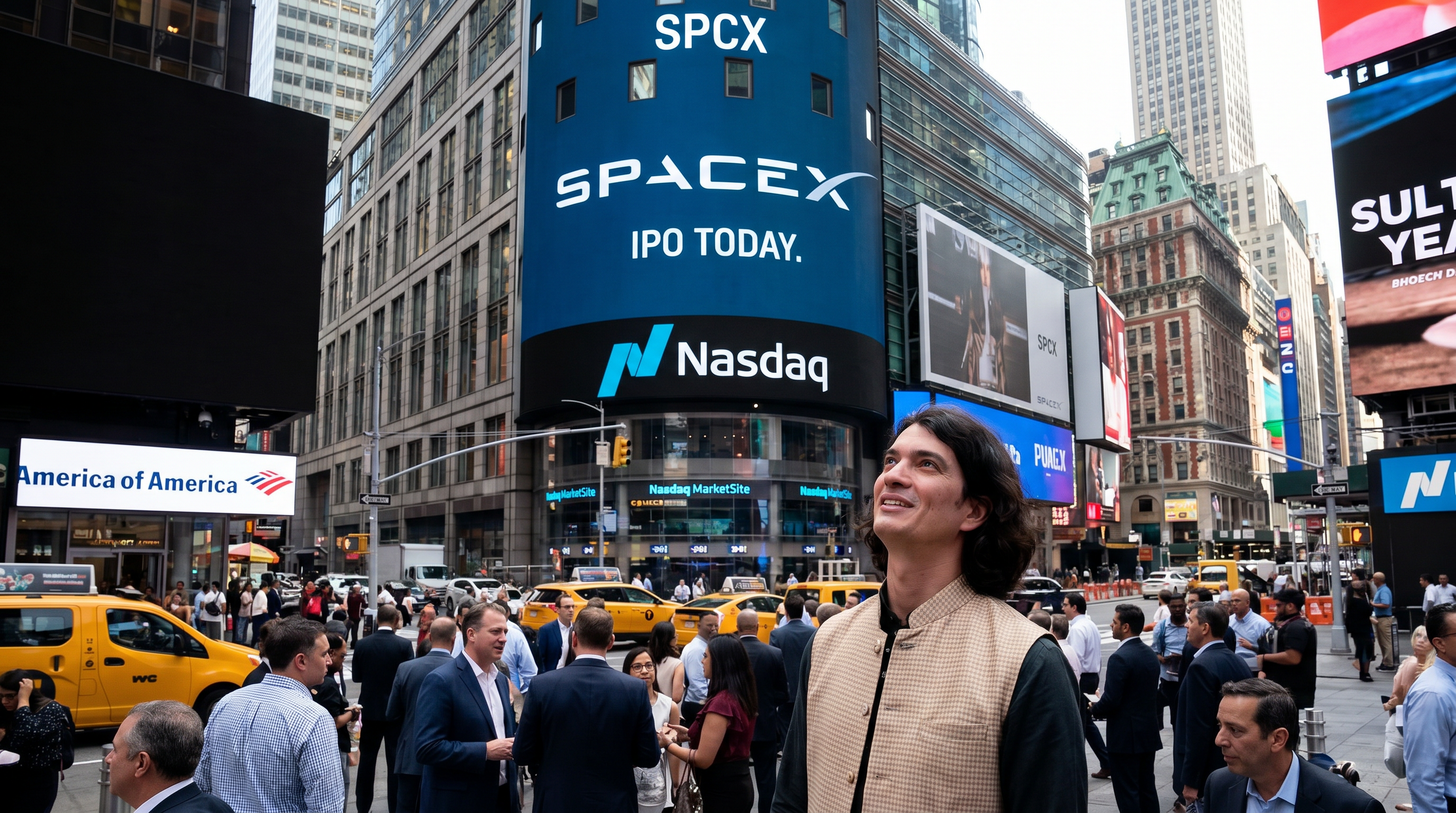
Bypassing the traditional price-discovery roadshow, the aerospace and technology conglomerate offered 555.5 million shares at a fixed price of $135. The debut shattered the previous record held by Saudi Aramco, which raised $29.4 billion during its 2019 listing.[6][10]
Market demand for the offering was overwhelming. Retail investors alone placed over $100 billion in orders, while total institutional demand topped $250 billion, leaving the massive offering roughly three to four times oversubscribed before shares even hit the open market.[3][4]

But beneath the headline numbers lies a complex financial architecture. SpaceX is no longer just a rocket manufacturer; it has evolved into a hybrid conglomerate comprising a satellite internet monopoly, a heavy-industry launch provider, and an artificial intelligence laboratory.[5][8]
The financial engine driving this $1.77 trillion valuation is Starlink. In 2025, the satellite internet constellation generated $11.4 billion—accounting for roughly 61% of SpaceX’s total $18.7 billion in revenue.[8][10]
Operating with a software-as-a-service financial profile, Starlink boasts a formidable 63% operating margin. With active users crossing 12 million in early 2026, this recurring subscription revenue effectively subsidizes the company's more speculative, capital-intensive ventures.[8]
Conversely, the division that made SpaceX famous—its launch business—is currently operating at a loss. Despite dominating the domestic payload market with its workhorse Falcon 9 rockets, the launch segment posted a $657 million operating loss in 2025.[10]

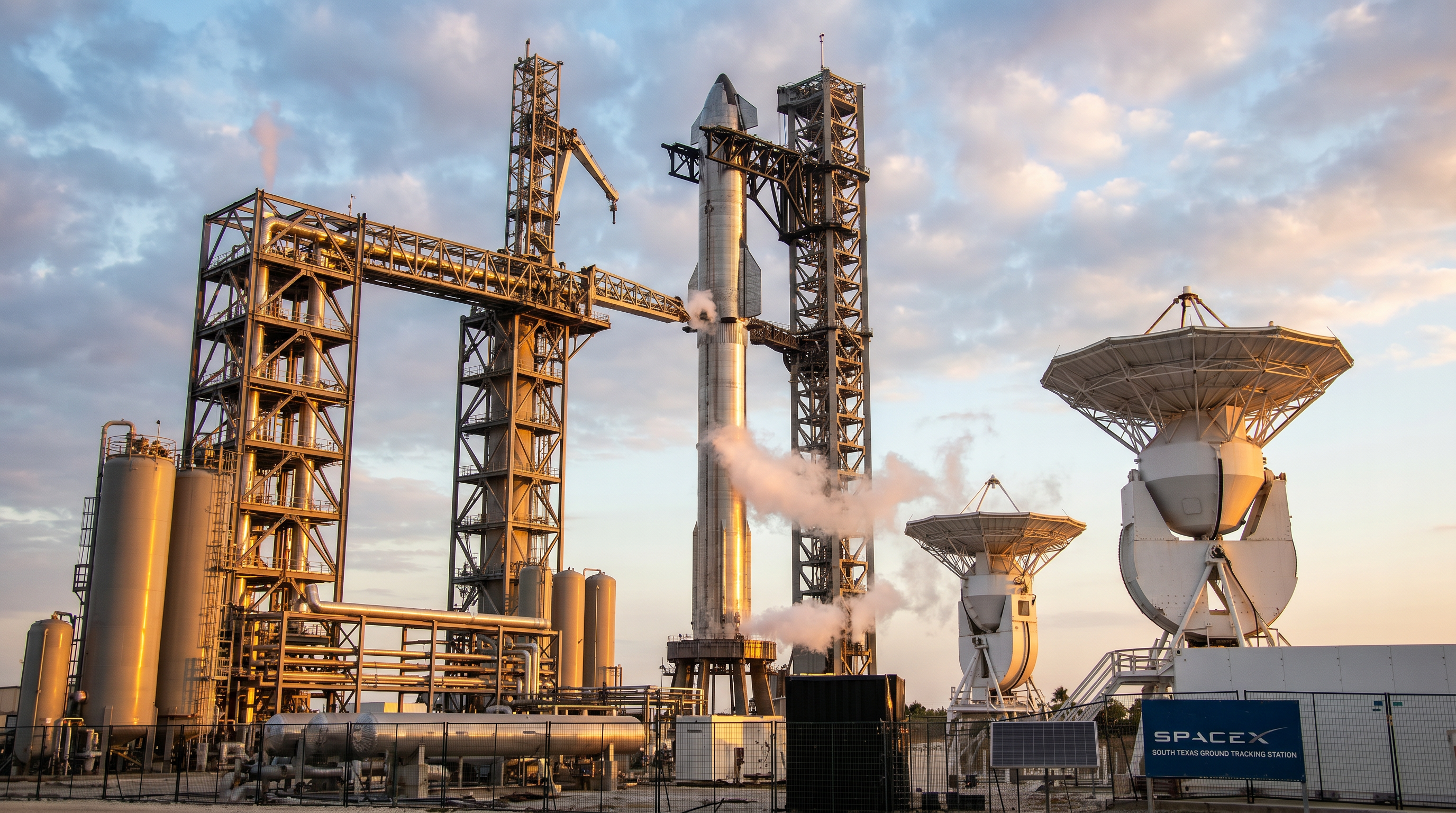
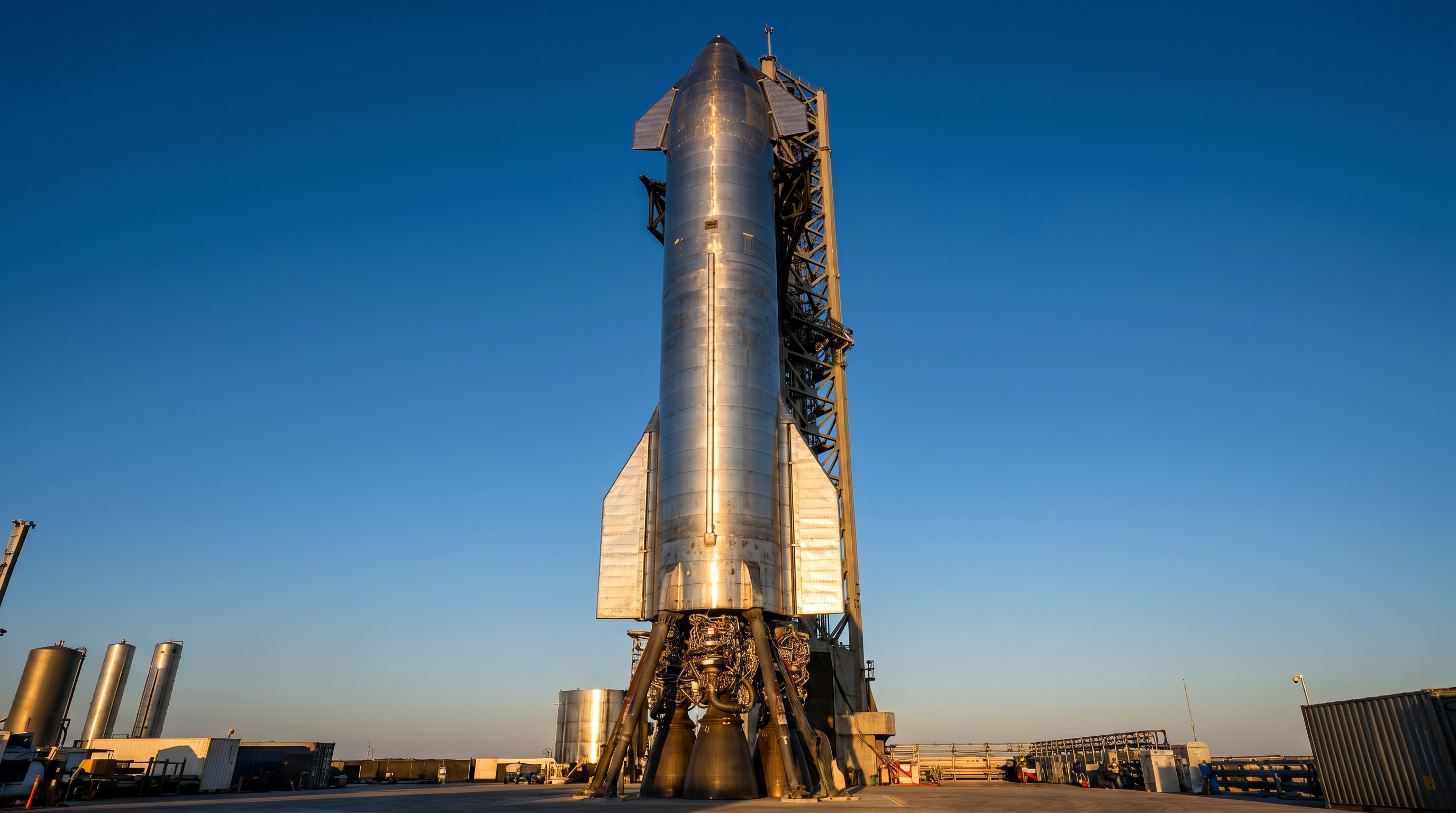
This deficit is largely driven by the staggering research and development costs associated with Starship, the next-generation mega-rocket designed to carry humans to the moon and Mars. SpaceX absorbed roughly $3 billion in Starship development costs last year alone.[10]
SpaceX absorbed roughly $3 billion in Starship development costs last year alone.
The most significant wildcard in the IPO, however, is artificial intelligence. In February 2026, SpaceX quietly merged with xAI, Elon Musk’s artificial intelligence startup, fundamentally altering the company's capital requirements and growth narrative.[10]
Competing in the generative AI race requires massive physical infrastructure. xAI drove a staggering $12.7 billion in capital expenditures in 2025, primarily for data center chips and computing clusters, resulting in a $6.35 billion operating loss for the AI segment.[8]
Yet, this aggressive spending is already yielding unprecedented enterprise contracts. SpaceX is reportedly selling access to its Colossus data centers to tech giants like Alphabet and Anthropic, securing monthly agreements that annualize to roughly $26 billion.[7]

The company is also pitching investors on a futuristic synergy between its divisions: "orbital data centers." By placing AI compute infrastructure in space, powered by unfiltered solar energy and connected via Starlink, SpaceX aims to bypass terrestrial power grid constraints entirely.[2][5]
Despite these ambitious revenue pipelines, fundamental analysts warn that the stock is priced for absolute perfection. At $1.77 trillion, SpaceX is trading at roughly 94 times its 2025 trailing revenue—a multiple virtually unprecedented for a mega-cap technology company.[5]
Research firms like Morningstar have cautioned that there is a severe disconnect between market enthusiasm and underlying fundamentals, noting that the combined entity posted a $4.28 billion net loss in the first quarter of 2026.[5]
Corporate governance has also drawn intense scrutiny from regulators and watchdogs. The IPO structure grants Elon Musk 82.4% of the shareholder voting power through super-voting Class B shares, effectively insulating him from activist investors or board challenges.[6]

This concentration of power prompted U.S. Senator Elizabeth Warren to petition the Securities and Exchange Commission, requesting a delay in the listing to investigate whether index funds and retail buyers are adequately protected from the company's unorthodox governance.[3]
Nevertheless, the mechanics of passive investing may force Wall Street's hand. Major index providers are fast-tracking SpaceX's inclusion into headline benchmarks, meaning passive mutual funds and exchange-traded funds will be obligated to buy the stock regardless of its valuation.[9]
How we got here
Dec 2025
A SpaceX tender offer prices shares at an implied $800 billion valuation.
Feb 2026
SpaceX merges with Elon Musk's xAI, absorbing massive compute infrastructure and boosting its valuation.
May 20, 2026
The company publicly files its S-1 prospectus, revealing Starlink's profitability and heavy AI cash burn.
Jun 11, 2026
SpaceX prices its IPO at a fixed $135 per share, bypassing the traditional roadshow range.
Jun 12, 2026
Shares begin trading on the Nasdaq under the ticker SPCX.
Viewpoints in depth
Growth Investors' View
SpaceX is a generational monopoly that justifies its historic premium.
Proponents argue that valuing SpaceX purely as a rocket company misses the point. By combining the world's dominant launch provider, a rapidly scaling global telecom network in Starlink, and a top-tier artificial intelligence lab in xAI, the company has created an impenetrable moat. Bulls point to Starlink's 63% margins and the potential for orbital data centers as evidence that SpaceX will define the infrastructure of the next century, making its $1.77 trillion valuation a reasonable entry point for long-term holders.
Fundamental Analysts' View
The stock is priced for absolute perfection and ignores severe cash burn.
Skeptics warn that a 94x trailing revenue multiple leaves zero room for execution errors. While Starlink is a proven cash generator, the launch division is losing money, and the xAI segment burned through billions in capital expenditures in 2025 alone. Analysts caution that the company is subsidizing highly speculative ventures—like Mars colonization and space-based supercomputers—with retail enthusiasm, creating a severe disconnect between the company's actual cash flow and its trillion-dollar market capitalization.
Corporate Governance View
The IPO structure bypasses traditional investor protections.
Governance advocates are raising alarms over the mechanics of the listing. By bypassing the traditional price-discovery roadshow and setting a fixed $135 price, SpaceX dictated terms to the market. Furthermore, Elon Musk's 82.4% voting control means public shareholders have virtually no say in corporate oversight. Critics, including lawmakers, worry that as passive index funds are forced to buy the stock, everyday retirement accounts will be exposed to the whims of a single executive without standard board accountability.
What we don't know
- How the stock will perform once the initial retail enthusiasm subsides and institutional lock-up periods expire.
- Whether the 'orbital data center' concept is technologically and economically viable in the near term.
- If the xAI division can achieve profitability against well-funded competitors like OpenAI and Anthropic.
Key terms
- S-1 Prospectus
- The foundational registration document a company files with the SEC before going public, detailing its business model, financials, and risks.
- Price-to-Sales (P/S) Ratio
- A valuation metric comparing a company's market capitalization to its total revenue over the past 12 months.
- EBITDA
- Earnings before interest, taxes, depreciation, and amortization; a metric used to evaluate a company's operating performance.
- Free Float
- The portion of a company's shares that are in the hands of public investors and available to trade on the open market.
- Orbital Data Center
- A theoretical concept proposed by SpaceX to place AI computing servers in space, utilizing solar power and avoiding terrestrial grid limits.
Frequently asked
Why is SpaceX going public now?
The company needs massive amounts of capital to fund its aggressive expansion into artificial intelligence infrastructure and the ongoing development of its Starship mega-rocket.
Is SpaceX a profitable company?
Its Starlink satellite internet division is highly profitable, but the overall company posted a net loss in early 2026 due to heavy research and development costs.
How much control does Elon Musk retain?
Through a structure of super-voting Class B shares, Musk retains approximately 82.4% of the shareholder voting power.
Can retail investors buy shares?
Yes, SpaceX allocated an unusually high 30% of its float to retail investors, though demand far exceeded the available supply before the stock began trading.
Sources
Source coverage
10 outlets
3 viewpoints surfaced










[1]Reuters
Musk's SpaceX prices record $75 billion IPO at $135 a share
Read on Reuters →[2]Los Angeles Times
SpaceX is poised to make history with record $75-billion stock IPO
Read on Los Angeles Times →[3]ForbesRetail & Growth Investors
SpaceX Cements Final IPO Price At $135 As Retail Investor Orders Top $100 Billion
Read on Forbes →[4]BloombergRetail & Growth Investors
SpaceX IPO Raises $75 Billion in Biggest Debut of All Time
Read on Bloomberg →[5]The GuardianFundamental Analysts
SpaceX heads for record $1.78tn float amid fears it is overvalued
Read on The Guardian →[6]Associated PressCorporate Governance Advocates
SpaceX plans to raise up to $75 billion in an IPO that would be the largest ever
Read on Associated Press →[7]The Motley FoolFundamental Analysts
The SpaceX IPO Is About to Lift Off at $1.77 Trillion
Read on The Motley Fool →[8]Equiti
How SpaceX Makes Money: Starlink Revenue & xAI Capital Spending
Read on Equiti →[9]CME GroupCorporate Governance Advocates
The SpaceX Mega-IPO: Why Index Choice Matters
Read on CME Group →[10]REX SharesFundamental Analysts
SpaceX's $75 Billion IPO, in Five Charts
Read on REX Shares →
More in business
See all 27 stories →Space Economy
SpaceX Raises $75 Billion in Largest IPO in History as Retail Demand Surges
6 sources
Executive Talent
The Rise of the Fractional Executive: How Mid-Sized Companies Are Rethinking the C-Suite in 2026
6 sources

Space Economy
SpaceX Shatters Records With $75 Billion IPO, Reaching $1.77 Trillion Valuation
8 sources
Space Economy
SpaceX Raises $75 Billion in Largest Initial Public Offering in History
10 sources
Every angle. Every day.
Get business stories with full source coverage and perspective breakdowns delivered to your inbox.