
Trump Nominates Jay Clayton for Director of National Intelligence Amid FISA Standoff
President Trump has tapped former SEC Chairman Jay Clayton to lead the nation's intelligence agencies, moving to resolve a congressional standoff over his controversial acting pick, Bill Pulte.
By Factlen Editorial Team
- Trump Administration
- Emphasizes Clayton's legal prestige and management capability to streamline the intelligence apparatus.
- Congressional Republicans
- Relieved by a confirmable, establishment-adjacent nominee that resolves the immediate intelligence oversight crisis.
- Democratic Critics
- Warn that despite his polished resume, Clayton lacks intelligence experience and has recently echoed partisan election-fraud narratives.
What's not represented
- · Career intelligence officers and rank-and-file ODNI staff facing potential downsizing.
- · Civil liberties organizations focused on the broader implications of the FISA Section 702 renewal beyond the DNI appointment.
Why this matters
The Director of National Intelligence oversees the 18 agencies that protect the United States from foreign threats. Clayton's nomination aims to break a legislative blockade that was threatening to let a critical international surveillance tool expire, directly impacting how the U.S. gathers foreign intelligence.
Key points
- President Trump nominated former SEC Chairman Jay Clayton to be the permanent Director of National Intelligence.
- The move aims to resolve a congressional standoff over acting DNI pick Bill Pulte, who faced intense bipartisan backlash.
- Lawmakers had stalled the renewal of FISA Section 702 surveillance powers in protest of Pulte's appointment.
- Clayton is a respected corporate lawyer but lacks traditional intelligence or national security experience.
- Critics have raised concerns over Clayton's recent comments questioning the integrity of California's primary elections.
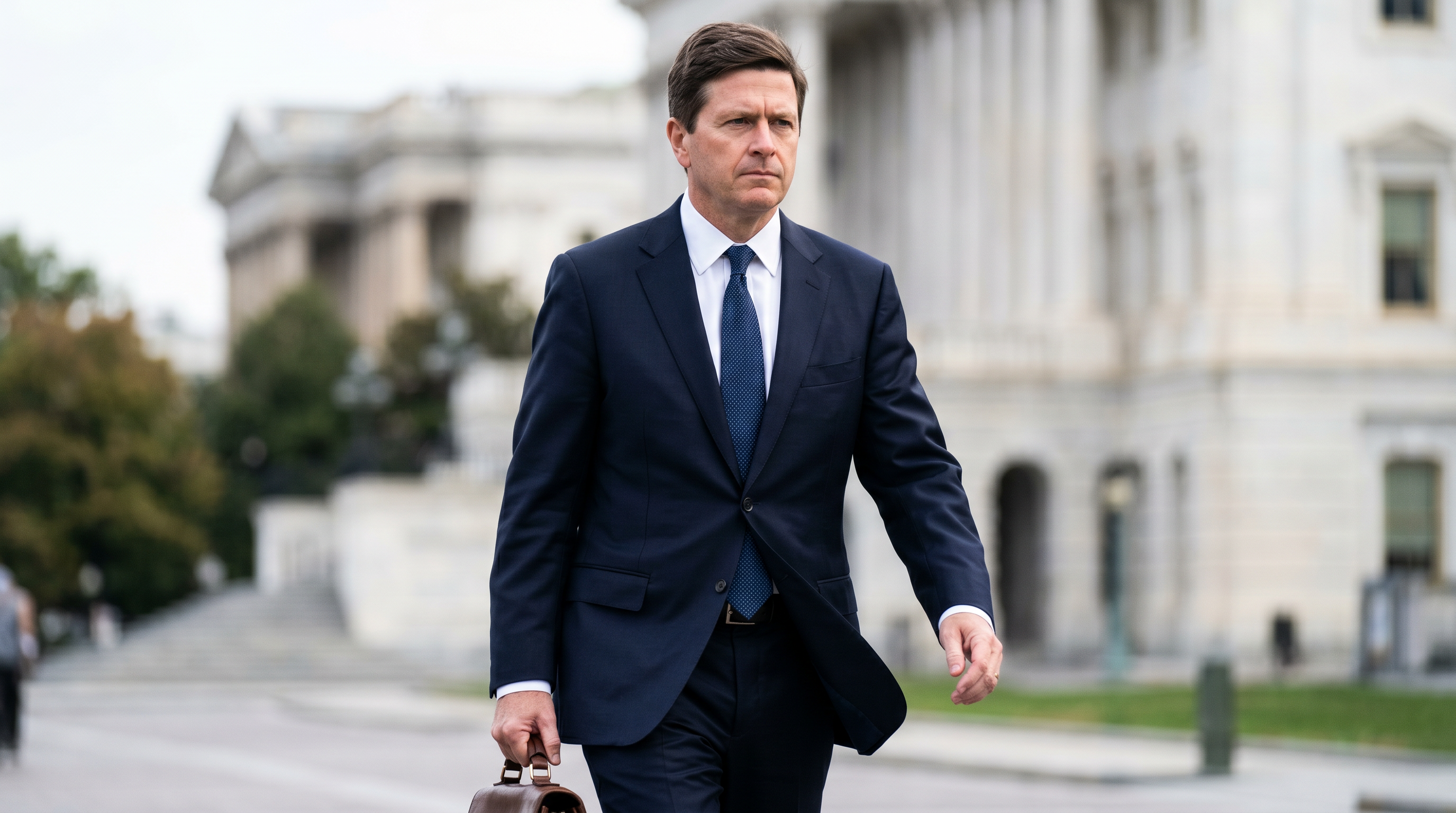
President Donald Trump announced Thursday that he will nominate Jay Clayton, the current U.S. Attorney for the Southern District of New York, to serve as the permanent Director of National Intelligence. The selection of Clayton, a prominent corporate lawyer and former chairman of the Securities and Exchange Commission, is an attempt to stabilize the nation's intelligence apparatus after weeks of mounting political turmoil. If confirmed by the Senate, Clayton would oversee and coordinate the 18 agencies that comprise the U.S. intelligence community.[2][3][6]
The nomination arrives at a moment of acute crisis on Capitol Hill. Just hours before Trump's announcement, a bipartisan coalition in the House of Representatives rejected a short-term extension of Section 702 of the Foreign Intelligence Surveillance Act (FISA). The controversial but widely used warrantless surveillance authority was set to lapse this weekend, and lawmakers explicitly tied their refusal to renew it to Trump's previous acting DNI pick, Bill Pulte.[2][3][4]
Pulte, who currently leads the Federal Housing Finance Agency, was tapped by Trump less than two weeks ago to serve as acting DNI following the sudden resignation of Tulsi Gabbard. Gabbard stepped down in May after 15 months in the role, citing her husband's cancer diagnosis. Pulte's appointment triggered an immediate revolt among Democrats and several Republicans, who argued that a housing regulator with zero national security experience was unfit to manage the country's most sensitive secrets.[2][4][6]

By pivoting to Clayton, the administration hopes to break the legislative logjam. Senate Majority Leader John Thune and Senate Intelligence Committee Chairman Tom Cotton quickly praised the selection, with Thune highlighting Clayton's reputation as a highly competent manager. The swift Republican embrace signals that Clayton, who was confirmed with bipartisan support for his SEC role in 2017, will face a much smoother path to confirmation than Pulte.[2][3]
However, Clayton's nomination is not without controversy. Like Pulte, Clayton lacks a traditional intelligence or national security background, a statutory requirement for the DNI role. His career has been defined by elite corporate law at Sullivan & Cromwell and white-collar financial regulation, rather than covert operations or geopolitical analysis.[1][6]
Like Pulte, Clayton lacks a traditional intelligence or national security background, a statutory requirement for the DNI role.
Furthermore, pro-democracy advocates and Democratic lawmakers have raised alarms over Clayton's recent public statements regarding election integrity. Earlier this week, Clayton appeared on CNBC and questioned the prolonged vote-counting process in California's primary elections, stating that the system was doing a "terrible job" and that the public was right to suspect fraud. Critics argue these comments echo the administration's broader efforts to cast doubt on electoral processes.[7]
There are also lingering questions about the immediate future of the Office of the Director of National Intelligence (ODNI). According to sources familiar with the administration's internal dynamics, CIA Director John Ratcliffe recommended Clayton for the permanent role. However, Trump reportedly still expects Pulte to preside over a significant downsizing and restructuring of the ODNI bureaucracy in his acting capacity before handing the reins over to Clayton.[2][3][6]
The DNI position was created in the aftermath of the September 11 attacks to prevent information silos between agencies like the CIA, NSA, and FBI. The director does not manage day-to-day spy operations but is responsible for synthesizing intelligence into the President's Daily Brief and ensuring that the sprawling intelligence apparatus works cohesively. Clayton's background in complex financial investigations and regulatory enforcement will be tested in an entirely different arena of global threat assessment.[4][6]

As the confirmation process begins, the Senate Intelligence Committee is expected to scrutinize not only Clayton's recent election comments but also his tenure at the SEC and his brief stint as the top federal prosecutor in Manhattan. While his allies point to his steady hand during market volatility in Trump's first term, opponents are likely to question whether a financial regulator can maintain the necessary independence from the White House when delivering hard, objective intelligence assessments.[1][2][7]
The immediate focus now shifts back to Congress, where lawmakers must decide if Clayton's formal nomination is enough of a concession to proceed with the FISA Section 702 reauthorization. With the surveillance tool's expiration looming, the intelligence community is bracing for potential operational disruptions while the Senate prepares to vet a nominee whose deep legal resume will be weighed against his lack of direct intelligence experience.[1][3][4]
How we got here
May 2026
Tulsi Gabbard resigns as Director of National Intelligence after 15 months in the role.
Early June 2026
Trump appoints housing official Bill Pulte as acting DNI, sparking immediate bipartisan backlash.
June 11, 2026
Congress stalls the renewal of FISA Section 702 in protest of Pulte's appointment.
June 11, 2026
Trump formally nominates Jay Clayton as the permanent DNI to break the legislative standoff.
Viewpoints in depth
Trump Administration
Views Clayton as a highly capable manager who can bring order to the intelligence community.
Administration officials and allies emphasize Clayton's prestigious legal background and his steady tenure as SEC Chairman during Trump's first term. They argue that the DNI role requires a competent executive who can coordinate sprawling bureaucracies rather than a field operative. CIA Director John Ratcliffe reportedly recommended Clayton, viewing him as the right figure to lead a streamlined and refocused intelligence apparatus once acting director Bill Pulte completes a planned downsizing of the ODNI.
Congressional Republicans
Relieved to have a confirmable nominee that resolves the immediate intelligence oversight crisis.
For Senate Republicans, Clayton represents a return to conventional, confirmable appointments. Lawmakers were deeply uncomfortable with Bill Pulte's lack of experience and the resulting standoff that threatened the expiration of FISA Section 702, a tool they consider vital for national security. By pivoting to Clayton—who previously earned bipartisan confirmation—Republicans can move forward with reauthorizing surveillance powers without appearing to rubber-stamp an unqualified loyalist.
Democratic Critics
Concerned by Clayton's lack of intelligence experience and his recent rhetoric on election fraud.
Democratic lawmakers and pro-democracy advocates argue that while Clayton has a polished corporate resume, he still lacks the statutory requirement of national security experience. Furthermore, they point to his recent television appearances where he questioned the integrity of California's vote-counting process. Critics fear that installing a figure willing to echo partisan election narratives at the top of the intelligence community could compromise the objective threat assessments required by the role.
What we don't know
- Whether the formal nomination of Clayton will be enough to immediately secure the votes needed to reauthorize FISA Section 702.
- How extensively acting DNI Bill Pulte will downsize the ODNI before Clayton potentially takes over.
- How Clayton's lack of traditional intelligence experience will impact his confirmation hearings in the Senate.
Key terms
- Director of National Intelligence (DNI)
- The cabinet-level official created after 9/11 who oversees and coordinates the 18 agencies of the U.S. intelligence community.
- FISA Section 702
- A provision of the Foreign Intelligence Surveillance Act that allows the government to collect the communications of non-Americans located abroad without a warrant.
- Office of the Director of National Intelligence (ODNI)
- The federal agency responsible for integrating foreign, military, and domestic intelligence in defense of the homeland.
Frequently asked
What does the Director of National Intelligence do?
The DNI oversees and coordinates the 18 agencies of the U.S. intelligence community and is responsible for synthesizing intelligence into the President's Daily Brief.
Why was the FISA Section 702 renewal stalled?
Lawmakers refused to reauthorize the warrantless surveillance program while Bill Pulte, an acting DNI with no intelligence experience, was set to oversee it.
Does Jay Clayton have an intelligence background?
No. His career has been focused on corporate law, financial regulation as SEC Chairman, and serving as a federal prosecutor.
Sources
Source coverage
7 outlets
3 viewpoints surfaced







[1]The GuardianDemocratic Critics
Jay Clayton: Trump pick has long legal résumé but few intelligence credentials
Read on The Guardian →[2]The Washington PostTrump Administration
Trump taps federal prosecutor Jay Clayton for director of national intelligence
Read on The Washington Post →[3]CBS NewsTrump Administration
Trump taps federal prosecutor Jay Clayton for director of national intelligence role
Read on CBS News →[4]Al-MonitorCongressional Republicans
Trump taps Jay Clayton as US intelligence chief
Read on Al-Monitor →[5]AxiosCongressional Republicans
Trump picks Jay Clayton for Director of National Intelligence
Read on Axios →[6]Financial TimesTrump Administration
Trump nominates Jay Clayton to lead US intelligence community
Read on Financial Times →[7]Democracy DocketDemocratic Critics
Trump taps Jay Clayton, prosecutor who echoed California election lies, as intel chief
Read on Democracy Docket →

More in news politics
See all 53 stories →Energy Economics
Fact Check: Is Renewable Energy Now Cheaper Than Fossil Fuels?
7 sources

Iran War
Trump Halts Planned Strikes on Iran, Claims Peace Deal is Imminent Despite Tehran's Caution
7 sources

Emissions Standards
Historic Legal Battle Escalates Over EPA's Repeal of the Greenhouse Gas Endangerment Finding
8 sources
Crowdsourced Moderation
Fact Check: Can Crowdsourced 'Community Notes' Actually Stop Political Misinformation?
8 sources

Every angle. Every day.
Get news politics stories with full source coverage and perspective breakdowns delivered to your inbox.