
Trump Halts Planned Strikes on Iran, Claims Peace Deal is Imminent Despite Tehran's Caution
President Trump abruptly canceled planned military strikes against Iran on Thursday, announcing that a settlement to end the months-long conflict is nearly complete. The pivot comes hours after he threatened to seize Iran's vital Kharg Island oil terminal, though Iranian officials caution that no final agreement has been reached.
By Factlen Editorial Team
- U.S. Administration
- Believes maximum pressure and the threat of seizing oil assets forced Iran to accept a peace deal.
- Iranian Government
- Maintains that no final deal is signed and views its military retaliation as successful deterrence.
- Military Analysts
- Warns that occupying Iranian territory like Kharg Island would be highly risky and prolong the war.
- Iranian Civilians
- Caught between the fear of further economic collapse and the hope for a permanent end to hostilities.
What's not represented
- · Global energy markets and oil importing nations
- · Regional U.S. allies hosting military bases
Why this matters
A peace agreement would end months of devastating regional conflict, reopen the Strait of Hormuz, and stabilize global energy markets. Conversely, if talks collapse and the U.S. moves to seize Iran's primary oil terminal, it could trigger an unprecedented escalation involving ground troops and massive disruptions to the global oil supply.
Key points
- President Trump canceled planned military strikes on Iran, claiming a peace deal is nearly complete.
- The pivot followed threats by Trump to seize Kharg Island, which handles 90% of Iran's oil exports.
- Iranian officials denied that a final agreement has been reached, highlighting ongoing diplomatic hurdles.
- Military experts warned that occupying Kharg Island would require up to 1,000 troops and expose them to mainland attacks.
- A finalized deal would likely reopen the Strait of Hormuz and stabilize global energy markets.
President Donald Trump abruptly reversed course on Thursday, canceling a planned wave of military strikes against Iran and declaring that a diplomatic settlement to end the months-long war is nearly complete. Speaking from the Oval Office, Trump claimed that negotiators had reached a major breakthrough, suggesting that a final agreement could be signed in Europe within days. The sudden pivot marks a dramatic de-escalation in a conflict that has severely disrupted global trade, rattled international energy markets, and drawn in multiple regional actors over the past year. If finalized, the deal would represent a significant shift in the administration's approach to the Middle East.[3][7]
The announcement came just hours after the administration issued its most severe threats of the war to date. Early Thursday, Trump took to social media to warn that the U.S. military would strike Iran "very hard" and floated the unprecedented prospect of seizing Kharg Island, Iran's primary oil export terminal. He suggested the United States could assume "total control" of Iran's oil and gas markets, explicitly comparing the proposed military operation to recent U.S. interventions in Venezuela's energy sector. The aggressive rhetoric had initially signaled a massive escalation that could have required a significant deployment of American ground forces to the Persian Gulf.[3][5]
Despite the White House's optimism, officials in Tehran quickly tempered expectations and pushed back against the narrative of a finalized agreement. The Iranian government issued statements clarifying that while discussions have indeed reached the highest levels of leadership, no final decision or definitive conclusion has been reached regarding a pact with Washington. The conflicting narratives highlight the extreme fragility of the ongoing negotiations, which are reportedly being mediated by regional partners including Pakistan and Qatar. Iranian diplomats appear hesitant to project capitulation, emphasizing that any ceasefire must address their core security concerns and regional interests.[6]
On the ground in Iran, the whiplash of Thursday's developments has left civilians whipsawed between the terrifying prospect of an expanded war and the desperate hope for a permanent ceasefire. After months of devastating infrastructure strikes, military casualties, and severe economic strangulation, many Iranians are deeply concerned about the country's potential collapse if the conflict remains in a state of violent limbo. The psychological toll of the war has been immense, with citizens anxiously monitoring international news for any sign that the daily threat of aerial bombardment and economic ruin might finally be coming to an end.[2]
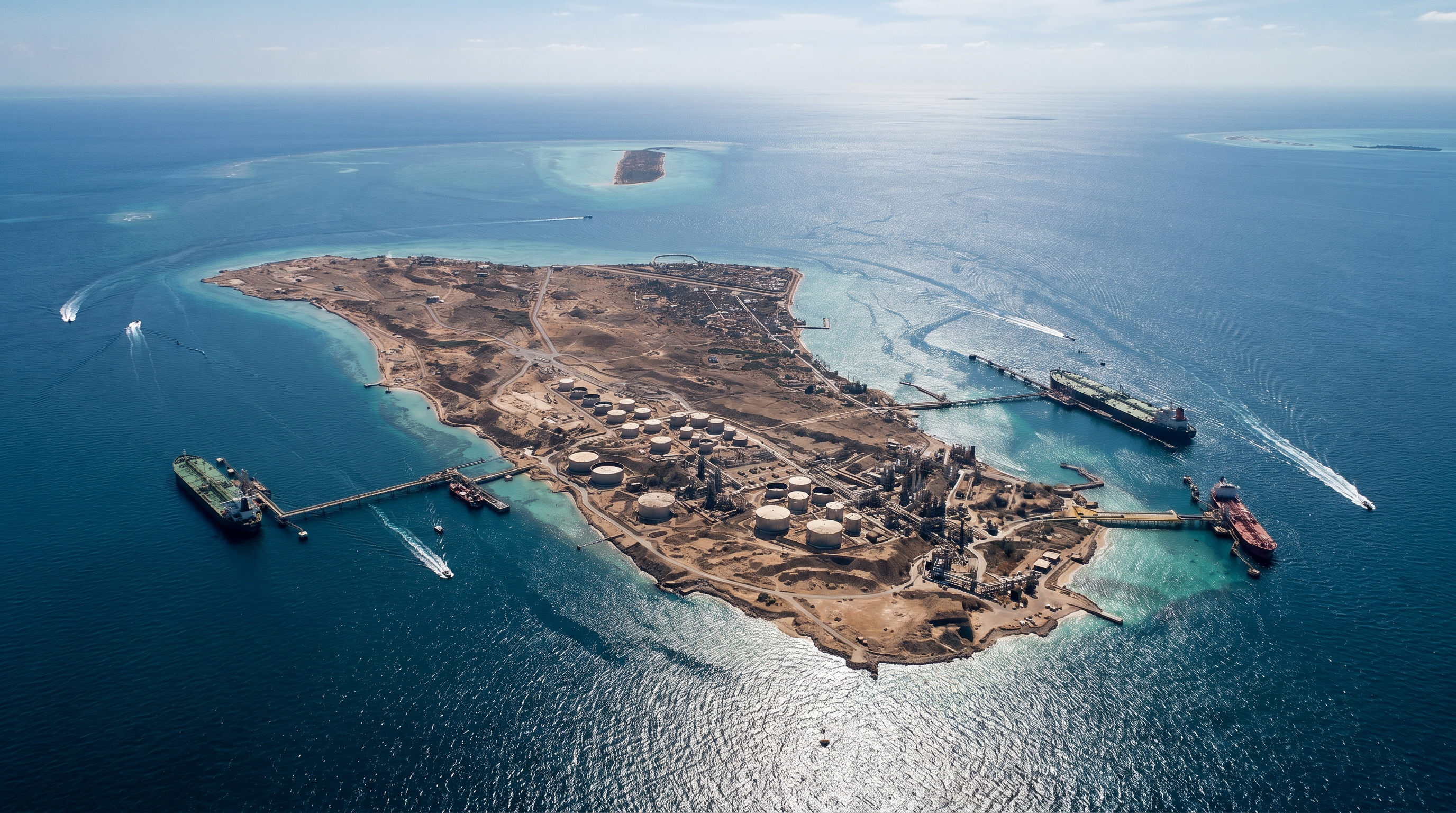
The focal point of Thursday's brinkmanship, Kharg Island, sits roughly 16 miles off the Iranian coast in the northern Persian Gulf and serves as the beating heart of the nation's energy economy. Before the outbreak of full-scale hostilities, the deep-water port handled approximately 90 percent of Iran's crude oil shipments, making it the single most important node in the country's financial infrastructure. While the U.S. Navy has effectively choked off these exports through a strict maritime blockade, seizing the island outright would represent a massive escalation that crosses a significant red line for the Iranian regime.[4][5]

Military analysts note that while U.S. forces could likely capture the island quickly, holding it would present severe logistical and security challenges that could bog down American forces for years. Former military commanders estimate that occupying Kharg Island would require between 800 and 1,000 troops, who would be highly vulnerable to Iranian missile, drone, and artillery attacks from the nearby mainland. Experts warn that such a seizure would be more likely to prolong the war than to deliver a decisive victory, as it would provide Iranian forces with a static, highly exposed American target right on their doorstep.[4]
forces could likely capture the island quickly, holding it would present severe logistical and security challenges that could bog down American forces for years.
Trump himself appeared to acknowledge these severe tactical risks shortly after issuing his initial threat to seize the oil infrastructure. In a subsequent telephone interview with Fox News, the president admitted that while his preference has always been to take Kharg Island and control the oil flow, he was unsure if the American public had the "appetite" or "stomach" for the prolonged military commitment required to occupy Iranian territory. This rare admission of domestic political constraints suggests that the threat may have been designed more as maximum-pressure leverage for the negotiating table than as a concrete operational plan.[3][5]
The diplomatic push comes against the backdrop of a rapidly expanding regional battlefield that threatened to spiral out of control. In the days leading up to the canceled strikes, Iranian forces launched a series of sophisticated drone and missile attacks targeting U.S. military installations in Kuwait, Bahrain, and Jordan. The strikes, which followed a U.S. attack on Iranian infrastructure in response to the downing of an American helicopter, underscored Tehran's willingness to leverage its regional network to pressure Washington into a favorable settlement. The exchanges demonstrated that neither side could achieve a cost-free victory through military force alone.[3][6]

If finalized, the proposed peace agreement would have immediate and profound global ramifications, particularly for the global economy. Trump indicated that the pact would lead to the swift reopening of the Strait of Hormuz, a critical chokepoint for global energy supplies that has been effectively closed by the fighting, sending shockwaves through international markets. For now, the international community remains on edge, waiting to see if the tentative diplomatic breakthrough can hold against the deep-seated mistrust between Washington and Tehran, or if the region will once again plunge into open warfare.[2][7]
How we got here
June 2025
The 'Twelve-Day War' sees heavy U.S. and Israeli strikes on Iranian nuclear facilities, setting the stage for broader conflict.
February 2026
Full-scale hostilities break out following U.S.-Israeli strikes targeting Iranian leadership.
June 9, 2026
U.S. forces strike targets in southern Iran after an Iranian drone downs a U.S. Apache helicopter.
June 10, 2026
Iran retaliates with missile and drone strikes against U.S. bases in Kuwait, Bahrain, and Jordan.
June 11, 2026
Trump threatens to seize Kharg Island before abruptly canceling strikes and announcing an imminent peace deal.
Viewpoints in depth
U.S. Administration's View
The White House believes maximum military and economic pressure has forced Tehran to the negotiating table.
President Trump and his advisors argue that the credible threat of seizing vital infrastructure like Kharg Island—and the resulting total loss of oil revenue—has broken Iran's resolve. By demonstrating a willingness to escalate to unprecedented levels, the administration claims it has secured highly favorable terms for a settlement that will permanently neutralize threats to U.S. forces and allies in the region.
Iranian Leadership's View
Tehran views the negotiations as a necessary tactical pause while refusing to concede to total capitulation.
Iranian officials maintain that their retaliatory strikes on U.S. bases in the Gulf demonstrate their enduring capacity to inflict pain, proving that Washington cannot achieve a cost-free military victory. They frame the potential deal not as a surrender, but as a mutual de-escalation forced by Iran's successful deterrence and the U.S. public's lack of appetite for a prolonged ground war.
Military & Security Analysts
Defense experts warn that occupying Iranian territory would be a strategic miscalculation.
Military strategists emphasize the difference between destroying infrastructure from the air and holding it with ground forces. Analysts point out that an occupation of Kharg Island would leave hundreds of U.S. troops exposed to asymmetric drone and missile attacks from the Iranian mainland just 16 miles away, potentially trapping the U.S. in an unwinnable war of attrition rather than hastening a peace deal.
What we don't know
- The exact terms of the proposed settlement and what concessions the U.S. and Iran have agreed to.
- Whether regional Iranian allies, such as Hezbollah and the Houthis, will abide by the terms of a U.S.-Iran ceasefire.
- How close the U.S. military actually came to launching the canceled strikes or initiating an operation against Kharg Island.
Key terms
- Kharg Island
- A small Iranian island in the Persian Gulf that serves as the country's primary sea terminal for exporting crude oil.
- Strait of Hormuz
- A narrow waterway between the Persian Gulf and the Gulf of Oman through which a significant portion of the world's oil supply passes.
- Axis of Resistance
- A political and military alliance led by Iran, including groups like Hezbollah and the Houthis, aimed at opposing U.S. and Israeli influence in the Middle East.
Frequently asked
Why is Kharg Island so important?
Kharg Island is Iran's main oil export terminal, handling approximately 90 percent of the country's crude oil shipments. Controlling or destroying it would effectively cut off Iran's primary source of revenue.
Has a peace deal been officially signed?
No. While President Trump claimed a deal is nearly complete and could be signed within days, Iranian officials stated that no final decision has been reached.
Why did Trump cancel the strikes?
Trump stated he called off the strikes because negotiations had reached the highest levels of Iranian leadership and a diplomatic settlement was imminent.
Sources
Source coverage
7 outlets
4 viewpoints surfaced







[1]Fox NewsU.S. Administration
Five American weapons that could bring Iran's oil fortress to its knees
Read on Fox News →[2]The New York TimesIranian Civilians
Whipsawed Between Fear and Relief, Iranians Hope for War's End
Read on The New York Times →[3]CBS NewsU.S. Administration
Live Updates: Trump says 'settlement' reached on Iran, signing could be as soon as this weekend
Read on CBS News →[4]ReutersMilitary Analysts
US takeover of Iran's Kharg Island might be quick but would pose risks to troops, experts say
Read on Reuters →[5]CNBCU.S. Administration
Trump threatens to seize 'total control' of Iran's oil industry including key export terminal Kharg Island
Read on CNBC →[6]The HinduIranian Government
West Asia war LIVE: Iran says hasn't reached a final decision on deal with U.S.
Read on The Hindu →[7]The Washington PostU.S. Administration
Trump says he has canceled plans to strike Iran, claiming deal is near
Read on The Washington Post →

More in news politics
See all 59 stories →US-Iran Conflict
Trump Announces 'Great Settlement' to End US-Iran War, Canceling Planned Strikes
8 sources
US-Iran Relations
US and Iran Reach 'Great Settlement' as Trump Cancels Military Strikes
8 sources
US-Iran Relations
Trump Claims 'Great Settlement' With Iran as US Prepares to Deport Iranian Asylum Seekers to Central African Republic
7 sources
Immigration Policy
US Prepares to Deport Iranian Asylum-Seekers to Central African Republic Under New Deal
6 sources
Every angle. Every day.
Get news politics stories with full source coverage and perspective breakdowns delivered to your inbox.