
Fact Check: Is Renewable Energy Now Cheaper Than Fossil Fuels?
Recent 2025 and 2026 data from major financial institutions and global energy watchdogs confirm that utility-scale solar and onshore wind are the cheapest forms of new electricity generation, even without government subsidies.
By Factlen Editorial Team
- Financial & Market Analysts
- Focus on the raw unsubsidized levelized cost and return on investment, arguing that capital flows to renewables simply because they offer the best margins.
- Global Energy Watchdogs
- Focus on macro investment trends and long-term demand forecasting, emphasizing that renewables are winning the global investment race.
- Grid Reliability Planners
- Focus on the 'firmed' cost of renewables, arguing that true metrics must include the batteries and transmission lines necessary to keep the lights on.
What's not represented
- · Fossil fuel industry advocates
- · Local communities opposing transmission lines
Why this matters
Energy costs dictate the price of nearly everything in the modern economy, from household electricity bills to the cost of manufacturing goods. Understanding the true economics of the grid helps voters and consumers separate political talking points from the financial reality of the energy transition.
Key points
- Utility-scale solar and onshore wind are the cheapest forms of new electricity generation.
- Renewables remain cost-competitive even without government subsidies or tax credits.
- Global investment in clean energy ($2.2 trillion) nearly doubles fossil fuel investment.
- Battery storage costs have declined significantly, making 'firmed' renewable grids highly economical.
- The cost of building new combined-cycle gas turbines has reached a 10-year high.
The political debate over energy costs often relies on outdated assumptions from a decade ago, when green energy required heavy subsidies to compete. Today, as grid demands surge to power data centers and electric vehicles, policymakers and taxpayers are asking a fundamental question: Is it actually cheaper to build and run renewable energy than fossil fuels in 2026?[7]
The short answer is yes. According to the 2025 Levelized Cost of Energy (LCOE+) report by the financial advisory firm Lazard, utility-scale solar and onshore wind remain the most cost-competitive forms of new-build generation on the market today.[1]
Crucially, this calculation is "unsubsidized." This means that even before factoring in government tax credits—such as those provided by the U.S. Inflation Reduction Act—building a new solar or wind farm is cheaper per megawatt-hour than building a new coal or combined-cycle gas turbine plant.[1][7]

The evidence from the International Energy Agency (IEA) corroborates this economic shift. In its World Energy Investment 2026 report, the IEA found that global energy investment is set to reach $3.4 trillion this year, with roughly $2.2 trillion flowing into clean energy compared to just $1.2 trillion for oil, gas, and coal.[2][4]
A common counter-argument is that fossil fuels only look expensive because they lack the subsidies given to green energy. However, the IEA analysis stacked fossil fuel consumption subsidies on top of investment and found that clean energy still leads the global market by a wide margin.[2][4]

Another major claim frequently tested by fact-checkers is the storage caveat: "Renewables are cheap, but the batteries required to store the power for nighttime use make the overall system too expensive." While this was a valid concern a few years ago, the data has rapidly shifted.[7]
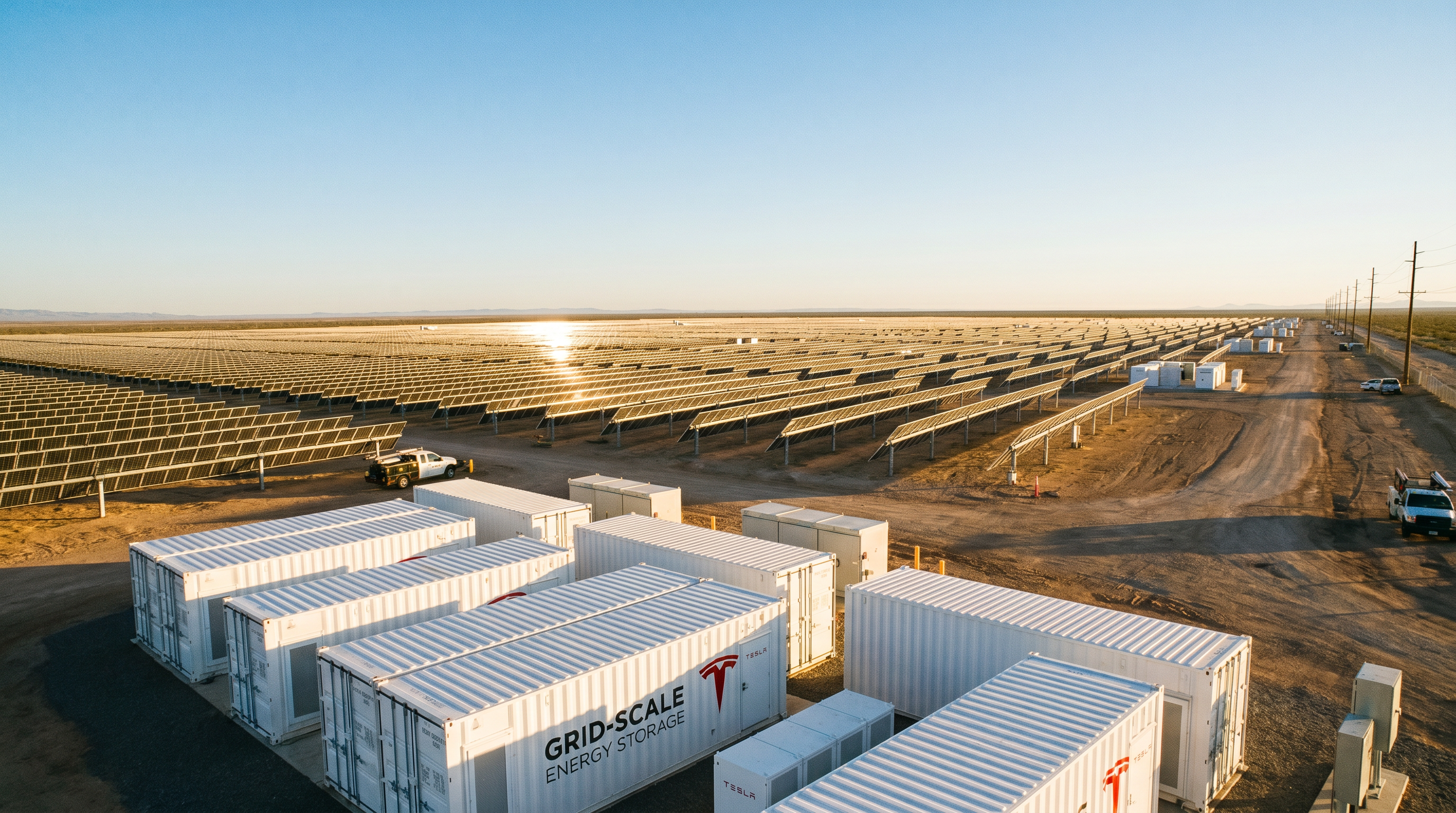
Lazard's 2025 analysis noted "notable declines" in the levelized cost of storage (LCOS) for battery systems. A 100-megawatt utility-scale standalone battery system saw its costs drop significantly over the past year, driven by an oversupply of battery cells and technological advances in energy density.[1][5]
Lazard's 2025 analysis noted "notable declines" in the levelized cost of storage (LCOS) for battery systems.
Australia's national science agency, CSIRO, modeled this exact scenario in its annual GenCost study. They found that even when accounting for the costs of "firming" the grid—adding battery storage and new transmission lines to back up intermittent wind and solar—renewables still deliver the lowest cost pathway compared to coal, gas, or nuclear power.[6]

How is this impacting the U.S. grid? The U.S. Energy Information Administration's (EIA) Annual Energy Outlook 2026 projects that natural gas, solar, and wind will supply the vast majority of capacity growth through 2050.[3]
The EIA notes that data center load is emerging as the dominant driver of long-term U.S. electricity growth. To meet this surging demand quickly, the most cost-effective resources being deployed by utility companies are renewables paired with large-scale battery storage.[3]
However, there is transparent uncertainty regarding the legacy grid. While new renewable plants are cheaper than new fossil fuel plants, operating existing, fully depreciated baseload gas generation can still be highly cost-competitive in the short term, especially when natural gas prices are low.[1][7]
Furthermore, the cost of building new combined-cycle gas turbines has reached a 10-year high. Lazard attributes this to turbine shortages, rising material costs, and long delivery times, which further widens the economic gap between new fossil fuel projects and new renewable installations.[1]
Ultimately, energy experts note that the transition is not just a one-to-one swap of fuels, but a shift to a fundamentally more efficient system. Electrified technologies, such as electric motors and heat pumps, use significantly less raw energy to produce the same output as combustion engines, meaning the total energy required to run the economy shrinks.[4][7]
Viewpoints in depth
Financial & Market Analysts
Focus on the raw unsubsidized levelized cost and return on investment.
Financial analysts view the energy transition primarily through the lens of capital efficiency. They argue that capital flows to renewables simply because they offer the best margins and fastest deployment times for new capacity. Reports from firms like Lazard emphasize that even without tax incentives, the sheer scale of solar and wind manufacturing has driven down costs to the point where new fossil fuel projects struggle to compete for private investment.
Global Energy Watchdogs
Focus on macro investment trends and long-term demand forecasting.
Organizations like the International Energy Agency emphasize that while renewables are winning the global investment race, massive grid upgrades are still required to handle the electrification of the global economy. They point out that the transition is not just about swapping power plants, but fundamentally changing how energy is consumed, noting that electrified technologies are inherently more efficient than combustion-based systems.
Grid Reliability Planners
Focus on the 'firmed' cost of renewables and the infrastructure needed for stability.
Grid operators and national science agencies argue that comparing raw generation costs isn't enough; the true metric must include the batteries and transmission lines necessary to keep the lights on when the wind isn't blowing. However, their models, such as CSIRO's GenCost study, confirm that even when these 'firming' costs are fully accounted for, a grid dominated by renewables and storage remains the cheapest long-term pathway.
What we don't know
- How quickly global supply chains can scale to meet the unprecedented demand for battery storage components.
- The exact long-term impact of surging data center electricity demand on regional grid stability.
Key terms
- Levelized Cost of Energy (LCOE)
- A metric that measures the average net present cost of electricity generation for a plant over its lifetime, allowing different technologies to be compared equally.
- Levelized Cost of Storage (LCOS)
- The total cost of investing in and operating an energy storage system divided by its total expected energy output over its lifetime.
- Firming
- The process of adding backup power, like battery storage or gas peaker plants, to intermittent renewable energy sources to ensure a constant, reliable supply of electricity.
- Combined-Cycle Gas Turbine
- A highly efficient power plant that uses both a gas and a steam turbine together to produce up to 50% more electricity from the same fuel than a traditional simple-cycle plant.
Frequently asked
Do renewables only look cheaper because of government subsidies?
No. Financial analyses from firms like Lazard show that utility-scale solar and onshore wind are the cheapest forms of new-build generation even on an unsubsidized basis.
What about the cost of batteries for when the sun isn't shining?
While storage adds cost, studies show that 'firmed' renewables (wind and solar paired with battery storage and transmission) still provide a lower levelized cost of energy than new coal or nuclear plants.
Are we still building new fossil fuel plants?
Yes, natural gas remains a part of the energy mix for grid stability, but the cost of building new gas turbines has reached a 10-year high, making renewables the primary choice for new capacity.
Sources
Source coverage
7 outlets
3 viewpoints surfaced







[1]LazardFinancial & Market Analysts
Lazard's Levelized Cost of Energy+ (LCOE+) 2025
Read on Lazard →[2]International Energy AgencyGlobal Energy Watchdogs
World Energy Investment 2026
Read on International Energy Agency →[3]U.S. Energy Information AdministrationGrid Reliability Planners
Annual Energy Outlook 2026
Read on U.S. Energy Information Administration →[4]ForbesGlobal Energy Watchdogs
Clean Energy Now Attracts Twice The Investment Of Fossil Fuels
Read on Forbes →[5]Energy-Storage.newsFinancial & Market Analysts
Lazard LCOE 2025: Battery storage costs decline to offset recent increases
Read on Energy-Storage.news →[6]CSIROGrid Reliability Planners
GenCost: Annual energy technology cost estimates
Read on CSIRO →[7]Factlen Editorial Team
Synthesis by Factlen editorial team
Read on Factlen Editorial Team →

More in news politics
See all 58 stories →US-Iran Relations
US and Iran Reach 'Great Settlement' as Trump Cancels Military Strikes
8 sources

US-Iran Relations
Trump Claims 'Great Settlement' With Iran as US Prepares to Deport Iranian Asylum Seekers to Central African Republic
7 sources
Immigration Policy
US Prepares to Deport Iranian Asylum-Seekers to Central African Republic Under New Deal
6 sources

Third-Country Deals
U.S. to Deport Iranian and Syrian Asylum Seekers to Central African Republic in New Deal
6 sources

Every angle. Every day.
Get news politics stories with full source coverage and perspective breakdowns delivered to your inbox.