
Historic Legal Battle Escalates Over EPA's Repeal of the Greenhouse Gas Endangerment Finding
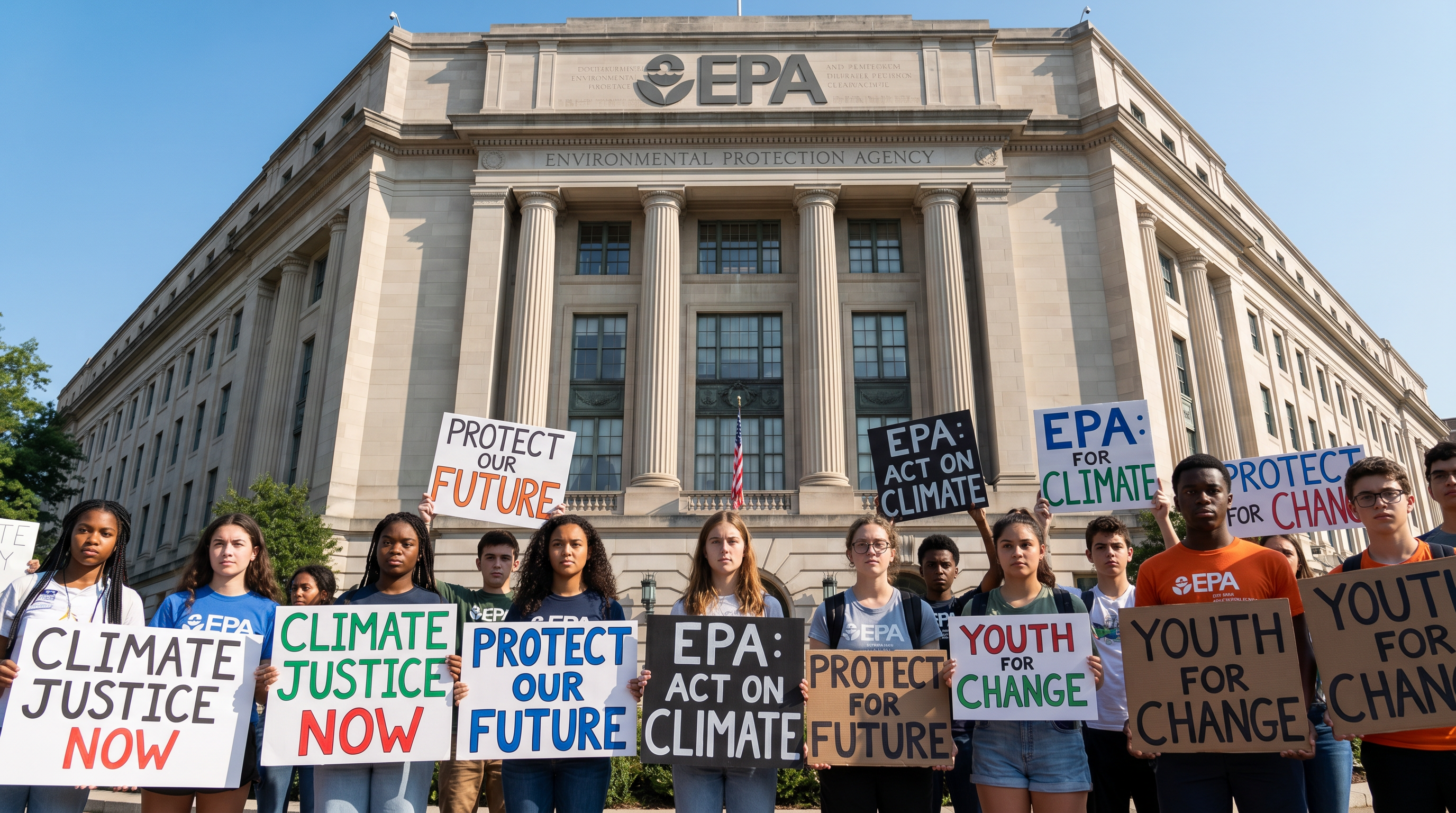
A coalition of 25 states and youth plaintiffs are urging federal courts to halt the administration's rollback of the 2009 Endangerment Finding, a move that eliminated federal greenhouse gas standards for vehicles.
By Factlen Editorial Team
- Federal Administration
- Argues the original finding exceeded statutory authority and that repealing it saves $1.3 trillion and protects consumer choice.
- State Regulators
- Argues the repeal ignores settled science and Supreme Court precedent, unlawfully abdicating the EPA's mandate.
- Public Health & Environmental Advocates
- Argues the deregulation ignores the direct health impacts of climate change, from extreme heat to worsening air quality.
- Youth & Constitutional Plaintiffs
- Argues the rollback actively harms their future and violates constitutional rights to life and liberty.
- International Negotiators
- Views the U.S. federal retreat as a hurdle to global climate goals, pushing forward with international targets regardless.
What's not represented
- · Automakers and Auto Industry Executives
Why this matters
The 2009 Endangerment Finding is the legal bedrock for nearly all U.S. climate regulations. Its repeal not only strips federal emissions standards for vehicles but also sets a precedent that could dismantle oversight of power plants and industrial pollution, fundamentally altering the U.S. trajectory on climate change and public health.
Key points
- The EPA finalized the repeal of the 2009 Greenhouse Gas Endangerment Finding, eliminating federal emissions standards for vehicles.
- A coalition of 25 states and a group of youth plaintiffs have filed lawsuits in the D.C. Circuit to halt the deregulation.
- The administration argues the repeal corrects a historical overreach and will save Americans $1.3 trillion.
- Plaintiffs warn the rollback will cause an irreversible gigaton of additional CO2 pollution while the case is litigated.
- The domestic rollback contrasts sharply with the concurrent Bonn Climate Conference, where international diplomats set a new 35% global electrification target.
The legal war over the single largest deregulatory action in U.S. history is reaching a boiling point. In the U.S. Court of Appeals for the D.C. Circuit, a coalition of 25 states, dozens of environmental groups, and a cohort of youth plaintiffs are fighting to halt the Environmental Protection Agency's repeal of the 2009 Greenhouse Gas Endangerment Finding.[2][3]
Finalized in February 2026 by EPA Administrator Lee Zeldin, the rescission dismantled the legal bedrock that required the federal government to regulate climate-warming pollution. By revoking the finding, the EPA simultaneously eliminated all federal greenhouse gas emission standards for light, medium, and heavy-duty vehicles, wiping out more than a decade of regulatory frameworks.[1][5]
Now, plaintiffs are demanding emergency intervention to prevent permanent environmental damage. In late May, youth plaintiffs in the lawsuit Venner v. EPA filed a motion for an immediate stay, arguing that automakers are already altering their business plans to lock in gas-powered vehicle production.[2]
The youth plaintiffs estimate that if the vehicle standards repeal is not stayed while the case winds through the courts, it will result in an additional gigaton of carbon dioxide emissions—more than Japan's total annual output. "The increased exposure to all of the pollutants that will result from this rule can't be undone," said Julia Olson, chief legal counsel for Our Children's Trust.[2]

The EPA and the administration frame the repeal as a monumental victory for the economy and consumer choice. The agency estimates the rollback will save Americans over $1.3 trillion, arguing that eliminating the emissions standards will make vehicles more affordable for everyday citizens and boost the global competitiveness of the American auto industry.[1][7]
Legally, the EPA argues that the 2009 finding exceeded the agency's authority under Section 202(a) of the Clean Air Act. The administration contends that the term "air pollution" in the statute was intended to address local and regional health threats—such as smog and lead exposure—rather than global climate phenomena.[1][5]
State regulators fiercely contest this interpretation. A coalition of 25 attorneys general, led by California's Rob Bonta and Massachusetts' Andrea Joy Campbell, argue the EPA is ignoring both settled science and Supreme Court precedent. In 2007, the Supreme Court ruled in Massachusetts v. EPA that greenhouse gases explicitly qualify as air pollutants under the Clean Air Act.[3][8]
EPA that greenhouse gases explicitly qualify as air pollutants under the Clean Air Act.
The repeal also sets up a collision course with state-level emissions rules. The EPA's final rule asserts that federal preemption continues to apply, effectively attempting to block California and other states from enforcing their own stricter tailpipe standards without a federal waiver—which the administration has signaled it will not grant.[5]
Public health organizations have condemned the move as a dereliction of duty. The American Public Health Association and the Environmental Defense Fund have highlighted that the rollback ignores the direct health impacts of climate change, from extreme heat to worsening air quality, which disproportionately affect vulnerable communities.[4][7]

The Venner v. EPA lawsuit introduces a novel constitutional angle to the legal fight. The 18 youth plaintiffs argue the repeal violates their fundamental rights to life, liberty, and religious freedom. Lead plaintiff Elena Venner, 21, argued that the rollback destroys the conditions necessary for life and prevents her from safely walking to religious services due to extreme heat and pollution.[2]
This domestic legal battle is unfolding against a backdrop of accelerating international action. This week, climate diplomats from around the world are gathered at the Bonn Climate Conference in Germany to lay the groundwork for COP31, highlighting a stark divergence between U.S. federal policy and the global consensus.[6]
While the U.S. federal government dismantles its vehicle standards, the COP31 Presidency—shared by Türkiye and Australia—just announced a new global target in Bonn to raise electricity's share of final energy demand from 20 percent today to 35 percent by 2035.[6]

The disconnect between Washington and the international community is creating friction in global trade and climate finance. Negotiators in Bonn are increasingly discussing climate-related trade measures, such as carbon border adjustments, which could eventually penalize U.S. exports if domestic emissions rise due to the deregulation.[6]
The D.C. Circuit's upcoming decision on the emergency stay will determine whether the vehicle emissions standards remain suspended during the litigation. Legal experts widely expect the core dispute over the Endangerment Finding to ultimately reach the Supreme Court, where the conservative majority has recently shown a willingness to curtail federal agency powers.[5]
If the Supreme Court ultimately upholds the EPA's rescission, it would permanently alter the landscape of U.S. environmental law. Such a ruling would strip the executive branch of its primary tool for combating climate change, leaving the federal government without the authority to regulate greenhouse gases unless Congress passes new, explicit legislation.[5][8]
How we got here
2007
The Supreme Court rules in Massachusetts v. EPA that greenhouse gases are air pollutants under the Clean Air Act.
2009
The EPA issues the Endangerment Finding, determining that greenhouse gases threaten public health.
Feb 2026
The EPA finalizes the rescission of the Endangerment Finding and repeals vehicle emission standards.
May 2026
Youth plaintiffs in Venner v. EPA file an emergency motion to stay the repeal.
Jun 2026
Global diplomats gather at the Bonn Climate Conference to set new international climate targets.
Viewpoints in depth
The Federal Administration's View
The EPA argues the repeal corrects a historical overreach and delivers massive economic savings.
Administration officials and legal defenders contend that the 2009 Endangerment Finding stretched the Clean Air Act far beyond its original intent. They argue that the statute's definition of 'air pollution' was designed to address local and regional health threats—like smog, lead, and particulate matter—not global climate phenomena. By rescinding the rule, the EPA claims it is executing the single largest deregulatory action in U.S. history, projecting over $1.3 trillion in savings and arguing that the move will make vehicles more affordable and protect consumer choice.
State Regulators' View
A coalition of states argues the EPA is abandoning its legal and scientific mandate.
Led by California and Massachusetts, 25 state attorneys general argue that the EPA's rescission is blatantly illegal and ignores decades of settled science. They point to the 2007 Supreme Court decision in Massachusetts v. EPA, which explicitly affirmed that greenhouse gases qualify as pollutants under the Clean Air Act. State regulators warn that abandoning federal vehicle standards will cause unprecedented disruption to 15 years of regulatory progress, increase climate-destabilizing pollution, and force states to bear the economic and health costs of extreme weather and poor air quality.
Youth Plaintiffs' View
Young Americans argue the rollback violates their constitutional rights to life and liberty.
In the Venner v. EPA lawsuit, 18 youth plaintiffs argue that the federal government's deregulation actively destroys the conditions necessary for human life. Backed by the non-profit law firm Our Children's Trust, they assert that the repeal infringes on constitutional rights, including religious freedom, by making the environment too hazardous to navigate safely. They are demanding an immediate stay on the rollback, warning that automakers are already locking in gas-powered vehicle production that will result in an irreversible gigaton of additional CO2 pollution.
What we don't know
- Whether the D.C. Circuit will grant the emergency stay requested by the youth plaintiffs to halt the repeal during litigation.
- How the Supreme Court will ultimately rule on the EPA's statutory authority to regulate greenhouse gases under the Clean Air Act.
- Whether California and other states will successfully defend their right to enforce stricter state-level tailpipe emissions standards.
Key terms
- Endangerment Finding
- A formal 2009 EPA ruling that greenhouse gases threaten public health, triggering a legal obligation to regulate them.
- Clean Air Act
- A comprehensive federal law that regulates air emissions from stationary and mobile sources to protect public health.
- D.C. Circuit
- The United States Court of Appeals for the District of Columbia Circuit, which handles many cases involving federal agency regulations.
- COP31
- The 31st UN Climate Change Conference, scheduled for November 2026 in Türkiye, where global climate targets will be negotiated.
Frequently asked
What is the Endangerment Finding?
A 2009 EPA determination that greenhouse gases threaten public health and welfare, which legally required the agency to regulate climate pollution under the Clean Air Act.
Why did the EPA repeal it?
The current administration argues the 2009 finding exceeded the EPA's statutory authority, claiming the Clean Air Act was meant for local pollution, not global climate change.
How does this affect cars?
By repealing the finding, the EPA simultaneously eliminated all federal greenhouse gas emission standards for light, medium, and heavy-duty vehicles.
What is happening at the Bonn Climate Conference?
International diplomats are meeting in Germany to prepare for COP31, recently announcing a new global target to raise electricity's share of energy demand to 35% by 2035, contrasting with U.S. deregulation.
Sources
Source coverage
8 outlets
5 viewpoints surfaced








[1]EPAFederal Administration
Final Rule: Rescission of the Greenhouse Gas Endangerment Finding
Read on EPA →[2]The GuardianYouth & Constitutional Plaintiffs
Eighteen American youth are demanding that a court immediately halt the Trump administration's repeal
Read on The Guardian →[3]State of CaliforniaState Regulators
Attorney General Bonta Co-Leads Coalition Challenging EPA Rescission
Read on State of California →[4]Environmental Defense FundPublic Health & Environmental Advocates
Health, environmental groups challenge the Trump EPA's harmful, unscientific, and illegal repeal
Read on Environmental Defense Fund →[5]Holland & KnightFederal Administration
Final Repeal Rule Emphasizes Legal Arguments
Read on Holland & Knight →[6]Down To EarthInternational Negotiators
Bonn Climate Conference 2026 sets a new global electrification target
Read on Down To Earth →[7]BMJPublic Health & Environmental Advocates
US president Donald Trump says he has finalised rules to revoke the legal basis for emissions regulations
Read on BMJ →[8]Spotlight PAState Regulators
A group of Democratic-led states, counties, and cities sued the Environmental Protection Agency
Read on Spotlight PA →

More in news politics
See all 59 stories →US-Iran Conflict
Trump Announces 'Great Settlement' to End US-Iran War, Canceling Planned Strikes
8 sources

US-Iran Relations
US and Iran Reach 'Great Settlement' as Trump Cancels Military Strikes
8 sources
US-Iran Relations
Trump Claims 'Great Settlement' With Iran as US Prepares to Deport Iranian Asylum Seekers to Central African Republic
7 sources
Immigration Policy
US Prepares to Deport Iranian Asylum-Seekers to Central African Republic Under New Deal
6 sources

Every angle. Every day.
Get news politics stories with full source coverage and perspective breakdowns delivered to your inbox.