
Supreme Court Strikes Down EPA Power Plant Emissions Rules in 6-3 Decision
The Supreme Court has invalidated the EPA's 2024 regulations requiring coal and new natural gas plants to capture their carbon emissions, ruling the agency exceeded its congressional authority.
By Factlen Editorial Team
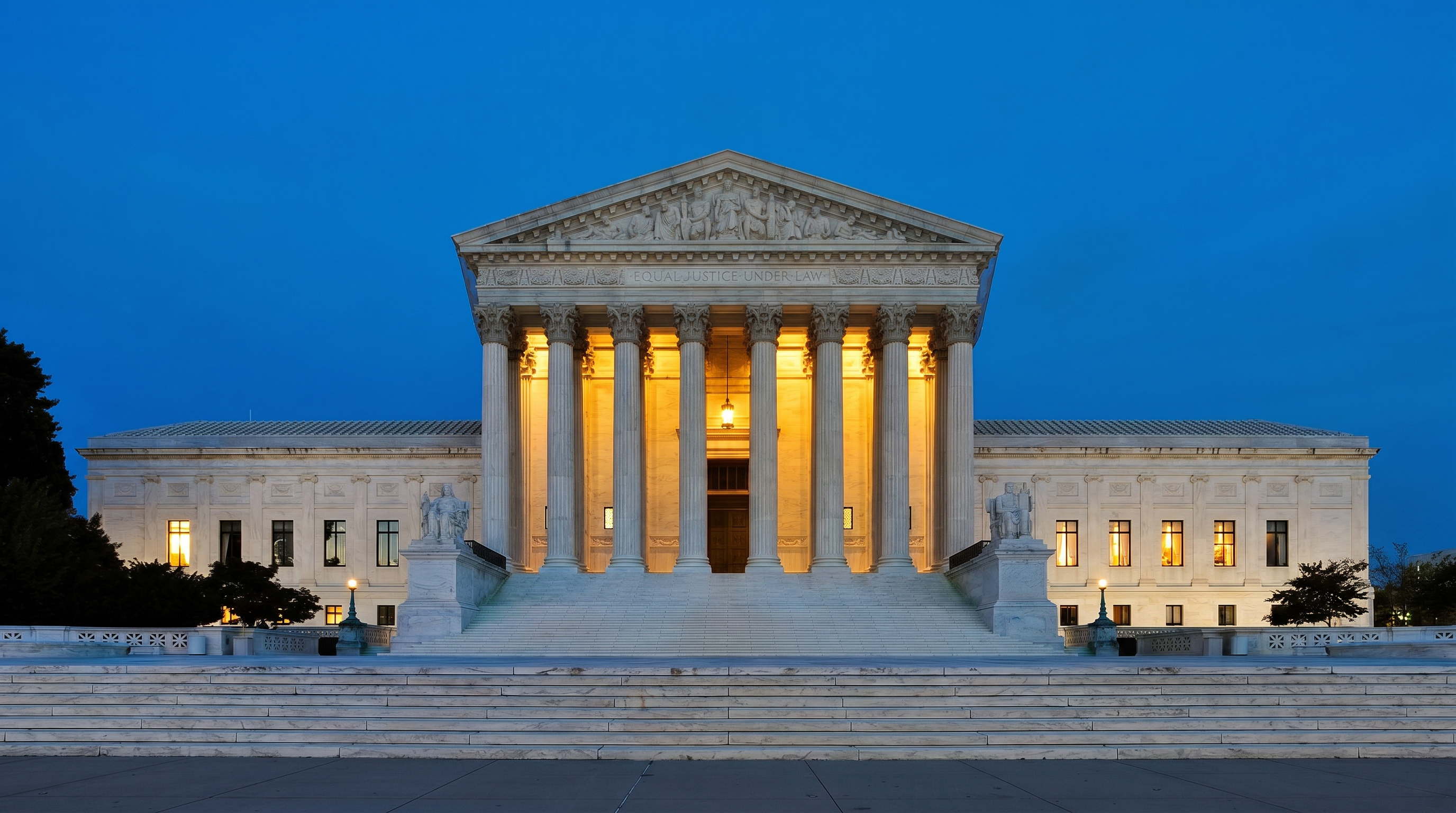
- State AGs & Fossil Fuel Industry
- Argues the EPA overstepped its authority and that the mandated carbon capture technology is unproven and would destroy grid reliability.
- Environmental Advocates
- Views the ruling as a disastrous setback for global climate goals and accuses the Court of legislating from the bench.
- Energy Market Analysts
- Notes that while the federal mandate is gone, underlying market economics and state-level policies will continue driving the renewable transition.
What's not represented
- · International climate negotiators
- · Renewable energy developers
Why this matters
This ruling effectively removes the federal government's primary regulatory mechanism for forcing the U.S. power sector to decarbonize. It shifts the burden of climate action entirely to individual states and market forces, while providing long-term operational certainty to fossil fuel plant operators.
Key points
- The Supreme Court ruled 6-3 that the EPA exceeded its authority by mandating carbon capture technology for power plants.
- The decision removes the Biden administration's primary tool for meeting its Paris Agreement climate pledges.
- Conservative states and utility groups celebrated the ruling as a victory for grid reliability and lower energy costs.
- Market analysts note that the transition to renewables will continue due to falling costs, despite the lack of a federal mandate.
The Supreme Court delivered a sweeping 6-3 decision on Thursday, striking down the Environmental Protection Agency’s ambitious 2024 regulations aimed at drastically reducing carbon emissions from the nation's power sector. The ruling, split along ideological lines, dismantles a cornerstone of federal climate policy that would have required existing coal-fired power plants and new natural gas facilities to capture up to 90% of their greenhouse gas emissions by 2032. Writing for the conservative majority, Chief Justice John Roberts argued that the EPA had overstepped the bounds of the Clean Air Act, attempting to force a nationwide energy transition without explicit authorization from Congress.[1][3][6]
The invalidated rule, finalized in the spring of 2024, was designed to be the regulatory teeth behind U.S. commitments to the Paris Agreement. By mandating the use of Carbon Capture and Sequestration (CCS) technology—or alternatively, co-firing plants with clean hydrogen—the EPA sought to virtually eliminate the 25% of U.S. greenhouse gas emissions that originate from electricity generation. However, a coalition of 39 Republican-led states, alongside major utility companies and the National Mining Association, immediately challenged the mandate, arguing that the required technologies were neither commercially viable at scale nor affordable.[2][4][7]
Thursday's decision heavily relied on the "Major Questions Doctrine," a legal framework the current Court has increasingly used to rein in executive branch agencies. The majority opinion asserted that an agency cannot impose regulations of such vast economic and political significance without clear, unambiguous statutory text from Congress. Because the Clean Air Act of 1970 does not explicitly mention carbon capture mandates for power grids, the Court ruled that the EPA cannot unilaterally mandate a multi-billion-dollar restructuring of how Americans get their electricity.[1][4]

In a blistering dissent, Justice Elena Kagan, joined by Justices Sonia Sotomayor and Ketanji Brown Jackson, accused the majority of substituting its own policy preferences for the scientific expertise of the EPA. Kagan wrote that the Clean Air Act was intentionally written with broad language to allow the agency to respond to new environmental threats and technological advancements. The dissent warned that stripping the EPA of its ability to regulate the primary driver of climate change leaves the federal government dangerously unequipped to handle an escalating global crisis.[3][5][6]
The reaction from the energy sector and conservative lawmakers was immediate and triumphant. West Virginia Attorney General Patrick Morrisey, who helped lead the coalition of states suing the EPA, called the ruling a massive victory for grid reliability and American energy independence. Industry groups argued that forcing plants to install unproven CCS technology by 2032 would have triggered a wave of premature plant retirements, inevitably leading to rolling blackouts and surging electricity costs for consumers during periods of peak demand.[2][4]
The reaction from the energy sector and conservative lawmakers was immediate and triumphant.
Conversely, environmental advocates and climate scientists described the ruling as a devastating setback for global climate goals. Without a federal mandate forcing the retirement or retrofitting of heavy-polluting plants, the United States is now highly unlikely to meet its pledge of cutting emissions in half by 2030. Climate groups warn that this decision effectively signals to the international community that the U.S. cannot guarantee its long-term climate commitments, potentially destabilizing future global climate negotiations.[3][5]
Despite the legal victory for fossil fuels, energy market analysts caution that the ruling will not reverse the broader macroeconomic trends transforming the U.S. grid. The cost of utility-scale solar, wind, and battery storage has plummeted over the last decade, making renewables cheaper to build and operate than maintaining aging coal plants in many markets. Furthermore, the massive tax incentives provided by the 2022 Inflation Reduction Act continue to heavily subsidize clean energy deployment, meaning the transition away from coal will continue, albeit at a pace dictated by market economics rather than federal deadlines.[1][6][7]

Grid operators, who sit caught between regulatory mandates and the physical reality of keeping the lights on, expressed a degree of quiet relief. Organizations like PJM Interconnection and MISO had previously warned that the EPA's aggressive timeline could compromise the reliability of the power grid, especially as electricity demand surges from new data centers and the electrification of transportation. The removal of the 2032 compliance cliff provides utilities with more breathing room to manage the complex logistics of interconnecting new renewable resources while maintaining dispatchable baseload power.[2][7]
The Supreme Court's decision also guarantees that the United States will operate under a deeply bifurcated energy policy for the foreseeable future. States with aggressive climate targets, such as California, New York, and Washington, will continue to enforce their own strict decarbonization mandates and carbon pricing schemes. Meanwhile, states in the Midwest and South will likely extend the operational lifespans of their existing fossil fuel fleets, creating a patchwork of environmental regulations that complicates operations for multi-state utility companies.[1][4][7]
Looking ahead, the EPA is left with few regulatory avenues to force power sector decarbonization. The agency will likely have to draft a significantly watered-down rule that focuses only on modest efficiency improvements "inside the fenceline" of existing plants—a strategy that yields only fractional emissions reductions. Ultimately, the ruling cements the reality that any sweeping, transformative action on U.S. climate policy will require an act of Congress, a prospect that remains highly unlikely in a deeply polarized political environment.[3][5][6]
How we got here
2007
The Supreme Court rules in Massachusetts v. EPA that greenhouse gases are pollutants covered by the Clean Air Act.
2015
The Obama administration introduces the Clean Power Plan, which is later stayed by the Supreme Court and repealed by the Trump administration.
2022
In West Virginia v. EPA, the Supreme Court limits the EPA's ability to force a system-wide shift from coal to renewables.
Spring 2024
The EPA finalizes a new rule mandating carbon capture technology at individual power plants by 2032.
June 2026
The Supreme Court strikes down the 2024 rule, citing the Major Questions Doctrine.
Viewpoints in depth
Conservative Legal & Fossil Fuel Industry
Argues the EPA overstepped its authority and that the mandated carbon capture technology is unproven.
This camp views the EPA's rule as an illegal attempt by the executive branch to bypass Congress and force a radical transformation of the American economy. State attorneys general and industry groups argued that Carbon Capture and Sequestration (CCS) is not commercially viable at the scale required by the EPA. They warned that enforcing the 2032 deadline would have forced the premature retirement of reliable baseload power plants, inevitably leading to rolling blackouts and surging electricity costs for consumers.
Environmental Advocates & EPA Defenders
Views the ruling as a disastrous setback for global climate goals and accuses the Court of legislating from the bench.
Climate scientists and environmental lawyers argue that the Clean Air Act was intentionally written with broad language so the EPA could respond to emerging scientific threats. They view the Court's reliance on the 'Major Questions Doctrine' as a judicial invention designed to strip regulatory power from subject-matter experts. Without a strong federal mandate, this camp warns that the U.S. will fail to meet its international emissions targets, accelerating the timeline for catastrophic climate impacts.
Grid Operators & Utilities
Focused on the physical reality of maintaining power reliability during the energy transition.
While many major utilities have their own internal goals to reach net-zero emissions by 2050, they expressed deep concern over the EPA's aggressive 2032 timeline. Grid operators like PJM and MISO warned that retiring fossil fuel plants before sufficient renewable generation and battery storage could be interconnected would destabilize the grid. For this group, the Supreme Court ruling provides necessary breathing room to manage the complex logistics of the energy transition without risking blackouts.
What we don't know
- How the EPA will attempt to regulate power plant emissions going forward using its remaining, limited authority.
- Whether the lack of a federal mandate will significantly slow the retirement of coal plants, or if market economics will continue to drive them offline.
- How international allies will respond to the U.S. losing its primary mechanism for enforcing its Paris Agreement pledges.
Key terms
- Major Questions Doctrine
- A legal principle used by the Supreme Court stating that federal agencies cannot create regulations with vast economic or political impact without explicit, specific authorization from Congress.
- Carbon Capture and Sequestration (CCS)
- Technology designed to trap carbon dioxide emissions at the source (like a power plant smokestack) and store it underground so it does not enter the atmosphere.
- Clean Air Act
- The comprehensive federal law passed in 1970 that regulates air emissions from stationary and mobile sources, which the EPA uses as its primary tool to combat pollution.
Frequently asked
What exactly did the Supreme Court strike down?
The Court invalidated a 2024 EPA rule that would have required existing coal plants and new natural gas plants to capture 90% of their carbon emissions by 2032.
Why did the Supreme Court rule against the EPA?
The 6-3 conservative majority used the 'Major Questions Doctrine,' ruling that Congress never explicitly gave the EPA the authority to mandate such a sweeping, expensive technological overhaul of the power grid.
Will coal plants stay open forever now?
Not necessarily. While they no longer face a 2032 federal deadline to install carbon capture, many coal plants are still retiring because solar, wind, and natural gas are cheaper to operate.
Can the EPA write a new rule?
Yes, but it will have to be significantly narrower, likely focusing only on minor efficiency upgrades at individual plants rather than forcing a shift to new technologies.
Sources
Source coverage
7 outlets
3 viewpoints surfaced







[1]ReutersEnergy Market Analysts
Supreme Court blocks EPA power plant emissions rule in major blow to climate goals
Read on Reuters →[2]Fox NewsState AGs & Fossil Fuel Industry
Supreme Court delivers massive victory to energy states, strikes down sweeping EPA mandate
Read on Fox News →[3]The New York TimesEnvironmental Advocates
In 6-3 Ruling, Supreme Court Dismantles Major E.P.A. Climate Regulation
Read on The New York Times →[4]The Wall Street JournalState AGs & Fossil Fuel Industry
Supreme Court Rules EPA Exceeded Authority on Power-Plant Carbon Rules
Read on The Wall Street Journal →[5]The GuardianEnvironmental Advocates
US Supreme Court deals devastating blow to global climate goals with EPA ruling
Read on The Guardian →[6]AP NewsEnergy Market Analysts
Divided Supreme Court strikes down EPA rule on power plant pollution
Read on AP News →[7]E&E NewsEnergy Market Analysts
What the Supreme Court's EPA ruling means for the US grid
Read on E&E News →

More in news politics
See all 53 stories →Energy Economics
Fact Check: Is Renewable Energy Now Cheaper Than Fossil Fuels?
7 sources
Iran War
Trump Halts Planned Strikes on Iran, Claims Peace Deal is Imminent Despite Tehran's Caution
7 sources

Emissions Standards
Historic Legal Battle Escalates Over EPA's Repeal of the Greenhouse Gas Endangerment Finding
8 sources
Crowdsourced Moderation
Fact Check: Can Crowdsourced 'Community Notes' Actually Stop Political Misinformation?
8 sources

Every angle. Every day.
Get news politics stories with full source coverage and perspective breakdowns delivered to your inbox.