
How Enhanced Geothermal Systems Are Unlocking 24/7 Clean Energy
Breakthroughs in horizontal drilling and subsurface engineering are allowing next-generation geothermal plants to generate continuous, carbon-free power anywhere on Earth.
By Factlen Editorial Team
- Geothermal Developers
- Advocates for rapid scaling of EGS to meet the 24/7 power demands of artificial intelligence.
- Energy Analysts
- Cautiously optimistic observers focused on execution risks, cost curves, and grid bottlenecks.
- Scientific Researchers
- Focuses on the technical validation, safety monitoring, and long-term potential of the technology.
What's not represented
- · Local communities near drilling sites
- · Fossil fuel industry competitors
Why this matters
As artificial intelligence and electrification drive unprecedented demand for electricity, the grid desperately needs 'firm' clean power that runs when the sun isn't shining. If enhanced geothermal scales as projected, it could provide a nearly limitless supply of baseload renewable energy, fundamentally altering the global climate trajectory.
Key points
- The AI boom is driving massive demand for 24/7 clean electricity, accelerating investments in geothermal technology.
- Enhanced Geothermal Systems (EGS) use horizontal drilling and hydraulic fracturing to create artificial reservoirs in hot, dry rock.
- Fervo Energy's $1.89 billion IPO in May 2026 signals strong Wall Street confidence in the commercial viability of EGS.
- The U.S. Department of Energy projects that next-generation geothermal could increase domestic capacity twentyfold to 90 GW by 2050.
The global energy transition is colliding with a massive new source of demand: artificial intelligence. As tech companies build sprawling data centers and the broader economy shifts toward electrification, the grid requires unprecedented amounts of electricity. While wind and solar power are cheap and abundant, they are inherently intermittent. To maintain stability, the grid desperately needs "firm" power—electricity that is available 24 hours a day, 365 days a year.[6]
Historically, the options for firm, carbon-free power were limited to nuclear energy and hydropower, both of which face steep geographic, financial, and regulatory hurdles. But a rapidly maturing technology—next-generation geothermal energy—is poised to fill the gap, offering the promise of continuous clean power without the footprint of a traditional power plant.[6]
In May 2026, the industry reached a major financial milestone when Fervo Energy, a leading geothermal developer, raised $1.89 billion in an upsized initial public offering. The IPO valued the Houston-based company at roughly $7.7 billion, signaling massive Wall Street appetite for scalable, clean baseload power and marking a turning point for the sector's commercial viability.[4][7]
This surge in investment is largely driven by tech giants desperate to power their infrastructure. Companies like Google and Meta are signing massive power purchase agreements (PPAs) to underwrite these early commercial projects. By committing to buy the electricity before the wells are even drilled, these hyperscalers are effectively guaranteeing a market and de-risking the massive upfront capital required for construction.[4][7]

To understand why this moment represents a breakthrough, one must understand how conventional geothermal energy works. Traditional geothermal plants rely on naturally occurring underground reservoirs of hot water and steam. Operators drill into these rare geological formations and use the resulting steam to spin turbines on the surface.[2][6]
Because conventional geothermal requires a highly specific combination of heat, fluid, and naturally permeable rock, it is geographically constrained to volcanically active places like Iceland, Kenya, and parts of the American West. As a result, it currently supplies less than 1% of the world's electricity.[6]
Next-generation geothermal, specifically Enhanced Geothermal Systems (EGS), removes the need for natural underground reservoirs. The Earth's crust is universally hot if you drill deep enough; EGS technology simply engineers the missing fluid and permeability, unlocking the ability to generate geothermal power almost anywhere on the planet.[2][6]
The mechanism borrows heavily from the oil and gas industry's shale revolution. Operators drill vertically for thousands of feet, then turn the drill bit horizontally into the hot, dry rock. They then inject fluid at high pressure to create microscopic fractures—a process known as hydraulic fracturing, or fracking.[1][6]
The mechanism borrows heavily from the oil and gas industry's shale revolution.
Once the artificial reservoir is created, water is pumped down an injection well and forced through the newly created fracture network, where it absorbs the ambient heat of the rock. The superheated fluid is then drawn back up through a production well. At the surface, the heat drives a turbine to generate electricity before the water is cooled and reinjected in a continuous closed loop.[2]

The speed of innovation in this space has been staggering. Between its initial pilot project in 2023 and its current commercial buildout, Fervo Energy has improved its drilling speed by roughly 70% and reduced well costs by nearly 75%, proving that the technology can follow a steep learning curve similar to solar panels and lithium-ion batteries.[4]
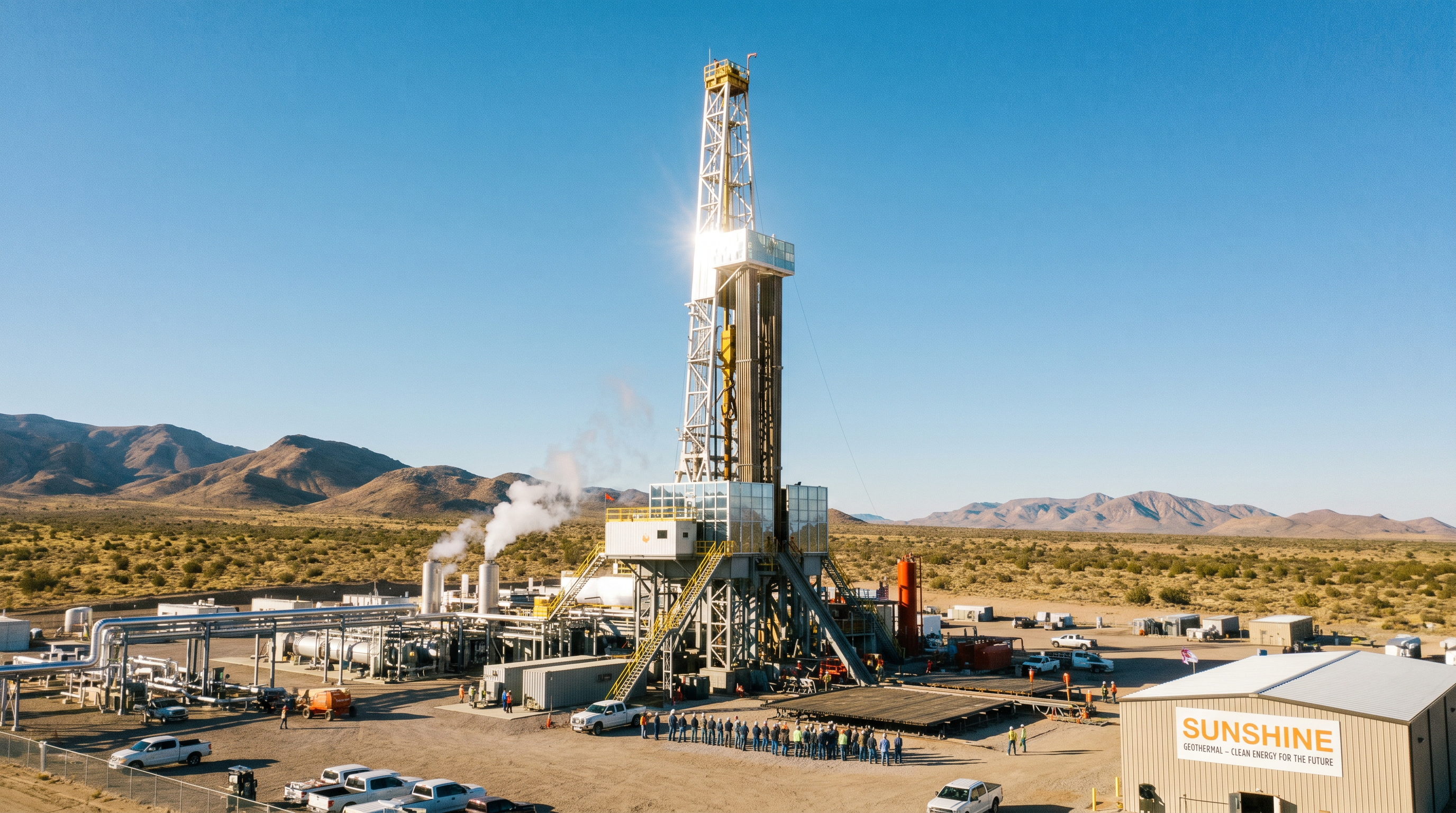
The flagship proving ground for this technology is Cape Station, a massive EGS facility currently under construction in Beaver County, Utah. Designed to eventually produce 500 megawatts (MW) of continuous power, the site is expected to deliver its first 100 MW to the grid in late 2026, serving utilities like Southern California Edison.[4][7]
Operating at these extreme depths and temperatures requires entirely new scientific instruments. Recently, researchers from the Lawrence Berkeley National Laboratory achieved a critical breakthrough at the Cape Station site by successfully deploying a high-temperature seismometer deep underground.[3]
For seven continuous months, the custom-built sensor monitored microseismic activity nearly 7,000 feet below the surface, withstanding temperatures up to 338°F. This unprecedented durability allows operators to map the subsurface fractures in real-time, ensuring the engineered reservoir is highly efficient while actively managing and mitigating the risk of induced earthquakes.[3]
The U.S. Department of Energy (DOE) views EGS as a linchpin of the clean energy transition. In its recent "Liftoff" report, the DOE projected that advanced geothermal technology could increase U.S. geothermal capacity from 4 gigawatts (GW) today to 90 GW by 2050—a twentyfold increase.[2]

Achieving that scale would provide enough firm power to support a fully decarbonized grid, complementing intermittent renewables and significantly reducing the need for massive, expensive battery storage deployments across the country.[2][6]
Despite the optimism, the industry faces significant hurdles. While the technology is proving viable, the regulatory environment remains sluggish. Permitting timelines for geothermal drilling on federal lands can take years, slowing the pace of deployment and frustrating developers eager to scale.[5]
Furthermore, while the cost curve is falling, EGS remains highly capital-intensive. The industry must prove that these engineered reservoirs will not degrade over time, maintaining their heat output and fluid flow for decades to justify the massive upfront investment required from project financiers.[5]
Grid interconnection is another severe bottleneck. Even if a gigawatt-scale geothermal plant is successfully built, the U.S. transmission infrastructure must be upgraded to carry that power from remote western deserts to the urban centers and data hubs that actually need it.[5]
Nevertheless, the convergence of oil-and-gas drilling expertise, Silicon Valley capital, and urgent climate mandates has pushed next-generation geothermal from a niche science experiment to a commercial reality. If the current trajectory holds, the heat beneath our feet may soon become the backbone of the digital economy.[4][7]
How we got here
2023
Fervo Energy launches Project Red in Nevada, proving the commercial viability of Enhanced Geothermal Systems.
March 2024
The DOE releases its Liftoff report, projecting next-generation geothermal could reach 90 GW by 2050.
July 2025
Berkeley Lab researchers deploy a high-temperature seismometer at Cape Station, beginning a record seven-month monitoring run.
May 2026
Fervo Energy goes public in a massive $1.89 billion IPO, signaling Wall Street's embrace of the technology.
Late 2026
Cape Station is scheduled to deliver its first 100 MW of continuous clean power to the grid.
Viewpoints in depth
Geothermal Developers & Tech Companies
Advocates for rapid scaling of EGS to meet the 24/7 power demands of artificial intelligence.
This camp, led by startups like Fervo Energy and hyperscalers like Google and Meta, views enhanced geothermal as the ultimate silver bullet for the grid. They argue that by repurposing the drilling innovations of the shale revolution, EGS can deliver baseload clean energy faster and more safely than nuclear power. For tech companies, underwriting these projects through massive power purchase agreements is a strategic imperative to ensure their AI data centers can operate around the clock without violating corporate climate pledges.
Energy Analysts & Economists
Cautiously optimistic observers focused on execution risks, cost curves, and grid bottlenecks.
While acknowledging the massive technical strides made in 2025 and 2026, energy analysts emphasize that EGS is still in its commercial infancy. They point out that while drilling costs have fallen by 75%, the absolute capital required to build a gigawatt-scale facility remains daunting. This camp closely watches the degradation rates of engineered reservoirs—questioning whether the artificial fractures will remain open and productive over a 30-year lifespan. They also warn that slow federal permitting and a lack of high-voltage transmission lines could throttle the industry's growth regardless of technological success.
Environmental & Community Advocates
Supporters of carbon-free energy who remain vigilant about water usage and induced seismicity.
Environmental groups generally support next-generation geothermal as a vastly superior alternative to fossil fuels, noting its tiny surface footprint and zero-emissions profile. However, they raise concerns about the localized impacts of EGS. The hydraulic fracturing process requires millions of gallons of water—a precious resource in the arid American West where these plants are primarily located. Additionally, while the microseismic events caused by fracturing are typically too small to be felt at the surface, advocates insist on rigorous, transparent monitoring to ensure operations do not trigger larger, damaging earthquakes.
What we don't know
- Whether the engineered subsurface fractures will remain open and productive over a multi-decade lifespan.
- How quickly federal and state agencies can streamline the permitting process for new geothermal drilling sites.
- If the U.S. transmission grid can be upgraded fast enough to carry gigawatts of new geothermal power from remote western deserts to urban data centers.
Key terms
- Enhanced Geothermal Systems (EGS)
- A technology that creates artificial underground reservoirs by injecting fluid into hot, dry rock to extract heat for electricity generation.
- Firm Power
- Electricity that can be generated reliably at any time of day or night, regardless of weather conditions.
- Hydraulic Fracturing
- The process of injecting liquid at high pressure into subterranean rocks to force open existing fissures and extract resources or heat.
- Power Purchase Agreement (PPA)
- A long-term contract between an electricity generator and a buyer, often used to guarantee revenue and secure financing for new energy projects.
- Microseismicity
- Very faint earth tremors, often induced by human activities like fluid injection, that are typically too small to be felt on the surface.
Frequently asked
How is next-generation geothermal different from traditional geothermal?
Traditional geothermal relies on naturally occurring underground pools of hot water. Next-generation systems (EGS) use advanced drilling to create artificial reservoirs in hot, dry rock, meaning they can be built almost anywhere.
Does enhanced geothermal use fracking?
Yes, EGS uses hydraulic fracturing techniques borrowed from the oil and gas industry to create tiny cracks in deep underground rock, allowing water to circulate and absorb heat.
Can geothermal energy cause earthquakes?
The fracturing process creates microseismic events, which are usually too small to be felt. Operators use advanced monitoring equipment to manage the reservoir and prevent larger, induced earthquakes.
Why are tech companies investing in geothermal?
Tech giants like Google and Meta need massive amounts of reliable, 24/7 electricity to power their AI data centers, and geothermal provides a carbon-free alternative to fossil fuels.
Sources
Source coverage
7 outlets
3 viewpoints surfaced







[1]TIMEGeothermal Developers
Fervo Energy: 2025 TIME100 Most Influential Companies
Read on TIME →[2]U.S. Department of EnergyScientific Researchers
Pathways to Commercial Liftoff: Next-Generation Geothermal Power
Read on U.S. Department of Energy →[3]Lawrence Berkeley National LaboratoryScientific Researchers
Scaling enhanced geothermal systems with continuous monitoring
Read on Lawrence Berkeley National Laboratory →[4]Cleantech GroupGeothermal Developers
Fervo Energy IPO and the Geothermal Framework
Read on Cleantech Group →[5]ThinkGeoEnergyEnergy Analysts
A year of momentum, but not the breakout many hoped for
Read on ThinkGeoEnergy →[6]World Resources InstituteScientific Researchers
The Promise of Next-Generation Geothermal
Read on World Resources Institute →[7]ESG TodayGeothermal Developers
Geothermal Developer Fervo Energy Raises $1.9 Billion in Upsized IPO
Read on ESG Today →
More in environment
See all 8 stories →Urban Resilience
How 'Sponge Cities' Are Redesigning the Urban Landscape to Stop Flooding
7 sources

Reef Tech
Beyond Planting: How Acoustic Enrichment and Micro-Fragmentation Are Rebuilding Coral Reefs
6 sources

Wildfire Tech
How AI is Catching Wildfires Before the First 911 Call
7 sources
Atmospheric Water
How Metal-Organic Frameworks Are Pulling Drinking Water From Desert Air
9 sources
Every angle. Every day.
Get environment stories with full source coverage and perspective breakdowns delivered to your inbox.