
USL Super League Aligns Calendar with NWSL as American Women's Soccer Prepares for 2031 World Cup
The Gainbridge USL Super League will shift to a spring-to-fall schedule in 2027, unifying the domestic women's soccer calendar as the sport experiences unprecedented attendance and investment.
By Factlen Editorial Team
- League Executives
- Focused on commercial alignment, domestic collaboration, and preparing the U.S. market for the 2031 Women's World Cup.
- Sports Business Analysts
- Focused on the unprecedented attendance figures, rising valuations, and the sport's trajectory toward an 800-million global audience.
- Club Management
- Focused on the immediate logistical challenges, roster building, and competitive pressure of the shortened 2026 transition season.
What's not represented
- · International Club Managers
- · Players' Union Representatives
Why this matters
A unified domestic calendar strengthens the commercial power of American women's soccer, paving the way for larger broadcast deals, higher player salaries, and a stronger U.S. bid for the 2031 World Cup.
Key points
- The USL Super League will transition to a spring-to-fall calendar in 2027, reversing its original European-style schedule.
- The league will play a transitional 14-match Fall Season in 2026 to bridge the gap.
- The alignment aims to unify the domestic soccer landscape ahead of the 2031 FIFA Women's World Cup.
- The move coincides with explosive growth in the sport, highlighted by the NWSL's recent 63,004 single-game attendance record.
- Analysts project women's soccer will become the world's fifth-largest athletic draw by 2030.
The Gainbridge USL Super League has officially announced a fundamental shift in its operational model, declaring a move to a spring-to-fall calendar starting in 2027. The decision marks a direct reversal of the league's original fall-to-spring schedule, which was initially designed to mirror the traditional European club calendar.[1][2]
The pivot is driven by a desire to unify the domestic women's soccer landscape in the United States. By aligning its schedule with the National Women's Soccer League (NWSL), the USL Super League aims to foster greater collaboration across North American competitions.[1][3]
USL President Paul McDonough emphasized that the change positions the league to be a stronger partner in the sport's domestic growth. A primary catalyst for this alignment is the impending 2031 FIFA Women's World Cup, which the United States is actively bidding to host.[1][3]

To bridge the gap before the 2027 transition, the USL Super League will execute a standalone, abbreviated Fall Season in 2026. The eight-club campaign will kick off on August 15, featuring a high-stakes 14-match sprint where each team plays seven home and seven away fixtures.[2][3]
The compressed schedule leaves virtually no margin for error. The club that finishes atop the table by November 28 will claim the Players' Shield, while the top four teams will advance to a playoff bracket culminating in a December 12 championship final.[2][3]
The compressed schedule leaves virtually no margin for error.
For club management and coaching staffs, the sudden calendar shift introduces immediate logistical hurdles. Teams like Dallas Trinity FC are navigating a highly condensed offseason, forcing head coaches to finalize their rosters and tactical frameworks on an accelerated timeline ahead of the August opener.[2]
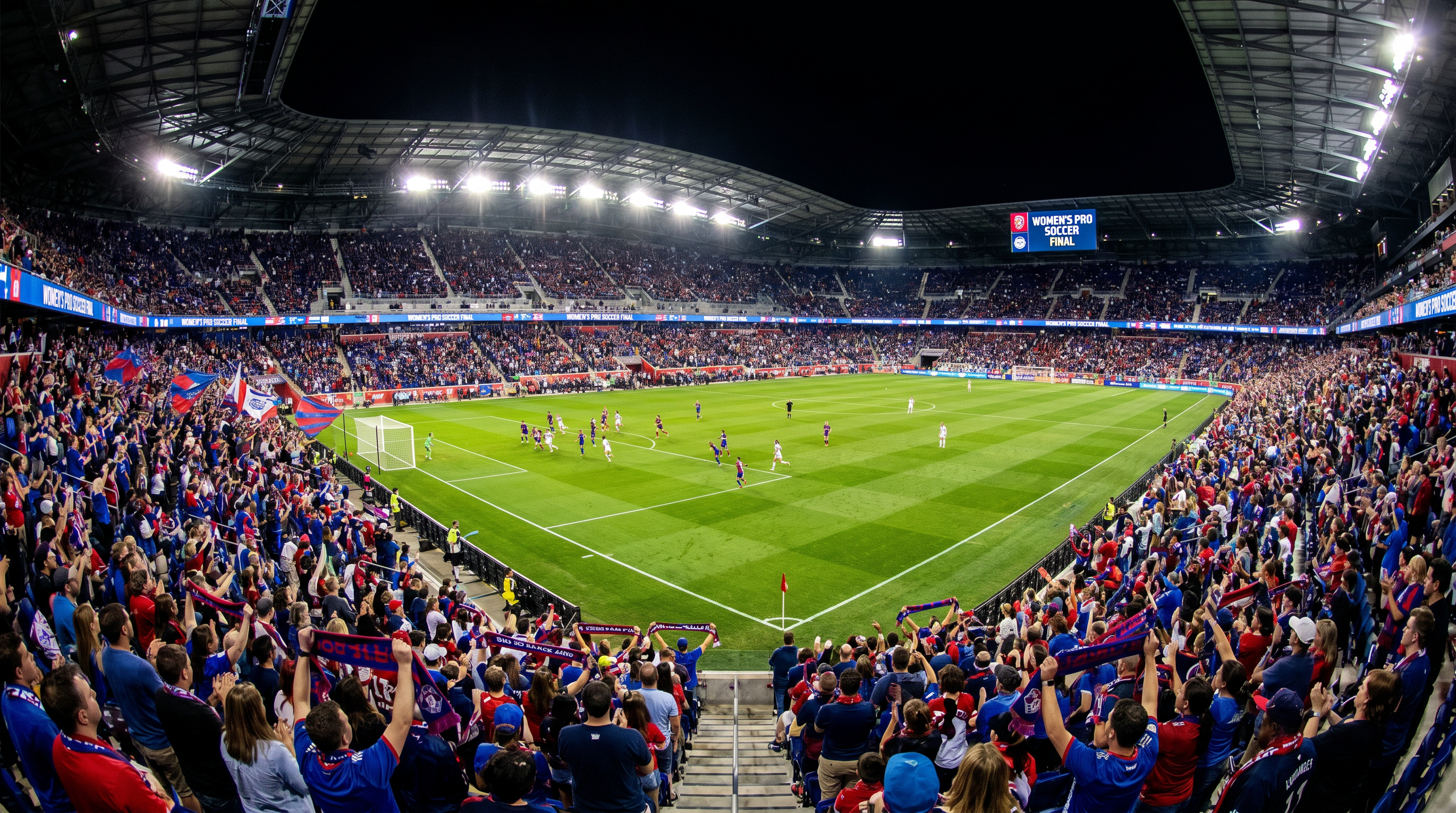
The USL's strategic realignment arrives during a period of unprecedented, explosive growth for women's professional soccer in the United States. The rival NWSL opened its 2026 campaign by shattering historical attendance metrics, drawing 129,202 fans across its opening weekend for a record average of 16,150 per match.[5][7]

The appetite for the women's game was perhaps best illustrated in Denver, where the expansion Summit franchise hosted a staggering 63,004 fans at Empower Field at Mile High. The landmark fixture obliterated the NWSL's previous single-game attendance record by more than 20,000 spectators.[4]
Other markets demonstrated similar fervor. Boston Legacy FC welcomed over 30,000 fans for its inaugural match, while established clubs in Kansas City and Washington, D.C., opened their seasons to sold-out stadiums.[5][7]
This domestic surge is part of a broader North American soccer renaissance. A recent Nielsen report revealed that the continent's overall soccer fan base has swelled by nearly 11 percent over the past five years, reaching 136 million people as the 2026 Men's World Cup dominates the summer sporting calendar.[8]

The financial ecosystem surrounding women's soccer is scaling in tandem with its audience. Agencies and marketing firms report a massive influx of commercial partnerships, while player valuations continue to climb, evidenced by record-breaking transfer fees and multi-million dollar contracts for top international talent.[5][6]
Looking ahead, industry analysts project that women's soccer will become the world's fifth-largest athletic draw by 2030, commanding a global audience of over 800 million fans. By synchronizing their calendars, the USL Super League and NWSL are ensuring that the American domestic pipeline is structurally prepared to capitalize on that monumental wave.[6]
How we got here
August 2024
The USL Super League kicks off its inaugural fall-to-spring season.
March 2026
The NWSL sets an all-time attendance record with 63,004 fans at a Denver Summit match.
June 2026
The USL Super League announces a shift to a spring-to-fall calendar starting in 2027.
August 2026
The USL Super League will begin a transitional 14-match Fall Season.
Spring 2027
The USL Super League and NWSL will operate on aligned domestic calendars.
Viewpoints in depth
League Executives' view
Unifying the domestic calendar is essential for maximizing commercial growth and preparing for the 2031 World Cup.
Leadership across the USL and NWSL recognize that a fragmented calendar dilutes the impact of American women's soccer. By aligning schedules, the leagues can present a unified front to broadcasters, sponsors, and fans. Executives argue this synchronization is a strategic necessity to capitalize on the momentum leading into the 2031 FIFA Women's World Cup, ensuring the United States remains the epicenter of the sport's commercial explosion.
Club Management's view
The sudden schedule change creates intense, immediate logistical pressure for coaching staffs.
While acknowledging the long-term benefits of calendar alignment, club managers and head coaches face a daunting short-term reality. The transitional 14-match Fall Season in 2026 leaves virtually no margin for error or slow starts. Front offices are scrambling through a condensed offseason to finalize rosters, integrate new signings, and build tactical cohesion, knowing that a single bad month could eliminate them from playoff contention.
Sports Business Analysts' view
The calendar alignment reflects a maturing industry racing to capture an 800-million-strong global audience.
Market analysts view the USL's pivot not just as a scheduling tweak, but as a symptom of a rapidly maturing asset class. With the NWSL drawing 63,000 fans to single matches and overall North American soccer interest surging past 130 million fans, the financial stakes have never been higher. Analysts project that streamlining the domestic product will accelerate media rights valuations and help women's soccer cement its status as a top-five global athletic draw by the end of the decade.
What we don't know
- The exact format and match count for the USL Super League's first full spring-to-fall season in 2027.
- Whether the unified calendar will lead to direct inter-league competitions between the NWSL and USL Super League.
- If the United States will successfully secure the hosting rights for the 2031 FIFA Women's World Cup.
Key terms
- USL Super League
- A Division I professional women's soccer league in the United States that launched to expand the professional pathway.
- NWSL
- The National Women's Soccer League, the longest-running top-tier professional women's soccer league in the United States.
- Players' Shield
- The trophy awarded to the USL Super League team that finishes first in the regular-season standings.
- Fall-to-Spring Calendar
- The traditional European soccer schedule that runs from late summer through the following May.
Frequently asked
Why is the USL Super League changing its schedule?
The league is shifting to a spring-to-fall calendar to align with the NWSL and the broader North American soccer landscape ahead of the 2031 Women's World Cup.
What happens to the USL Super League in 2026?
To bridge the gap before the 2027 transition, the league will play a shortened, 14-match transitional Fall Season running from August 15 to December 12.
How many fans are attending women's soccer games in the US?
The NWSL set a new benchmark in early 2026, averaging over 16,000 fans on opening weekend and drawing a record 63,004 spectators to a single match in Denver.
What is the projected growth for women's soccer globally?
Industry analysts project the sport will become the world's fifth-largest athletic draw by 2030, with an audience exceeding 800 million fans.
Sources
Source coverage
8 outlets
3 viewpoints surfaced








[1]Equalizer SoccerLeague Executives
USL Super League switching to spring-fall calendar in 2027
Read on Equalizer Soccer →[2]3rd DegreeClub Management
USL Super League moving to Spring/Fall calendar, will play standalone season in Fall 2026
Read on 3rd Degree →[3]Brooklyn Football ClubLeague Executives
Gainbridge Super League Announces 2026 Fall Season Format, Transition to Spring-to-Fall Calendar in 2027
Read on Brooklyn Football Club →[4]The GuardianSports Business Analysts
NWSL newcomers attracted more than 60,000 fans to Mile High Stadium for landmark fixture
Read on The Guardian →[5]Sports Business JournalSports Business Analysts
NWSL sets opening weekend attendance record
Read on Sports Business Journal →[6]New York Institute of TechnologySports Business Analysts
From New York Tech to the Global Stage of Women's Soccer
Read on New York Institute of Technology →[7]NWSL OfficialLeague Executives
NWSL Sets Opening Weekend Attendance Record to Kick Off 2026 Season
Read on NWSL Official →[8]Straits TimesSports Business Analysts
Interest climbs for soccer across North America before 2026 World Cup, study shows
Read on Straits Times →

More in sports
See all 309 stories →Training Science
The Zone 2 Training Revolution: Why Cyclists Are Riding Slower to Get Faster
7 sources

USWNT
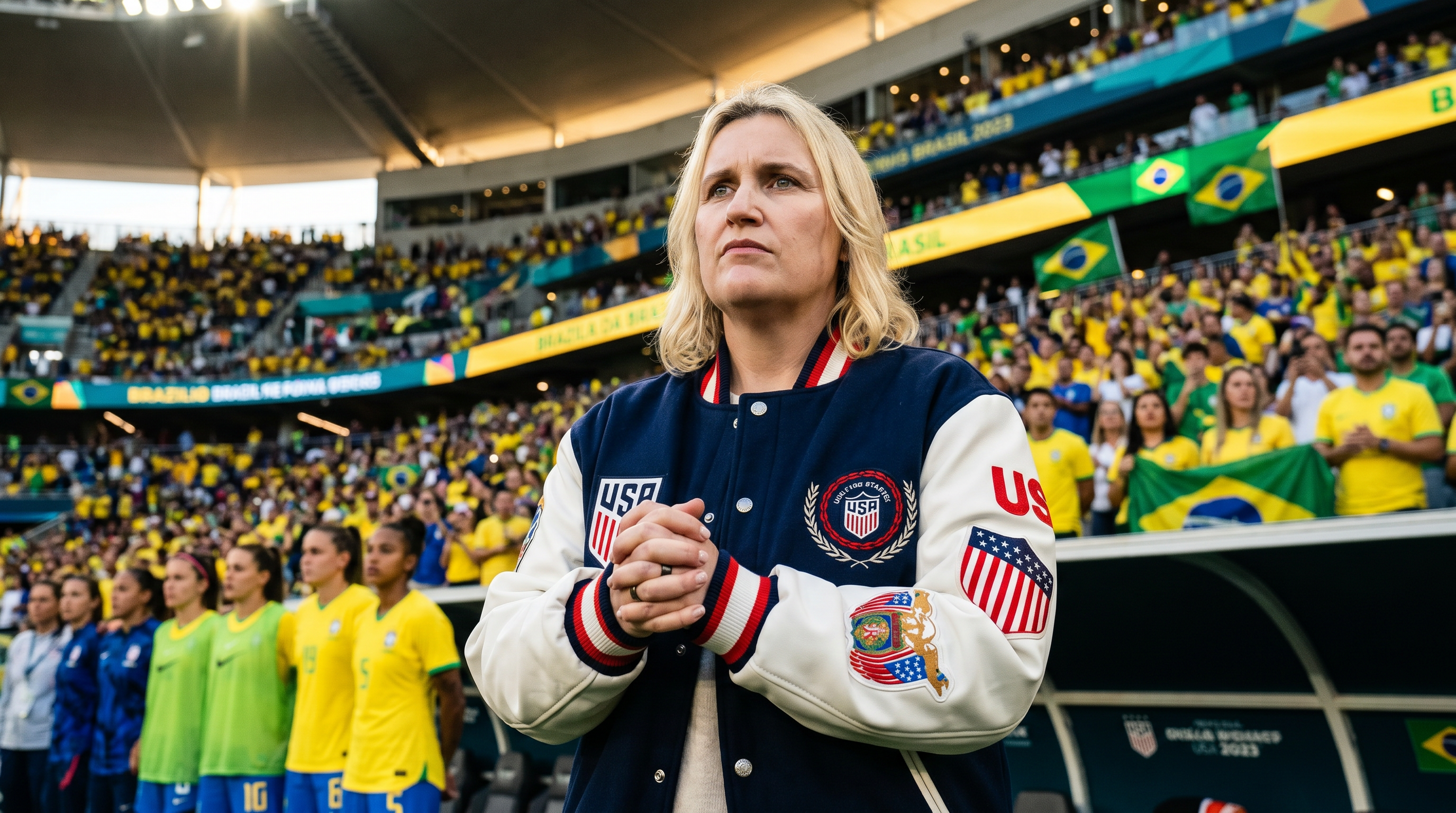
USWNT Embraces Chaos in Brazil, Splitting Friendly Series Amid Eight Red Cards
6 sources
NBA Finals
New York Knicks Complete Largest Comeback in NBA Finals History to Take 3-1 Lead
7 sources

Women's Soccer
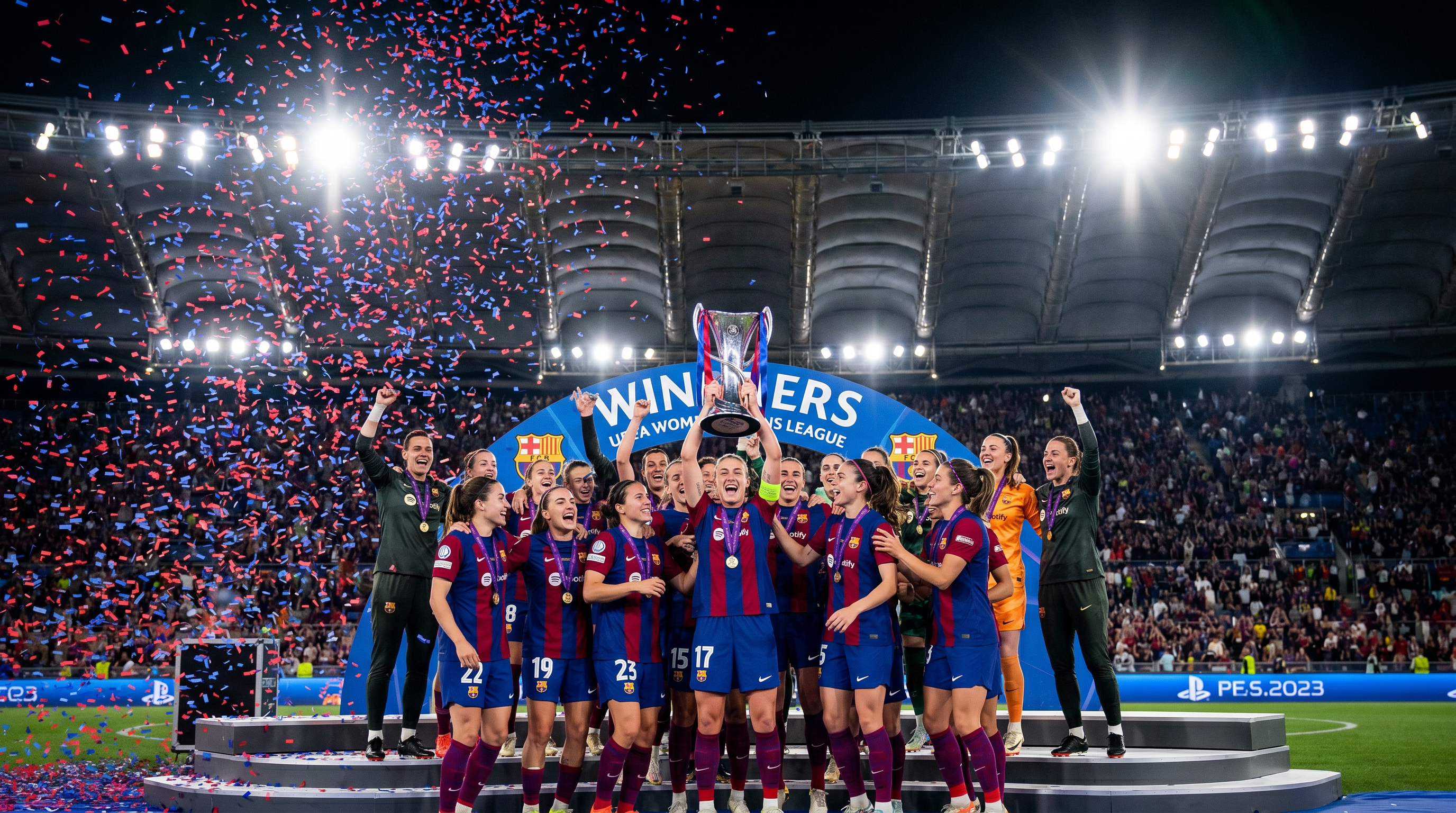
UEFA Women's Champions League Shatters Viewership Records With 44.5 Million Audience
6 sources
Every angle. Every day.
Get sports stories with full source coverage and perspective breakdowns delivered to your inbox.