
The Rise of Agrivoltaics: How Dual-Use Solar is Reshaping the Future of Farming
By co-locating solar panels and crops on the same land, agrivoltaics is boosting farm incomes, saving water, and accelerating the clean energy transition. But scaling the technology requires overcoming high upfront costs and complex regulatory hurdles.
By Factlen Editorial Team
- Agricultural Innovators
- Focus on the agronomic benefits of microclimates, water conservation, and stabilizing farm revenues through dual-income models.
- Renewable Energy Developers
- View agrivoltaics as a critical tool to unlock land access, reduce local opposition to solar farms, and lower maintenance costs via solar grazing.
- Policy & Land-Use Regulators
- Emphasize the need for clear zoning definitions and standardized frameworks to protect prime farmland while meeting decarbonization targets.
- Independent Analysts
- Synthesize the competing priorities to evaluate the long-term viability and scalability of dual-use infrastructure.
What's not represented
- · Traditional row-crop farmers whose land is unsuitable for current agrivoltaic designs
- · Local utility grid operators managing decentralized power inputs
Why this matters
As the world races to build renewable energy, developers and farmers are increasingly fighting over the same land. Agrivoltaics solves this zero-sum conflict, offering a blueprint for producing clean power without sacrificing global food security.
Key points
- Agrivoltaics co-locates solar panels and agricultural production on the same land, eliminating the competition between energy and food.
- The panels create beneficial microclimates that reduce soil evaporation by up to 50% and protect crops from extreme heat.
- Shade-tolerant crops like lettuce and tomatoes see yield increases, while sun-intensive crops like corn experience significant declines.
- The dual-income model stabilizes farm finances, combining crop sales with predictable solar lease revenue.
- Scaling the technology requires overcoming higher initial capital costs for elevated racking and navigating fragmented zoning laws.
The global transition to renewable energy faces a looming geographic bottleneck: space. By 2050, the expansion of utility-scale solar power could require millions of acres of land, placing energy developers in direct competition with the agricultural sector for flat, sun-drenched acreage. For years, this dynamic has forced a zero-sum choice between harvesting sunlight and growing food.[6][7]
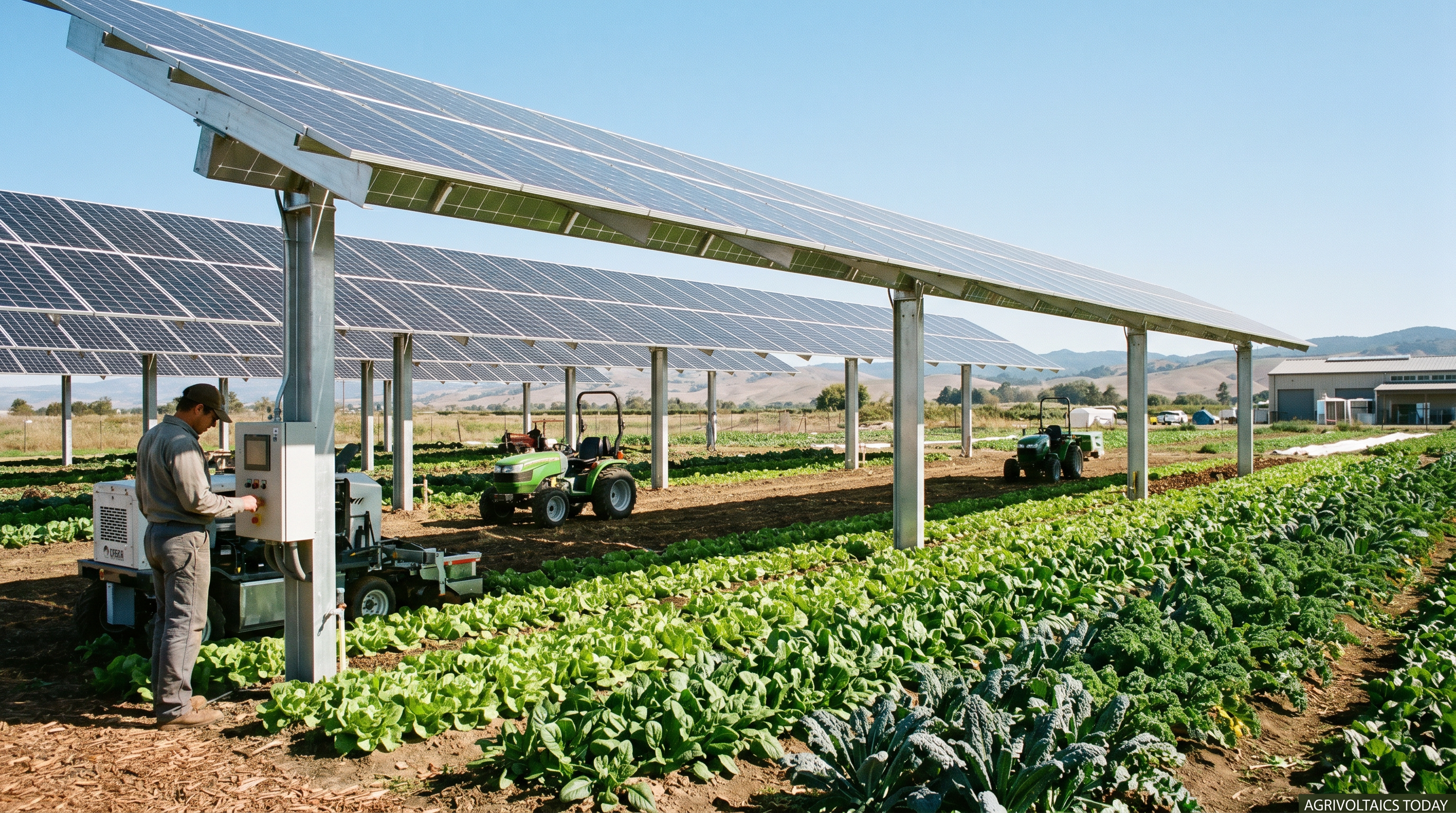
Enter agrivoltaics—a rapidly scaling dual-use framework that co-locates photovoltaic panels and agricultural production on the exact same plot of land. Rather than clear-cutting prime farmland to install low-mounted solar arrays, agrivoltaic systems elevate the panels on specialized racking, allowing crops to grow, livestock to graze, and tractors to operate underneath.[1][2]
The concept is moving swiftly from experimental pilot projects to commercial deployment. In the United States alone, agrivoltaic installations more than doubled between 2020 and 2024, expanding from 27,000 acres to over 62,000 acres, and generating roughly 10 gigawatts of solar capacity. In Europe, researchers estimate that deploying agrivoltaics on just 1% of the continent's agricultural land could unlock 944 gigawatts of capacity, fundamentally altering the region's energy security calculus.[4][5]
The core mechanism driving agrivoltaics' success is the creation of beneficial microclimates. Solar panels provide partial shading that dramatically alters the environment at the soil level. During peak summer heat, the panels act as a protective canopy, lowering ambient air and soil temperatures. At night, the structures help trap heat, protecting sensitive crops from sudden frosts.[2][3]

This microclimate effect translates into profound water conservation. By shielding the soil from direct, relentless sunlight, agrivoltaic arrays reduce evapotranspiration—the process by which water is transferred from the land to the atmosphere. Studies indicate that irrigation needs can drop by 14% to 50% depending on the specific crop and local climate, offering a critical lifeline to farmers operating in drought-prone or water-stressed regions.[2][3]
However, the agricultural benefits are not universal; success depends entirely on crop selection. Plants have a "light saturation point," meaning they can only utilize a certain amount of sunlight for photosynthesis before the excess light becomes a stressor. Shade-tolerant crops, which evolved in forest understories, thrive in these partially shaded environments.[1][2][3]
Recent commercial trials demonstrate that leafy greens like lettuce can see yield increases of up to 15% under solar panels, while tomatoes and berries can experience bumps of 12% and 8%, respectively. The shade reduces heat stress, allowing these plants to channel energy into fruit and leaf production rather than survival mechanisms.[1][3]
The shade reduces heat stress, allowing these plants to channel energy into fruit and leaf production rather than survival mechanisms.
Conversely, sun-intensive crops that evolved in open grasslands—such as corn and wheat—struggle under the panels. These C4-pathway plants require full, uninterrupted sunlight to maximize their growth. Planting them in an agrivoltaic system can result in yield reductions of 25% to 40%, making traditional row-crop farming largely incompatible with current dense solar array designs.[3]

For land where crop cultivation isn't viable, "solar grazing" has emerged as a highly profitable alternative. Sheep are introduced to the solar fields to forage on pasture grasses, effectively serving as a natural landscaping service. This eliminates the developer's need for fossil-fuel-powered mowers and herbicides, while providing livestock farmers with a steady stream of income and free grazing land.[4][6]
The economic calculus for farmers is perhaps the most compelling driver of adoption. Agriculture is notoriously volatile, subject to the whims of extreme weather, commodity pricing, and rising input costs. Agrivoltaics introduces a predictable, long-term revenue stream via solar land leases or direct energy sales. This dual-income model stabilizes farm finances, allowing operators to keep their land in the family rather than selling it off to pure commercial developers.[2][6]
When evaluating the total output of the land, agrivoltaics achieves remarkable efficiency. Agronomists measure this using the Land Equivalent Ratio (LER). Because the land is producing both food and electricity simultaneously, overall land productivity gains of 35% to 73% are routinely reported, meaning it would take significantly more acreage to produce the same amount of food and energy separately.[3]

Despite the clear agronomic and economic benefits, scaling agrivoltaics presents formidable engineering challenges. Traditional solar farms are built low to the ground to minimize steel costs and wind resistance. Agrivoltaic systems require panels to be elevated—typically 2.5 to 4 meters high—to allow tractors and combine harvesters to pass underneath.[1][3]
This elevated racking, combined with the need to space the rows wider apart to allow sufficient light penetration, significantly increases the initial capital expenditure. Depending on the design complexity, agrivoltaic installations can cost 10% to 40% more upfront than standard utility-scale solar projects. For small- and medium-scale farmers, this premium can be a prohibitive barrier to entry without targeted government subsidies or favorable financing.[1][6]

Regulatory friction also threatens to slow deployment. In many jurisdictions, zoning laws strictly separate "agricultural" and "industrial" land uses. If a farmer installs a massive solar array, they risk losing their agricultural tax exemptions, even if they continue to grow crops underneath. In Europe, the regulatory landscape remains highly fragmented, with only a few nations having established clear legal definitions that protect a farmer's status when adopting dual-use technology.[5][7]
To overcome these hurdles, the industry is rapidly innovating. Next-generation agrivoltaic designs are incorporating bifacial solar panels that capture reflected light from the crops below, and dynamic tracking systems that tilt the panels throughout the day to optimize the balance between energy generation and plant photosynthesis.[1]
As climate change accelerates and the demand for clean energy intensifies, the pressure on global land resources will only grow. Agrivoltaics offers a rare paradigm shift: a framework where energy security and food sovereignty are no longer locked in a zero-sum battle, but instead work in tandem to build a more resilient rural economy.[6][7]

How we got here
2020
U.S. agrivoltaics capacity sits at 4.5 gigawatts across 27,000 acres, largely in experimental pilot phases.
2024
U.S. capacity more than doubles to 10 gigawatts across 62,000 acres as commercial viability is proven.
2025
European Union strategies officially recognize agrivoltaics, though member states struggle with fragmented zoning regulations.
2026
The global agrivoltaics market accelerates, driven by advanced racking designs and increasing agricultural climate stress.
Viewpoints in depth
Agricultural Innovators
Farmers and agronomists focused on crop resilience and revenue diversification.
For the agricultural sector, agrivoltaics is primarily a climate adaptation and financial survival tool. Agronomists highlight that as global temperatures rise, the shade provided by solar panels acts as a critical buffer against heat stress and rapid soil evaporation. By carefully selecting shade-tolerant crops like leafy greens and berries, farmers can actually increase their yields while slashing irrigation costs. Just as importantly, the steady revenue from solar leases or energy sales provides a financial floor, insulating family farms from the extreme volatility of commodity markets and extreme weather events.
Renewable Energy Developers
Energy companies seeking to scale utility solar while minimizing community friction.
Solar developers view agrivoltaics as the key to unlocking the millions of acres required to meet mid-century decarbonization goals. Historically, proposing a massive solar farm on agricultural land triggered fierce local opposition and protracted zoning battles over the loss of food production. By integrating agriculture into the array design, developers can bypass this 'food versus fuel' conflict, securing community buy-in and faster permitting. Furthermore, partnering with livestock farmers for 'solar grazing' drastically reduces the developer's ongoing vegetation management costs.
Policy & Land-Use Regulators
Government officials balancing decarbonization mandates with food security.
Regulators and policymakers are caught between two urgent mandates: rapidly expanding renewable energy infrastructure and protecting prime agricultural land. Their primary concern is establishing rigorous legal definitions for agrivoltaics to prevent 'greenwashing'—where developers install standard solar farms, plant minimal vegetation, and claim agricultural tax exemptions. Regulators are pushing for standardized frameworks that mandate minimum crop yields or active grazing to ensure the land remains genuinely productive, while also working to streamline grid connectivity for rural farmers.
What we don't know
- How the long-term degradation of soil compaction from heavy solar installation equipment will affect multi-decade crop yields.
- Whether government subsidies will be standardized enough to make the higher upfront costs viable for small-scale family farms.
- How rapidly dynamic tracking technology and semi-transparent panels will become cost-competitive with standard opaque arrays.
Key terms
- Agrivoltaics
- The simultaneous use of land for both solar energy generation and agricultural production.
- Land Equivalent Ratio (LER)
- A metric used to measure the productivity of dual-use land compared to separating the uses on different plots.
- Microclimate
- The distinct local climate conditions created beneath solar panels, characterized by lower temperatures and higher soil moisture.
- Solar Grazing
- The practice of using livestock, typically sheep, to manage vegetation under and around solar panels.
- Evapotranspiration
- The process by which water is transferred from the land to the atmosphere by evaporation from the soil and transpiration from plants.
Frequently asked
Can tractors still be used in agrivoltaic fields?
Yes. Agrivoltaic arrays are designed with elevated racking—typically 2.5 to 4 meters high—and wider row spacing specifically to accommodate standard agricultural machinery.
Do solar panels block too much light for plants to grow?
It depends on the crop. Shade-tolerant plants like leafy greens and berries thrive and can see yield increases, while sun-intensive crops like corn and wheat experience reduced yields.
Why is agrivoltaics more expensive to install?
The systems require specialized, elevated mounting structures and reinforced foundations to withstand wind loads, increasing initial capital costs by 10% to 40% compared to traditional solar farms.
What is solar grazing?
Solar grazing is the practice of using livestock, most commonly sheep, to manage the vegetation under and around solar panels, providing a dual-use benefit without the need for crop cultivation.
Sources
Source coverage
7 outlets
4 viewpoints surfaced






[1]AZoCleantechAgricultural Innovators
What are the Key Benefits and Challenges of Agrivoltaics?
Read on AZoCleantech →[2]SolarTechRenewable Energy Developers
What is Agrivoltaics? The Complete Guide to Solar-Agriculture Integration
Read on SolarTech →[3]Energy Solutions IntelligenceAgricultural Innovators
Agrivoltaics 2026: Farming & Solar Dual Income
Read on Energy Solutions Intelligence →[4]National Renewable Energy LaboratoryPolicy & Land-Use Regulators
Lighting the Way for Agrivoltaics
Read on National Renewable Energy Laboratory →[5]SolarplazaPolicy & Land-Use Regulators
3 hard truths about agrivoltaics in Europe
Read on Solarplaza →[6]Institute for Energy Economics and Financial AnalysisRenewable Energy Developers
Agrivoltaics: An Economic Option for Farmers and Rural Development
Read on Institute for Energy Economics and Financial Analysis →[7]Factlen Editorial TeamIndependent Analysts
Synthesis by Factlen editorial team
Read on Factlen Editorial Team →
More in environment
See all 8 stories →Urban Resilience
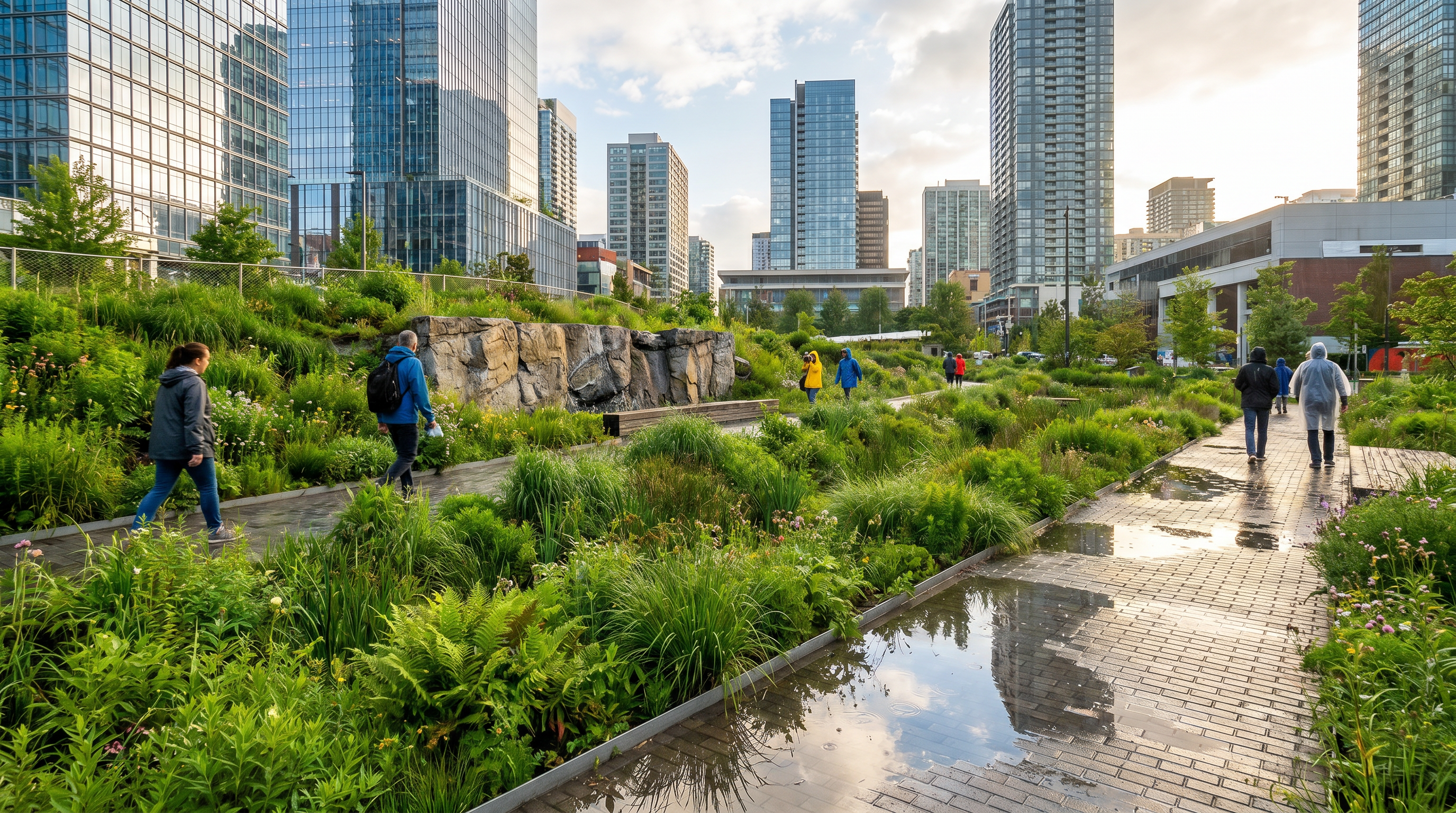
How 'Sponge Cities' Are Redesigning the Urban Landscape to Stop Flooding
7 sources
Reef Tech
Beyond Planting: How Acoustic Enrichment and Micro-Fragmentation Are Rebuilding Coral Reefs
6 sources

Wildfire Tech
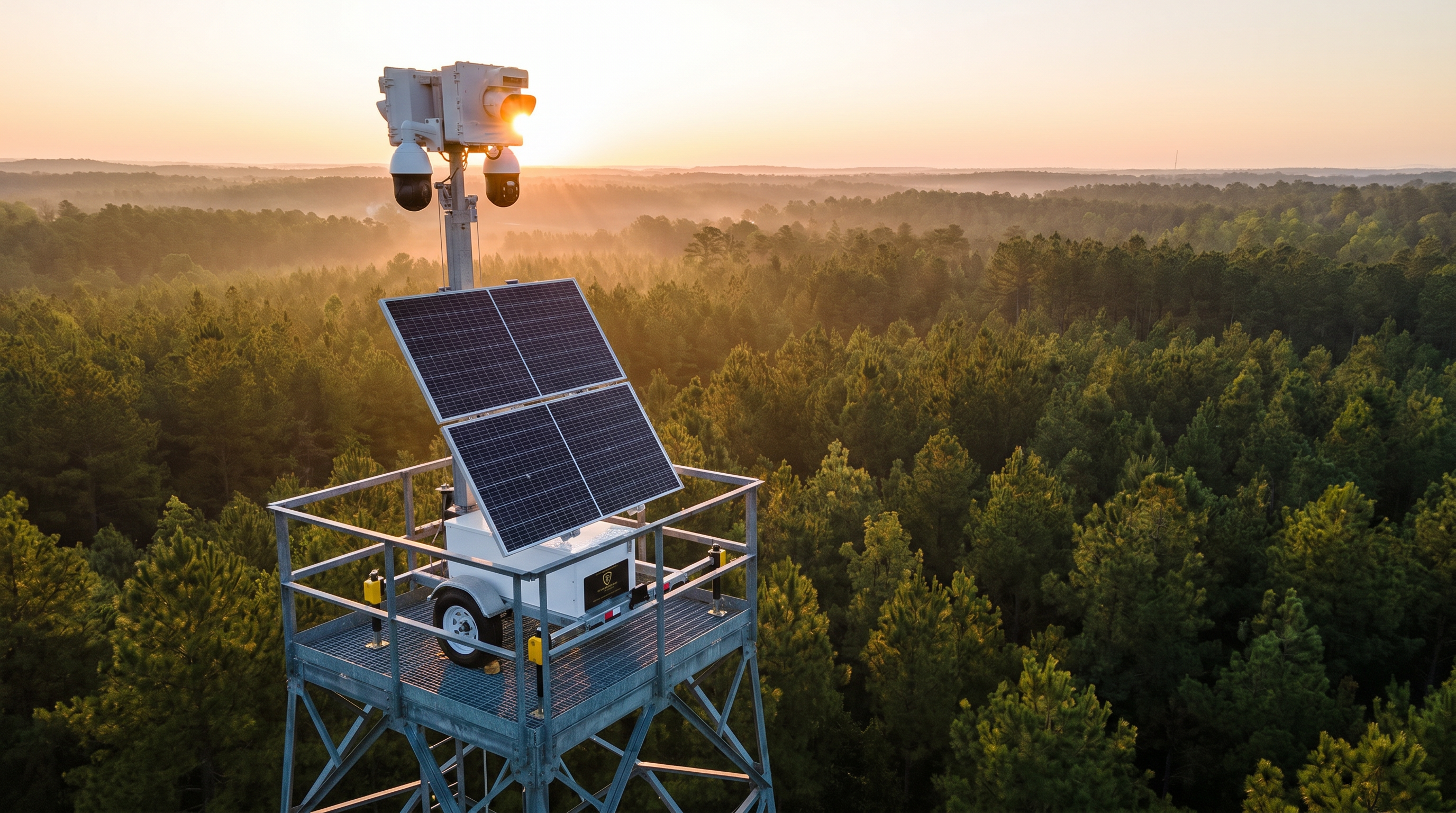
How AI is Catching Wildfires Before the First 911 Call
7 sources
Atmospheric Water
How Metal-Organic Frameworks Are Pulling Drinking Water From Desert Air
9 sources
Every angle. Every day.
Get environment stories with full source coverage and perspective breakdowns delivered to your inbox.