
Inside the Passive House: The Building Standard That Cuts Energy Use by 90%
The Passivhaus standard relies on extreme insulation and airtightness to maintain perfect indoor temperatures year-round without conventional heating or cooling systems.
By Factlen Editorial Team
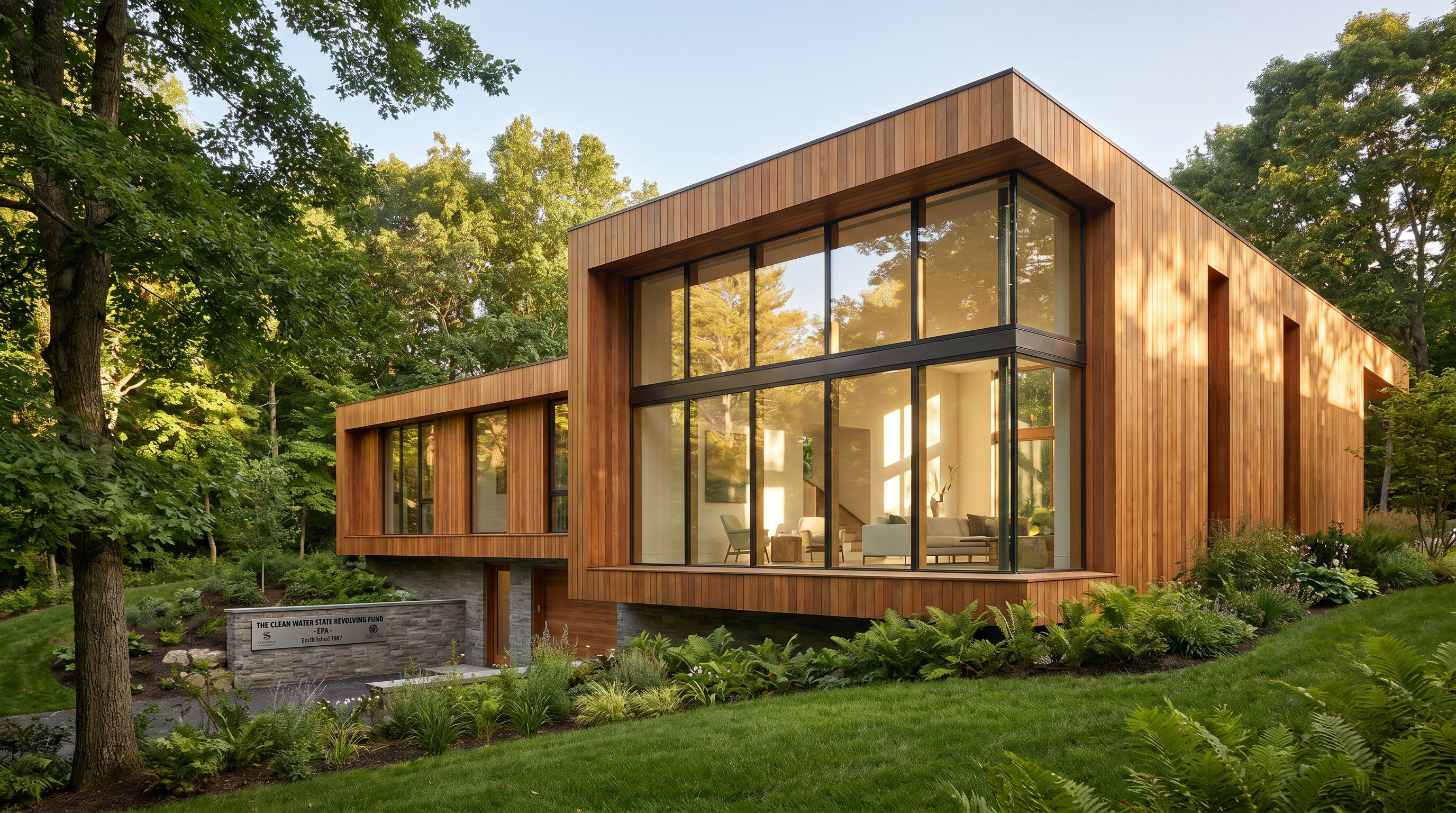
- Passivhaus Advocates
- Prioritize extreme energy efficiency, thermal comfort, and indoor air quality.
- Public Policy Planners
- Focus on grid resilience, building codes, and eliminating fuel poverty.
- Traditional Builders & Sceptics
- Emphasize upfront costs, construction complexity, and ROI timelines.
What's not represented
- · Homeowners who have lived in Passive Houses for decades
- · HVAC manufacturers facing reduced demand for conventional furnaces
Why this matters
Buildings account for a massive portion of global carbon emissions and household expenses. Understanding the Passive House standard empowers homeowners and buyers to radically lower their utility bills, improve their indoor air quality, and protect themselves against volatile energy prices and extreme weather.
Key points
- Passive House is a rigorous building standard that reduces heating and cooling energy demand by up to 90 percent.
- The standard relies on five principles: superinsulation, airtightness, high-performance windows, thermal bridge-free design, and mechanical ventilation.
- Heat Recovery Ventilators (HRVs) provide a constant supply of fresh, filtered air without losing the home's internal heat.
- Building a Passive House typically costs 10 to 30 percent more upfront, but energy savings often pay back the premium within a decade.
- The standard is increasingly being used for commercial buildings and social housing to eliminate fuel poverty and reduce grid strain.
Imagine a home that stays a comfortable 68 degrees year-round, regardless of blizzards or heatwaves outside, with no traditional furnace or air conditioner. This is the promise of the Passive House, or Passivhaus, standard. It is a rigorous, science-backed approach to building design that prioritizes extreme energy efficiency, thermal comfort, and exceptional indoor air quality. Rather than relying on massive mechanical systems to heat and cool the air, the home itself does the heavy lifting.[10]
The scale of the potential impact is massive. The energy we use in our buildings is responsible for a significant portion of global carbon emissions, the vast majority of which is burned for space heating and cooling. Passive House design flips this dynamic entirely, reducing heating and cooling demand by up to 90 percent compared to conventional homes, and cutting overall energy use by roughly 70 percent.[4][5]
The concept is not entirely new. The modern standard originated from a 1988 conversation between Swedish academic Bo Adamson and German physicist Wolfgang Feist. They sought to quantify exactly what it would take to build a home so thermally efficient that it would not need a conventional heating system. By 1991, the first certified Passive House was built in Darmstadt, Germany, proving that the physics worked in the real world.[1]
Unlike many green building approaches that rely on bolting solar panels onto a standard roof to offset high energy consumption, Passivhaus takes a "fabric first" approach. It focuses entirely on optimizing the building envelope—the physical barrier between the indoors and outdoors. The standard is built upon five core principles that must work in harmony to achieve certification.[2][4]

The first pillar of this approach is extreme superinsulation. Passive Houses use significantly thicker layers of high-performance insulation in the walls, roof, and foundation than standard building codes require. This creates a continuous thermal buffer that holds indoor temperatures steady for days, much like a high-quality thermos keeps coffee hot in the winter and iced tea cold in the summer.[1][4]
However, insulation alone is practically useless if cold wind can blow right through the walls. Airtightness is the second pillar. Builders meticulously seal every joint, seam, and electrical penetration with specialized tapes and membranes to prevent drafts and uncontrolled air leaks. During construction, the building undergoes rigorous blower-door testing to ensure the envelope is virtually leak-proof.[4]
Because windows are typically the weakest point in any building envelope, the third principle requires the use of high-performance glazing. Passive Houses utilize advanced windows—usually triple-paned glass filled with inert argon or krypton gas, set into heavily insulated frames with warm-edge spacers. These windows are carefully positioned to capture free solar heat during the winter while utilizing shading to block the harsh summer sun.[1][4]
The fourth principle involves eradicating thermal bridges. A thermal bridge is a highly conductive material, like a steel beam or a concrete balcony slab, that passes directly from the inside of the home to the outside. These act as highways for heat to escape and can cause condensation and mold. Passive House design requires meticulous engineering to eliminate these weak points entirely.[2][4]
With a house sealed so tightly, a common question immediately arises: how do the occupants breathe? This brings us to the fifth and arguably most critical active component of the standard: Mechanical Ventilation with Heat Recovery. Without this system, an airtight home would quickly become stuffy, humid, and unhealthy.[3][4]
With a house sealed so tightly, a common question immediately arises: how do the occupants breathe?
Often described as the "lungs" of a Passive House, a heat recovery ventilator continuously extracts stale, humid air from kitchens and bathrooms while simultaneously drawing in fresh, filtered air from the outside to supply the living rooms and bedrooms. This ensures a constant, imperceptible flow of fresh air throughout the entire building.[4]

Inside the ventilation unit, the two airstreams pass each other through a highly efficient heat exchange core without ever physically mixing. The outgoing warm air transfers up to 90 percent of its thermal energy to the incoming cold air, pre-warming it before it enters the rooms. In certain climates, Energy Recovery Ventilators are used instead to transfer moisture as well, preventing the home from becoming too dry in winter or too humid in summer.[3][7]
This constant circulation of filtered air provides profound health benefits that go beyond energy savings. Because the incoming air passes through fine filters, it strips out pollen, dust mites, wildfire smoke, and urban exhaust. For allergy and asthma sufferers, the indoor environment of a Passive House often provides a sanctuary of clean air that traditional homes simply cannot match.[3][6]
Despite the clear benefits, the primary barrier to widespread adoption has always been the cost. Building a Passive House typically carries an upfront premium of 10 to 30 percent over standard construction. This premium is driven by the extra insulation, the specialized triple-glazed windows, the mechanical ventilation units, and the rigorous quality assurance testing required to achieve official certification.[5]
However, advocates and financial analysts point to the long-term return on investment. Because utility bills are slashed to a fraction of the norm, the monthly energy savings can often offset the slightly higher mortgage payments from day one. In many markets, the payback period for the initial premium sits between seven and ten years, after which the homeowner enjoys decades of nearly free heating and cooling.[5][9]

There is also a fascinating economic concept at play known as "tunneling through the cost barrier," a term coined by energy analyst Amory Lovins. By investing heavily in the building envelope, the heating and cooling loads drop so low that conventional, expensive HVAC systems can be entirely eliminated or drastically downsized. The money saved by not buying a massive furnace helps pay for the better windows and insulation.[3]
Despite the proven physics and economics, several myths about the standard persist. The most common is the belief that living in a Passive House means living in a hermetically sealed box where opening a window is strictly forbidden. In reality, occupants can open windows whenever they please; the mechanical ventilation simply ensures they never have to when the weather outside is miserable.[6][8]
Another frequent critique is that the strict performance targets limit architectural creativity, forcing designers into building simple, boxy structures. While it is true that complex shapes with high surface-area-to-volume ratios make achieving the standard mathematically harder, skilled architects routinely design stunning, modern, and highly articulated Passive Houses that blend seamlessly into any neighborhood.[6][8]

The standard does face genuine engineering challenges in extreme climates. In regions with brutal, sub-zero winters or sweltering, highly humid summers, hitting the strict certification limit of 15 kilowatt-hours per square meter per year for heating or cooling requires heroic levels of insulation and specialized dehumidification, sometimes pushing the cost-benefit ratio to its absolute limit.[1][5]
Yet, the principles are scaling rapidly beyond bespoke single-family homes. The standard is increasingly being applied to large-scale commercial projects, university dormitories, schools, and social housing developments. For local governments, the reduction in operating costs and the complete elimination of fuel poverty for low-income residents offer massive, compounding societal dividends.[1][8]
As global building codes slowly tighten in response to the climate crisis, the gap between standard construction and Passivhaus is steadily narrowing. By proving that buildings can be radically efficient, supremely comfortable, and climate-resilient all at once, the Passive House standard offers a clear, tested blueprint for the future of the built environment.[10]
How we got here
1970s
Early passive solar homes are built in response to the global energy crisis, focusing heavily on solar heat gain.
1988
Bo Adamson and Wolfgang Feist conceptualize the modern Passivhaus standard, shifting focus to extreme insulation and airtightness.
1991
The world's first certified Passive House is completed in Darmstadt, Germany.
1996
The Passive House Institute (PHI) is founded to standardize the certification process globally.
2024
Governments like Scotland begin mandating Passivhaus-equivalent energy standards for all new residential construction.
Viewpoints in depth
Passivhaus Advocates
Focuses on the long-term environmental and health benefits of the standard.
Advocates argue that the building sector cannot reach net-zero emissions through renewable energy alone; demand must be drastically reduced first. They emphasize that the 90% reduction in heating and cooling energy makes homes resilient to power grid failures and volatile energy prices. Furthermore, they highlight the profound health benefits of continuous mechanical ventilation, which provides a sanctuary from urban air pollution, wildfire smoke, and indoor allergens.
Traditional Builders & Sceptics
Focuses on the upfront costs, supply chain challenges, and construction complexity.
Sceptics do not dispute the physics of the standard, but they frequently point to the steep learning curve and the 10% to 30% upfront cost premium as major barriers to mass adoption. They argue that the meticulous attention to detail required for airtightness and thermal bridge-free construction slows down building schedules. Additionally, in extreme climates, the sheer volume of insulation required to hit the strict certification targets can yield diminishing returns on investment compared to simply installing a larger solar array.
Public Policy Planners
Focuses on the macroeconomic and societal dividends of ultra-efficient housing.
For local governments and urban planners, the standard represents a powerful tool for social equity and infrastructure management. By virtually eliminating heating bills, Passivhaus social housing projects eradicate fuel poverty for low-income residents. On a macroeconomic level, planners note that if entire neighborhoods are built to this standard, the peak winter heating demand on national power grids is drastically reduced, making the transition to a fully renewable energy grid significantly cheaper and more stable.
What we don't know
- How quickly the construction industry's supply chains can scale up the production of specialized materials like triple-glazed windows to lower the upfront cost premium.
- Whether national building codes in North America will fully adopt Passive House metrics, or opt for less stringent 'net-zero ready' compromises.
- The long-term lifespan of modern airtight membranes and tapes over a 100-year building lifecycle.
Key terms
- Thermal Bridge
- A highly conductive material or structural weak point in a building's envelope that allows heat to easily escape to the outside.
- Building Envelope
- The physical separator between the conditioned and unconditioned environment of a building, including the walls, roof, foundation, windows, and doors.
- Heat Recovery Ventilator (HRV)
- A mechanical system that continuously replaces stale indoor air with fresh outdoor air while capturing the heat from the outgoing air to warm the incoming air.
- U-value
- A measure of how much heat is lost through a given thickness of a particular material; lower numbers indicate better insulation.
- MERV 13
- A high-efficiency air filter rating capable of capturing fine particles, including pollen, mold spores, and wildfire smoke.
Frequently asked
Can I open the windows in a Passive House?
Yes. While the mechanical ventilation system provides constant fresh air, occupants are free to open windows whenever they want. The system simply ensures you don't have to open them during extreme weather.
Do Passive Houses have to look like weird boxes?
No. While simple shapes are easier to make energy-efficient, skilled architects can design Passive Houses in any style, from traditional cottages to striking modern geometric designs.
What happens to a Passive House if the power goes out?
Because of the extreme insulation and airtightness, a Passive House will maintain its indoor temperature for days during a winter power outage, keeping occupants safe from freezing.
Is the air inside a Passive House stuffy?
The opposite is true. The continuous mechanical ventilation system completely replaces the indoor air with filtered, fresh outdoor air every few hours, resulting in significantly better air quality than a standard home.
Sources
Source coverage
10 outlets
3 viewpoints surfaced










[1]Wikipedia
Passive house
Read on Wikipedia →[2]Australian Government: YourHomePublic Policy Planners
Passive House
Read on Australian Government: YourHome →[3]Passive House CaliforniaPassivhaus Advocates
Passive House Air Quality
Read on Passive House California →[4]Australian Passivhaus AssociationPassivhaus Advocates
Passivhaus: Its 5 Principles Explained
Read on Australian Passivhaus Association →[5]New York EngineersTraditional Builders & Sceptics
Passive House Construction and Green Building
Read on New York Engineers →[6]Lunchbox ArchitectTraditional Builders & Sceptics
5 Reasons Why Passive House Standards Are a Terrible Idea
Read on Lunchbox Architect →[7]Build With RisePublic Policy Planners
Do I Need an HRV or ERV?
Read on Build With Rise →[8]Architectural TechnologyPublic Policy Planners
Debunking Passivhaus Myths
Read on Architectural Technology →[9]TyecoTraditional Builders & Sceptics
Passive House vs. Traditional Homes Costs
Read on Tyeco →[10]Factlen Editorial Team
Synthesis by Factlen editorial team
Read on Factlen Editorial Team →
More in lifestyle
See all 29 stories →Neuroarchitecture
How Neuroarchitecture and Biophilic Design Are Re-Engineering the Modern Home
10 sources
Skin Health
The Science of Skin Barrier Repair: Understanding Ceramides, Peptides, and the Acid Mantle
8 sources
Dating Culture
Beyond the Swipe: How 'Experiential Intimacy' and Run Clubs Are Rewriting the Rules of Dating
6 sources

Social Fitness
The New Science of Social Fitness: Why Friendships and 'Third Places' Are the Key to Longevity
7 sources

Every angle. Every day.
Get lifestyle stories with full source coverage and perspective breakdowns delivered to your inbox.