
Supreme Court Blocks Alabama From Executing Inmate Using Nitrogen Gas
The U.S. Supreme Court has temporarily halted the execution of Jeffrey Lee, blocking Alabama from using nitrogen hypoxia. The unsigned decision follows lower court rulings that the relatively new method poses a substantial risk of severe suffering.
By Factlen Editorial Team

- Human Rights Advocates
- Argue that nitrogen hypoxia causes torturous 'air hunger' and highlight systemic issues like judicial override.
- Legal Analysts
- Focus on the Eighth Amendment threshold, the requirement for alternative execution methods, and the broader precedent set by the Supreme Court.
- State Officials
- Argue that the method is humane, inmates lose consciousness quickly, and the state has a duty to carry out sentences for severe crimes.
What's not represented
- · Family members of the victims, Jimmy Ellis and Elaine Thompson.
- · Correctional officers tasked with administering the nitrogen gas protocol.
Why this matters
This ruling marks the first major federal roadblock for nitrogen hypoxia, a controversial new execution method states are adopting as lethal injection drugs become scarce. The decision could set a national precedent for what constitutes cruel and unusual punishment under the Eighth Amendment.
Key points
- The U.S. Supreme Court blocked Alabama from executing Jeffrey Lee using nitrogen gas, leaving a lower court's permanent injunction in place.
- A federal appeals court previously ruled that the one to three minutes of 'air hunger' caused by the gas constitutes an intolerable risk of severe suffering.
- Alabama pioneered nitrogen hypoxia in 2024 as an alternative to lethal injection and has used it in seven executions.
- Lee was sentenced to death in 2000 by a judge who overruled a 7-5 jury recommendation for life in prison.
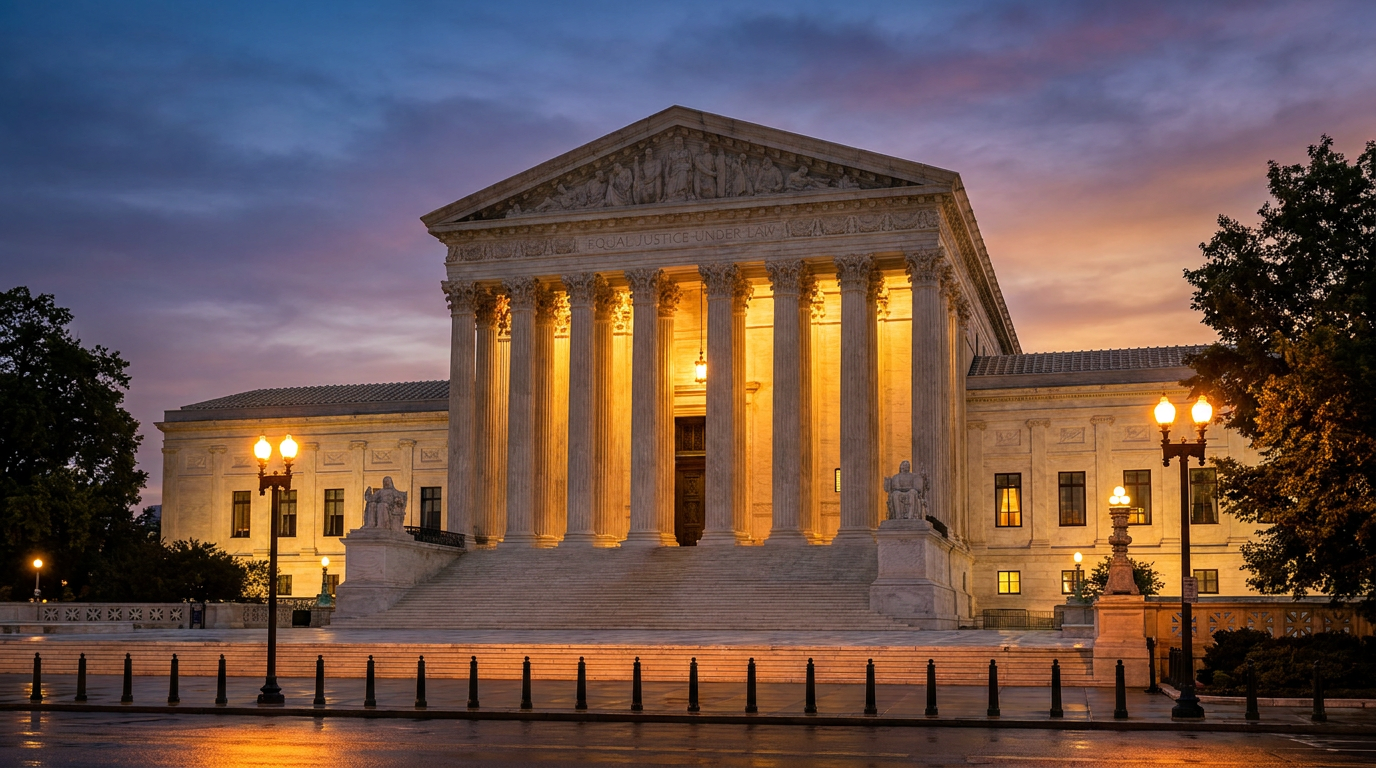
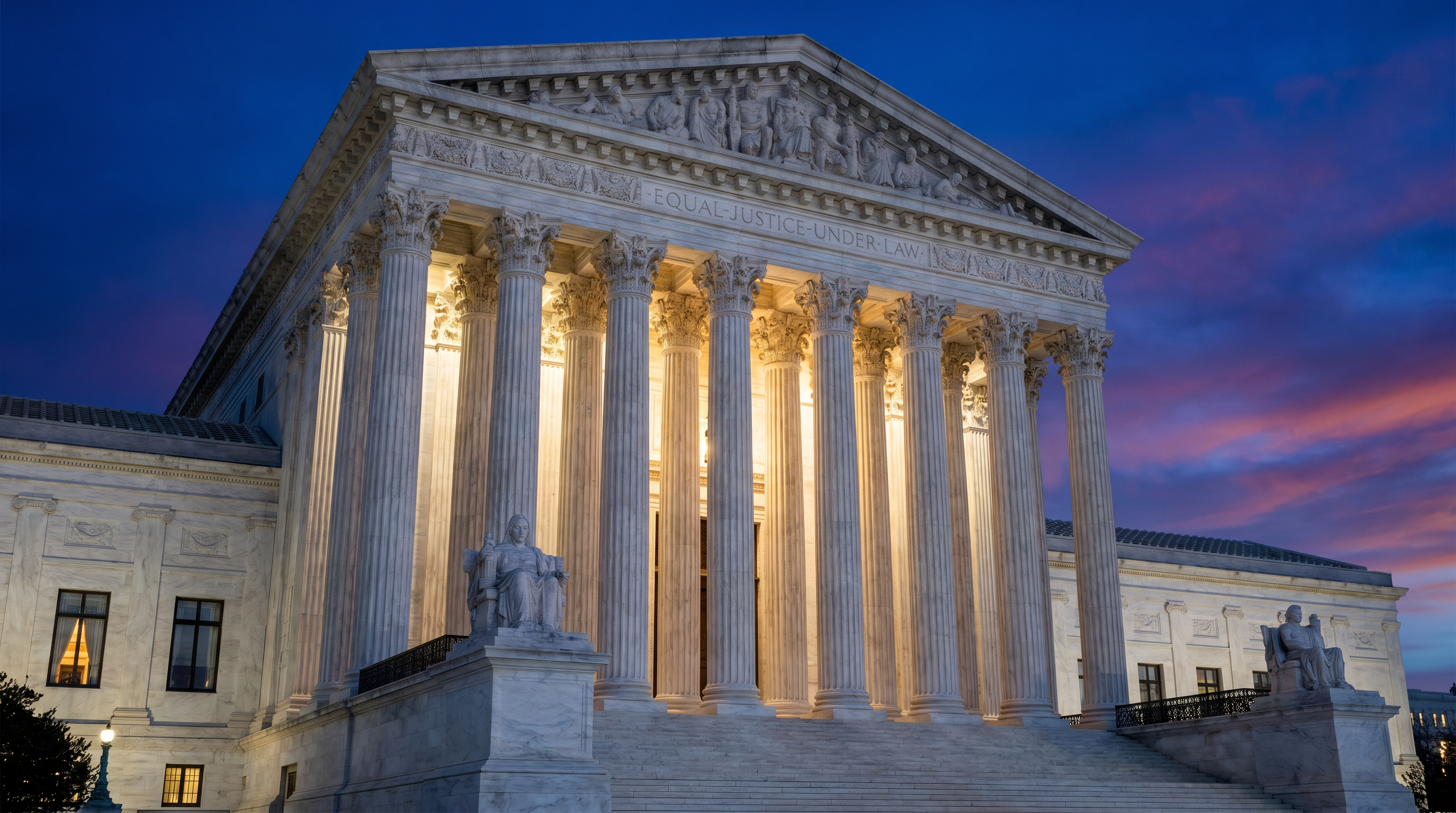
The U.S. Supreme Court has intervened to halt the execution of Jeffrey Lee, issuing an unsigned order that prevents the state of Alabama from putting him to death using nitrogen gas. The last-minute ruling spares Lee, who was scheduled to be executed on Thursday evening, and sets the stage for a high-stakes legal battle over the constitutionality of the relatively new execution method. The decision marks a rare instance of the high court stepping in to block a state's chosen method of capital punishment.[1][2]
Lee, 49, has spent more than two decades on death row following his conviction for the 1998 murders of Jimmy Ellis and Elaine Thompson. Prosecutors established that Lee entered a pawn shop in Orrville, Alabama, armed with a sawed-off shotgun, fatally shooting the owner and an employee during a robbery attempt. While the state prepared to carry out the sentence at the William C. Holman Correctional Facility, a fierce appellate fight was unfolding in federal courts over the mechanics and humanity of nitrogen hypoxia.[3][5]
Nitrogen hypoxia involves strapping a respirator mask to the condemned person's face and replacing breathable air with pure nitrogen gas. This deprives the body of oxygen, eventually causing death by asphyxiation. Alabama pioneered the method in 2024, presenting it as a humane alternative to lethal injection, which has become increasingly difficult to administer due to pharmaceutical companies refusing to supply the necessary drugs. Since its introduction, nitrogen gas has been used to carry out seven executions in Alabama and one in Louisiana.[3][4]
However, the method has drawn intense scrutiny from medical experts and human rights advocates. During an April bench trial that weighed the constitutionality of the protocol, medical experts testified that inmates executed via nitrogen gas likely experience "severe air hunger"—a desperate, physiological drive to breathe—for one to three minutes before losing consciousness. Witnesses to previous nitrogen executions have reported seeing inmates thrashing, moaning, and pulling against their restraints after the gas began to flow, contradicting the state's claims that the procedure is entirely painless and peaceful.[3][6]

This physiological distress became the crux of Lee's legal challenge under the Eighth Amendment, which prohibits cruel and unusual punishment. To successfully challenge an execution method, the Supreme Court requires inmates to prove that the protocol poses a "substantial risk of serious harm" and to propose a feasible alternative method by which the state could execute them instead. Lee's legal team argued that the prolonged sensation of suffocation easily met the threshold for unconstitutional cruelty, superadding terror and pain to the execution process.[3][4][6]
The legal trajectory of Lee's case resembled a pendulum in the weeks leading up to his scheduled execution. Initially, U.S. District Judge Emily Marks ruled in late May that while the method involved some suffering, it did not cross the threshold of unconstitutional cruelty. Marks noted that the loss of consciousness occurs relatively quickly, rejecting arguments that the method was inherently torturous and clearing the way for the state to proceed with its scheduled timeline. The state viewed this initial ruling as a validation of its new protocol.[4][6]
That decision was abruptly reversed on June 8 by a three-judge panel of the 11th U.S. Circuit Court of Appeals. The appellate panel determined that the one to three minutes of conscious suffocation constituted an "intolerable" timeframe, creating intense physiological stress, anxiety, and physical discomfort. The appellate judges concluded that this duration of air hunger presented a substantial risk of serious harm over and above death itself, effectively mandating a halt to the procedure. This reversal sent the case back to the district court with clear instructions.[3][4]
That decision was abruptly reversed on June 8 by a three-judge panel of the 11th U.S.
Bound by the appellate court's findings, Judge Marks issued a permanent injunction on Tuesday, barring Alabama from using nitrogen gas to execute Lee. In her 26-page ruling, she concluded that Lee had shown by a preponderance of the evidence that the protocol violates the Eighth Amendment. Marks acknowledged the sobering reality of capital punishment, writing that while the Constitution does not guarantee a painless death, human life cannot be extinguished without confronting the risk of severe pain.[4]
Alabama Attorney General Steve Marshall immediately appealed the injunction to the Supreme Court. The state's legal team argued that the lower courts had incorrectly characterized the protocol as barbaric, maintaining that inmates lose consciousness rapidly and that the method does not cause cruel or unusual suffering. The state insisted that the execution should proceed to deliver long-delayed justice for the victims of the 1998 murders, warning that blocking the procedure would effectively paralyze the state's ability to carry out capital sentences.[3][4][5]
The state also challenged Lee's proposed alternative method of execution: a firing squad. While Judge Marks ruled that a firing squad was "feasible, readily implemented, and significantly reduces the substantial risk of serious harm," Alabama argued it lacked a developed protocol or the immediate facilities to carry it out. The state claimed it had no legitimate penological reason to adopt a firing squad when it already had three authorized methods on the books, and argued that a firing squad would likely face its own constitutional challenges.[3][4]
The Supreme Court's unsigned order blocking the execution did not detail the justices' legal reasoning, but it effectively leaves the lower court's injunction in place for now. The intervention is highly significant, as the high court has historically been hesitant to strike down state execution methods or intervene in last-minute appeals. The order signals that at least a majority of the justices believe the Eighth Amendment questions surrounding nitrogen hypoxia warrant closer examination before another inmate is subjected to the procedure.[1][2][4]
The ruling also brings renewed attention to the unique and controversial circumstances of Lee's original sentencing. During his trial in 2000, the jury voted 7-5 to recommend a sentence of life in prison without the possibility of parole. Under standard legal procedures in most jurisdictions, a jury's recommendation of life would spare the defendant from death row, reflecting the community's judgment on the appropriate severity of the punishment. However, Alabama law at the time allowed for a different outcome.[5][6]

The trial judge utilized a practice known as "judicial override" to discard the jury's recommendation and unilaterally impose the death penalty. Alabama was the last state in the nation to permit judges to overrule jury life verdicts, officially abolishing the practice in 2017. Because the legislative change was not applied retroactively, inmates like Lee who were sentenced under the old rules remained on death row, a point of ongoing contention for legal reform advocates who view the sentences as fundamentally flawed.[6]
For now, Lee remains incarcerated at the Holman Correctional Facility. Judge Marks explicitly noted in her ruling that the state is not permanently barred from executing him, pointing out that Alabama still authorizes lethal injection and the electric chair. She clarified that Lee is "not entitled to an injunction barring the state from executing him using one of those methods," leaving the door open for the state to issue a new death warrant under a different protocol if it chooses not to pursue the nitrogen gas appeal.[4]
The Supreme Court's stay is expected to trigger a broader, more definitive review of nitrogen hypoxia at the federal level. With other states closely watching Alabama's implementation of nitrogen gas as lethal injection drugs become harder to procure, the eventual ruling on its constitutionality will likely shape the future of capital punishment in the United States for decades to come. If the high court ultimately deems the method unconstitutional, states may be forced to revert to older methods like firing squads or the electric chair, or abandon capital punishment altogether.[1][4]
How we got here
Dec 1998
Jeffrey Lee commits a double murder during a pawn shop robbery in Orrville, Alabama.
2000
A trial judge overrides a 7-5 jury vote for life imprisonment and sentences Lee to death.
2024
Alabama pioneers the use of nitrogen gas for executions, carrying out the first such procedure in the U.S.
May 2026
A U.S. District Judge initially rules that Alabama's nitrogen protocol is constitutional.
Jun 8, 2026
The 11th Circuit Court of Appeals reverses the lower court, citing 'intolerable' suffering.
Jun 11, 2026
The U.S. Supreme Court issues an order blocking Lee's scheduled execution.
Viewpoints in depth
State Officials
Alabama's Attorney General and state prosecutors maintain that nitrogen hypoxia is a fast and humane method of execution.
State officials argue that the lower courts mischaracterized the procedure, asserting that inmates lose consciousness almost immediately without severe pain. From this perspective, blocking the execution delays justice for the victims of the 1998 double murder and creates an unreasonable burden on the state by demanding alternative methods, like a firing squad, for which no protocol currently exists.
Human Rights Advocates
Opponents of the death penalty and human rights organizations view nitrogen hypoxia as an experimental and torturous practice.
Relying on eyewitness accounts of previous executions and medical testimony, they argue that the one to three minutes of 'air hunger' constitutes cruel and unusual punishment. This camp also points to systemic flaws in Lee's specific case, noting that his death sentence was imposed by a judge who overruled a 7-5 jury recommendation for life in prison—a practice Alabama has since outlawed.
Legal Analysts
Constitutional scholars focus on the rigorous standards of the Eighth Amendment.
They note that the Supreme Court requires inmates to prove not just that a method is painful, but that it poses a 'substantial risk of serious harm' compared to a known, feasible alternative. Analysts view this case as a critical test of whether the federal judiciary will allow states to continue experimenting with new execution methods as traditional lethal injection drugs become increasingly difficult to obtain.
What we don't know
- Whether the Supreme Court will eventually hear full arguments on the constitutionality of nitrogen hypoxia or leave the lower court's injunction in place.
- If Alabama will attempt to develop a firing squad protocol, which the lower court deemed a feasible alternative.
- How this ruling will impact other states, like Louisiana, that have recently adopted nitrogen gas as an execution method.
Key terms
- Nitrogen Hypoxia
- An execution method where a person is forced to breathe pure nitrogen gas, leading to death by oxygen deprivation.
- Air Hunger
- A severe physiological distress and intense urge to breathe caused by a lack of oxygen.
- Eighth Amendment
- The section of the U.S. Constitution that prohibits the federal government and states from imposing cruel and unusual punishments.
- Judicial Override
- A legal practice, now abolished in all states, that allowed a trial judge to overrule a jury's sentencing recommendation in a capital case.
- Injunction
- A court order that compels a party to do or refrain from specific acts, such as halting an execution.
Frequently asked
Why was Jeffrey Lee sentenced to death?
Lee was convicted of murdering two people, Jimmy Ellis and Elaine Thompson, during a 1998 pawn shop robbery in Alabama.
Did the jury recommend the death penalty?
No. The jury voted 7-5 to recommend life in prison without parole, but the trial judge used a practice called 'judicial override' to sentence him to death.
What is nitrogen hypoxia?
It is a method of execution where the inmate breathes pure nitrogen gas through a mask, causing death by asphyxiation.
Why did the courts block the execution?
Appellate judges determined that the method causes one to three minutes of severe 'air hunger,' which they ruled poses a substantial risk of serious harm, violating the Eighth Amendment.
Is Jeffrey Lee's death sentence overturned?
No. The Supreme Court only blocked the use of nitrogen gas. Alabama could still attempt to execute him using lethal injection or the electric chair.
Sources
Source coverage
6 outlets
3 viewpoints surfaced






[1]The New York TimesLegal Analysts
Supreme Court Blocks Alabama From Executing Inmate Using Nitrogen Gas
Read on The New York Times →[2]NPRHuman Rights Advocates
Supreme Court prohibits Alabama from using nitrogen gas for execution
Read on NPR →[3]CBS NewsState Officials
Alabama inmate's nitrogen gas execution tonight hinges on last-minute appeal to Supreme Court
Read on CBS News →[4]Associated PressLegal Analysts
Judge bars Alabama nitrogen gas execution, says method is unconstitutionally cruel
Read on Associated Press →[5]1819 NewsState Officials
State sets nitrogen hypoxia execution for man convicted of double murder in 1998 robbery
Read on 1819 News →[6]Equal Justice InitiativeHuman Rights Advocates
Alabama Plans to Execute Jeffrey Lee Despite Jury Vote for Life
Read on Equal Justice Initiative →

More in news politics
See all 72 stories →Death Penalty
Supreme Court Blocks Alabama From Executing Inmate Using Nitrogen Gas
8 sources
US-Iran Conflict
Trump Cancels Strikes on Iran, Claiming Imminent Peace Deal as Markets Surge
10 sources

Death Penalty
Supreme Court Blocks Alabama From Executing Inmate Using Nitrogen Gas
6 sources
Workplace Trends
Fact Check: Does a Four-Day Workweek Actually Improve Revenue and Employee Health?
8 sources

Every angle. Every day.
Get news politics stories with full source coverage and perspective breakdowns delivered to your inbox.