
The Rise of Local AI: How to Run Powerful Models on Your Own Hardware
Advances in open-weight models and dedicated neural processors have transformed everyday laptops into private AI servers. Here is how on-device AI works, why it matters for privacy, and how to get started.
By Factlen Editorial Team
- Privacy Advocates
- Argue that local execution is the only way to guarantee sensitive data remains secure.
- Open-Source Developers
- Value the freedom to tinker, modify, and build without relying on proprietary APIs.
- Hardware Manufacturers
- View on-device AI as the primary driver for a massive PC upgrade cycle.
- Enterprise IT
- Focus on the compliance and cost-saving benefits of running models on local infrastructure.
What's not represented
- · Cloud Infrastructure Providers
Why this matters
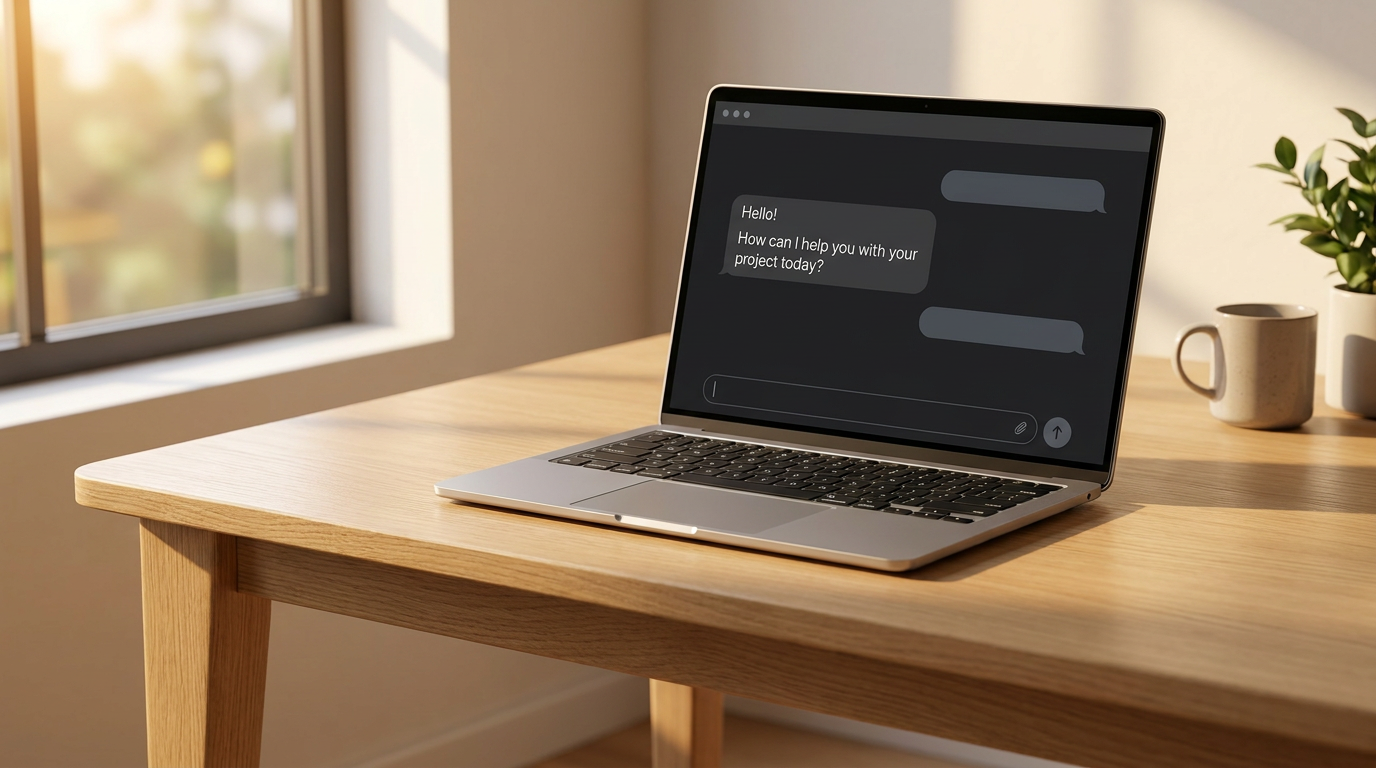
Running AI locally means your sensitive data never leaves your computer, eliminating privacy risks and subscription fees. It democratizes access to powerful intelligence, allowing anyone with a modern laptop to automate workflows offline.
Key points
- Local AI allows users to run powerful language models entirely offline, ensuring complete data privacy.
- Dedicated Neural Processing Units (NPUs) make running AI on laptops fast and battery-efficient.
- Software tools like LM Studio and Ollama have made installing local AI as easy as downloading a standard app.
- Quantization compresses massive models so they can fit into the 8GB to 16GB of RAM found on typical consumer laptops.
For the past three years, artificial intelligence has largely been a cloud-hosted phenomenon. When a user typed a prompt into a chatbot, that text was beamed to massive, power-hungry server farms owned by a handful of tech giants. But in 2026, the center of gravity is shifting. The AI revolution is no longer confined to remote data centers; it is happening directly on the laptop sitting on your desk.[6]
This transition from cloud-dependent AI to "local AI" represents one of the most significant democratizations of computing power in a decade. By running large language models entirely on your own hardware, the paradigm fundamentally changes. There are no subscription fees, no internet connection requirements, and most importantly, no data privacy compromises.[2]
The catalyst for this shift is a convergence of two distinct trends: highly optimized open-weight models and specialized silicon. Until recently, running a capable AI model required a desktop computer equipped with multiple expensive graphics cards. Today, thanks to breakthroughs in software compression and hardware design, a standard thin-and-light laptop can run models that rival the cloud giants of just a year ago.[6]
On the hardware side, the hero of the local AI movement is the Neural Processing Unit, or NPU. Unlike a traditional Central Processing Unit that handles general tasks, or a Graphics Processing Unit built for rendering images, an NPU is purpose-built for the complex matrix mathematics that AI models require.[1]

NPUs are measured in TOPS—Tera Operations Per Second. To qualify for Microsoft’s "Copilot+" standard in 2026, a laptop must feature an NPU capable of at least 40 TOPS. Modern chips from Qualcomm, Intel, and AMD now routinely hit between 45 and 80 TOPS. This dedicated silicon allows the computer to process AI tasks rapidly without draining the battery or causing the cooling fans to spin out of control.[1]
But hardware is only half the equation. The software ecosystem has undergone a radical simplification. In the early days of open-source AI, running a model required navigating complex Python environments, compiling code from source, and troubleshooting arcane error messages. It was a domain strictly reserved for software engineers and hobbyists.[6]
Today, tools like Ollama and LM Studio have transformed local AI into a consumer-friendly experience. LM Studio, for instance, offers a polished graphical interface that looks much like a standard app store. Users can search for a model, click download, and start chatting in seconds. Ollama provides a similarly frictionless experience for developers, allowing them to pull and run models with a single command.[2][3]
Today, tools like Ollama and LM Studio have transformed local AI into a consumer-friendly experience.
These software runners act as the engine, but the fuel comes from the open-weight model ecosystem. Companies like Meta, Alibaba, and Mistral have released incredibly capable models—such as Llama 4, Qwen 3, and Mistral Medium—freely to the public. These models are downloaded as single files and loaded directly into the computer's memory.[4]
The mechanism that makes it possible to fit these massive models onto a standard laptop is called quantization. A raw AI model is essentially a massive spreadsheet of billions of numbers, known as parameters, typically stored in high-precision 16-bit formats. A 70-billion parameter model in its raw state would require over 140 gigabytes of memory—far beyond the capacity of a normal computer.[5]
Quantization compresses these numbers, often down to 4-bit precision. While this slightly reduces the model's mathematical exactness, researchers discovered that neural networks are incredibly resilient to this compression. A quantized model retains roughly 95 percent of its reasoning capability while requiring only a fraction of the memory. A highly capable 8-billion parameter model can now run comfortably on a laptop with just 8 to 16 gigabytes of RAM.[5][6]

The practical applications of this technology are expanding rapidly. Software developers are using local models to power AI coding assistants directly inside their editors, ensuring that proprietary company code is never transmitted to a third-party server. Writers and researchers are feeding massive folders of PDF documents into local AI tools to summarize and synthesize information securely.[3]
Beyond simple chat interfaces, the 2026 landscape is increasingly defined by "agentic" workflows. Because local models do not charge per-token API fees, users can set up autonomous AI agents that run continuously in the background. These agents can organize files, draft email replies, or monitor data feeds without racking up a massive cloud computing bill.[2]
For enterprise and healthcare sectors, local AI is not just a convenience; it is a strict compliance requirement. Hospitals can use on-device models to transcribe patient notes and extract medical codes without violating data privacy laws. Law firms can analyze sensitive contracts without risking a breach of client confidentiality. When the model lives on the device, the data never leaves the room.[6]

However, the local AI ecosystem still faces genuine constraints. While open-weight models are remarkably capable, the absolute frontier of AI reasoning—models like OpenAI’s GPT-4o or Anthropic’s Claude 3.7—still resides in the cloud. Industry analysts estimate that local models generally trail frontier cloud models by three to six months in raw capability.[6]
Furthermore, while NPUs have drastically improved efficiency, running a large language model locally is still a computationally intense task. Continuous generation will drain a laptop's battery faster than standard web browsing, and users pushing the limits of their hardware may experience slower response times compared to cloud APIs.[1]
Because of these trade-offs, the future of computing is likely hybrid. Simple, privacy-sensitive, and high-frequency tasks—like autocorrect, basic coding autocomplete, and local file search—will be routed to the NPU and handled on-device. Complex reasoning tasks that require massive context windows or specialized knowledge will seamlessly escalate to the cloud.[6]

Ultimately, the rise of local AI represents a fundamental shift in digital ownership. By untethering artificial intelligence from the cloud, users are reclaiming control over their data and their tools. The ability to run a world-class reasoning engine on a laptop in a coffee shop, entirely offline, is no longer science fiction—it is the new baseline for personal computing.[6]
How we got here
Feb 2023
Meta's LLaMA model leaks, sparking the grassroots open-source AI movement.
Aug 2023
The llama.cpp project proves that large models can run efficiently on standard consumer hardware like MacBooks.
May 2024
Microsoft announces the Copilot+ PC standard, mandating NPUs with at least 40 TOPS for Windows laptops.
Early 2025
Open-weight models like DeepSeek and Llama 3 match the performance of previous-generation proprietary cloud models.
Mid 2026
Graphical tools like LM Studio make running local AI as simple as installing a standard desktop application.
Viewpoints in depth
Privacy Advocates
Argue that local execution is the only way to guarantee sensitive data remains secure.
For privacy advocates, the cloud-based AI era represented a massive security vulnerability. Sending proprietary code, sensitive health records, or personal journals to a third-party server inherently carries the risk of data breaches or unauthorized training usage. By shifting inference to the local device, users achieve true data sovereignty. The model acts as a closed-loop system where the user retains absolute control over what the AI sees and how that information is stored.
Open-Source Developers
Value the freedom to tinker, modify, and build without relying on proprietary APIs.
The developer community champions local AI primarily as an antidote to vendor lock-in. When building applications on top of cloud APIs, developers are at the mercy of sudden price hikes, unexpected downtime, or unannounced model deprecations. Running open-weight models locally ensures that the foundational infrastructure of an application cannot be pulled out from under the creator. Furthermore, having direct access to the model weights allows for deep customization and fine-tuning that cloud providers often restrict.
Hardware Manufacturers
View on-device AI as the primary driver for a massive PC upgrade cycle.
For companies like Intel, AMD, and Qualcomm, the shift toward local AI is a generational business opportunity. The PC market had largely stagnated prior to the AI boom, with consumers holding onto laptops for five years or more. By establishing NPUs and high RAM capacities as the new baseline for a functional workspace, hardware manufacturers are driving a massive upgrade cycle. They position on-device AI not just as a feature, but as a fundamental requirement for the modern professional.
What we don't know
- Whether the capability gap between open-weight local models and proprietary cloud models will eventually close entirely, or if cloud providers will always maintain a distinct lead.
- How quickly software developers will transition from building cloud-dependent AI apps to hybrid apps that leverage local NPUs by default.
Key terms
- NPU (Neural Processing Unit)
- A specialized computer chip designed specifically to handle the complex math required by AI models efficiently.
- Quantization
- A compression technique that reduces the precision of an AI model's numbers, allowing it to run on devices with less memory.
- Open-weight model
- An AI model where the core architecture and trained parameters are publicly available for anyone to download and use.
- TOPS (Tera Operations Per Second)
- A metric used to measure the performance of an NPU, indicating how many trillion operations it can perform in one second.
- Inference
- The process of running live data through a trained AI model to generate a response or prediction.
Frequently asked
Can my current laptop run local AI?
Yes, if it has at least 8GB to 16GB of RAM. While a dedicated NPU makes it faster and more battery-efficient, tools like LM Studio can run models on standard CPUs and GPUs.
Is local AI completely free?
Yes. Once you download the open-weight model and the runner software, there are no subscription fees or per-message costs.
Do local models need an internet connection?
No. After the initial download of the software and the model file, the entire system runs completely offline.
Are local models as smart as cloud models?
They are highly capable for everyday tasks like coding, summarizing, and drafting, but they typically trail the absolute frontier cloud models by a few months in complex reasoning.
Sources
Source coverage
6 outlets
4 viewpoints surfaced






[1]QualcommHardware Manufacturers
Snapdragon X Elite and the Era of On-Device AI
Read on Qualcomm →[2]OllamaOpen-Source Developers
Get up and running with large language models locally
Read on Ollama →[3]LM StudioOpen-Source Developers
Discover, download, and run local LLMs
Read on LM Studio →[4]Meta AIEnterprise IT
Llama: Open and Efficient Foundation Language Models
Read on Meta AI →[5]Hugging FaceOpen-Source Developers
GGUF and Local Model Quantization
Read on Hugging Face →[6]Factlen Editorial TeamPrivacy Advocates
Synthesis by Factlen editorial team
Read on Factlen Editorial Team →

More in ai
See all 64 stories →Privacy Tech
How Local AI and Small Language Models Are Freeing Users from the Cloud
8 sources
On-Device AI
How On-Device AI and Small Language Models Are Putting Private, Powerful Tech on Your Laptop
8 sources
Materials Science
AI Uncovers 25 Rare-Earth-Free Magnetic Materials, Paving the Way for Cheaper EVs
7 sources

Open-Source AI
The Open-Source AI Exemption: How New Global Policies Are Democratizing Scientific Research
7 sources

Every angle. Every day.
Get ai stories with full source coverage and perspective breakdowns delivered to your inbox.