
Supreme Court Blocks Alabama From Executing Inmate Using Nitrogen Gas
In a 6-3 decision, the U.S. Supreme Court upheld a lower court's ruling that Alabama's nitrogen hypoxia execution protocol violates the Eighth Amendment's ban on cruel and unusual punishment.
By Factlen Editorial Team
- Abolitionists and Civil Rights Advocates
- Argue that nitrogen hypoxia is an untested, torturous method that violates basic human rights.
- State Law Enforcement Officials
- Maintain that the method is humane and necessary to carry out lawful sentences.
- Neutral Legal Observers
- Focus on the procedural precedents and the Supreme Court's interpretation of the Eighth Amendment.
What's not represented
- · Families of the victims, who have waited decades for the sentence to be carried out.
- · Correctional officers tasked with administering untested execution protocols.
Why this matters
This ruling marks the first time a federal court has permanently banned a legislatively enacted execution method. It forces states to re-evaluate how they carry out capital punishment amid ongoing shortages of lethal injection drugs.
Key points
- The Supreme Court voted 6-3 to block Alabama from executing Jeffery Lee using nitrogen gas.
- A federal judge permanently banned the method, citing a substantial risk of severe pain and air hunger.
- Lee's legal team successfully argued that a firing squad is a feasible, less painful alternative.
- Lee was sentenced to death in 1998 after a judge overrode a 7-5 jury vote for life in prison.
- The ruling marks the first time a federal court has permanently banned a legislatively enacted execution method.
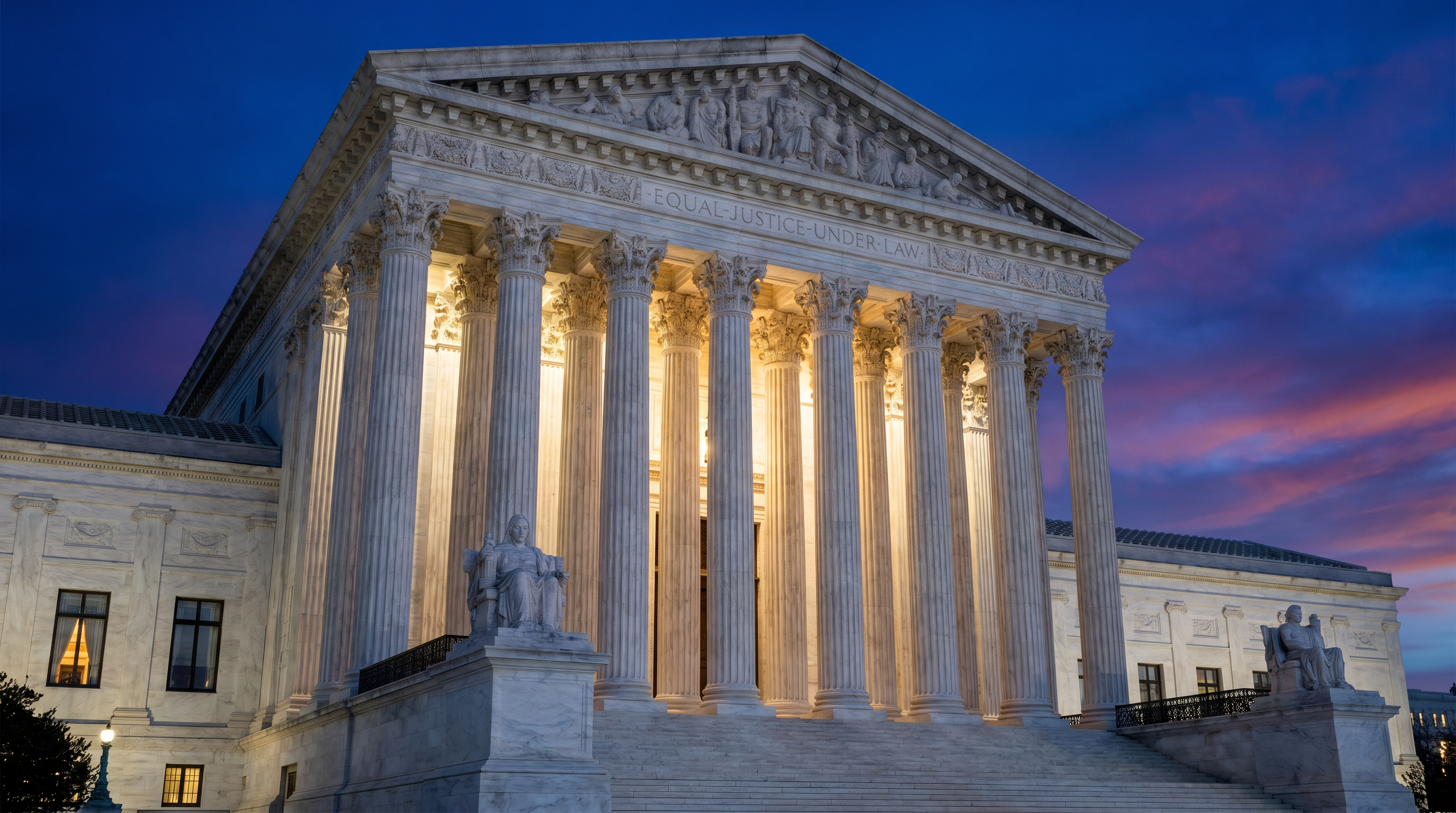
The U.S. Supreme Court intervened late Thursday to block the state of Alabama from executing 49-year-old Jeffery Lee using nitrogen gas. In a brief, unsigned order, the high court declined to lift a lower court's injunction that had permanently barred the state from using the controversial method, effectively sparing Lee hours before his scheduled death.[1][3]
The 6-3 decision saw conservative Justices Clarence Thomas, Samuel Alito, and Neil Gorsuch dissenting, indicating they would have allowed the execution to proceed. The majority provided no written explanation for their decision, a common practice in emergency docket rulings, but the outcome cemented a landmark victory for death penalty abolitionists and civil rights advocates.[3][4]
The legal battle centered on the Eighth Amendment's prohibition of cruel and unusual punishment. Earlier in the week, U.S. District Judge Emily C. Marks issued a permanent injunction against Alabama's nitrogen hypoxia protocol. Her ruling followed a directive from the 11th U.S. Circuit Court of Appeals, which found that the method posed a "substantial risk of serious harm" to the condemned.[1][6]
According to the appellate court's findings, inmates subjected to pure nitrogen gas likely experience "severe air hunger and corresponding emotional distress, anxiety, physiological stress, and physical discomfort" for at least one to three minutes before suffocating. The court deemed this an "intolerable" timeframe that goes over and above the mental distress typically associated with an impending execution.[3][6]
Alabama introduced nitrogen hypoxia in 2024 as an alternative to lethal injection, a method plagued nationwide by pharmaceutical embargoes and a string of botched intravenous line insertions. The state has since carried out several executions using the gas, arguing that it induces unconsciousness within seconds and is more humane than existing alternatives.[1][4]
The mechanism of nitrogen hypoxia involves strapping an airtight respirator mask to the inmate's face and replacing the breathable oxygen in the chamber with pure nitrogen. Because the body continues to exhale carbon dioxide, the natural panic reflex triggered by holding one's breath is theoretically bypassed. However, medical experts and witnesses to previous nitrogen executions have reported inmates writhing, gasping, and convulsing for several minutes before expiring.[2][6]

Because the body continues to exhale carbon dioxide, the natural panic reflex triggered by holding one's breath is theoretically bypassed.
Alabama Attorney General Steve Marshall fiercely defended the protocol, traveling to Washington, D.C., to petition the Supreme Court directly. In court filings, state attorneys argued that the lower courts were relying on "outlandish" claims and that banning a legislatively enacted method based on the risk of emotional distress expands the concept of cruelty well beyond constitutional bounds.[3][5]
Under Supreme Court precedent established in 2008, an inmate challenging a state's execution method cannot simply argue that it is painful; they must also propose a feasible, readily implemented alternative that significantly reduces the risk of severe pain. In this case, Lee's legal team proposed execution by firing squad.[2][6]
Judge Marks evaluated the firing squad proposal and determined it met the Supreme Court's criteria. She ruled that a firing squad could be "readily implemented" by the state and would significantly reduce the prolonged suffering associated with nitrogen asphyxiation. Alabama officials countered that they currently lack the protocols and facilities to carry out a firing squad execution, making it an unfeasible alternative.[3][5]
The debate over the method of Lee's death is intertwined with the controversial history of his sentencing. Lee was convicted of the 1998 murders of Jimmy Ellis and Elaine Thompson during a pawn shop robbery. At his trial, the jury voted 7-5 to recommend a sentence of life in prison without the possibility of parole.[4][6]
However, the trial judge utilized a practice known as "judicial override" to reject the jury's recommendation and unilaterally impose the death penalty. Alabama was the last state in the nation to permit judicial override, officially abolishing the practice in 2017. Because the 2017 law was not made retroactive, Lee and dozens of other inmates remained on death row despite their juries voting for life.[1][4]

Thursday's Supreme Court order does not vacate Lee's death sentence, nor does it prevent Alabama from executing him using a different method. Judge Marks explicitly noted in her ruling that the state remains authorized to execute Lee via lethal injection or the electric chair, though it is unclear how quickly the Alabama Department of Corrections could pivot to those protocols.[1][4]
The broader implications of the ruling are profound. While the Supreme Court's unsigned order does not establish a sweeping national precedent, it allows the first-ever permanent federal ban on a state's chosen execution method to stand. This creates a formidable legal hurdle for Alabama and the handful of other states, including Oklahoma and Mississippi, that have authorized nitrogen gas.[5][6]

For now, the machinery of capital punishment in Alabama is stalled. As the state evaluates its options for Lee and other inmates scheduled for the death chamber, the legal and medical communities will continue to scrutinize the boundaries of the Eighth Amendment in an era where traditional execution methods are increasingly difficult to carry out.[1][3]
How we got here
1998
Jeffery Lee is convicted of a double murder; a judge overrides the jury's recommendation of life in prison and sentences him to death.
2017
Alabama abolishes the practice of judicial override in capital cases, though the law is not applied retroactively.
2024
Alabama begins using nitrogen hypoxia for executions amid ongoing shortages of lethal injection drugs.
June 9, 2026
A federal judge permanently blocks the state from using nitrogen gas on Lee, ruling it unconstitutional.
June 11, 2026
The U.S. Supreme Court declines to lift the injunction, halting Lee's scheduled execution.
Viewpoints in depth
Abolitionists and Civil Rights Advocates
Argue that nitrogen hypoxia is an untested, torturous method that violates basic human rights.
Civil rights groups and death penalty abolitionists view nitrogen hypoxia as a form of human experimentation. They point to eyewitness accounts of previous executions where inmates convulsed and gasped for air for several minutes. This camp argues that the Eighth Amendment's protection against cruel and unusual punishment must evolve to prohibit methods that cause severe physiological panic and 'air hunger,' regardless of whether the state claims the method is fast.
State Law Enforcement Officials
Maintain that the method is humane and necessary to carry out lawful sentences.
State attorneys and correctional officials argue that nitrogen hypoxia is a painless alternative to lethal injection, inducing unconsciousness in seconds. They contend that the legal challenges are delay tactics designed to indefinitely stall lawful executions. From this perspective, banning a legislatively approved method based on the potential for 'emotional distress' or brief physical discomfort sets a dangerous precedent that could render all forms of capital punishment unconstitutional.
Medical and Scientific Observers
Highlight the lack of clinical data and the physiological realities of asphyxiation.
Medical professionals note that while nitrogen gas is used in some industrial and veterinary contexts, its application for human execution lacks rigorous clinical testing. Experts emphasize that the human body's response to pure nitrogen can be unpredictable, often resulting in severe physiological stress, vomiting, and prolonged agonal breathing before brain death occurs. They argue that the state's claims of a 'peaceful' death are not supported by the medical literature on asphyxiation.
What we don't know
- Whether Alabama will attempt to execute Lee using lethal injection or the electric chair, which remain legally authorized.
- How the Supreme Court's unsigned order will impact other states, like Oklahoma and Mississippi, that have authorized nitrogen gas.
- If Alabama will attempt to establish protocols for a firing squad, as proposed by Lee's defense team.
Key terms
- Nitrogen Hypoxia
- An execution method where breathable air is replaced with pure nitrogen gas, causing death by oxygen deprivation.
- Eighth Amendment
- The section of the U.S. Constitution that prohibits the federal government and states from imposing excessive bail, excessive fines, or cruel and unusual punishments.
- Judicial Override
- A legal practice, now abolished in all 50 states, that allowed a trial judge to overrule a jury's sentencing recommendation in a capital case.
- Injunction
- A court order requiring a person or entity to do or cease doing a specific action.
Frequently asked
Why did the Supreme Court block the execution?
The Supreme Court declined to lift a lower court's injunction, which found that Alabama's nitrogen gas protocol causes severe pain and violates the Eighth Amendment's ban on cruel and unusual punishment.
Will Jeffery Lee still be executed?
Lee remains on death row. The court's order only blocks the use of nitrogen gas; Alabama is still legally authorized to execute him using lethal injection or the electric chair.
Why did Lee ask for a firing squad?
Supreme Court precedent requires inmates challenging an execution method to propose a feasible alternative. Lee's lawyers argued a firing squad would be significantly less painful than nitrogen gas.
Has nitrogen gas been used before?
Yes. Alabama introduced the method in 2024 and has used it in several executions, though witnesses have reported inmates experiencing prolonged convulsions and gasping.
Sources
Source coverage
6 outlets
3 viewpoints surfaced






[1]The New York TimesAbolitionists and Civil Rights Advocates
Supreme Court Blocks Alabama From Executing Inmate Using Nitrogen Gas
Read on The New York Times →[2]NPRAbolitionists and Civil Rights Advocates
Supreme Court prohibits Alabama from using nitrogen gas for execution
Read on NPR →[3]CBS NewsNeutral Legal Observers
Supreme Court rejects Alabama request for nitrogen gas execution
Read on CBS News →[4]Associated PressNeutral Legal Observers
Supreme Court declines to let Alabama proceed with nitrogen gas execution
Read on Associated Press →[5]Fox NewsState Law Enforcement Officials
Alabama AG appeals nitrogen gas execution ruling to US Supreme Court
Read on Fox News →[6]Death Penalty Information CenterAbolitionists and Civil Rights Advocates
Federal Judge Permanently Enjoins Alabama from Using Nitrogen Gas to Execute Jeffery Lee
Read on Death Penalty Information Center →
More in news politics
See all 76 stories →Homelessness Crisis
Trump Administration Suspends Federal Funding for Los Angeles Homelessness Agency
6 sources

Strait of Hormuz
U.S. and Iran Weigh 60-Day Ceasefire to Reopen Strait of Hormuz as Trump Claims Deal is Imminent
7 sources

US-Iran Deal
US and Iran Near Memorandum of Understanding to Reopen Strait of Hormuz and Extend Ceasefire
7 sources

Strait of Hormuz
Trump Calls Off Strikes on Iran, Touts Imminent Peace Deal as Markets Surge
8 sources

Every angle. Every day.
Get news politics stories with full source coverage and perspective breakdowns delivered to your inbox.