
South Korea's Ex-President Yoon Sentenced to 30 Years for Drone Plot That Preceded Martial Law
Former South Korean President Yoon Suk Yeol received a 30-year prison sentence for orchestrating covert drone flights over North Korea. The court ruled the operation was a deliberate attempt to provoke a military crisis and justify his failed 2024 martial law declaration.
By Factlen Editorial Team
- The Prosecution
- Argues Yoon deliberately provoked a nuclear-armed neighbor to manufacture a pretext for an illegal coup.
- International Observers
- Focuses on the geopolitical risks and the damage to South Korea's democratic and military institutions.
- Yoon's Legal Defense
- Maintains the drone operations were legitimate military responses to North Korean provocations.
What's not represented
- · North Korean state media's official reaction to the sentencing.
- · Rank-and-file South Korean soldiers who were ordered to execute the drone flights.
Why this matters
This verdict confirms that a sitting democratic president was willing to risk a military conflict with a nuclear-armed neighbor solely to manufacture a crisis and justify a domestic coup. The 30-year sentence, added to his existing life term, serves as a historic warning against the weaponization of the military for political survival.
Key points
- Former President Yoon Suk Yeol was sentenced to 30 years in prison for a covert military drone operation over North Korea.
- The court ruled the October 2024 drone flights were designed to provoke Pyongyang and manufacture a national emergency.
- Prosecutors successfully argued the manufactured crisis was intended to justify Yoon's disastrous December 2024 martial law declaration.
- Former Defense Minister Kim Yong-hyun was also found guilty of aiding an adversary and abusing his power.
- Yoon's defense team denied the charges, claiming the flights were a legitimate military response to North Korean trash balloons.
- The 30-year sentence is in addition to the life sentence Yoon is already serving for leading an insurrection.
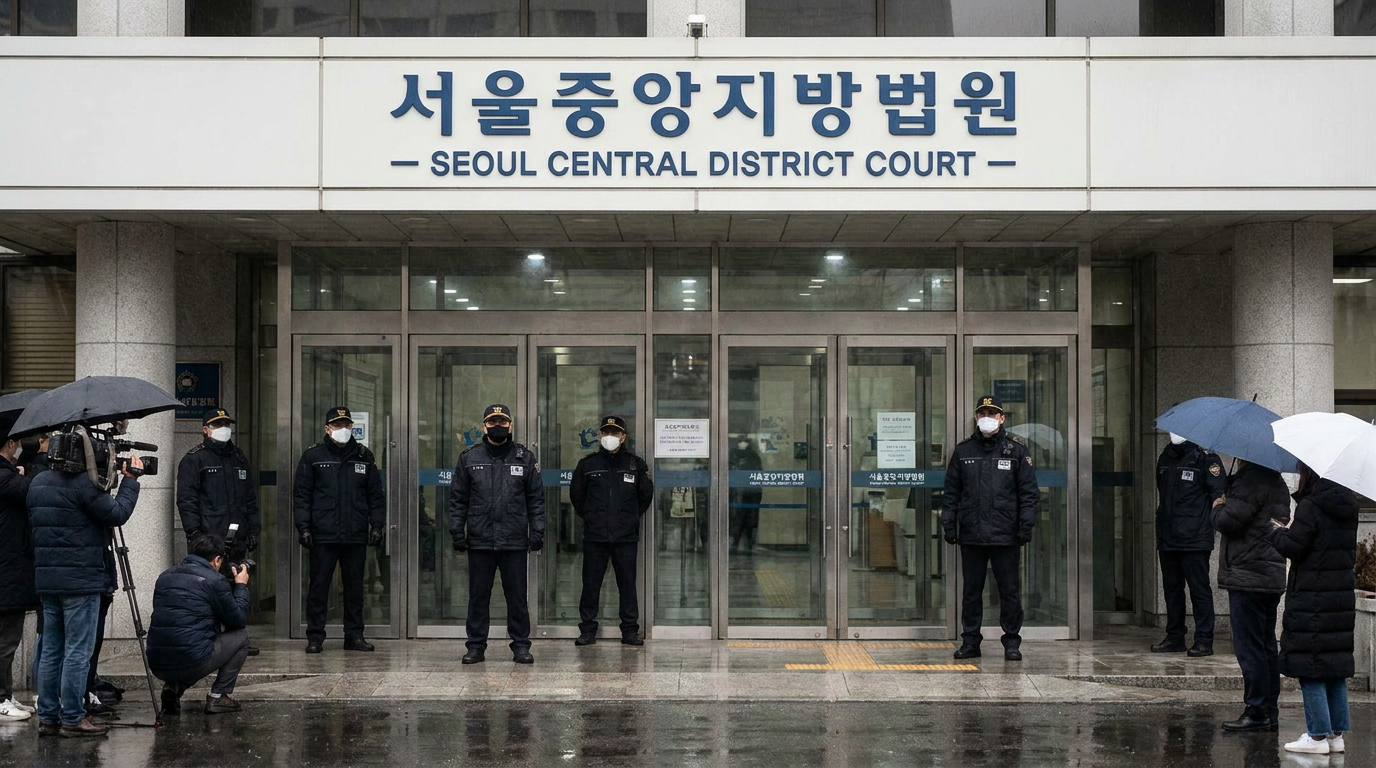
Former South Korean President Yoon Suk Yeol was sentenced to 30 years in prison on Friday for orchestrating a covert military drone operation over North Korea, a plot the court ruled was designed to manufacture a national emergency. The Seoul Central District Court found the disgraced leader guilty of aiding an adversary and abusing his power, concluding that he deliberately provoked Pyongyang to create a pretext for his disastrous December 2024 martial law declaration. The ruling adds a staggering new chapter to the legal fallout surrounding Yoon’s brief attempt to suspend civilian rule, confirming suspicions that the administration was willing to risk a genuine military conflict with a nuclear-armed neighbor to solve a domestic political crisis.[1][2][4]
The case centered on a series of highly classified drone incursions that took place in October 2024. According to prosecutors, Yoon and his inner circle ordered military drones to fly across the heavily fortified Demilitarized Zone and drop anti-regime propaganda leaflets directly over Pyongyang. While the flights were initially framed as a response to North Korea’s campaign of floating trash-filled balloons into the South, investigators revealed a much darker motive. Special prosecutors successfully argued that the true goal was to "fabricate wartime conditions" by inducing an armed retaliation from North Korean forces, thereby giving Yoon the justification he needed to deploy the military domestically.[2][3][5]
Former Defense Minister Kim Yong-hyun, a key confidant who helped mobilize forces for the eventual martial law decree, was also found guilty of abuse of power and aiding the enemy. The court determined that Yoon and Kim conspired from the very beginning to execute the drone operation for private political purposes entirely unrelated to genuine national defense. In its ruling, the judicial panel stated that the men were "co-principal offenders in the crime of benefiting the enemy." The judges noted that the reckless operation actively harmed South Korea’s military interests, as several drones crashed in North Korean territory, leaking classified specifications, onboard equipment details, and sensitive flight routes to Kim Jong Un's regime.[4][5][6]

Throughout the trial, Yoon’s legal team vehemently denied the charges, characterizing the prosecution’s narrative as a "speculative and false novel." Defense attorneys maintained that the former president neither ordered nor gave prior approval for the drone flights, arguing that the military acted independently to conduct a legitimate, proportional response to North Korea's ongoing border provocations. They insisted that the October drone operations had absolutely no connection to the martial law declaration that followed two months later. Despite these arguments, the court found the timeline and internal communications presented by the special prosecutor compelling enough to secure a conviction on the most severe charges.[3][4][6]
They insisted that the October drone operations had absolutely no connection to the martial law declaration that followed two months later.
Friday’s 30-year sentence compounds the unprecedented legal jeopardy facing the ousted leader, who has been in custody since his arrest in July 2025. The drone verdict arrives just months after the same Seoul court handed Yoon a historic life sentence for leading an insurrection, a conviction stemming directly from the events of December 3, 2024. On that night, Yoon appeared on national television to declare martial law, citing the phantom threat of North Korean influence and domestic "anti-state forces." He also faces a separate five-year prison term for obstructing justice, painting a portrait of an administration that systematically dismantled democratic guardrails in a desperate bid to monopolize power.[2][4][5]

The martial law order that Yoon sought to justify with the drone plot ultimately lasted only six hours. In a dramatic showdown that captivated the globe, South Korean lawmakers and citizens physically breached a military and police blockade at the National Assembly to vote down the decree. The immediate collapse of the coup attempt forced Yoon’s cabinet to lift the measure, triggering a rapid sequence of events that saw him suspended from office, impeached by the legislature, and formally removed by the Constitutional Court. The revelation that the entire crisis was preceded by a deliberate attempt to bait North Korea into an attack has only deepened the public's anger over the episode.[2][5]
The geopolitical implications of the court's findings are profound, highlighting how close the Korean Peninsula came to a manufactured war. By weaponizing the military apparatus to serve a domestic political agenda, Yoon's administration severely strained the command structure of the South Korean armed forces and alarmed international allies. North Korea, which had furiously accused Seoul of the drone flights at the time, used the incursions to justify further severing ties and labeling the South its "most hostile" enemy. Yoon is expected to appeal the 30-year sentence, adding another layer of complex litigation to a saga that has fundamentally reshaped South Korea's political landscape.[3][4][6]

Beyond the courtroom, the convictions of a former president and his defense minister have forced a painful reckoning within South Korea's defense and intelligence establishments. Military officials are now grappling with the institutional damage caused by being used as pawns in a domestic coup plot. Reforms are already being debated in the National Assembly to ensure that the chain of command cannot be hijacked for political provocations in the future. As Yoon's multiple appeals wind their way toward the Supreme Court, the South Korean public remains transfixed by the steady stream of revelations, viewing the trials not just as a prosecution of one man, but as a necessary cleansing of the democratic system he attempted to subvert.[1][3][5]
How we got here
October 2024
South Korean military drones drop anti-regime leaflets over Pyongyang, spiking cross-border tensions.
Dec. 3, 2024
President Yoon Suk Yeol declares martial law in a late-night televised address.
Dec. 4, 2024
Lawmakers vote to overturn the martial law decree after just six hours, leading to Yoon's suspension.
July 2025
Yoon is formally arrested following his impeachment and removal from office by the Constitutional Court.
February 2026
Yoon is sentenced to life in prison for leading an insurrection.
June 12, 2026
Yoon receives an additional 30-year sentence for the drone provocation plot.
Viewpoints in depth
The Prosecution & Judiciary
Argues that Yoon deliberately endangered national security to manufacture a pretext for an illegal domestic coup.
Special prosecutors and the Seoul Central District Court view the drone operation not as a military necessity, but as a highly illegal political maneuver. They argue that by intentionally provoking a nuclear-armed neighbor, Yoon and his defense minister committed the crime of benefiting the enemy. The judiciary's stance is that the administration was willing to sacrifice state security and leak classified military assets—evidenced by the crashed drones—solely to create the 'wartime conditions' required to justify the December 2024 martial law declaration.
Yoon's Legal Defense
Maintains that the drone operations were legitimate military responses to North Korean provocations.
Yoon’s legal team dismisses the prosecution's narrative as a 'speculative and false novel.' They argue that the October 2024 drone flights were a proportional and necessary self-defense measure in response to North Korea's ongoing campaign of sending trash-filled balloons across the border. Furthermore, the defense insists that Yoon neither explicitly ordered nor gave prior approval for the specific drone incursions, attempting to decouple the military's border operations from the president's later decision to declare martial law.
South Korean Public & Reformers
Views the revelations as a shocking abuse of power that requires deep institutional reform.
For the South Korean public and pro-democracy lawmakers, the trial confirms their worst fears about the Yoon administration's disregard for democratic norms. The revelation that the president was willing to risk a hot war on the peninsula to solve a domestic political crisis has deepened public outrage. Reformers are now using the court's findings to push for strict new oversight mechanisms over the military and intelligence agencies, ensuring that the commander-in-chief cannot unilaterally bypass the chain of command to manufacture a national emergency.
What we don't know
- Whether the Supreme Court will uphold the consecutive life and 30-year sentences upon appeal.
- The full extent of the classified military intelligence North Korea recovered from the crashed drones.
- How the South Korean military plans to restructure its chain of command to prevent future political weaponization.
Key terms
- Martial Law
- The temporary imposition of direct military control of normal civil functions or suspension of civil law by a government, typically during an emergency.
- Insurrection
- A violent uprising or illegal attempt to take control of a government, the primary charge for which Yoon received a life sentence.
- Demilitarized Zone (DMZ)
- The heavily fortified border separating North and South Korea, across which the covert drone flights were launched.
Frequently asked
Why was Yoon Suk Yeol sentenced to 30 years?
He was found guilty of ordering covert military drone flights over North Korea to intentionally provoke a crisis, which he planned to use as a pretext for declaring martial law.
What was the defense's argument?
Yoon's lawyers claimed the drone flights were a legitimate military response to North Korea sending trash-filled balloons into the South, and denied Yoon ordered them for political reasons.
Is this Yoon's only prison sentence?
No. He is already serving a life sentence for insurrection related to the actual martial law declaration, plus a five-year sentence for obstruction of justice.
Who else was convicted in this trial?
Former Defense Minister Kim Yong-hyun was also found guilty of aiding an adversary and abusing his power for his role in planning the drone operation.
Sources
Source coverage
6 outlets
3 viewpoints surfaced






[1]The New York TimesThe Prosecution
Drones Flown Over North Korea Were Part of Martial Law Plot by Former South Korean President
Read on The New York Times →[2]Al JazeeraInternational Observers
South Korea’s ex-President Yoon gets 30 years over drone operation
Read on Al Jazeera →[3]The GuardianThe Prosecution
Former South Korea president Yoon Suk Yeol sentenced to 30 years in prison for sending drones over Pyongyang
Read on The Guardian →[4]The Korea HeraldYoon's Legal Defense
Ex-President Yoon sentenced to 30 years over N. Korea drone operation
Read on The Korea Herald →[5]Associated PressInternational Observers
South Korea's ousted President Yoon Suk Yeol and his former defense minister have been sentenced to 30 years in prison
Read on Associated Press →[6]ReutersInternational Observers
South Korean Court Sentences Ex-President Yoon to 30 Years Over Drone Case
Read on Reuters →
More in news politics
See all 81 stories →Yoon Suk Yeol
Ousted South Korean President Yoon Suk Yeol Sentenced to 30 Years for North Korea Drone Plot
8 sources
Deepfake Defense
Fact Check: Can We Actually Detect Political Deepfakes in 2026?
7 sources

Student Loans
Sweeping Federal Student Loan Overhaul Takes Effect July 1, Ending SAVE Plan and Capping Borrowing
8 sources

Strait of Hormuz
U.S. and Iran Near Ceasefire Agreement to Reopen Strait of Hormuz
7 sources
Every angle. Every day.
Get news politics stories with full source coverage and perspective breakdowns delivered to your inbox.