
Ousted South Korean President Yoon Suk Yeol Sentenced to 30 Years for North Korea Drone Plot
A Seoul court has sentenced former South Korean President Yoon Suk Yeol to 30 years in prison for orchestrating covert drone flights over North Korea to manufacture a pretext for his 2024 martial law declaration.
By Factlen Editorial Team
- South Korean Judiciary & Prosecutors
- Argue Yoon fabricated a wartime crisis for political gain, compromising state security.
- International Observers
- Focus on the severe geopolitical risks Yoon's actions posed to the region.
- Yoon's Defense & Supporters
- Argue the drone flights were a legitimate response to North Korean provocations.
What's not represented
- · North Korean state media's current reaction to the sentencing
- · Rank-and-file South Korean military personnel who executed the drone orders
Why this matters
This ruling exposes how close South Korea came to a manufactured war, demonstrating the extreme lengths a democratic leader took to retain power. It also sets a historic legal precedent for holding heads of state accountable for weaponizing national security.
Key points
- Former South Korean President Yoon Suk Yeol was sentenced to 30 years in prison for ordering covert drone flights over North Korea in 2024.
- The court ruled the operation was a deliberate provocation designed to manufacture a national security crisis and justify Yoon's December 2024 martial law declaration.
- Former Defense Minister Kim Yong-hyun also received a 30-year sentence for his role as a co-principal offender in the plot.
- Yoon is already serving a life sentence for insurrection related to the martial law attempt, following his impeachment and removal from office in 2025.
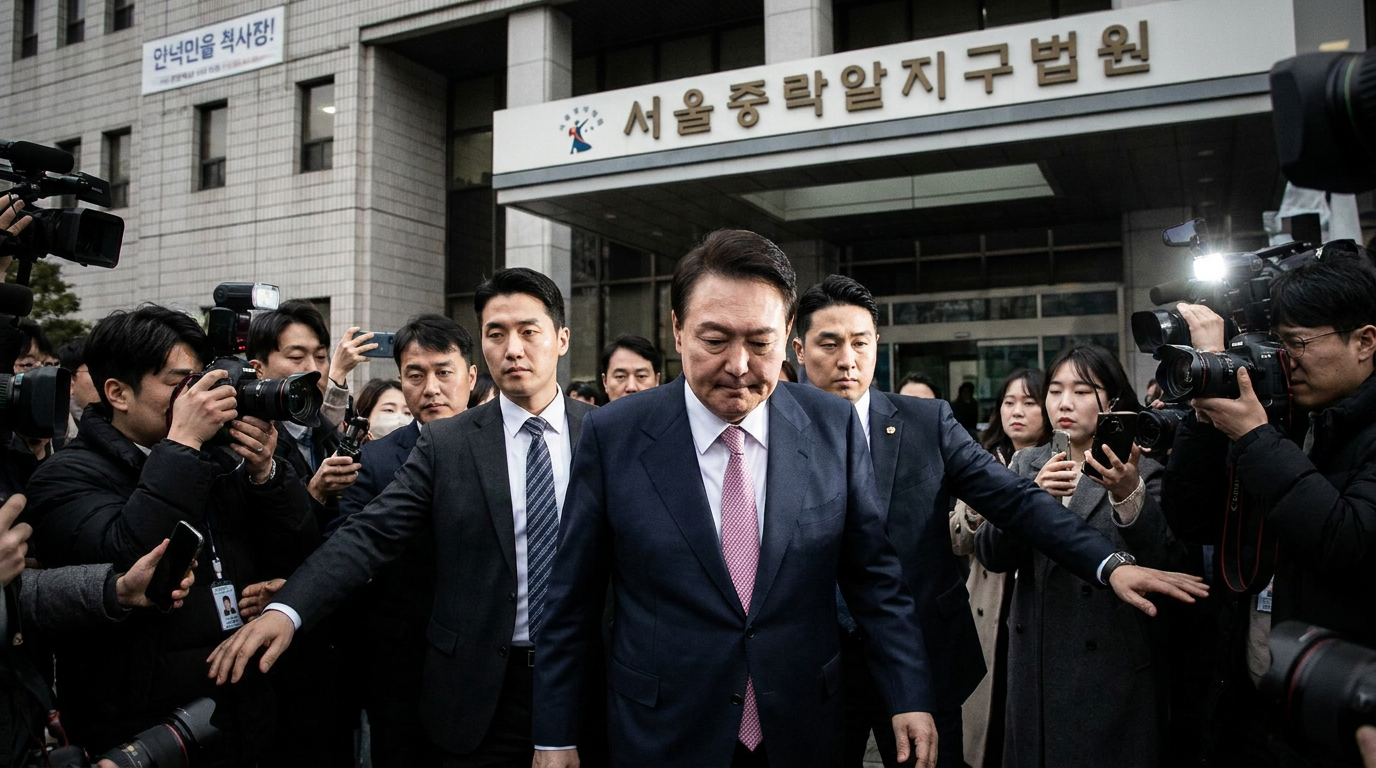
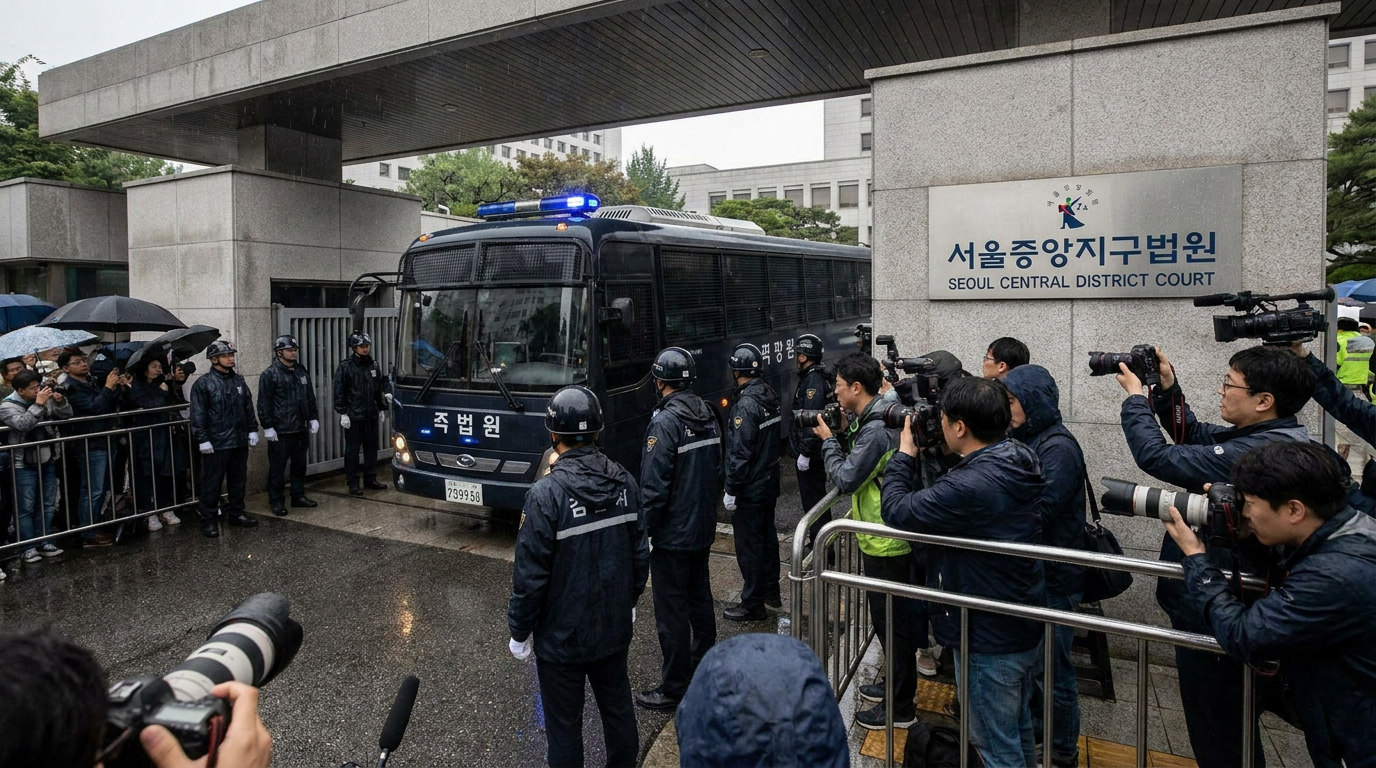
A Seoul court has sentenced ousted South Korean President Yoon Suk Yeol to 30 years in prison for orchestrating covert military drone flights over North Korea, a move prosecutors successfully argued was designed to manufacture a national security crisis and justify his disastrous 2024 martial law declaration. The Seoul Central District Court handed down the verdict on Friday, finding the former conservative leader guilty of abuse of power and 'general treason' for aiding an adversary. The sweeping judgment closes another chapter in the dramatic downfall of a leader whose actions plunged Asia's fourth-largest economy into its deepest political turmoil in decades.[1][2][3][4][7][8]
The ruling marks the first time in South Korea’s constitutional history that a former president has been convicted of external security crimes and 'enemy-benefiting activities.' According to the court, Yoon and his inner circle deliberately sought to provoke Pyongyang into launching armed attacks against the South. By escalating tensions with a volatile, nuclear-armed neighbor, Yoon intended to create a warlike atmosphere that would allow him to suspend civilian rule, sideline his political opponents, and monopolize power under the guise of a national emergency.[1][3][4][7]
The case centered on events in October 2024, when South Korean military drones infiltrated North Korean airspace to drop anti-regime propaganda leaflets over Pyongyang. At the time, the incursions triggered a severe spike in cross-border military tensions, with North Korea threatening retaliation and South Korea's defense ministry issuing vague denials. Special prosecutors revealed during the trial that the operation was not a routine military maneuver or an isolated intelligence gathering mission, but a calculated political plot hatched by Yoon from the outset.[1][3][5][6]

The court ruled that the drone incursions actively harmed South Korea's military interests rather than protecting them. By sending advanced military hardware into hostile territory for private political purposes, the operation exposed sensitive operational capabilities, drone specifications, and flight routes to North Korean authorities after some of the drones crashed near the capital. Judges noted that the president's supreme command of the armed forces must be exercised to protect the nation, but Yoon 'arbitrarily used such powers for his own political gain,' severely compromising state security.[1][2][3][6][8]
Alongside Yoon, former Defense Minister Kim Yong-hyun—a key confidant who helped plan the martial law mobilization—was also sentenced to 30 years in prison, a penalty that exceeded the 25-year term initially sought by prosecutors. Yeo In-hyung, the former head of the Defense Counterintelligence Command, received a 15-year sentence for his role in executing the conspiracy. The court found that Yoon and Kim were co-principal offenders who had meticulously planned the cross-border provocation from the very beginning to serve their domestic political agenda.[2][3][8]
Yeo In-hyung, the former head of the Defense Counterintelligence Command, received a 15-year sentence for his role in executing the conspiracy.
Yoon’s legal team vehemently denied the charges throughout the proceedings, dismissing the prosecution's narrative as a 'speculative and false novel.' His defense argued that Yoon neither ordered nor subsequently approved the specific drone flights, maintaining that the military's actions were a legitimate act of self-defense in response to North Korea launching thousands of trash-carrying balloons across the border earlier that year. They warned the court that convicting a former commander-in-chief of aiding the enemy for operations directed against North Korea would severely paralyze the country's future security posture.[1][6]

Despite these defense arguments, the court concluded that the timeline of events clearly linked the October drone flights to Yoon's ultimate authoritarian power grab. On the night of December 3, 2024, Yoon delivered a shock televised address declaring emergency martial law, citing the specter of North Korean influence and accusing liberal lawmakers of being 'anti-state forces.' The suspension of civilian rule lasted only six hours before lawmakers bravely scaled the parliament's barricades and voted the measure down in an emergency session, effectively breaking the coup attempt.[3][6][7][8]
Friday's 30-year sentence adds to the staggering legal reckoning facing the disgraced former leader. Yoon is already in custody serving a life sentence, which was handed down in February 2026, for leading an insurrection related to the martial law declaration itself. Following the December 2024 crisis, Yoon was swiftly impeached by the National Assembly, formally removed from office by the Constitutional Court in early 2025, and replaced by liberal President Lee Jae Myung following a highly charged snap election that reshaped the country's political landscape.[4][6][7]

The diplomatic fallout from the drone plot continues to cast a long shadow over the Korean Peninsula. While President Lee Jae Myung expressed regret earlier this year over the previous administration's drone incursions—a move briefly praised by North Korean leadership—hopes for a lasting diplomatic rapprochement have since faded. Pyongyang has returned to labeling the South its 'most hostile' enemy, leaving inter-Korean relations in a deep freeze as both sides continue to fortify their positions along the heavily militarized border.[5][6]
For South Korea, the conclusion of the drone trial serves as a stark testament to the resilience of its democratic institutions. The judiciary's willingness to hold a former head of state accountable for weaponizing the military against his own people underscores the strength of the guardrails that ultimately prevented the nation from sliding back into authoritarianism. While Yoon's legal team has indicated they will likely appeal the latest ruling, the verdict stands as a historic warning against the abuse of executive power.[4][5][6][7]
How we got here
Oct 2024
South Korean military drones drop propaganda leaflets over Pyongyang, spiking cross-border tensions.
Dec 3, 2024
Yoon declares emergency martial law, which is revoked by the National Assembly hours later.
2025
Yoon is impeached by parliament, removed from office by the Constitutional Court, and arrested.
Feb 2026
Yoon is sentenced to life in prison for leading an insurrection.
Jun 12, 2026
Yoon receives an additional 30-year sentence for the drone plot.
Viewpoints in depth
South Korean Judiciary & Prosecutors
The court views the drone operation as a treasonous abuse of power designed to fabricate a national emergency.
Prosecutors successfully argued that Yoon and his defense minister treated the South Korean military as a private political tool. By deliberately sending drones into the airspace of a hostile, nuclear-armed neighbor, they risked a catastrophic regional war solely to create the domestic panic necessary to justify martial law. The court emphasized that this reckless provocation actively harmed national security by exposing advanced drone capabilities and flight routes to Pyongyang.
Yoon's Defense Team
Yoon's lawyers maintain the drone flights were a legitimate military response, not a political plot.
The defense team argues that the October 2024 drone operations were a proportionate, self-defense measure in retaliation for North Korea sending thousands of trash-filled balloons across the border. They contend that Yoon did not directly order the specific flights, and warn that convicting a former commander-in-chief of 'aiding the enemy' for taking a hardline stance against North Korea sets a dangerous precedent that will paralyze future military leadership.
International Observers
Global analysts focus on the severe geopolitical risks and the resilience of South Korea's democracy.
For the international community, the trial highlights the terrifying geopolitical stakes of Yoon's power grab—showing how a domestic political crisis in Seoul nearly triggered an international conflict with Pyongyang. However, foreign observers also point to the aftermath as a triumph of institutional guardrails. The swift revocation of martial law by the parliament, followed by Yoon's impeachment and subsequent life sentence, demonstrates the deep entrenchment of democratic norms in Asia's fourth-largest economy.
What we don't know
- Whether Yoon's legal team will successfully appeal the 30-year sentence.
- The full extent of the classified military data North Korea recovered from the crashed drones.
Key terms
- General Treason / Benefiting the Enemy
- A severe charge in South Korean law involving actions that harm the nation's military interests or provide an advantage to a hostile state.
- Martial Law
- The temporary substitution of military authority for civilian rule, which Yoon attempted to impose in December 2024.
Frequently asked
Why was Yoon Suk Yeol sentenced to 30 years?
A Seoul court found him guilty of ordering military drone flights over North Korea to provoke a crisis and justify his 2024 martial law declaration.
Is Yoon already in prison?
Yes, he is currently serving a life sentence handed down in February 2026 for leading an insurrection related to the martial law attempt.
What was Yoon's defense?
His lawyers argued he did not directly order the drone flights and that the operations were a legitimate response to North Korea sending trash-filled balloons into the South.
Who else was convicted in this case?
Former Defense Minister Kim Yong-hyun was also sentenced to 30 years, and former counterintelligence chief Yeo In-hyung received 15 years.
Sources
Source coverage
8 outlets
3 viewpoints surfaced








[1]NPRYoon's Defense & Supporters
Ousted South Korean President Yoon given prison term for drone flights over Pyongyang
Read on NPR →[2]The Korea TimesSouth Korean Judiciary & Prosecutors
Ex-President Yoon sentenced to 30 years in prison in drone infiltration case
Read on The Korea Times →[3]The Korea HeraldSouth Korean Judiciary & Prosecutors
Yoon sentenced to 30 years over Pyongyang drone operation
Read on The Korea Herald →[4]Al JazeeraInternational Observers
South Korea’s ex-President Yoon gets 30 years over drone operation
Read on Al Jazeera →[5]The GuardianInternational Observers
Former South Korea president Yoon Suk Yeol sentenced to 30 years in prison for sending drones over Pyongyang
Read on The Guardian →[6]Channel News AsiaYoon's Defense & Supporters
South Korea's ex-president Yoon Suk Yeol gets 30 years over North Korea drone incident
Read on Channel News Asia →[7]The New York TimesInternational Observers
Drones Flown Over North Korea Were Part of Martial Law Plot by Former South Korean President
Read on The New York Times →[8]XinhuaInternational Observers
South Korea's ex-president Yoon sentenced to 30 years in prison over general treason
Read on Xinhua →
More in news politics
See all 87 stories →US-Iran Conflict
Trump Halts Planned Strikes on Iran, Citing Progress on Peace Deal
8 sources

Strait of Hormuz
US Halts Strikes as Iran Weighs Proposed Ceasefire Deal to End 105-Day War
6 sources

Public Lands
Trump Administration Moves to Eliminate Forest Service Research Budget Ahead of Fire Season
9 sources
Yoon Conviction
Former South Korean President Yoon Suk Yeol Sentenced to 30 Years for Provoking North Korea
7 sources
Every angle. Every day.
Get news politics stories with full source coverage and perspective breakdowns delivered to your inbox.